
Adolescence
Adolescence is the most important piece of television produced in 2025, and that's not the same thing as saying it's the best.
Full analysis below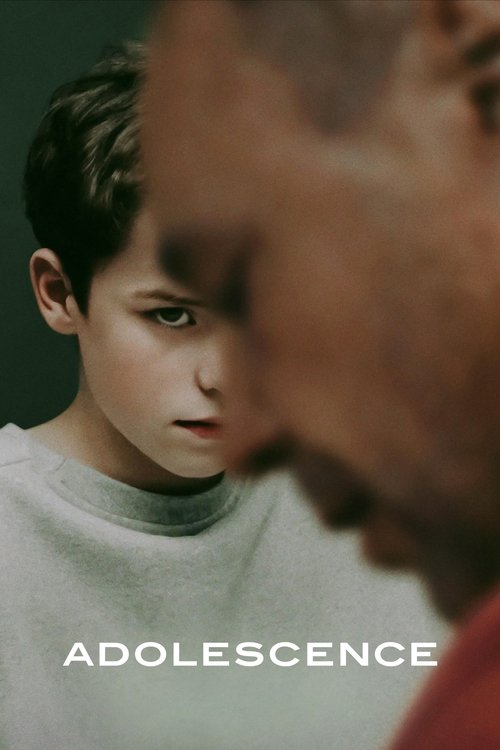
This film draws you in for a significant portion of its runtime with traditional or neutral content before springing its woke agenda. Know before you go!
NOT A WOKE TRAP. The series wears its ideological concerns openly. From Episode 1, the investigation centers on online radicalization and misogynistic content consumed by the accused. The interrogation scenes, school investigation, and therapy sessions all directly reference the manosphere. Conservative viewers can identify the show's perspective within the first fifteen minutes and make an informed choice. There is no hidden agenda or late-game pivot.
Adolescence is the most important piece of television produced in 2025, and that's not the same thing as saying it's the best.
The premise is devastatingly simple. Armed police raid a family home in South Yorkshire at dawn. They drag 13-year-old Jamie Miller out of bed. He's arrested on suspicion of murdering his classmate Katie Leonard, a girl who rejected his romantic advances and then cyberbullied him. Over four episodes, each shot in a single unbroken take, the series examines the arrest, the school's response, Jamie's psychological evaluation, and the family's collapse. That's it. No subplot. No B-story. No relief.
The one-take format is not a gimmick. It is the show's thesis expressed through form. You cannot cut away. You cannot fast-forward. You cannot take a breath. Director Philip Barantini, who pioneered this approach with Boiling Point, understands that the absence of editing eliminates the viewer's ability to emotionally disengage. When Stephen Graham's Eddie Miller watches through a two-way mirror as his son casually describes the murder, the camera holds on Graham's face for minutes that feel like hours. There is no cut to release you. This is what makes Adolescence viscerally different from every other show about youth violence. It traps you in the room.
Episode 1 follows the police raid and interrogation. Ashley Walters plays DI Bascombe with quiet authority, navigating the procedural reality of questioning a child murder suspect while the boy's father, who happens to be a colleague's acquaintance, breaks down in the adjacent room. Owen Cooper's performance as Jamie is the series' greatest achievement. Cooper was 13 years old with zero professional experience when cast. He plays Jamie as neither monster nor innocent, but as something more terrifying: a normal boy who has absorbed an ideology that recoded rejection as attack and taught him that the appropriate response to humiliation is violence. When Jamie tells the detectives that Katie 'had it coming,' Cooper delivers the line with such casual conviction that it lands like a physical blow.
Episode 2 moves to the school. The camera follows various students, teachers, and staff through a day of grief counseling, rumor, accusation, and performative mourning. This is the weakest episode structurally, but it contains the series' most damning sociological observation: the school is a machine for producing exactly the kind of alienation that radicalized Jamie. The teachers are overwhelmed. The counselors are rote. The students are performing emotions for each other's consumption. Nobody is actually connecting.
Episode 3 is the masterpiece. Erin Doherty plays Briony Ariston, a forensic psychologist tasked with evaluating Jamie's mental state. The entire episode is their session in a secure facility. Doherty's work here is extraordinary: she methodically peels back Jamie's defenses, moving from rapport-building to confrontation, from gentle questions about his home life to the revelation of what he found on the internet. The red pill content. The Andrew Tate videos. The incel forums where rejected boys become soldiers in a war against women who won't give them what they deserve. When Jamie finally breaks, when the ideology cracks and the 13-year-old underneath appears for a moment, it is one of the most devastating scenes in recent television. Doherty and Cooper both won Emmys for this episode. They deserved them.
Episode 4 returns to the family. Eddie and Manda Miller (Christine Tremarco) attempt to live in the aftermath. The community has turned on them. Their daughter Lisa is bullied at school. Their marriage is fracturing under the weight of a question that has no answer: could we have prevented this? The episode ends with both parents in tears, unable to comfort each other, unable to assign blame, unable to move forward. It is quietly devastating and deliberately offers no resolution.
The culture war around Adolescence is as much a part of the story as the show itself. From the left, the series has been embraced as a searing indictment of the manosphere pipeline, proof that Andrew Tate and his imitators are radicalizing boys toward violence against women. Prime Minister Keir Starmer hosted a roundtable with the creators. Netflix made the show free for UK secondary schools. MPs called for parliamentary screenings. The series became Exhibit A in the case for social media regulation.
From the right, the response was more fractured. Some conservatives praised the show for depicting the genuine crisis facing boys: absent fathers, disconnected institutions, a society that has no positive vision of masculinity to offer them. Others attacked it as 'anti-white propaganda' because the perpetrator is a white boy and the lead detective is Black. Co-creator Jack Thorne addressed this directly: 'We're not making a point about race.' Conservative leader Kemi Badenoch was criticized for dismissing the show, which progressives framed as evidence that the right doesn't care about violence against women. The more interesting conservative critique came from writers who argued that the show correctly diagnoses the symptoms (alienated boys seeking meaning online) but misidentifies the disease (blaming the manosphere rather than the collapse of family structure, faith, and community that left boys vulnerable in the first place).
This is where VirtueVigil's analysis matters. Adolescence is not propaganda. It is not dishonest. But it does have a perspective, and that perspective leans clearly toward the progressive explanation for male youth violence. The show's thesis is that the internet, specifically misogynistic content creators and incel communities, radicalized a normal boy into a killer. The show does not seriously explore alternative or complementary explanations: the decline of father-son relationships, the absence of faith or community institutions, the failure of schools to provide meaning rather than just credentials, or the possibility that some violence stems from individual pathology rather than ideological capture. Eddie Miller is a loving, present father. The family is intact. The community exists. And yet Jamie still killed Katie. The show's implicit argument is that the internet is powerful enough to override all of those protective factors, which is a progressive framing that places the blame on systems and content rather than individual moral failure or the absence of traditional structures.
This is an important distinction because both sides genuinely have a point. The manosphere is real. Andrew Tate's influence on boys is documented and measurable. Incel forums do radicalize vulnerable young men. The show depicts this accurately. But the show also somewhat lets institutions off the hook by making the internet the primary villain. The school in Episode 2 is failing, but the show presents this as a resource problem rather than a philosophical one. The family in Episode 4 is sympathetic but passive. Nobody in Adolescence asks the harder question: what would a positive vision of masculinity look like? What would a boy like Jamie need to hear from a father, a church, a mentor, a culture? The show is brilliant at diagnosing what went wrong. It has almost nothing to say about what right would look like.
As pure television, Adolescence is extraordinary. The performances are uniformly superb. The one-take format is used with discipline and purpose. The writing is sharp, humane, and resists easy answers even as its ideological leanings are clear. The nine Emmy wins (including Outstanding Limited Series, Lead Actor for Graham, Supporting Actor for Cooper, Supporting Actress for Doherty, Directing, and Writing) are entirely deserved. The 146 million views in 91 days confirm that this is not a niche art piece but a genuine cultural event.
But cultural events are not neutral. Adolescence has already shaped policy in the UK. It has already been deployed as an argument for internet regulation. It has already been used to dismiss conservative concerns about boys as cover for misogyny. And it has already been claimed by both sides as evidence for their worldview. The show itself is better than the discourse it has generated, which is usually the sign of something genuinely good. But VirtueVigil's job is to note what the show says, what it doesn't say, and whose framework it adopts. Adolescence adopts a progressive framework. It does so with extraordinary craft. And that craft is exactly what makes its perspective so persuasive and so worth scrutinizing.
Formula: Weighted Score = Severity × Authenticity Multiplier × Centrality Multiplier
🔴 Woke Tropes
| Trope | Severity | Authenticity | Centrality | Score |
|---|---|---|---|---|
| Toxic Masculinity as Root Cause of Violence | 5 | 0.9 | 1.8 | 8.1 |
| Internet and Social Media as Existential Threat to Children | 4 | 0.8 | 1.5 | 4.8 |
| Institutional Failure Framing (Schools, Systems) | 3 | 0.7 | 1 | 2.1 |
| Male Violence Against Women as Systemic Pattern | 4 | 0.8 | 1.5 | 4.8 |
| Progressive Policy Prescription (Regulation, Intervention) | 2 | 0.6 | 0.5 | 0.6 |
| Diverse Authority Figures in Positions of Power | 2 | 0.7 | 0.5 | 0.7 |
| Empathy for Cyberbullying Victims (Female Perspective) | 2 | 0.9 | 0.8 | 1.44 |
| TOTAL WOKE | 22.5 | |||
🟢 Traditional Tropes
| Trope | Severity | Authenticity | Centrality | Score |
|---|---|---|---|---|
| Parental Love and Family as Emotional Core | 4 | 0.8 | 1.5 | 4.8 |
| Personal Accountability and Consequences | 3 | 0.7 | 1 | 2.1 |
| Working-Class Authenticity and Dignity | 3 | 0.9 | 1 | 2.7 |
| Male Vulnerability and Emotional Depth | 3 | 0.9 | 1.2 | 3.24 |
| Moral Horror at Youth Violence | 3 | 0.8 | 0.8 | 1.92 |
| TOTAL TRADITIONAL | 14.8 | |||
Score Margin: -8 WOKE
Director: Philip Barantini
CENTER-LEFT. Known for immersive one-take filmmaking that prioritizes raw human experience over political messaging. His work gravitates toward working-class stories and systemic pressure, but the craft consistently leads the ideology.Philip Barantini is a British director and former actor who has become the preeminent one-take filmmaker working today. His breakthrough was Boiling Point (2021), a restaurant drama shot in a single continuous take starring Stephen Graham, which earned a BAFTA nomination for Outstanding British Film. He followed it with a Boiling Point TV series (2023) and then Adolescence. Barantini's one-take approach is not a gimmick but a deliberate directorial philosophy: the absence of cuts eliminates the viewer's ability to emotionally disengage. In Adolescence, this means you cannot look away from the arrest, the interrogation, the school investigation, or the therapy session. Each episode locks you into real time with no escape hatch. Barantini won the Primetime Emmy for Outstanding Directing for a Limited or Anthology Series or Movie for his work here. His next project is Enola Holmes 3.
Adult Viewer Insight
Conservative adults should watch Adolescence, full stop. Not because it confirms their worldview, because it doesn't. But because understanding how the other side frames the crisis facing boys is essential to countering it effectively. The show's depiction of the manosphere pipeline is accurate. Its depiction of a normal family destroyed by online radicalization is emotionally devastating and not easily dismissed. Where conservatives should push back is on the show's implicit claim that the internet alone explains Jamie's violence. The show presents a loving, present father, an intact family, and a functioning community, and argues that the internet was powerful enough to override all of it. That's a specific ideological claim, not an established fact. The conservative response should not be to dismiss the show but to ask: if these traditional structures weren't enough, what does that say about the depth of the cultural crisis? And if the show's only answer is 'regulate the internet,' what about the deeper questions of meaning, purpose, faith, and identity that no content moderation algorithm can solve? Progressive adults will find the show validates their existing concerns about social media, toxic masculinity, and the manosphere. They should note that the show quietly concedes the conservative point that loving parents and intact families are not enough, which implies the problem runs deeper than any single policy intervention.
Parental Guidance
TV-MA. No nudity, no sex, no drug content. The violence is psychological rather than graphic: the murder is not shown on screen. The primary content concerns are the armed police raid, the interrogation of a minor, extensive discussion of incel ideology and misogynistic online content, cyberbullying, and the emotional devastation of a family. Strong British profanity throughout. Recommended for mature viewers aged 15 and up. The UK government endorsed screening it in secondary schools for ages 14-15+. Parents should watch it first and be prepared to discuss the themes. For families with teenage sons who are active on social media, this is one of the most valuable conversation starters available, but it requires adult facilitation. Do not let a 12-year-old watch this alone.
Find Adolescence on Amazon Prime Video, rent, or buy:
▶ Stream or Buy on AmazonAs an Amazon Associate, VirtueVigil earns from qualifying purchases.
Community Discussion 0
Subscribe to comment.
Join the VirtueVigil community to share your perspective on this review.