
Aquaman and the Lost Kingdom
The DCEU died the way it lived: drowning in its own ambition. Aquaman and the Lost Kingdom was supposed to be a triumphant send-off for DC's most commercially successful franchise. Instead, it became a $215 million climate change PSA that forgot to be a good movie first.…
Full analysis below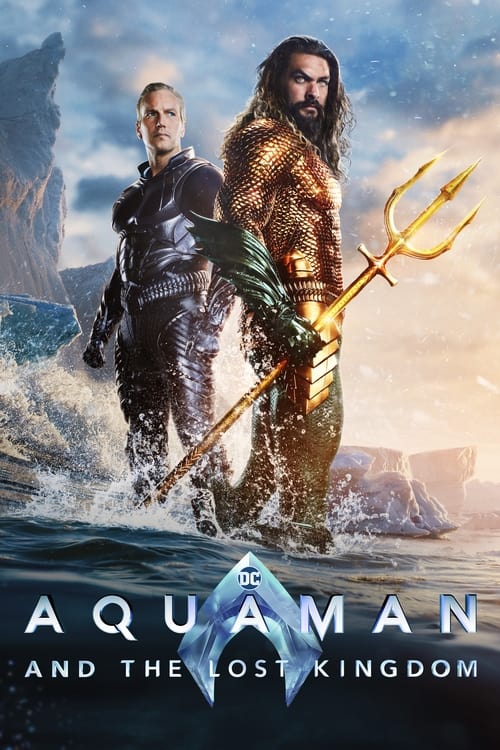
This film draws you in for a significant portion of its runtime with traditional or neutral content before springing its woke agenda. Know before you go!
NOT A WOKE TRAP. Aquaman and the Lost Kingdom is not hiding its ideology. The climate change messaging was announced publicly by director James Wan and star Jason Momoa well before release. Momoa gave a real-life UN climate speech in 2019 and made no secret that the film would carry that same torch. Trailers hinted at the environmental stakes. The film's woke elements - climate change as the central threat, the UN speech climax, the progressive framing of global cooperation - are visible in advance. There is no bait-and-switch here. The film's real problem is not deception but execution: it wears its ideology openly and clumsily, which is one reason it bombed. Conservative audiences knew what they were getting, and many chose to skip it.
The DCEU died the way it lived: drowning in its own ambition. Aquaman and the Lost Kingdom was supposed to be a triumphant send-off for DC's most commercially successful franchise. Instead, it became a $215 million climate change PSA that forgot to be a good movie first. The original Aquaman (2018) earned $1.15 billion by being exactly what audiences wanted - a big, dumb, gorgeous undersea adventure with Jason Momoa punching things. The sequel decided audiences actually needed a lecture about greenhouse gas emissions, ocean acidification, and the importance of addressing the United Nations about the climate crisis. The box office responded accordingly: $440 million worldwide, barely breaking even after marketing costs, a catastrophic 62% drop from the original. Critics gave it a 36% on Rotten Tomatoes. Audiences gave it a 5.6 on IMDB. And 4.5 million people signed a petition just to get one of its stars removed from the cast. This is what happens when a franchise substitutes messaging for storytelling.
Four years after becoming King of Atlantis, Arthur Curry has married Mera and fathered a son, Arthur Jr. He splits his time between ruling the underwater kingdom and navigating life as a new dad on the surface. His domestic bliss is interrupted when David Kane - Black Manta - resurfaces with a vengeance. Still consumed by rage over his father's death at Arthur's hands, Kane has been working with marine biologist Dr. Stephen Shin to locate Atlantean artifacts. When Shin accidentally discovers an Antarctic cavern, Manta finds the Black Trident, an ancient weapon that possesses him with the spirit of Kordax, a fallen Atlantean king imprisoned through blood magic.
Five months later, Manta raids an Atlantean Orichalcum reserve. The film takes pains to explain that Orichalcum - a fictional ancient fuel source - emits massive quantities of greenhouse gases when activated. Its use causes rising planetary temperatures, extreme weather events, and ocean acidification. An ancient Atlantean kingdom once nearly caused a planetary extinction event by over-using it. If this sounds less like a superhero plot and more like a congressional briefing on fossil fuels, you are paying attention.
Mera is injured in the raid, sidelining Amber Heard's character for most of the film's runtime. Arthur, needing intel, breaks his half-brother Orm out of desert prison. The pair travel to a pirate haven called the Sunken Citadel, where they learn Manta's location. What follows is the film's strongest stretch: Arthur and Orm navigating a volcanic island filled with mutated flora and fauna, bickering like an odd couple. Patrick Wilson's fish-out-of-water comedy as Orm encounters surface-world culture (he tries to eat a cockroach, marvels at candy bars) provides the film's best laughs.
Orm touches the Black Trident and receives visions revealing its origin: Kordax was King Atlan's brother, ruler of the lost kingdom of Necrus, imprisoned after a failed coup. The blood of Atlan's descendants can free him. Manta kidnaps Arthur Jr. to use the baby's blood to release Kordax. The heroes track them to Necrus in Antarctica for the final confrontation.
In the climax, Manta nearly kills Arthur before Mera arrives for a last-minute save. Orm catches the Black Trident before it strikes Mera, becoming possessed by Kordax's spirit. Arthur appeals to his brother's humanity, convincing Orm to overcome the possession and destroy both Kordax and the Trident. Necrus collapses. Manta refuses rescue and falls into a fissure. Orm is redeemed but exiled to the surface world under a faked death.
The film ends with Arthur addressing the United Nations, revealing Atlantis's existence to the world and declaring the kingdom's intention to become a UN member state - specifically to combat the environmental damage threatening both ocean and surface civilizations. The final image is a superhero standing at a podium delivering a climate policy speech. Roll credits.
Formula: Weighted Score = Severity x Authenticity Multiplier x Centrality Multiplier
Authenticity: High=0.7, Moderate=1.0, Low (injected)=1.4 | Centrality: Low=0.5, Moderate=1.0, High=1.8
| Trope | Severity (1-5) | Authenticity | Centrality | Weighted Score |
|---|---|---|---|---|
| Climate Change as Central Plot Engine | 4 | Low (1.4) | High (1.8) | 10.08 |
| UN Speech / Globalist Cooperation Ending | 4 | Low (1.4) | Moderate (1.0) | 5.60 |
| Environmental Catastrophism / Fossil Fuel Allegory | 3 | Moderate (1.0) | High (1.8) | 5.40 |
| Corporate Greenwashing / Virtue Signal Packaging | 3 | Low (1.4) | Moderate (1.0) | 4.20 |
| Female Character Sidelined But Still Saves The Day | 2 | Moderate (1.0) | Moderate (1.0) | 2.00 |
| Globalist Unity as Solution to All Problems | 3 | Low (1.4) | Low (0.5) | 2.10 |
| Actor-Activist Blurring (Momoa's Real UN Speech) | 2 | Moderate (1.0) | Low (0.5) | 1.00 |
| Diverse Cast Presented Without Comment | 1 | High (0.7) | Low (0.5) | 0.35 |
| WOKE TOTAL | 30.73 |
| Trope | Severity (1-5) | Authenticity | Centrality | Weighted Score |
|---|---|---|---|---|
| Brotherhood and Fraternal Redemption | 4 | High (0.7) | High (1.8) | 5.04 |
| Fatherhood and Family Protection | 4 | High (0.7) | High (1.8) | 5.04 |
| Redemption Through Sacrifice | 3 | High (0.7) | High (1.8) | 3.78 |
| Masculine Hero Defending His Kingdom | 3 | High (0.7) | Moderate (1.0) | 2.10 |
| Villain Motivated by Father's Death / Honor | 2 | High (0.7) | Moderate (1.0) | 1.40 |
| Ancestral Legacy and Bloodline | 2 | High (0.7) | Low (0.5) | 0.70 |
| Marriage and Nuclear Family Structure | 2 | High (0.7) | Low (0.5) | 0.70 |
| TRAD TOTAL | 18.76 |
Score Margin: -12 WOKE
Aquaman and the Lost Kingdom landed in the crosshairs of multiple culture war battles simultaneously, and the result was a perfect storm of audience disinterest.
The Amber Heard Problem. Over 4.5 million people signed a petition demanding Heard's removal from the film following her defamation trial with Johnny Depp. Warner Bros. responded by reducing her screen time to roughly 10 minutes, an awkward compromise that satisfied no one. Heard's supporters felt she was unfairly punished; Depp's supporters felt 10 minutes was 10 minutes too many. The controversy poisoned the film's marketing - trailers were cut to minimize or eliminate Heard entirely, creating the bizarre spectacle of a $215 million film hiding one of its credited stars.
The Climate Lecture. Conservative audiences who loved the original Aquaman for its unpretentious spectacle were warned away by early reports and trailers signaling heavy environmental messaging. The villain's plan literally involves emitting greenhouse gases. The film ends with a speech at the United Nations. Jason Momoa had already delivered a real UN climate speech in 2019, blurring the line between character and activist. For audiences who came to see a man ride seahorses and fight underwater, being served a climate policy seminar was unwelcome.
The DCEU Death Rattle. By the time The Lost Kingdom arrived in December 2023, the DCEU was already dead. James Gunn and Peter Safran had announced a complete DC Universe reboot. The film was the 15th and final DCEU installment, releasing after a string of failures (The Flash, Shazam! Fury of the Gods, Blue Beetle). Audiences had no reason to emotionally invest in a franchise that had already been canceled. The Lost Kingdom was not just a disappointing sequel - it was a eulogy for a cinematic universe that never lived up to its potential.
Buried under the climate messaging is a film with a genuinely effective traditional core. The Arthur-Orm buddy dynamic is the movie's strongest element. Patrick Wilson is having visible fun as Orm discovers the surface world, and his bickering chemistry with Momoa generates the film's only real emotional warmth. Their arc - estranged brothers learning to trust each other, Orm's journey from imprisoned villain to self-sacrificing hero - is classic fraternal redemption storytelling.
Arthur as a father is played with surprising sincerity. Momoa's scenes with baby Arthur Jr. are warm and grounded, and the threat to his child provides genuine stakes. The film treats fatherhood as Arthur's defining identity, not his kingship - a quietly traditional message.
Black Manta's motivation - avenging his father's death - is fundamentally traditional: a son's duty to his father's memory, twisted into villainy by obsession. Yahya Abdul-Mateen II sells the rage even when the script saddles him with climate-change mechanics.
The climate change apparatus drags the film into lecture territory. The Orichalcum-as-fossil-fuel allegory is about as subtle as a trident to the face. Every time the film builds momentum with an action sequence or buddy comedy beat, it stops to remind you about greenhouse gas emissions and ocean acidification. The film treats the audience like students who need to be educated rather than moviegoers who paid for entertainment.
The UN speech ending is the single most deflating climax in the DCEU. After two hours of undersea battles, ancient curses, and zombie armies, the film culminates with... a man standing at a podium announcing a diplomatic initiative. It is the cinematic equivalent of a superhero filing a tax return. Momoa's real-life UN activism bleeds into the character so thoroughly that Arthur Curry stops being a superhero and becomes a spokesperson. Whatever genuine environmental concern motivated this choice, the execution transforms spectacle into sermon.
Amber Heard's reduced role creates a structural problem. Mera is sidelined by injury early in the film, disappearing for most of the middle act. When she returns for the climax, her presence feels obligatory rather than earned. The film cannot decide whether to use her or hide her, and the resulting compromise satisfies neither the story nor the audience.
Conservative adults considering Aquaman and the Lost Kingdom should know that the climate change messaging is not subtle, it is not brief, and it is not incidental. It is the engine driving the entire plot. The villain's scheme produces greenhouse gases. The stakes are framed as global warming. The resolution involves international cooperation through the United Nations. Jason Momoa's real-world climate activism is grafted directly onto the character.
That said, the film's traditional elements are genuine. The brother bond between Arthur and Orm carries real emotional weight. Arthur's fatherhood arc is played straight and with warmth. The action sequences, while undermined by poor CGI in places, deliver the spectacle you expect from an Aquaman film. Patrick Wilson's comic performance alone is worth the price of a rental.
The film is bad, but not offensive. It is preachy but not malicious. It mistakes messaging for storytelling, which is a creative failure more than an ideological assault. If you loved the first Aquaman and can tolerate periodic environmental lectures, the buddy comedy core is entertaining enough. If you have zero patience for climate change messaging in your superhero movies, skip it - the film will not change your mind, and it will waste your time trying.
Formula: Weighted Score = Severity × Authenticity Multiplier × Centrality Multiplier
🔴 Woke Tropes
| Trope | Severity | Authenticity | Centrality | Score |
|---|---|---|---|---|
| Climate Change as Central Plot Engine | 4 | Low | High | 10.08 |
| UN Speech / Globalist Cooperation Ending | 4 | Low | Moderate | 5.6 |
| Environmental Catastrophism / Fossil Fuel Allegory | 3 | Moderate | High | 5.4 |
| Corporate Greenwashing / Virtue Signal Packaging | 3 | Low | Moderate | 4.2 |
| Female Character Sidelined But Still Saves the Day | 2 | Moderate | Moderate | 2 |
| Globalist Unity as Solution to All Problems | 3 | Low | Low | 2.1 |
| Actor-Activist Blurring (Momoa's Real UN Speech) | 2 | Moderate | Low | 1 |
| Diverse Cast Presented Without Comment | 1 | High | Low | 0.35 |
| TOTAL WOKE | 30.7 | |||
🟢 Traditional Tropes
| Trope | Severity | Authenticity | Centrality | Score |
|---|---|---|---|---|
| Brotherhood and Fraternal Redemption | 4 | High | High | 5.04 |
| Fatherhood and Family Protection | 4 | High | High | 5.04 |
| Redemption Through Sacrifice | 3 | High | High | 3.78 |
| Masculine Hero Defending His Kingdom | 3 | High | Moderate | 2.1 |
| Villain Motivated by Father's Death / Honor Code | 2 | High | Moderate | 1.4 |
| Ancestral Legacy and Bloodline | 2 | High | Low | 0.7 |
| Marriage and Nuclear Family Structure | 2 | High | Low | 0.7 |
| TOTAL TRADITIONAL | 18.8 | |||
Score Margin: -12 WOKE
Director: James Wan
MODERATE / COMMERCIALLY PRAGMATIC. Wan is primarily a genre craftsman, not an ideologue. His horror films (Saw, The Conjuring, Insidious) carry no meaningful political baggage. He took the climate change mandate for Aquaman 2 seriously but has acknowledged it was always part of the Aquaman character's DNA in the comics. Wan has no significant public political activism.Malaysian-born Australian filmmaker. James Wan is one of Hollywood's most commercially successful directors, having created or co-created the Saw, Insidious, and Conjuring franchises. He directed Furious 7 (2015) and the original Aquaman (2018), which grossed $1.15 billion worldwide. Wan is primarily a genre craftsman rather than a political filmmaker. His horror work draws heavily from Catholic and Christian supernatural traditions, particularly in The Conjuring series, which treats faith and religious authority with genuine respect. His pivot to the DCEU was motivated by a desire to build underwater worlds rather than push messages. However, he publicly embraced climate change as a thematic pillar for The Lost Kingdom, noting that Aquaman has always been an environmentally conscious character in the comics. Whether this was personal conviction or studio mandate is unclear, but the result is a film where the environmental messaging overwhelms the entertainment.
Writer: David Leslie Johnson-McGoldrick
American screenwriter raised in Mansfield, Ohio. Ohio State University graduate. Credits include Orphan (2009), Wrath of the Titans (2012), The Conjuring 2 (2016), the first Aquaman (2018), and The Conjuring: The Devil Made Me Do It (2021). His filmography is primarily genre work with no discernible political pattern. He is a workmanlike Hollywood screenwriter who adapts to the vision of his directors. For Aquaman 2, the climate change thesis and UN speech ending were baked into the story conception by Wan and Momoa. Johnson-McGoldrick executed their vision rather than originating the ideology.
Adult Viewer Insight
Conservative adults should know the climate change messaging is central, sustained, and unsubtle. The villain's plan produces greenhouse gases, the stakes are framed as global warming, and the film literally ends with a speech at the United Nations about environmental cooperation. Jason Momoa's real-world UN climate activism is grafted directly onto the character. However, the traditional core is genuine: the Arthur-Orm brotherhood is emotionally effective, Arthur's fatherhood arc is played with warmth and sincerity, and Patrick Wilson's comic performance provides real entertainment value. The film is preachy but not malicious - it mistakes messaging for storytelling rather than weaponizing ideology against its audience. Worth a rental for the buddy comedy. Not worth a theater trip for the sermon.
Parental Guidance
Recommended minimum age: 10+ (PG-13). Aquaman and the Lost Kingdom is a standard superhero action film with no significant content concerns beyond typical genre violence. There is undersea combat, fantasy violence with ancient weapons, and zombie-like undead warriors. A baby is kidnapped but never harmed. Amber Heard's Mera is injured early but recovers. No sexual content, no profanity beyond mild language. The primary parental consideration is ideological: the film presents climate change as an urgent existential threat, frames greenhouse gas emissions as the mechanism of the villain's plan, and ends with a UN speech about global environmental cooperation. Parents who want to address this messaging with their children should be prepared for a sustained environmental theme rather than a brief aside. The film is otherwise a straightforward fantasy adventure suitable for families.
Find Aquaman and the Lost Kingdom on Amazon Prime Video, rent, or buy:
▶ Stream or Buy on AmazonAs an Amazon Associate, VirtueVigil earns from qualifying purchases.
Community Discussion 0
Subscribe to comment.
Join the VirtueVigil community to share your perspective on this review.