
Avatar: Fire and Ash
James Cameron's Avatar: Fire and Ash is a three-hour-and-seventeen-minute spectacle that will make your eyeballs very happy while occasionally making your brain very tired.…
Full analysis below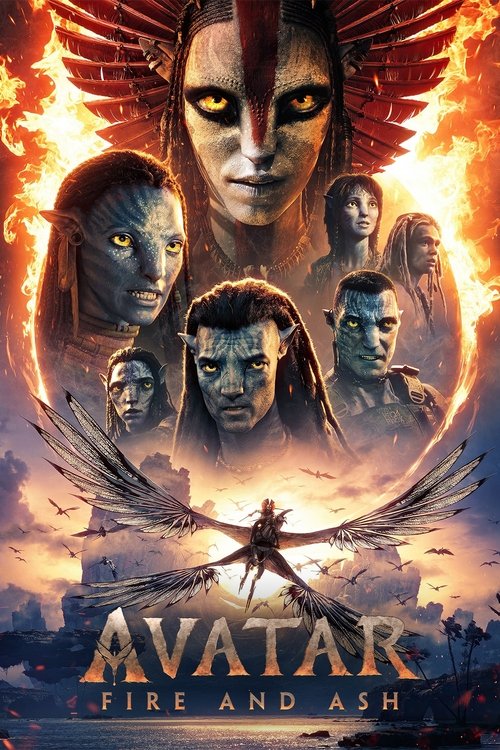
No bait-and-switch. Cameron's environmentalist, anti-colonial politics have been explicit since 2009. Conservative viewers know what the Avatar franchise is. The surprise in Fire and Ash runs in the other direction: the traditional elements are stronger than expected.
James Cameron's Avatar: Fire and Ash is a three-hour-and-seventeen-minute spectacle that will make your eyeballs very happy while occasionally making your brain very tired. The third trip to Pandora cost somewhere north of $350 million, grossed $1.46 billion, and delivers exactly the experience you would expect from the director who essentially invented the modern blockbuster. It is visually staggering. It is narratively familiar. And it is ideologically committed to the same anti-colonial, environmentalist worldview that has powered this franchise since day one.
The story picks up weeks after the death of Neteyam, the eldest Sully son. The family is broken by grief. Lo'ak narrates the opening with genuine emotional weight, wrestling with guilt over his brother's death. Neytiri has hardened into something frightening. Zoe Saldana described her own character as having become a full-blown racist toward humans, and that is not an exaggeration. The woman who once saw the good in Jake Sully now wants Spider, the human boy her family adopted, gone. She is consumed by rage. It is the most interesting character work in the film, and to Cameron's credit, the movie does not frame her hatred as righteous. It frames it as destructive. That is a surprisingly nuanced choice for a filmmaker not known for nuance.
The big new addition is the Mangkwan clan, volcano-dwelling Na'vi who rejected Eywa after a volcanic eruption destroyed their homeland. Led by the charismatic and terrifying Varang, played with real physical presence by Oona Chaplin, the Mangkwan are hedonistic, violent, and willing to collaborate with the human RDA forces. There is a genuinely interesting moral question buried in there about what happens when the gods fail you. Unfortunately, Cameron does not dig into it. The Mangkwan are mostly just space orcs. They raid, they burn, they kill. The philosophical potential of a faithless Na'vi culture is left largely unexplored.
The colonialism allegory remains the franchise's central architecture, and it is as unsubtle as ever. The RDA is back strip-mining Pandora, hunting Tulkun whales for profit, and embodying every critique of Western corporate imperialism you have ever read. The film's most pointed new wrinkle is the discovery that Spider, infused with Pandoran mycelia, can now breathe Pandora's atmosphere. The RDA immediately recognizes this could be reverse-engineered, making the planet habitable for all humans. It is Cameron's clearest statement yet: colonization is not about resources anymore. It is about replacement.
But strip away the environmental messaging and the anti-colonial framework, and what is actually driving this movie? Family. Fatherhood. Sacrifice. Faith.
Jake Sully's arc is fundamentally about fatherhood. He is trying to reconnect with Lo'ak after Neteyam's death. He is trying to hold his family together while Neytiri spirals. When the Mangkwan capture his children, he does not hesitate to surrender himself. When Spider is endangered, he prepares to make an impossible choice. The emotional climax of the film is not the battle. It is the moment Jake decides not to kill Spider, and Neytiri finally accepts the human boy as family. That is a story about mercy, about the expansion of the family unit, about a father's protective love overcoming fear. These are deeply conservative emotional beats dressed in blue alien skin.
Kiri's storyline is overtly spiritual. She learns she was sired by Eywa, essentially the daughter of God in the Pandoran cosmology. She struggles to connect with her divine parent. She pleads for Eywa's intervention in the final battle, and Eywa answers. Whatever you think of Cameron's pantheistic nature-worship, the narrative structure is unmistakable: a young woman of faith calls upon a higher power in humanity's darkest hour, and that higher power delivers. That is a faith narrative. It is not Christian. But the architecture is traditional.
Spider's arc is the most emotionally complex in the film. A human boy caught between two worlds, rejected by Neytiri, used as a lab rat by the RDA, torn between his adoptive Na'vi family and his biological father Quaritch. The resolution, Spider being initiated into the Na'vi people at the spirit trees, being accepted fully, is essentially a conversion and adoption narrative. He chooses his family. He chooses his faith. He is welcomed in. That resonates on traditional terms whether Cameron intended it to or not.
The warrior ethos is celebrated without reservation. Jake re-bonds with the apex predator Toruk, rallies the Na'vi clans, and leads them into battle. Ronal, pregnant and mortally wounded, fights to her last breath. The film treats martial courage and the willingness to defend your people as unambiguous goods. There is no hand-wringing about violence here. When your home is under attack, you fight. Period.
Technically, the film is extraordinary. The volcanic Mangkwan homeland is unlike anything seen in the previous films. The underwater sequences continue to push boundaries. The final battle is massive, chaotic, and genuinely thrilling. Cameron remains the best spectacle filmmaker alive, full stop. Whatever your ideological complaints, the man earns his ticket price.
Conservative viewers should know what they are getting. This is an anti-colonial, environmentalist, spiritually pantheistic blockbuster. It has been from the start. But it is also a movie about a father protecting his family, a young woman's faith, a boy choosing where he belongs, warriors defending their homeland, and mercy triumphing over vengeance. The woke scaffolding is impossible to miss. The traditional foundation is what makes the building stand.
| Trope | Category | Location | Authenticity |
|---|---|---|---|
| Institutional Evil | WOKE | Throughout — RDA as full-spectrum colonial enterprise: mining, whale hunting, biological colonization; no redeemable humans within the institution | Organic to franchise worldbuilding. The RDA has been the institutional villain since 2009. Fire and Ash escalates by framing colonization as species replacement. |
| Anti-Western Revisionism | WOKE | Throughout — Avatar franchise structured as allegory of Western colonialism, Na'vi as Indigenous peoples, RDA as European colonial powers | Organic to the franchise. Cameron has been explicit about the allegorical intent since 2009. |
| Environmental Pantheism | WOKE | Kiri's communion with Eywa; final battle — Pandoran ecosystem responds as divine intelligence, punishing exploitation and rewarding harmony with nature | Organic to franchise worldbuilding. Eywa has been established since the original film. Nature as God is the franchise's core theology. |
| The Colonialist Villain | WOKE | RDA operations throughout, especially the Tulkun whale hunt — Captain Scoresby leads hunt with enthusiastic cruelty despite marine biologist Dr. Garvin's objections | Organic to franchise. The whale hunt is Cameron's most direct environmental parable yet, modeled explicitly on commercial whaling. |
| The Girl Boss | WOKE | Throughout — Varang leads Mangkwan; Kiri's spiritual connection is decisive in the final battle; Neytiri infiltrates Bridgehead City alone; Ronal fights while in labor; General Ardmore commands the RDA | Mixed. Cameron has done this since Aliens (1986). Every faction is led or decisively influenced by a woman. More pronounced here than in any previous Avatar film. |
| The Marginalized Savant | WOKE | Kiri's arc throughout — coded as neurodivergent (seizures when connecting with Eywa), treated as strange, turns out to be daughter of the deity and turns the tide of battle | Mixed. The trope is present but serves the story's spiritual framework rather than feeling bolted on. Cameron executes it with sincerity. |
| Redeemed Criminal (Systemic) | WOKE | Mangkwan backstory — nihilism and violence framed as products of trauma and divine abandonment rather than inherent evil | Weakly present. Despite the sympathetic backstory, the Mangkwan function as straightforward antagonists. The systemic explanation is offered but not deeply explored. |
| Infallible Youth | WOKE | Lo'ak's narration and leadership; Kiri's spiritual authority exceeding adults; Spider making the pivotal choice in the climax | Mildly woke. The kids are impressive but they suffer, grieve, and struggle. The trope is tempered by genuine consequences. |
| The Bigoted Traditionalist | WOKE | Neytiri's hatred of humans (especially Spider) treated as destructive; Tulkun elders' pacifism nearly gets them slaughtered | Weakly woke. Neytiri's arc is treated with real empathy. The critique of rigid traditionalism is present but nuanced. |
| Defense of the Innocent | TRADITIONAL | Throughout — Jake surrenders himself to protect his children; the entire final battle framed as defense of home and family against invaders | Authentic. The most primal traditional narrative: parents protecting their young, warriors defending their homeland. The emotional engine of the film. |
| The Self-Sacrificing Hero | TRADITIONAL | Jake's surrender; Ronal dies giving birth while defending her people; Quaritch chooses death over surrender | Authentic. Ronal's death, combining combat heroism with the act of childbirth, is the most striking. She dies giving life while defending it. |
| Industry and Perseverance | TRADITIONAL | Jake re-bonds with Toruk through extraordinary personal will; Lo'ak returns repeatedly to the Tulkun council despite rejection | Authentic. Success comes through persistent effort and personal courage. Nobody is handed anything. |
| Faith in Adversity | TRADITIONAL | Kiri's arc throughout; spirit tree ceremony — Kiri maintains faith, pleads for divine intervention, receives it; Spider's initiation functions as baptism and conversion | Authentic in structure. The theology is pantheistic but the narrative function is identical to traditional faith stories: believe, endure, call upon the divine, be answered. |
| Traditional Femininity | TRADITIONAL | Neytiri's grief arc; Ronal's death in childbirth; Neytiri adopting baby Pril — despite the girl-boss surface, every female arc is driven by maternal love | Authentic. Motherhood frames every female character's emotional journey. Neytiri grieves as a mother. Ronal fights as a mother. Neytiri heals by becoming a mother again. |
| Restored Home | TRADITIONAL | Final act resolution — battle won, RDA repelled, Spider initiated as Na'vi, Neytiri accepts Spider as family, Sully clan restored and expanded | Authentic. The family fractured by loss and hatred comes back together. Home defended. Invaders repelled. Community endures. Bittersweet (Ronal dead, Neteyam still gone) but the living choose to go forward together. |
| Wise Elder | TRADITIONAL | Mo'at's counsel; Tulkun elder council — elder authority respected even when challenged; Lo'ak persuades rather than overthrows | Authentic. Elders matter. Their wisdom is sought. Their authority, while not absolute, is honored. |
| Warrior Ethos | TRADITIONAL | Final battle; Jake's Toruk bond; clan rally — martial leadership treated as heroic and necessary; warrior tradition honored as the reason the Na'vi survive | Authentic. Zero pacifist hand-wringing about violence in defense of home. When your home is under attack, you fight. The strongest warrior-ethos narrative in the franchise. |
Director: James Cameron
MODERATELY WOKE (woke on institutional/environmental themes, traditional on family/sacrifice/warrior ethos)The most commercially successful director in film history and a committed environmentalist. His ideological signature is consistent: anti-corporate, anti-military-industrial, pro-environment, deeply suspicious of institutional power. But Cameron simultaneously celebrates traditional family structures, maternal devotion, warrior courage, and self-sacrifice. His progressive politics and traditional storytelling instincts coexist in genuine tension. That tension is what makes his films commercially dominant. Both sets of values are authentically present.
Writer: Rick Jaffa & Amanda Silver (screenplay); Josh Friedman & Shane Salerno (story)
Jaffa and Silver are a married writing team whose credits include Rise and Dawn of the Planet of the Apes and Jurassic World. Their work consistently features nature-vs-exploitation themes and institutional villainy. Friedman and Salerno are commercial Hollywood craftsmen with no strong independent ideological signals.
Producers
- James Cameron (Lightstorm Entertainment) — Total creative control. The ideological signal is entirely Cameron's. See director profile.
- Jon Landau (Lightstorm Entertainment) — Cameron's producing partner since Titanic. Passed away in July 2024 during post-production. His contribution was complete before his death. Landau was a production executive, not a creative voice. No independent ideological signal.
Full Cast
Fidelity Casting Analysis N/A
Avatar is an original fictional universe. There is no historical or literary source material against which to assess casting fidelity. The Na'vi are alien beings performed through motion capture. Fidelity casting analysis does not meaningfully apply.
No source fidelity concerns. Zoe Saldana remains the franchise MVP, bringing genuine ferocity and emotional depth to Neytiri. Oona Chaplin delivers real menace as Varang. Jack Champion as Spider gives the film's most vulnerable human performance. Sam Worthington continues to be the least charismatic element of his own franchise, though he has grown into the role over three films.
Adult Viewer Insight
Conservative adult viewers approaching Avatar: Fire and Ash should understand they are walking into the third act of a franchise whose ideological commitments have been transparent since 2009. The anti-colonial allegory is the architecture. The environmentalism is the theology. These are not going to change. What is worth knowing is that this installment's traditional elements are stronger than in either predecessor. The fatherhood narrative is genuine and emotionally powerful. Neytiri's arc from hatred to acceptance is about mercy overcoming vengeance, which is a fundamentally traditional moral journey. The warrior ethos is celebrated without apology. The faith narrative, Kiri's relationship with Eywa, functions as a sincere exploration of divine purpose and answered prayer. Ronal's death in childbirth while defending her people is simultaneously the most traditionally feminine and the most martially heroic moment in the franchise. Cameron is not trying to trick you. He is a sincere environmentalist who also sincerely believes in family, sacrifice, and courage. The result is a film that conservative viewers can engage with critically and find more to appreciate than the surface politics suggest. Watch it for the spectacle. Argue with the politics. But notice that the story only works because its traditional bones are strong.
Parental Guidance
Violence: Intense and sustained. The Mangkwan ambush features burning ships and brutal combat. Characters are shot, burned, and killed on screen. Ronal dies in combat during childbirth, a scene that is emotionally intense. A whale hunt sequence shows intelligent beings killed for profit, which may disturb animal-sensitive children. The final battle is massive. Not gratuitous by Cameron's standards, but relentless. Sexual Content: Minimal. Quaritch and Varang's romantic subplot is suggested rather than shown. No nudity beyond the franchise's standard Na'vi body design. Language: Mild. Military dialogue and occasional harsh language. No significant profanity. Substance Use: The Mangkwan are described as hedonists. Quaritch experiences a hallucinogenic sequence with Varang suggesting ritualistic intoxication. Scary Content: The Mangkwan ambush, a flooding/asphyxiation sequence (Spider nearly dies), the whale hunt, and the climactic battle are all intense. Ronal's death will be upsetting for younger viewers. The spirit tree sequences where characters commune with the dead may be unsettling for children unfamiliar with the franchise's spiritual worldbuilding. Age Recommendations: Under 10: not recommended. The violence, emotional intensity, and runtime (3h 17min) are too much. Ages 10-12: with parental discretion. Ages 13+: appropriate. The themes of grief, identity, and belonging are well-suited to adolescent audiences. Discussion Starters: Spider's identity crisis (what does it mean to choose your family) offers a productive conversation about adoption, belonging, and chosen identity. Neytiri's arc from hatred to acceptance is a conversation about the difference between righteous anger and destructive bitterness. The environmental and colonial messaging can be used to teach children how filmmakers use allegory and how to identify and critically evaluate ideological frameworks in entertainment.
Community Discussion 0
Subscribe to comment.
Join the VirtueVigil community to share your perspective on this review.