
Avengers: Endgame
Avengers: Endgame is the highest-grossing film of all time (adjusted for inflation).…
Full analysis below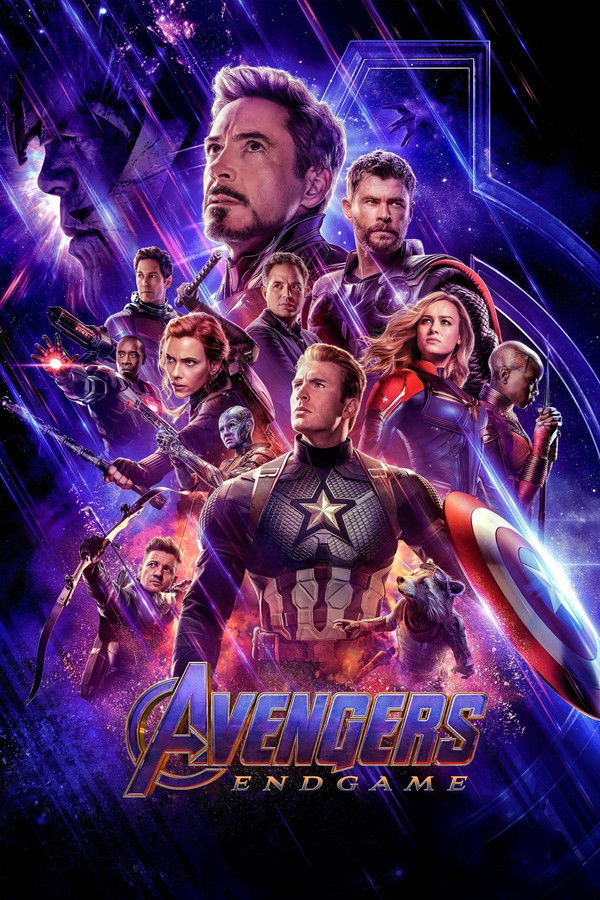
NOT A WOKE TRAP. Avengers: Endgame is exactly what it was marketed as: the conclusion of 22 Marvel films, designed to deliver maximum emotional payoff for the audience that invested in those films. The woke content - female hero assembly shot, LGBT+ moment, Captain Marvel's positioning - was visible in the marketing and in the discourse surrounding the film's release. There is no hidden agenda. The traditional content - Tony's sacrifice, Steve's family ending, family and sacrifice as core values - is equally prominent. Conservative audiences who went in expecting some progressive elements got what they expected, and traditional audiences who valued Tony's arc got that too.
Avengers: Endgame is the highest-grossing film of all time (adjusted for inflation). It is also one of the most emotionally efficient pieces of blockbuster filmmaking ever constructed: 22 films of investment cashed in over 181 minutes, delivering payoffs that made grown adults cry in theaters across 54 countries.
It is not the greatest superhero film ever made. The Dark Knight is. But Endgame accomplishes something different and arguably harder: it closes a story that took 22 films to tell, and it does so satisfyingly, which is nearly miraculous.
Ideologically, Endgame is genuinely mixed in a way that reflects exactly where Marvel was in 2019: one foot in the traditional storytelling that made the MCU great, one foot in the progressive identity politics that would eventually sink it.
Let's start with what Endgame gets right, because it gets a lot right.
Tony Stark's arc is classically traditional from beginning to end. He is a selfish billionaire who becomes a hero, builds a family, finds happiness in retirement, and then sacrifices everything - including the life he has built with Pepper and Morgan - to save trillions of lives. 'I am Iron Man.' Three words. The snap. The death. It is one of the great moments of sacrifice in popular film. There is nothing progressive about Tony Stark's death. It is a man choosing the good of others over his own survival, over his family's happiness, over everything he has built. That is heroism in the oldest and deepest sense.
Steve Rogers' ending is equally traditional, and it was controversial for the wrong reasons. Steve uses the time machine to go back to 1945, marry Peggy Carter, and live the life he was robbed of when he crashed the plane into the Arctic. When he returns as an old man to pass his shield to Sam Wilson, the film is saying: Steve Rogers earned the right to come home. He earned the farm. He earned the family. After 70+ years of sacrifice, the traditional good life - marriage, family, growing old with someone you love - is presented as the ultimate reward.
Conservative critics noted that this ending retroactively undermines Steve's 70 years of sacrifice by revealing he was happy in the past all along. That is a fair structural criticism but it misses the emotional point. The film is arguing that some sacrifices are complete. Steve paid his debt. The universe does not owe him eternal selflessness. Marriage and family are goods worth coming home to. That is traditional.
Clint and Natasha's race to sacrifice themselves for the Soul Stone is the film's most underrated traditional sequence. Two friends who love each other, arguing over which of them has the right to die for the other. It is selfless competition. The instinct to protect the person you love, even at the cost of your life, is ancient and good. The scene is genuinely moving.
The film's treatment of family throughout is consistent and strong. Tony has a daughter, Morgan, and the scenes of their domestic life are warm and unironic. Pepper's goodbye to Tony as he dies is devastating not because Marvel manufactured emotion but because eleven years of a relationship paid off in thirty seconds. Thor's grief over his mother and failure to stop Thanos leads to his depression, which is played partly for laughs but is honestly one of the better MCU attempts to show psychological consequences of catastrophic failure.
Now for what the film gets wrong ideologically.
The all-female hero assembly mid-battle is the most overtly progressive moment in the MCU up to this point. A dozen female characters converge to protect Spider-Man in a shot that has nothing to do with storytelling and everything to do with identity statement. It is not earned by the narrative. No character asked for it. It is a studio-mandated 'girl power' shot inserted into an action sequence for optics. It stops the film dead for the 20 seconds it takes to assemble.
Brie Larson's Captain Marvel is a recurring problem in Endgame. She arrives, saves the day in space, barely interacts with any character, and is treated as a trump card who can apparently defeat Thanos alone (until Thanos punches her into a wall, which the audience cheered at in 2019 theaters more loudly than anything else in the film). Her characterization is thin, her relationships non-existent, and her power level inconsistent. She is a political statement that the film does not know how to integrate into its actual story.
The brief LGBT+ moment - Scott Lang's support group includes a man who mentions going on a date with another man - is historically significant as the MCU's first openly LGBT+ content. It is brief and easy to miss. Its inclusion here rather than in a more developed context suggests it was inserted deliberately to claim the milestone without committing to real representation. This is a studio covering its ideological bases rather than telling a story.
Thanos as the villain deserves acknowledgment. He is an anti-villain whose logic is internally consistent: the universe has finite resources, unchecked population growth leads to extinction, the merciful solution is to remove half of all life randomly and equitably. This is a Malthusian argument made with genuine conviction. The film does not validate his logic - the Avengers' mission is explicitly to undo the Snap, not debate its merits - but Thanos is too well-written to function as a pure villain. Josh Brolin's performance gives him gravity and even pathos. The film is not arguing for Malthusianism. But it gives the argument a genuinely compelling voice, which is the right creative choice.
The VVWS score reflects a genuinely mixed film. The traditional content (Tony's sacrifice, Steve's ending, family as ultimate value, Clint and Natasha's sacrifice competition) is strong and emotionally resonant. The woke content (female hero lineup, Captain Marvel as untextured political symbol, LGBT+ moment) is real but relatively contained. The margin is razor thin, which is where this film actually lands.
Endgame is a film that the Marvel machine got mostly right on traditional values before the progressive drift of Phase 4 took full hold. It is the last MCU film where traditional storytelling wins out over identity politics, even if only barely. Watch it for Tony's ending. Watch it for Steve coming home. Watch it knowing that the franchise peaked here and went somewhere considerably less satisfying afterward.
Formula: Weighted Score = Severity × Authenticity Multiplier × Centrality Multiplier
🔴 Woke Tropes
| Trope | Severity | Authenticity | Centrality | Score |
|---|---|---|---|---|
| Female Hero Assembly Shot | 4 | 0.7 | 1.8 | 5.04 |
| Untextured Female 'Ultimate Hero' (Captain Marvel) | 3 | 1 | 1 | 3 |
| First MCU LGBT+ Content | 2 | 1 | 0.5 | 1 |
| Thor Mocked for Depression and Weight Gain | 2 | 1 | 0.5 | 1 |
| Hawkeye's Vigilante Killing of POC Criminals | 1 | 1 | 0.5 | 0.5 |
| TOTAL WOKE | 10.5 | |||
🟢 Traditional Tropes
| Trope | Severity | Authenticity | Centrality | Score |
|---|---|---|---|---|
| Ultimate Sacrifice as Heroic Culmination | 5 | 0.7 | 1.8 | 6.3 |
| Marriage and Family as Ultimate Good | 4 | 0.7 | 1 | 2.8 |
| Selfless Competition to Sacrifice | 4 | 0.7 | 1 | 2.8 |
| The Hero Coming Home | 3 | 0.7 | 0.5 | 1.05 |
| Grief Treated with Weight | 2 | 0.7 | 0.5 | 0.7 |
| TOTAL TRADITIONAL | 13.6 | |||
Score Margin: +3 TRAD
Director: Anthony Russo and Joe Russo
CENTRIST / LIBERAL CRAFTSMEN. The Russo Brothers are commercial directors who prioritize audience satisfaction over ideological messaging. They delivered the most crowd-pleasing MCU films (Captain America: The Winter Soldier, Civil War, Infinity War, Endgame) and have since moved into broader commercial work. They are not ideological filmmakers in the way that some Marvel directors have been, but they operated within a studio system (Marvel / Disney) that was increasingly committed to progressive representation during this period. The progressive elements in Endgame (female hero lineup, first MCU LGBT+ moment) reflect studio mandates as much as directorial choice.Anthony and Joe Russo began as television directors (Arrested Development, Community) before breaking into feature films with You, Me and Dupree (2006). Their MCU career launched with Captain America: The Winter Soldier (2014), a film widely praised for its political thriller structure. They directed four MCU films in total. Post-MCU, they directed Cherry (2021) for Apple TV+ and The Gray Man (2022) for Netflix. Their aesthetic is clean, efficient, and action-focused.
Writer: Christopher Markus and Stephen McFeely
Markus and McFeely wrote all four Russo Brothers MCU films. They are skilled at large-scale narrative construction and character payoff. Endgame's screenplay is an extraordinary feat of logistical storytelling: managing 22 characters across a time heist structure while hitting emotional beats for a 22-film franchise. The traditional content (Tony's sacrifice, Steve's ending, family as the ultimate value) is consistent with the Markus/McFeely approach across their entire MCU run. The progressive content reflects evolving studio direction during production.
Adult Viewer Insight
Parental Guidance
PG-13, appropriate for ages 10+ who have watched the prior MCU films. Emotionally intense with major character deaths. The LGBT+ moment is brief and mild. Tony Stark's sacrifice is a powerful conversation starter about heroism and selflessness. Three-hour runtime requires planning for younger viewers.
Find Avengers: Endgame on Amazon Prime Video, rent, or buy:
▶ Stream or Buy on AmazonAs an Amazon Associate, VirtueVigil earns from qualifying purchases.
Community Discussion 0
Subscribe to comment.
Join the VirtueVigil community to share your perspective on this review.