
Avengers: Infinity War
Avengers: Infinity War is the best argument that the Marvel Cinematic Universe ever made for its own existence. Ten years of narrative groundwork paid off in a film that is, almost in spite of itself, genuinely tragic. The heroes lose. The villain wins.…
Full analysis below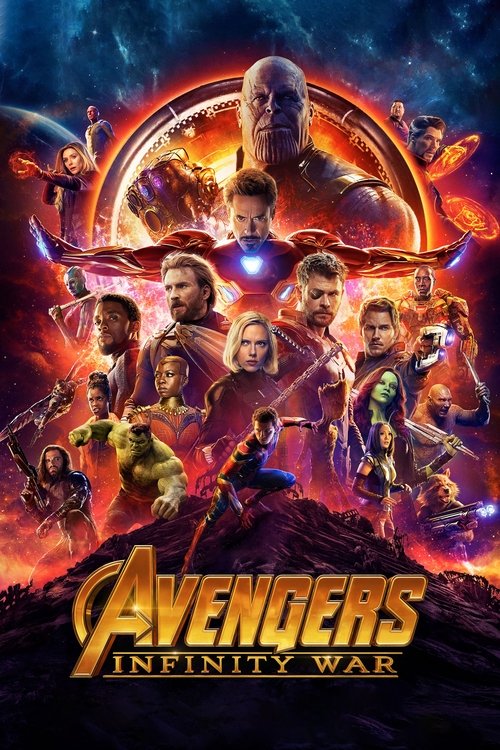
NOT A WOKE TRAP. Avengers: Infinity War is an enormous action spectacle that delivers exactly what it promises: every Marvel hero versus the most powerful villain in the universe. There is no hidden progressive agenda. The film's heroes lose. The villain succeeds. The moral universe of the film is unambiguous: Thanos's utilitarian logic, kill half of all life to preserve the other half, is presented as genuine evil, not as a legitimate philosophical debate. Conservative audiences will find this the most straightforwardly traditional of the major Avengers films.
Avengers: Infinity War is the best argument that the Marvel Cinematic Universe ever made for its own existence. Ten years of narrative groundwork paid off in a film that is, almost in spite of itself, genuinely tragic. The heroes lose. The villain wins. The final fifteen minutes are among the most affecting in blockbuster cinema history. And ideologically, this is the most traditionally weighted major Avengers film.
The key to understanding Infinity War is that Thanos is the movie's protagonist. The Russo Brothers and writers Christopher Markus and Stephen McFeely made a structurally unusual choice: they gave the villain the character arc. Thanos has a coherent philosophy (utilitarian: kill half of all life to preserve the other half from resource depletion), a tragic emotional backstory (Gamora), and he achieves his goal. Every other character in this enormous ensemble exists in relation to him. The Avengers are not protagonists solving a problem. They are obstacles Thanos overcomes.
This structure has significant ideological implications. By centering the villain and letting him win, the film forces the audience to engage seriously with his arguments. Thanos is not a cartoonish evil. He believes he is saving the universe. He mourns the murder of his adopted daughter to obtain the Soul Stone. He watches the sunrise after his victory with something that looks like peace. The film does not endorse his position, but it refuses to make him stupid. His logic is stated clearly, challenged by other characters, and ultimately defeated not by counter-argument but by his own emotional blind spots.
The traditional reading of Infinity War is this: Thanos's utilitarian philosophy is presented as monstrous precisely because it treats individual lives as expendable in service of an abstraction. Every character who resists Thanos does so because they value specific people over universal calculations. Thor wants revenge for Loki. Doctor Strange gives up the Time Stone to save Tony Stark's life. Gamora wanted to be loved by her father more than she wanted the universe saved. These are not utilitarian calculations. They are personal loyalties, familial love, and individual commitments. The film says these are right even when they lose.
The sacrifice theme runs through the entire film. Loki dies trying to protect Thor. Gamora agrees to reveal the Soul Stone's location to protect Nebula from torture. Vision asks Scarlet Witch to destroy the Mind Stone in his head to prevent Thanos from getting it, an act of willed self-destruction. Groot sacrifices his arm. The film's moral accounting is consistent: love means being willing to die for specific people, not for abstract principles. That is a traditional moral framework.
The political content is essentially nil. There are no American institutions to critique or defend. No gender or identity politics. No environmental messaging beyond Thanos's satirized Malthusianism (the film treats 'reduce the population to save resources' as obviously evil). The diversity of the ensemble reflects a decade of MCU world-building rather than any ideological agenda in this specific film. Black Panther's Wakanda providing the battleground is plot convenience, not racial messaging.
The woke penalty is minimal and primarily structural. A film with forty heroes inevitably includes female characters in combat roles (Black Widow, Okoye, Gamora, Scarlet Witch), and there are a few moments where the women get staged battle sequences. This is present but not foregrounded as feminist messaging. The film does not pause to celebrate its diversity or lecture about representation. Characters of all backgrounds fight and die because the stakes require everyone to fight and die.
The Russo Brothers' craft here is extraordinary. Managing forty characters across six narrative threads simultaneously, on locations ranging from New York to Edinburgh to Titan to Wakanda, while keeping Thanos's emotional arc coherent throughout is a structural achievement that film schools should study. The battle of Wakanda is spectacular. The confrontation on Titan is intimate and genuinely tense. Thor's arrival in Wakanda is one of the most cathartic moments in franchise cinema.
The ending is devastating in a way that feels earned rather than cheap. Characters the audience has spent years loving disintegrate. Spider-Man tells Tony Stark 'I don't want to go' and then disappears. That moment hit adult audiences who had watched Peter Parker grow up across three films. It is designed to hurt, and it does, because the film has earned the emotional investment.
Infinity War is a conservative film in the deepest structural sense: it affirms individual human life against utilitarian abstraction, it treats self-sacrifice as the highest virtue, and it takes genuine evil seriously rather than rationalizing it. The heroes are defeated not because their values are wrong but because they are fighting something genuinely more powerful. That moral coherence, even in defeat, is traditionally resonant.
Formula: Weighted Score = Severity × Authenticity Multiplier × Centrality Multiplier
🔴 Woke Tropes
| Trope | Severity | Authenticity | Centrality | Score |
|---|---|---|---|---|
| Diverse Ensemble Action Staging | 2 | 1 | 0.5 | 1 |
| Ensemble Diversity over Single Protagonist | 2 | 1 | 0.5 | 1 |
| TOTAL WOKE | 2.0 | |||
🟢 Traditional Tropes
| Trope | Severity | Authenticity | Centrality | Score |
|---|---|---|---|---|
| Self-Sacrifice as Ultimate Heroism | 5 | 0.7 | 1.8 | 6.3 |
| Love Over Utilitarian Abstraction | 4 | 0.7 | 1 | 2.8 |
| Villain's Evil as Genuine and Explicit | 4 | 0.7 | 1 | 2.8 |
| Defenders of Civilization / Order vs. Chaos | 4 | 0.7 | 1 | 2.8 |
| Brotherhood and Loyalty Under Fire | 3 | 0.7 | 1 | 2.1 |
| TOTAL TRADITIONAL | 16.8 | |||
Score Margin: +15 TRAD
Director: Anthony Russo and Joe Russo
CENTRIST / INDUSTRY CRAFTSMEN. The Russo Brothers are television directors turned blockbuster specialists (Community, Arrested Development, Captain America: The Winter Soldier, Captain America: Civil War). They have expressed no strong public ideological positions. Their Marvel films are characterized by political-thriller pacing, serious tone, and genuine consequences for characters. They have spoken about their admiration for 1970s conspiracy thrillers (All the President's Men, Three Days of the Condor) as inspirations. Their sensibility is craft-first. The Infinity War/Endgame duology is the apex of their work: massive scale, genuine emotional stakes, and a villain who is genuinely threatening.Joe and Anthony Russo are brothers from Cleveland who broke into Hollywood through low-budget comedy before being hired by Marvel to direct Winter Soldier. Their instinct to treat superhero stories with the seriousness of political thrillers revolutionized the MCU's tone. Infinity War and Endgame are together the most ambitious and commercially successful superhero films ever made. They have since moved into independently financed projects (The Gray Man, Extraction) with mixed results.
Writer: Christopher Markus and Stephen McFeely
Markus and McFeely are the writing team behind all of the Captain America films, Thor: The Dark World, and both Avengers final acts. They are skilled at juggling enormous ensemble casts while maintaining emotional coherence. Infinity War's screenplay is a genuine achievement: it services roughly forty characters across multiple simultaneous storylines while keeping Thanos's perspective central enough to function as the film's actual protagonist. Their political instincts in the writing are invisible, which is exactly right for this kind of project.
Adult Viewer Insight
Conservative adults who gave up on the MCU after it started lecturing should watch Infinity War. It is the culmination of the franchise's traditional phase before the ideological drift of Phase 4. The film takes evil seriously. It shows heroes who lose because they value people over calculations. It ends with genuine tragedy rather than a tidy resolution. This is blockbuster filmmaking at its most morally serious, and its moral framework is recognizably traditional.
Parental Guidance
PG-13, appropriate for ages 11 and up. The ending, where billions die including beloved characters, may traumatize younger MCU fans. Violence is intense but not gory. Thanos's mass-murder philosophy is stated clearly and correctly framed as evil. Parental discussion about utilitarian ethics vs. individual human dignity is a genuine opportunity this film creates.
Find Avengers: Infinity War on Amazon Prime Video, rent, or buy:
▶ Stream or Buy on AmazonAs an Amazon Associate, VirtueVigil earns from qualifying purchases.
Community Discussion 0
Subscribe to comment.
Join the VirtueVigil community to share your perspective on this review.