
Bad Boys: Ride or Die
Bad Boys: Ride or Die is a franchise that knows exactly what it is and has stopped pretending otherwise.…
Full analysis below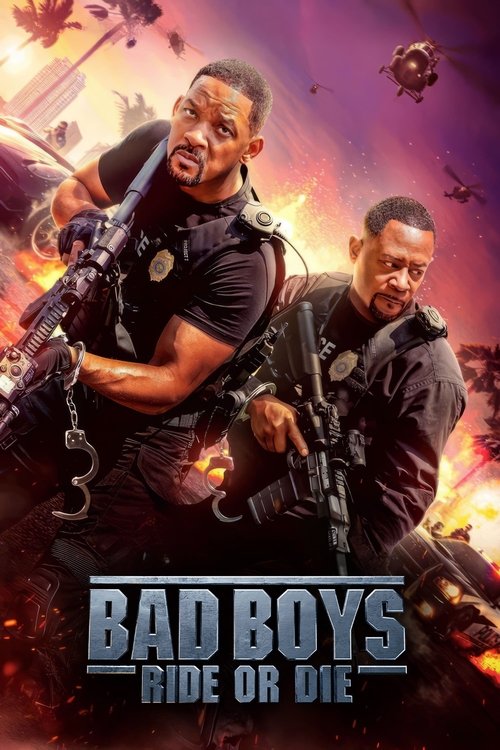
Ride or Die's institutional corruption plot is not woke in the structural-racism sense. The corrupt figures are identified bad actors who betrayed their institution. Mike and Marcus spend the entire film defending the honor of their dead captain and the integrity of Miami PD against specific criminals who happen to occupy law enforcement positions. This is closer to a pro-police film than an anti-police one.
Bad Boys: Ride or Die is a franchise that knows exactly what it is and has stopped pretending otherwise. The fourth installment in the 30-year saga of Miami detectives Mike Lowrey and Marcus Burnett delivers action, comedy, and the particular chemistry of Will Smith and Martin Lawrence with enough energy to justify its $405 million box office.
The story this time centers on a genuine loyalty test. When their late captain Conrad Howard is posthumously implicated in cartel corruption, Mike and Marcus refuse to accept the verdict. They go fugitive, becoming the hunted rather than the hunters, in order to prove that the man who mentored them was framed. This is as traditional a premise as action cinema offers: loyal men defending the honor of a fallen friend against a conspiracy that wants to silence them.
The script by Chris Bremner and Will Beall gets credit for threading this premise through the franchise's DNA without losing the franchise's personality. Marcus comes out of a near-death experience convinced he cannot be killed, which gives Lawrence permission to play the entire film with an almost religious serenity that is both funny and oddly touching. His certainty that God has a plan for him produces the film's funniest beats and also, unexpectedly, its most emotionally resonant ones. When he finally has to confront the possibility that he might actually die, Lawrence plays it with genuine weight.
Smith, by contrast, is more subdued than at any point in the franchise. He gets married at the film's opening and spends the rest of the movie in reactive mode, trying to keep his partner alive, keep his family safe, and clear their captain's name. The Oscars controversy almost certainly shaped the decision to keep Smith's performance quieter and Lawrence's louder. The calculation works: Lawrence carries the film's comedic energy and Smith grounds its emotional stakes.
The villains are functional. Eric Dane plays a corrupt general who has been funneling cartel money and using Captain Howard as his fall guy. Ioan Gruffudd plays a cartel enforcer called the Butcher. Neither character gets enough screen time to become genuinely interesting, which is a franchise limitation. Bad Boys films have always treated their villains as obstacles rather than people. The Butcher exists primarily for the film's extended Everglades action sequence, which is inventive and well executed.
Jacob Scipio as Armando, Mike's son from his cartel love affair in the previous film, continues his arc toward redemption. His dynamic with Smith provides the film's most traditional content: a father and son with a complicated history choosing each other. This subplot is more interesting than the main villain's conspiracy and the film wisely gives it significant time.
For conservative viewers the film is a mixed but generally positive experience. The pro-loyalty, pro-law-enforcement bones of the story are solid. Mike and Marcus spend the entire film defending their dead captain's reputation against people who want to permanently tarnish it. That is a traditional value system - loyalty to the fallen, refusal to accept a rigged verdict, willingness to sacrifice your own safety for someone else's honor. The institutional corruption exists but it is located in specific criminal individuals rather than the institution itself. Miami PD as a whole is not the villain. Specific traitors within it are.
The action sequences are filmed with Adil El Arbi and Bilall Fallah's signature kinetic energy - fast cuts, close-quarters chaos, and a fondness for body-cam perspectives that may frustrate some viewers but gives the action a visceral immediacy. The climactic sequence in the Everglades is the film's technical high point. The film maintains a brisk pace at 115 minutes and does not outstay its welcome.
Bottom line: this is crowd-pleasing franchise entertainment built on a traditional loyalty premise. The woke content is minimal and incidental. The traditional content - brotherhood, fatherhood, honoring the fallen, and loyalty tested by fire - is the engine.
| Trope | Category | Location | Authenticity |
|---|---|---|---|
| Brotherhood Under Fire | TRADITIONAL | Throughout - Mike and Marcus as a 30-year friendship tested by external threat; their loyalty to each other is the film's emotional center | Authentic. The Smith-Lawrence chemistry has driven this franchise since 1995. Their partnership is the entire point of Bad Boys, and Ride or Die gives it real stakes for the first time. When Marcus nearly dies early in the film, the audience feels the threat. |
| Honor of the Fallen | TRADITIONAL | Central plot - Mike and Marcus go fugitive to clear their dead captain's name; the entire film is a mission of posthumous loyalty | Authentic. This is the film's strongest traditional element. Clearing a fallen mentor's name at personal cost is a code-of-honor premise that resonates with conservative audiences. Joe Pantoliano's Captain Howard is barely in the film but his shadow dominates it. |
| Father-Son Redemption | TRADITIONAL | Mike and Armando subplot - Mike's cartel-raised son chooses to help his father, completing an arc toward legitimate family belonging | Authentic. Armando's redemption arc from Bad Boys for Life continues with genuine emotional weight. Jacob Scipio plays him with dignity. The father-son bond being re-earned is a traditional narrative that works. |
| Faith as Protection | TRADITIONAL | Marcus subplot throughout - Marcus interprets his heart attack and near-death vision as divine protection; his certainty that God preserved him shapes his behavior for the entire film | Natural. The film plays Marcus's faith mostly for comedy but treats the premise with genuine warmth. His belief that God has a plan is not mocked, even when it produces absurd behavior. Faith as a source of courage is an authentic traditional value. |
| Marriage and Commitment | TRADITIONAL | Opening sequence - Mike marries Christine; Marcus's marriage to Theresa remains a loving relationship at the center of his character | Authentic. Both leads are defined by their marriages. The film opens with a wedding. Marriage as a source of motivation and moral grounding is consistent throughout. |
| Institutional Corruption (Contained) | WOKE | Main villain conspiracy - corrupt figures within law enforcement framed their dead captain; the institution has been infiltrated by bad actors | Organic. The corruption is specific rather than systemic. The film is not saying police are institutionally evil. It is saying specific traitors within Miami PD and the military committed crimes. This is morally legible and does not indict the institution. Intensity: Low-Moderate. |
| Will Smith Post-Scandal Platform | WOKE | Casting - Smith's return to a major studio action film 2 years after the Oscars slap represents Hollywood's willingness to rehabilitate progressive celebrity despite public controversy | Off-screen signal only. The film itself does not reference Smith's personal life. The concern is whether audiences want to fund his rehabilitation. Content impact: zero. |
| Diverse Ensemble Police Unit | WOKE | AMMO team - the supporting detective crew includes women and minorities in positions of authority; standard action cinema ensemble diversity | Natural for the franchise and the setting. Miami is a majority-minority city. The Bad Boys franchise has always featured a diverse supporting cast. This is not a political insertion; it is franchise continuity. |
Director: Adil El Arbi and Bilall Fallah
PROGRESSIVE-LEANING - Belgian-Moroccan filmmakers with a social justice perspective in personal projects, genre-neutral in commercial workAdil El Arbi and Bilall Fallah are Belgian directors of Moroccan descent who made Rebel (2022), a Belgian film about a young man radicalized by ISIS that was Belgium's Oscar entry. Their personal work engages with immigrant identity and social marginalization. However, their commercial American work (Bad Boys for Life, Ms. Marvel, Batgirl - the latter famously shelved by Warner Bros.) does not carry overt political agendas. They are hired guns for major franchises who deliver action competently. Their personal politics exist; they do not bleed into Will Smith vehicle action films. Ideological tendency in Bad Boys context: NEUTRAL.
Writer: Chris Bremner and Will Beall
Chris Bremner wrote Bad Boys for Life (2020) and returns here. His Bad Boys work is straightforward action comedy without political subtext. Will Beall is a former LAPD officer turned screenwriter (Aquaman, Gangster Squad). Beall's law enforcement background gives him authenticity in writing police procedural elements. His scripts favor action mechanics over ideology.
Producers
- Jerry Bruckheimer (Don Simpson/Jerry Bruckheimer Films) — Bruckheimer is the most commercially successful action producer in Hollywood history (Top Gun, Pirates of the Caribbean, Bad Boys franchise, Armageddon, The Rock). His films are red-blooded American action entertainment with traditional masculine values. Law enforcement and military are generally heroic in Bruckheimer films. The Bad Boys franchise is his baby and has always been pro-cop at its core. Ideological signal: TRADITIONAL.
- Will Smith (Westbrook Studios) — Smith is both star and producer on this franchise. His personal brand intersects with progressive celebrity culture, but Bad Boys has never been a political vehicle for him. He returns to the franchise post-Oscars-slap controversy, which overshadowed the film's marketing but does not affect the content. As producer, his commercial instincts align with Bruckheimer's: make an entertaining action film that audiences want to see.
- Doug Belgrad (2.0 Entertainment) — Former Sony Pictures president turned independent producer. No specific ideological signal.
Full Cast
Fidelity Casting Analysis N/A - SEQUEL TO ORIGINAL IP
Bad Boys is an original franchise with no adaptation source. Fidelity casting is not applicable. The core cast of Smith and Lawrence has been consistent since 1995. Tasha Smith replaces Theresa Randle as Marcus's wife Theresa - a casting swap driven by scheduling rather than ideological considerations. The franchise's Miami setting and diverse supporting cast have been consistent throughout.
Will Smith (Mike Lowrey): The franchise's undeniable center. Controversy around the Oscars slap was managed by keeping his promotion limited, but his screen presence remains the draw. Martin Lawrence (Marcus Burnett): Lawrence's loose comedic energy arguably outperforms Smith in this installment. Their 30-year screen partnership is genuine and visible. Tasha Smith (Theresa): Smith is a competent replacement but the character was already thin. Rhea Seehorn (Judy Howard): Better Call Saul's Kim Wexler proves her dramatic range in a more serious supporting role. Tiffany Haddish (Ava): Comedy relief, functional.
Adult Viewer Insight
Conservative viewers who have followed the Bad Boys franchise since 1995 will find Ride or Die the most emotionally serious installment of the four. The previous films were almost purely comedic action. This one has genuine stakes, a real central question about loyalty and honor, and two lead performances that have matured in interesting ways. The Will Smith controversy is the elephant in the room. Smith's Oscars slap in 2022 caused Sony to briefly shelve this film, then quietly release it with minimal Smith-centered marketing. His performance is restrained by the standards of his previous Bad Boys appearances. Whether this was a deliberate creative choice, a response to the controversy, or simply where Smith is as an actor at 55, the result is a more grounded performance than the franchise has seen from him. Lawrence compensates with more energy than he has shown in years. The Marcus near-death vision subplot contains the film's most interesting content for conservative viewers. Marcus receives what he interprets as a vision from God telling him it is not his time. He returns from the experience with total certainty that he is being protected for a purpose. The film plays this mostly for comedy, but the underlying premise - that God has a plan, that some men are preserved for a reason - is treated with genuine affection rather than mockery. This is unusual for a mainstream action comedy from a major Hollywood studio. Jerry Bruckheimer's involvement as producer is a reliable quality marker for conservative audiences. His films consistently feature male heroism, law enforcement as generally virtuous, and action that does not lecture. Ride or Die upholds all of these.
Parental Guidance
Rated R. Adult content throughout. Violence: Heavy. Extended action sequences with gunfights, explosions, hand-to-hand combat, and lethal force. The Everglades climax is particularly intense. Characters die on screen. Not appropriate for children. Sexual Content: Moderate. Mike's wedding involves mild romantic content. Some sexual humor between Marcus and his wife. Language: Heavy throughout. Frequent profanity consistent with R-rated action comedies. Substance Use: Minimal. Age Recommendations: 17 and up. This is an adult action film with adult content. Discussion Guidance: (1) Mike and Marcus risk everything to clear their dead captain's name even when they have nothing to gain. What does that say about what loyalty means? (2) Marcus's near-death experience changes his personality for the rest of the film. Do you think people who have near-death experiences really change? (3) Armando is trying to earn a different kind of life than the one his mother raised him for. What does the film say about whether people can choose who they become?
Find Bad Boys: Ride or Die on Amazon Prime Video, rent, or buy:
▶ Stream or Buy on AmazonAs an Amazon Associate, VirtueVigil earns from qualifying purchases.


Community Discussion 0
Subscribe to comment.
Join the VirtueVigil community to share your perspective on this review.