
Black Panther
Black Panther is the most culturally significant MCU film ever made, and scoring it requires separating the cultural event from the actual film. The movie tells a surprisingly traditional story wrapped in progressive packaging.
Full analysis below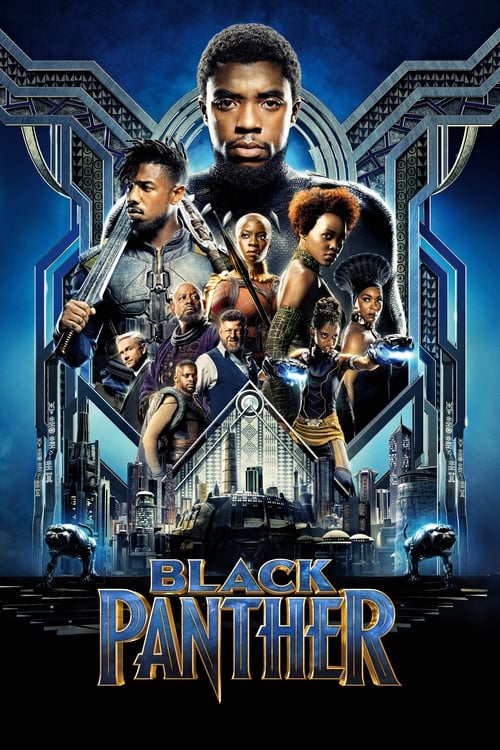
NOT A WOKE TRAP. Black Panther wears its cultural messaging openly. The film's themes of African pride, Afrofuturism, and racial justice are front and center from the marketing through the final frame. There is no bait-and-switch. Conservative audiences who research the film before seeing it will know exactly what they're getting.
Black Panther is the most culturally significant MCU film ever made, and scoring it requires separating the cultural event from the actual film. The movie tells a surprisingly traditional story wrapped in progressive packaging.
T'Challa returns to Wakanda after his father's death to assume the throne. He faces a challenge from Killmonger, an American-raised Wakandan with legitimate grievances about Wakanda abandoning the African diaspora. T'Challa loses the throne, fights to regain it, and ultimately chooses a third path: opening Wakanda to the world through bridge-building, not conquest or isolation.
The actual narrative structure is deeply traditional. A young man inherits his father's legacy. He grapples with his father's mistakes. He defends his homeland against a usurper. He nearly dies. He's saved by loyal family and allies. He defeats the villain through superior character. Replace 'Wakanda' with 'Asgard' and you've got Thor, except with better acting and a better villain.
The traditional bones are real. Duty, honor, and sacrifice drive T'Challa. The women of Wakanda are powerful and central to the story but operate within frameworks of loyalty to king and country. Okoye's conflict between personal loyalty and institutional duty is the film's most morally sophisticated beat.
Killmonger is fascinating because the film takes his pain seriously without endorsing his solution. His rage at generational injustice is real, but his answer of violent revolution is framed as wrong. T'Challa defeats him morally, not just physically.
But the progressive content is equally central. Wakanda is an Afrofuturist fantasy of Africa uncolonized, technologically supreme, culturally vibrant. Every visual choice celebrates African aesthetics. The film explicitly discusses slavery, colonialism, and systemic racial injustice. Killmonger's monologue about his ancestors who jumped from slave ships is devastating and unambiguously centered. T'Challa's UN speech about building bridges was an unmistakable dig at Trump-era border wall rhetoric.
Our honest assessment: MIXED. The narrative structure, themes of duty and honor, and moral framework are traditional. The cultural politics, identity messaging, and real-world commentary are progressive. Neither overwhelms the other. The margin is +1, essentially a dead heat.
RT Critics: 96%. RT Audience: 79%. Metacritic: 88. IMDB: 7.3. CinemaScore: A+. Box office: $1.35B on $200M budget. Won 3 Oscars. First superhero film nominated for Best Picture.
Director: Ryan Coogler
PROGRESSIVE. Coogler's filmography centers on Black American experiences and systemic injustice. Fruitvale Station (2013) dramatized the police killing of Oscar Grant. Creed (2015) revitalized the Rocky franchise through a Black protagonist. His work consistently engages with racial identity, but within broadly accessible narrative frameworks.Ryan Coogler is a Black American filmmaker from Oakland, California. His debut feature Fruitvale Station won the Grand Jury Prize at Sundance. He directed Black Panther to become the highest-grossing solo superhero film at the time ($1.35B worldwide) and the first superhero film nominated for Best Picture. He returned to direct Black Panther: Wakanda Forever (2022). His sensibility merges social consciousness with blockbuster entertainment.
Writer: Ryan Coogler & Joe Robert Cole
Joe Robert Cole co-wrote both Black Panther films. His other credits include All Day and a Night (2020). The screenplay draws from Ta-Nehisi Coates' comic run and the original Stan Lee/Jack Kirby creation, filtering them through Coogler's Oakland upbringing and a Pan-Africanist worldview.
Adult Viewer Insight
Conservative adults will find much to appreciate if they engage with the cultural politics without feeling attacked. The hero's journey is textbook traditional. T'Challa's arc of inheriting his father's mantle and choosing wisdom over vengeance is deeply conservative in structure. The villain advocates violent revolution and is definitively defeated. The film's resolution is centrist: share resources, build bridges, help through institutions rather than war. Michael B. Jordan's villain is genuinely compelling and the world-building is spectacular. The film does contain explicit commentary on colonialism that some may find preachy, but it's not trying to make you feel guilty. It's telling a story about a fictional African nation with craft and conviction.
Parental Guidance
PG-13 for prolonged action violence. Recommended age: 10+. Action includes hand-to-hand combat, spear fighting, vehicle chases. Several characters die on-screen. A throat is cut during battle. Killmonger's scarred torso is disturbing. Language: 5 s-words, 'a--,' one 'b--ch,' God's name misused twice. Minimal sexual content. Wakandan mythology involves ancestral plane visits and the panther god Bast. Themes of colonialism, slavery, and racial justice may prompt questions from children.
Find Black Panther on Amazon Prime Video, rent, or buy:
▶ Stream or Buy on AmazonAs an Amazon Associate, VirtueVigil earns from qualifying purchases.
Community Discussion 0
Subscribe to comment.
Join the VirtueVigil community to share your perspective on this review.