
Challengers
Challengers is a technically brilliant film and a moral void. Luca Guadagnino is one of the most gifted visual stylists working today, and he brings his full arsenal to this story of a love triangle set across thirteen years of competitive tennis.…
Full analysis below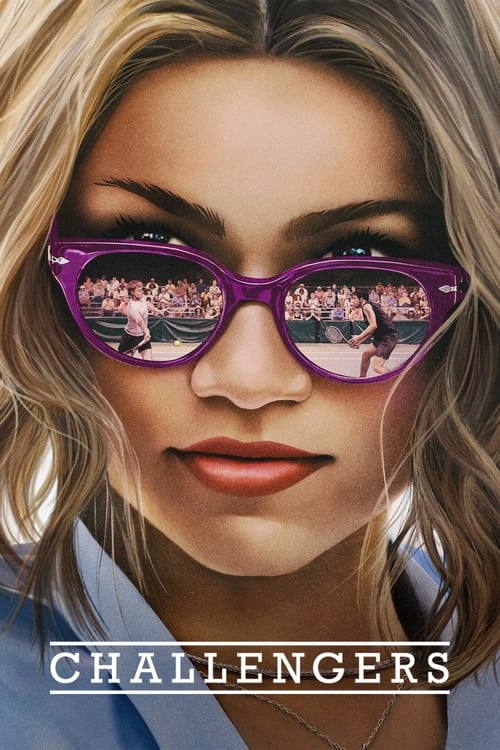
This film draws you in for a significant portion of its runtime with traditional or neutral content before springing its woke agenda. Know before you go!
The trailer emphasizes athletic competition and romantic tension. The film delivers a stylized story of infidelity, sexual manipulation, and female dominance over men framed as empowerment. No traditional family values are affirmed. The marriage at the center of the story is a transactional arrangement. The climax is deliberately ambiguous about whether any romantic bond is genuine at all.
Challengers is a technically brilliant film and a moral void. Luca Guadagnino is one of the most gifted visual stylists working today, and he brings his full arsenal to this story of a love triangle set across thirteen years of competitive tennis. The electronic score by Trent Reznor and Atticus Ross is propulsive and hypnotic. The cinematography is gorgeous. Zendaya delivers the best performance of her career. And yet the film exists in a complete ethical vacuum, presenting manipulation, infidelity, and sexual dominance as the sophisticated currency of desire.
The plot follows Tashi Duncan, a tennis prodigy whose injury ends her playing career. She becomes a coach instead, first marrying Art Donaldson and steering his rise to grand slam champion, all while maintaining a charged emotional entanglement with Patrick Zweig, Art's best friend and her own earlier boyfriend. The film is told nonlinearly, jumping back and forth across thirteen years with casual ease. The central question is not whether anyone will behave morally - they won't - but rather whose desire is more authentic, and what tennis itself means to each of them.
Guadagnino frames tennis explicitly as sex. The metaphor is not subtle. Rallies are intercut with romantic encounters. The serve is penetration. The return is response. When Tashi says she wants to watch some good f*ing tennis, she means it literally and figuratively. This is the film's central aesthetic strategy, and it's executed with skill. But it also means the film's moral universe is built entirely around physical desire, with nothing beyond it.
Tashi is the most compelling element and also the most concerning. She is brilliant, magnetic, and entirely willing to use the two men in her orbit as instruments of her ambitions. She cheats on Art. She strings Patrick along. She pushes Art toward a match he isn't sure he wants, against an opponent who is her unfinished emotional business. The film never condemns her for any of this. It finds her fascinating instead. For Guadagnino, Tashi is not a villain. She's a force of nature.
The male characters fare no better. Art is soft, compliant, increasingly hollow. Patrick is all appetite and no discipline. Neither man is able to function independently of Tashi's gravitational pull. The film's climax - a literal tennis match between the two men while Tashi watches - resolves in a moment of shared exhilaration that is deliberately ambiguous about what it means. Are these two men finally free of her? Are they playing for her? Are they playing for each other? Guadagnino refuses to answer, and that refusal is his aesthetic signature.
Conservative viewers will find little to celebrate here. The marriage between Art and Tashi is essentially a transaction - she coaches him, he provides stability, both get something from the arrangement that has almost nothing to do with love. Infidelity is treated as inevitable rather than tragic. The bisexual overtones (a three-way kiss early on, the male friendship that borders on romantic obsession) are presented as natural rather than transgressive. There are no children who are hurt by any of this, no consequences that feel genuinely painful. It's a sealed glass world where desire is everything and everything else is nothing.
The performances are uniformly excellent, which makes the moral emptiness all the more frustrating. Zendaya commands every scene. O'Connor brings wild-eyed charisma to Patrick. Faist is heartbreaking as a man hollowed out by success. These three actors deserve a film with a moral compass. They got an exquisite exercise in aesthetic nihilism instead.
For the technically inclined viewer, Challengers is fascinating. As a story that affirms anything worth affirming, it's a disappointment.
| Trope | Category | Location | Authenticity |
|---|---|---|---|
| The Femme Fatale as Heroine | WOKE | Entire film - Tashi Duncan manipulates both male leads for her own ambitions without consequence or condemnation | The script is explicitly constructed around Tashi's power. This is not incidental. Guadagnino and Kuritzkes intentionally present her manipulation as sophisticated rather than destructive. |
| Infidelity Normalized | WOKE | Second act - Tashi has a one-night stand with Patrick while married to Art; treated as inevitable rather than tragic | Central to the plot. The infidelity is not resolved, repented, or punished within the film's moral framework. |
| Sexual Ambiguity as Sophistication | WOKE | First act hotel room scene - three-way kiss; Art and Patrick's friendship coded with romantic intensity throughout | Intentional Guadagnino signature. He does not frame bisexual or homoerotic tension as complicated - he presents it as natural and sophisticated. |
| Marriage as Transaction | WOKE | Throughout - Tashi and Art's relationship functions as a professional arrangement; love is secondary to competitive ambition | The script is explicit about this. Art himself acknowledges he is a project for Tashi. The transaction frame is never challenged. |
| Emasculated Male Characters | WOKE | Throughout - both Art and Patrick are defined entirely by their relationship to Tashi; neither has meaningful agency or identity outside her | Structural to the screenplay. The entire story is told from the perspective of Tashi's gravitational influence on two men who cannot escape it. |
| Competitive Excellence | TRADITIONAL | Tennis sequences throughout - all three characters demonstrate genuine dedication to athletic excellence; the match sequences are thrillingly rendered | Authentic. The film consulted real tennis professionals. The athletic sequences are based on real competitive dynamics. |
| Passion and Devotion | TRADITIONAL | Art and Patrick's devotion to Tashi across thirteen years - even when it costs them - carries a note of genuine romantic commitment | Partially authentic. The devotion is real within the film but is ultimately framed as pathological dependency rather than admirable love. |
| Industry and Perseverance | TRADITIONAL | Art's career arc - he becomes a grand slam champion through years of dedicated training under Tashi's coaching | Authentic. The film takes the work of athletic preparation seriously. |
Director: Luca Guadagnino
PROGRESSIVEItalian filmmaker known for sensual, aesthetically lush cinema with progressive undercurrents. His filmography includes Call Me by Your Name (gay romance), Bones and All (cannibalism as metaphor for outsider desire), and Suspiria (feminist horror remake). Guadagnino is unabashedly art-house progressive who treats fluid sexuality and unconventional desire as default subject matter.
Writer: Justin Kuritzkes
Screenwriter and husband of director Celine Song (Past Lives). His debut feature script. Challengers was his spec script acquired by MGM in 2022. The screenplay is structurally clever - nonlinear, tennis-obsessed - but its moral architecture is deliberately absent any traditional framework.
Producers
- Amy Pascal (Pascal Pictures) — One of the most powerful producers in Hollywood. Former Sony Pictures chairman. Known for prestige fare and franchise output. Her producing history is broad - she's done Spider-Man, The Help, Little Women. She follows prestige talent and awards potential. No consistent political agenda beyond commercial ambition.
- Luca Guadagnino (Frenesy Film Company) — See director profile. As producer on his own films, his artistic vision is total and unmoderated.
- Zendaya (Why Are You Acting?) — Actress-producer who co-produced this film. Zendaya is publicly progressive, a vocal supporter of progressive social causes, and whose public profile skews heavily left. Her involvement as producer (not just talent) signals personal investment in the material and its framing.
- Rachel O'Connor (Why Are You Acting?) — Producing partner. Works in prestige drama space. No independent political signal.
Full Cast
Fidelity Casting Analysis FAITHFUL
Original screenplay - no source material to compare against. The central casting of Zendaya (biracial) as Tashi Duncan appears to be an organic creative choice consistent with the character as written. There are no historical figures involved. No fidelity concerns apply.
Challengers is an original screenplay with no prior source material, novel, or historical basis. The Fidelity Casting Score framework does not apply to original IP. The casting of Zendaya as Tashi Duncan is a character-first decision - the role was written specifically for her. Josh O'Connor and Mike Faist were cast for their physical and dramatic complementarity. No characters were race- or gender-swapped from any prior version. Score: N/A (original IP).
Adult Viewer Insight
Conservative adult viewers should approach Challengers with a clear understanding of what the film is. It is not a traditional romantic drama. It is a study in erotic power dynamics presented without moral framework. Tashi Duncan is not a character who learns from her mistakes or faces consequences for her infidelity. The film frames her manipulation of two devoted men as sophistication rather than cruelty. The film is worth watching as a cultural artifact - it tells you a great deal about what progressive art cinema finds compelling in 2024. The answer is: desire without consequence, identity without stability, and relationships defined entirely by power and appetite. These are not traditional values, and the film makes no attempt to pretend otherwise. Guadagnino is a gifted filmmaker whose work consistently explores desire outside conventional frameworks. Challengers is his most commercially accessible and his most ideologically consistent film. If you want to understand why conservative and progressive Americans increasingly watch different movies, Challengers is a useful case study. Critics adored it. Mainstream audiences gave it a respectable but not enthusiastic reception. The gap tells the story.
Parental Guidance
Rated R. Not appropriate for viewers under 17. Sexual Content: Heavy. Multiple scenes of passionate physical encounters. The tennis-as-sex metaphor means sensuality permeates the entire film. A hotel room scene early in the film involves a three-way kiss between all three leads. Sexual infidelity is a central plot element presented without condemnation. Language: Moderate to strong. Casual profanity throughout. Violence: Minimal. Sports injuries depicted. Substance Use: Some drinking in social contexts. Ideological Content: Female dominance over men presented as sophisticated. Infidelity normalized. Bisexual undertones throughout. Marriage portrayed as a transactional arrangement. Age Recommendations: Not appropriate for minors. Adults can watch and discuss as an example of how contemporary prestige cinema frames desire and relationships. Family Discussion: (1) How does the film frame Tashi's manipulation of Art and Patrick? Is she a sympathetic character? (2) What does the film suggest about the purpose of marriage? (3) The film never shows consequences for infidelity. Is that a realistic portrayal? (4) How does competitive sports function as a metaphor in this film, and do you find that metaphor convincing?
Find Challengers on Amazon Prime Video, rent, or buy:
▶ Stream or Buy on AmazonAs an Amazon Associate, VirtueVigil earns from qualifying purchases.

Community Discussion 0
Subscribe to comment.
Join the VirtueVigil community to share your perspective on this review.