
Conclave
Edward Berger's Conclave is the most dangerous kind of progressive film: one that is genuinely excellent.
Full analysis below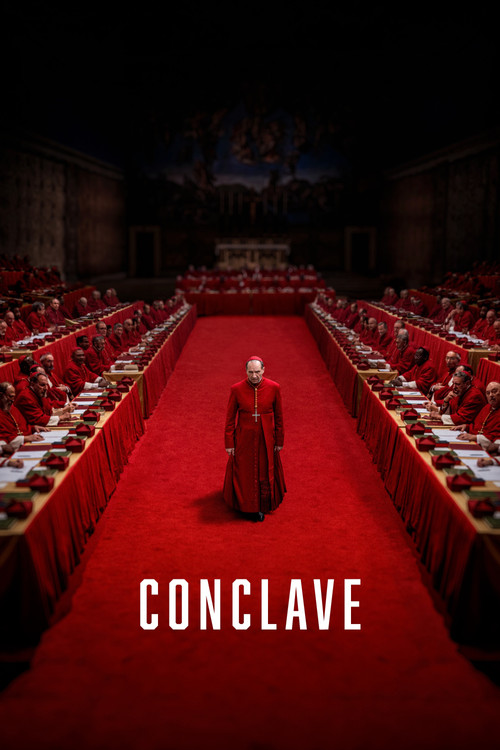
This film draws you in for a significant portion of its runtime with traditional or neutral content before springing its woke agenda. Know before you go!
Progressive themes integral to the plot throughout. The twist compounds it but woke messaging runs throughout.
Edward Berger's Conclave is the most dangerous kind of progressive film: one that is genuinely excellent.
This is not low-budget agitprop. It is not a ham-fisted lecture. It is a visually sumptuous, masterfully acted, compulsively watchable political thriller set inside the Vatican. Ralph Fiennes gives one of the performances of his career. The cinematography by Stéphane Fontaine is austere and magnificent. The ritual and ceremony of the papal election is rendered with the kind of reverential care that makes you believe, at least for a while, that the filmmakers might actually respect what they're depicting.
They don't. Or rather - they respect the aesthetics of Catholicism while systematically dismantling its doctrinal foundations, portrait by portrait, scandal by scandal, until the final 90 seconds deliver a twist that Megyn Kelly called "the most disgusting anti-Catholic" ending she'd seen in years, and that Bishop Robert Barron said "checks practically every woke box" he could identify.
The trap is that Conclave wins your trust before it betrays it. It looks like prestige drama. It earned BAFTA Best Film. It won the Oscar for Best Adapted Screenplay at the 97th Academy Awards. Critics gave it 88% on Rotten Tomatoes. Serious film publications called it "even-handed." Conservative Catholics who dismissed it without seeing it were mocked as reactionaries.
But they were right. Conclave is woke propaganda wrapped in Gregorian chant and Caravaggesque lighting. It is the single most effective delivery vehicle for progressive ideology about gender, institutional authority, and doctrinal doubt that Hollywood produced in 2024.
That's why it's so dangerous.
Conclave opens with the Pope dying of a sudden heart attack in the night. What he knew, what he planned, and what he whispered to God in his final moments become the film's animating mysteries.
Cardinal Thomas Lawrence (Ralph Fiennes), the Dean of the College of Cardinals, is the reluctant architect of the conclave that follows. Lawrence is the film's moral center: a man eaten alive by his own private doubt, questioning whether he even believes anymore, yet committed to the Church's integrity with an almost obsessive rigor. His opening homily to the assembled cardinals sets the film's theological thesis explicitly: "Certainty is the enemy of unity and tolerance. Our faith is a living thing, precisely because it walks hand in hand with doubt. If there was only certainty and no doubt, there would be no mystery, and therefore no need for faith." Remember that line. It is the film's argument, and the endpoint of its argument, all at once.
The Candidates
Four cardinals emerge as frontrunners:
- Cardinal Aldo Bellini (Stanley Tucci) - An American progressive reformer who believes the Church must evolve. Urbane, politically sophisticated, but ultimately too compromised by political calculation to win the votes he needs.
- Cardinal Joshua Adeyemi (Lucian Msamati) - A Nigerian social conservative who leads early balloting and terrifies the progressive bloc. Dignified, principled, articulate about traditional doctrine. He is the film's most capable traditional Catholic voice - and therefore the one the narrative destroys first.
- Cardinal Joseph Tremblay (John Lithgow) - A moderate Canadian who presents himself as a bridge-builder while secretly engaging in brazen corruption: arranging Sister Shanumi's transfer from Nigeria to the Vatican to sabotage Adeyemi, and paying other cardinals for their votes (simony). He is exposed by Lawrence and eliminated.
- Cardinal Goffredo Tedesco (Sergio Castellitto) - An Italian arch-traditionalist who wants to bring back the Latin Mass and reverse decades of progressive drift. He is the film's primary boogeyman: the thing good men must unite to stop.
The Scandals
Lawrence unravels each of the leading candidates like pulling threads from a tapestry:
Adeyemi had a secret illicit relationship with a young Nigerian nun, Sister Shanumi, resulting in an illegitimate son she gave up for adoption. Adeyemi confirms the truth when pressed. Though Lawrence is bound by the seal of confession, a whisper campaign ends Adeyemi's candidacy. The film's most traditionally Catholic character is neutralized by a sexual scandal.
Tremblay is revealed to have engineered Shanumi's transfer to the Vatican specifically to sink Adeyemi, and to have paid cardinals for votes. Lawrence finds the evidence in the late Pope's sealed apartment and publishes it. Tremblay is finished.
Tedesco survives these collapses and sees his conservative support surge. The progressive bloc rallies in panic around Bellini, then ultimately around Lawrence himself, not because Lawrence wants the papacy but because he is the only figure left who can stop the arch-traditionalist.
A suicide bombing detonates near the Sistine Chapel during the voting - a jarring intrusion of the outside world's violence into the sequestered conclave.
The Wild Card
Throughout the film, the late Pope's final act has loomed: he secretly named a Mexican-born Archbishop named Vincent Benítez (Carlos Diehz) as a cardinal in pectore - "in the chest," meaning in secret - and arranged for him to be flown in from Kabul, where he had been ministering to Catholics under the Taliban. Benítez arrives late, humble, serene, and utterly disinterested in power. He refuses to campaign. He consistently votes for Lawrence.
Before the vote that elects a new pope, Lawrence confronts Benítez about a canceled medical appointment in Switzerland - paid for by the late Pope - that Lawrence worries may indicate a terminal illness. If the new Pope is dying, the conclave has failed.
Benítez tells him the truth.
The Twist Ending
Benítez is intersex. He was born with a uterus and ovaries but was raised as male by his family and lived his entire life as a man. He only discovered his intersex biology as an adult, and the late Pope had arranged his Swiss appointment to have his uterus surgically removed - an appointment Benítez ultimately canceled, choosing instead to accept his body as God made it.
Standing on the threshold of becoming Pope Innocent XIV, Benítez tells Lawrence: "I am what God made me." He suggests his intersex identity is not a disqualification but a credential - that a man who "exists between certainties" may be exactly what a Church consumed by certainty needs.
Lawrence sits with this information. He keeps the secret. The white smoke rises. Pope Innocent XIV - a man born with female internal reproductive organs - is announced to the world.
The film ends.
This is not an ambiguous ending. The narrative endorses it. Benítez is the only candidate portrayed as genuinely holy. Lawrence, the moral compass of the film, is moved and convinced. The audience is meant to find it beautiful.
3. Trope Analysis - VVWS Weighted Scoring
🔴 Woke Tropes
| Trope | Severity | Authenticity | Centrality | Weighted Score |
|---|---|---|---|---|
| Intersex man elected Pope - structurally endorsed as the right outcome | 5 | Low (1.4) | High (1.8) | 12.6 |
| "Certainty is the enemy of unity" - doctrinal doubt elevated as virtue, certainty framed as vice | 5 | Low (1.4) | High (1.8) | 12.6 |
| Traditionalist Catholic (Tedesco) as primary villain to be stopped | 4 | Moderate (1.0) | High (1.8) | 7.2 |
| The institutional Church presented as universally venal, power-hungry, and corrupt | 4 | Moderate (1.0) | High (1.8) | 7.2 |
| Conservative African cardinal (Adeyemi) neutralized via sex scandal | 3 | Moderate (1.0) | Moderate (1.0) | 3.0 |
| TOTAL WOKE | 42.6 |
🟢 Traditional Tropes
| Trope | Severity | Authenticity | Centrality | Weighted Score |
|---|---|---|---|---|
| Catholic liturgy and conclave ritual depicted with genuine reverence and beauty | 3 | High (0.7) | Low (0.5) | 1.05 |
| Lawrence's crisis of faith treated with seriousness and theological weight, not satirized | 3 | High (0.7) | Moderate (1.0) | 2.1 |
| Corruption (simony) exposed and morally condemned | 2 | High (0.7) | Low (0.5) | 0.7 |
| TOTAL TRAD | 3.85 |
Score Margin: -39 WOKE
4. Woke Trap Assessment
This is a WOKE TRAP. Degree: Severe.
The definition of a woke trap is a piece of media that presents itself as culturally conservative-adjacent - in order to draw in an audience that would otherwise avoid it - and then delivers progressive ideological content that the audience has been disarmed from resisting. Conclave is the most sophisticated execution of this strategy since The Shape of Water.
Consider the setup: the film is based on a serious 2016 thriller novel by respected British author Robert Harris. It is directed by the man who made All Quiet on the Western Front, a somber anti-war masterpiece. It stars Ralph Fiennes, one of the most respected classical actors alive. It is set inside the Vatican. It depicts the Catholic Mass, the ritual of the conclave, the burning of ballots, the white smoke, the habemus papam announcement - all with scrupulous fidelity and visual grandeur. It was released in October, during peak Oscar season, packaged and marketed as prestige adult drama.
For 110 of its 120 minutes, Conclave can plausibly be defended as a serious, morally complex portrait of institutional religion. Some thoughtful Catholics, including those who write for sympathetic publications, argued the film was "nuanced" or "not anti-Catholic." A progressive Catholic website praised the film's treatment of doubt as a "keystone of faith." These viewers were trapped.
The trap springs in the final ten minutes. The new Pope's identity is the culmination of the film's central thesis: that the certainty which traditional Catholic doctrine requires is itself a spiritual failure. Benítez's power, the film argues, derives from his existence "between certainties." He is the ideal pope for a progressive vision of the Church precisely because his body refuses to be categorically defined by biological sex - the very category on which the Church's teaching on male-only ordination rests. The film does not confront this implication. It does not even acknowledge it. It simply presents it as beautiful and lets the white smoke rise.
Missio Dei Catholic put it plainly: "The movie uses incrementalism to obscure the Church's clear teaching on the papacy and priesthood - reserved for men - by introducing an intersex character of a cardinal who becomes Pope."
That's the trap. And it was decorated with awards by the people who built it.
5. Creative Team At A Glance
Director: Edward Berger (German, b. 1970) - made his name with All Quiet on the Western Front (2022), which won 4 Oscars. Progressive humanist sensibilities. Not an ideological activist, but consistently drawn to films that challenge institutional authority and traditional certainty.
Screenwriter: Peter Straughan (British, from Gateshead) - adapted the Robert Harris novel with enough precision to win the Oscar, BAFTA, Golden Globe, and Critics' Choice Award for Best Adapted Screenplay. Previously known for adapting Wolf Hall (BBC, 2015). When Megyn Kelly called the film "anti-Catholic," Straughan responded publicly: "I stand by it."
Producer: Tessa Ross and Juliette Howell (House Productions) with FilmNation Entertainment and Indian Paintbrush. Distributed in the US by Focus Features (Universal).
Cast: Ralph Fiennes, Stanley Tucci, John Lithgow, Isabella Rossellini, Sergio Castellitto, Lucian Msamati, Carlos Diehz. Multiple cast members expressed skepticism of traditional Catholicism in press interviews.
6. Director/Writer Ideological Track Record
Edward Berger is not a cartoonish ideologue - he is something more sophisticated and therefore more influential: a skilled filmmaker whose moral worldview consistently runs against traditional institutional structures.
All Quiet on the Western Front (2022) is an extraordinary film and a genuinely anti-war masterpiece. But notice the pattern of his subject matter: his work is drawn to powerful institutions - armies, churches - and explores them primarily through the lens of their failures, corruptions, and capacity for grinding individuals into the machinery of authority. In All Quiet, that institution is the German military and its political class. In Conclave, it is the Catholic Church.
Berger has said he "never wanted to take down the Catholic Church" and "didn't think the ending was the most important thing in the film." He welcomed controversy as healthy discourse. This is how progressive filmmakers talk when they've made something they know is ideologically loaded but want critics to engage with rather than dismiss. It is a sophisticated rhetorical posture.
Peter Straughan adapted Robert Harris's novel faithfully - the intersex twist is present in the source material - but the screenplay amplifies the ideological argument. In both book and film, Benítez says "I am what God made me." But the film goes further: the screenplay specifically argues Benítez's intersex identity makes him more qualified to lead, precisely because he "exists between certainties." This is not just a fact about Benítez's body - it is a philosophical argument about leadership and faith, framed to rhyme with Lawrence's opening homily. That philosophical scaffolding was constructed by Straughan, and it earned him every major screenwriting award of the season.
The pattern is clear: these are not filmmakers who stumbled into a provocative ending. This is intentional ideological architecture, executed at the highest level of cinematic craft.
7. Adult Viewer Insight - What the Film Is Actually Arguing
Sophisticated adult viewers should understand exactly what Conclave is saying before they decide to engage with it.
The film's argument, stated plainly:
1. Doctrinal certainty is the enemy. Lawrence's opening homily is the film's manifesto. The villain is not merely Tedesco's corruption or Tremblay's simony. The villain is certainty itself. The film argues that a Church that knows what it believes is a Church incapable of love. This is a direct assault on the nature of Catholic dogma, which is by definition certain.
2. The institution is irredeemably corrupt. Every viable candidate for pope has a disqualifying secret: an illegitimate child, vote-buying, doctrinal fanaticism. The only pure man is the one who has no institutional ambition. The message is clear: the Church as a human institution is rotten.
3. Gender is not a binary, and this makes someone a better pope. This is the film's most radical claim, made quietly and beautifully and with no counterargument. Benítez's intersex biology is not a complication to be wrestled with - it is a gift, a qualification, a sign of divine particularity. The Church teaches ordination is reserved for men. The film does not engage with that teaching. It simply elects an intersex pope and calls it holy.
What the film does well: It is genuinely gripping. The performances are extraordinary. Ralph Fiennes's portrayal of a man in spiritual crisis is the finest thing he has done in years. The film treats the interior life of faith with more seriousness than almost any other mainstream Hollywood production. It does not mock the Mass. It does not sneer at believers.
This makes it dangerous. Films that are entirely hostile to faith are easy to dismiss. Conclave is genuinely moving in places. It earns affection before it betrays trust. Thoughtful adult Catholics who engage with it should do so prepared for that betrayal - not to deny the film's considerable artistry, but to resist the ideology it carries inside the art like contraband in a cathedral.
8. Parental Guidance
Not appropriate for children or teenagers.
- Themes: Institutional corruption, sexual misconduct by clergy, terrorism, gender identity, and sustained philosophical arguments against doctrinal certainty. All at a sophisticated adult level.
- Violence: Moderate. A suicide bombing and aftermath depicted. Nothing gratuitous but disturbing in context.
- Sexual content: No explicit scenes. An illicit relationship between a cardinal and a nun is discussed in dialogue.
- Language: Minimal profanity.
- Theological content: Extended, sophisticated arguments against Catholic doctrinal certainty, delivered through the film's entire narrative architecture rather than through dialogue. Teenagers without strong theological grounding will absorb these arguments without the tools to evaluate them.
- The specific concern for Catholic families: The intersex pope ending is designed to be moving. If a young Catholic sees this film, finds it beautiful, and comes away believing the Church's teachings on biological sex and ordination should be questioned - that is not an accident. It is the film's intent.
Age recommendation: Adults 25+ with theological literacy. Come prepared to engage critically with what the film argues, not just to admire how beautifully it argues it.
Review by the VirtueVigil Editorial Team | February 18, 2026 | VVWS v2.1
Formula: Weighted Score = Severity × Authenticity Multiplier × Centrality Multiplier
🔴 Woke Tropes
| Trope | Severity | Authenticity | Centrality | Score |
|---|---|---|---|---|
| Intersex man elected Pope - narratively endorsed as right and holy | 5 | Low | High | 12.6 |
| "Certainty is the enemy of unity" - doctrinal doubt elevated as virtue | 5 | Low | High | 12.6 |
| Traditionalist Catholic (Tedesco) as primary villain and existential threat | 4 | Moderate | High | 7.2 |
| The institutional Church portrayed as universally corrupt and power-hungry | 4 | Moderate | High | 7.2 |
| Conservative African cardinal neutralized via sexual scandal | 3 | Moderate | Moderate | 3 |
| TOTAL WOKE | 42.6 | |||
🟢 Traditional Tropes
| Trope | Severity | Authenticity | Centrality | Score |
|---|---|---|---|---|
| Catholic liturgy and conclave ritual depicted with genuine reverence and beauty | 3 | High | Low | 1.05 |
| Lawrence's crisis of faith treated with seriousness and theological weight | 3 | High | Moderate | 2.1 |
| Simony and corruption exposed and condemned | 2 | High | Low | 0.7 |
| TOTAL TRADITIONAL | 3.9 | |||
Score Margin: -39 WOKE
Director: Edward Berger
Progressive humanist. Consistently drawn to films about the failures and corruptions of powerful institutions. Not an ideological activist but a sophisticated filmmaker whose moral worldview runs against traditional institutional authority.Swiss-Austrian director (b. 1970), known for All Quiet on the Western Front (2022, 4 Oscars including Best International Feature Film). His work is consistently drawn to institutions - armies, churches - explored primarily through their corruption and capacity for grinding individuals under the weight of authority. For Conclave, Berger stated he 'never wanted to take down the Catholic Church' while simultaneously welcoming controversy and defending the film's ideological content. He is too skilled to be dismissed as a blunt propagandist, which is precisely what makes him effective.
Writer: Peter Straughan
British screenwriter from Gateshead. Previously adapted Wolf Hall for the BBC (2015). Won Oscar, BAFTA, Golden Globe, and Critics' Choice Award for Best Adapted Screenplay for Conclave. Faithfully adapted Robert Harris's 2016 novel but amplified the ideological argument: the screenplay specifically frames Benitez's intersex identity as a qualification for the papacy - that he 'exists between certainties' - tying it thematically to Lawrence's opening homily in a way the novel handles less explicitly. When Megyn Kelly publicly called the film anti-Catholic, Straughan responded: 'I stand by it.'
Adult Viewer Insight
Conclave is a genuinely excellent film - and therefore a genuinely dangerous one. For 110 of its 120 minutes it can be defended as serious, morally complex prestige drama. But its central thesis is clear: 'certainty is the enemy of unity and tolerance,' delivered in Lawrence's opening homily and confirmed by the film's ending. Every traditional Catholic candidate for pope is either exposed as corrupt (Adeyemi's illegitimate son, Tremblay's vote-buying) or portrayed as a zealot to be feared (Tedesco's Latin Mass traditionalism). The only holy man is intersex and was elected precisely because, in the film's framing, his existence 'between certainties' makes him better suited to lead a Church that must learn to doubt its own doctrine. This is a direct assault on the epistemological foundations of Catholic teaching, delivered with extraordinary cinematic craft. Bishop Barron called it 'every woke box checked.' Ben Shapiro called it propaganda for the view that 'the traditional Catholic Church is evil.' They are correct. Watch it with your intellectual defenses fully raised, or don't watch it at all.
Parental Guidance
Not appropriate for children or teenagers. The film contains moderate violence (suicide bombing, disturbing aftermath), discussion of clerical sexual misconduct and illegitimate pregnancy, and sustained sophisticated arguments against Catholic doctrinal certainty - delivered not through dialogue but through the film's entire narrative architecture. The intersex pope ending is specifically designed to be emotionally moving and narratively endorsed. Young Catholic viewers without strong theological grounding will absorb its ideological content without the tools to evaluate or resist it. Recommended for adults 25+ with theological literacy only. Parents should watch first.
Find Conclave on Amazon Prime Video, rent, or buy:
▶ Stream or Buy on AmazonAs an Amazon Associate, VirtueVigil earns from qualifying purchases.


Community Discussion 0
Subscribe to comment.
Join the VirtueVigil community to share your perspective on this review.