Deadpool & Wolverine
Deadpool & Wolverine is exactly what it advertises itself as: an audacious, frequently profane, nostalgically loaded buddy film that smashes two beloved superhero personas together and dares the audience not to have fun.…
Full analysis below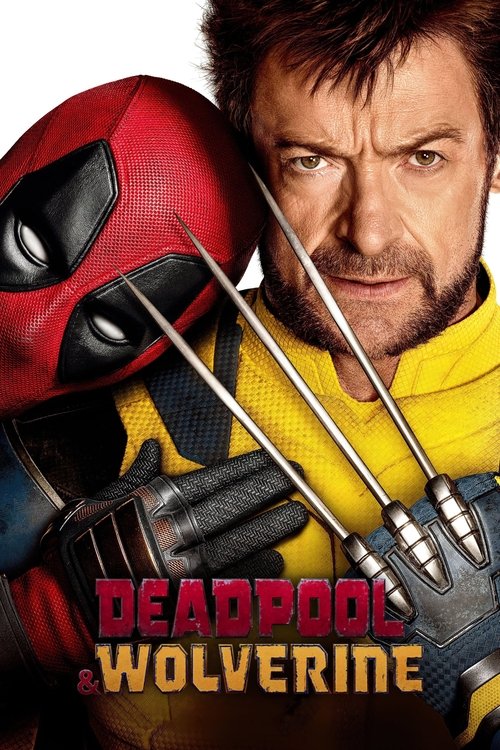
This film draws you in for a significant portion of its runtime with traditional or neutral content before springing its woke agenda. Know before you go!
The film's primary marketing appeal - Hugh Jackman returns as Wolverine, Ryan Reynolds brings his Deadpool brand of irreverence - will draw in a broad audience that includes many conservative viewers. The progressive content (Cassandra Nova played by a non-binary actor with associated signaling, LGBTQ-coded Deadpool humor, progressive Marvel Studios institutional fingerprint) is present but not the dominant experience. This rates as a mild trap rather than a severe one.
Deadpool & Wolverine is exactly what it advertises itself as: an audacious, frequently profane, nostalgically loaded buddy film that smashes two beloved superhero personas together and dares the audience not to have fun. The good news is that Ryan Reynolds and Hugh Jackman have genuine chemistry, the set-pieces are inventive, and the sustained commitment to not taking itself seriously is genuinely refreshing in an era of Marvel films that buckle under their own mythological weight. The less good news is that this is still a Marvel Studios product in 2024, and the progressive fingerprints are present even when the film is trying hard to be purely entertaining.
The plot involves the TVA - the Time Variance Authority from the Loki series - recruiting Wade Wilson to go retrieve a specific Wolverine variant from the multiverse. The Wolverine they find is a broken, self-loathing version of Logan who failed to save his world's X-Men and has been drunk in the Australian outback ever since. The central dynamic is Deadpool's relentless, irritating optimism trying to crack through Wolverine's genuine despair - and it works because Jackman has the range to play the despair as real while Reynolds bounces off it comedically without it feeling cruel.
The villain is Cassandra Nova (Emma Corrin), Charles Xavier's psychic twin - a powerful telepath who wants to destroy the multiverse or at least a significant portion of it. Corrin is effectively menacing in the role, though the character is somewhat underdeveloped by the film's need to balance nostalgia cameo after nostalgia cameo with actual plot. The Void - a wasteland where TVA discards variant beings - becomes the film's playground for bringing back Fox-era Marvel characters including Jennifer Garner's Elektra, Wesley Snipes's Blade, and Channing Tatum finally delivering the Gambit performance that the Fox-Gambit solo film would have given us.
From a VirtueVigil perspective, the film presents a mixed scorecard. On the traditional side, the core relationship between Wade and Logan - two male friends with different personalities who push each other toward better versions of themselves - is a genuinely traditional male friendship story. Wolverine's arc from self-loathing failure to willingness to sacrifice himself is the standard hero's journey dressed in Marvel clothing. The film's nostalgia content - bringing back beloved characters from the Fox era - appeals explicitly to tradition and the value of what came before. And the ending asks Logan to choose sacrifice over self-preservation in a way that honors traditional heroic values.
On the woke side: Cassandra Nova is played by Emma Corrin, a non-binary actor who uses they/them pronouns, in a casting choice that carries identity-politics signaling regardless of whether the script foregrounds it. Deadpool's character has always carried LGBTQ-coded humor and bisexual-coded identity in the source comics, and the film continues that tradition with several jokes and references that the target demographic will recognize as inclusive signaling. Marvel Studios under Kevin Feige has been a consistent progressive cultural force, and the institutional fingerprint is present even in a film that is predominantly trying to entertain rather than lecture.
The film is fun. That is honestly worth saying. In an era of Marvel films that have felt increasingly exhausting and ideologically burdened, Deadpool & Wolverine has the self-awareness to mock the very franchise infrastructure it belongs to. The meta-commentary on Marvel's creative struggles (the film literally jokes about how bad recent MCU films have been) is charming. The action is competent and sometimes inventive. Reynolds and Jackman are a genuinely entertaining pair. Conservative viewers who can engage with the progressive elements critically rather than passively will find enough entertainment value to make the price of admission reasonable - with eyes open.
| Trope | Category | Location | Authenticity |
|---|---|---|---|
| LGBTQ Normalization / Queer-Coded Hero | WOKE | Deadpool's established bisexual-coded identity; LGBTQ-coded humor and references throughout | Natural. This is established Deadpool character canon from the comics and previous films. Not a new insertion for this entry. |
| Identity-Casting / Non-Binary Representation | WOKE | Cassandra Nova - played by non-binary actor Emma Corrin in a deliberate casting statement | Emphasized. The casting of Corrin is an intentional identity-politics choice that signals Marvel Studios' progressive casting priorities. |
| Marvel Studios Institutional Progressive Fingerprint | WOKE | Ensemble diversity; progressive cultural references embedded in comedy | Natural. Marvel Studios' institutional progressive culture is a consistent feature of their productions. |
| Female Representation in Action Roles | WOKE | Jennifer Garner's Elektra, Dafne Keen's X-23 - female action heroes in significant supporting roles | Natural. Both characters are established in prior films. Not new insertions. |
| Male Friendship and Brotherhood | TRAD | The central Wade-Logan dynamic - two men with different personalities who push each other toward their better selves | Organic. The bromance formula at the film's core is a traditional male friendship story dressed in Marvel clothing. |
| Self-Sacrificing Hero | TRAD | Logan's final arc - a broken man who finds something worth dying for and chooses sacrifice over survival | Organic. The hero's redemption through sacrifice is handled with genuine emotional weight. |
| Nostalgia and the Value of Tradition | TRAD | The film's extensive nostalgia content - returning Fox-era characters, honoring what came before in the franchise | Organic. The film makes an explicit argument that things from the past have value worth preserving. The nostalgia is sincere, not ironic. |
| Redemption Arc / Personal Responsibility | TRAD | Logan's arc from failure and self-loathing to choosing to act and accept consequences | Organic. Personal accountability and redemption through action are classically traditional narrative values. |
Director: Shawn Levy
PROGRESSIVE-LITE - mainstream Hollywood progressive, not ideology-first but compliant with progressive studio cultureShawn Levy (Free Guy, The Adam Project, Night at the Museum franchise, Stranger Things executive producer) is a mainstream commercial director whose output ranges across the ideological spectrum. He is not an auteur with a political thesis but operates comfortably within progressive Hollywood culture. His films tend toward sentimentality, male friendship as a value, and action-comedy balance. Free Guy (2021) has some progressive gaming-culture commentary but is predominantly entertaining. Levy is a studio craftsman who delivers commercially and culturally doesn't fight upstream. His willingness to take on Deadpool & Wolverine signals confidence in the material rather than ideological ambition.
Writer: Ryan Reynolds, Rhett Reese, Paul Wernick, Zeb Wells
Ryan Reynolds co-wrote with the Deadpool franchise veterans Reese and Wernick (Deadpool 1 & 2, Zombieland) plus Marvel writer Zeb Wells. Reynolds is a gifted comedy writer who has shaped the Deadpool persona across three films. The Deadpool character as written carries a self-aware bisexual-coded identity and irreverent attitude toward political categories. Reynolds's personal politics are mainstream progressive (Canadian, socially liberal) but his creative output prioritizes comedy over ideology. Reese and Wernick are genre entertainers. Wells is a Marvel Comics writer who works across the publisher's progressive-leaning editorial environment.
Producers
- Kevin Feige (Marvel Studios) — Marvel Studios president and the architect of the MCU. Feige's Marvel has become increasingly progressive in its casting and storytelling choices across Phase 4 and 5 - a pattern that has drawn sustained criticism from traditionalist fans. Feige is personally liberal and has actively recruited diverse creative talent. His involvement signals Marvel Studios' institutional progressive fingerprint.
- Ryan Reynolds (Maximum Effort) — Star, producer, and co-writer. Reynolds's personal politics are mainstream progressive but his creative priority is entertainment. His involvement ensures the Deadpool brand identity - irreverence, meta-humor, self-awareness - is preserved.
- Shawn Levy — Director-producer. See director profile. Provides commercial instincts to balance the brand chaos.
Full Cast
Fidelity Casting Analysis NOTABLE DEVIATION
Cassandra Nova's casting as a non-binary actor represents a character change from the comics source material. Most other casting is faithful or new.
The most notable fidelity question is the casting of Emma Corrin (non-binary, they/them pronouns) as Cassandra Nova, who in the comics is portrayed as female. This is not a dramatic demographic swap but a deliberate identity-casting choice that signals progressive intent. Wolverine (Hugh Jackman) and Deadpool (Ryan Reynolds) are faithful to their established portrayals. Jennifer Garner returns as Elektra from her original Fox-Marvel portrayal, maintaining continuity. Channing Tatum finally appears as Gambit - a role he was set to play before the Fox merger canceled the standalone Gambit film - representing nostalgic continuity rather than revisionism. The returning Fox-era characters (Blade, Pyro, X-23) are portrayed by their original actors. The Cassandra Nova casting is the film's primary fidelity deviation.
Adult Viewer Insight
Conservative viewers who are Wolverine fans specifically should know that Hugh Jackman's performance is the best reason to see this film. His portrayal of a broken, failed Logan who finds something worth dying for is more emotionally grounded than most Marvel films manage. Go for Jackman. Tolerate the rest with appropriate critical distance. The Deadpool franchise's LGBTQ-coded elements are not new - they were present in Deadpool 1 and 2. If those didn't bother you, this film is more of the same.
Parental Guidance
Ages 17+ only. This is a hard R-rated film. - Violence: Heavy - the Deadpool franchise is defined by graphic, gory action. Lots of dismemberment, blood, brutal fight sequences. This is not MCU-lite violence. - Language: Very strong - wall-to-wall profanity consistent with the Deadpool brand - Sexual content: Moderate - LGBTQ-coded humor, some sexual jokes, nothing explicit - Thematic content: Themes of failure, self-loathing, redemption, sacrifice, male friendship - LGBTQ content: Explicit LGBTQ-coded humor and references throughout; Cassandra Nova played by non-binary actor - This is an R-rated film that should not be seen by anyone under 17. The Deadpool franchise has never been appropriate for children and this film maintains that rating aggressively.
Find Deadpool & Wolverine on Amazon Prime Video, rent, or buy:
▶ Stream or Buy on AmazonAs an Amazon Associate, VirtueVigil earns from qualifying purchases.



Community Discussion 0
Subscribe to comment.
Join the VirtueVigil community to share your perspective on this review.