Death of a Unicorn
Let's get the headline out of the way. Yes, Death of a Unicorn has a political lean. It is an anti-capitalist satire wrapped in a creature feature, and it does not try to hide it. The rich people are cartoonishly evil. The young progressive woman is the moral compass.…
Full analysis below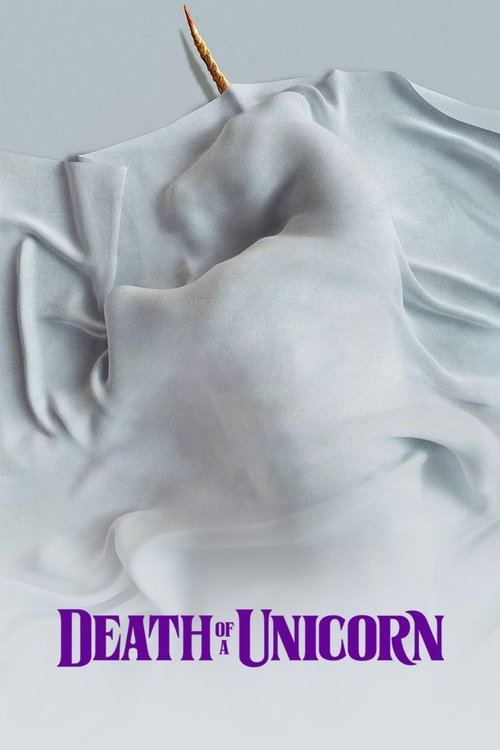
This film draws you in for a significant portion of its runtime with traditional or neutral content before springing its woke agenda. Know before you go!
Not a woke trap. The anti-capitalist, eat-the-rich ideology is broadcast loudly from the first frame of marketing. The billionaire pharmaceutical family is named Leopold (predator symbolism). The protagonist is coded as a progressive Gen-Z art student. The director openly cites the Sacklers as inspiration. The satire is on-the-nose, not hidden. Conservative audiences can make a fully informed decision before pressing play.
Let's get the headline out of the way. Yes, Death of a Unicorn has a political lean. It is an anti-capitalist satire wrapped in a creature feature, and it does not try to hide it. The rich people are cartoonishly evil. The young progressive woman is the moral compass. The unicorns are nature's revenge on corporate greed. If you've seen Jurassic Park, Alien, or any movie where a corporation tries to exploit something it doesn't understand and gets eaten for its trouble, you know the template.
But here's what makes this one interesting for our audience: it's not lazy about it.
The setup is clean. Elliot Kintner (Paul Rudd), a widowed lawyer, is driving through the Canadian Rockies with his teenage daughter Ridley (Jenna Ortega) to visit his pharmaceutical billionaire boss, Odell Leopold (Richard E. Grant). On the way, they hit a unicorn with their car. Elliot bludgeons it with a tire iron. They stuff it in the trunk. When they arrive at the Leopold estate, the family discovers the creature has miraculous healing properties. Odell's cancer? Cured by injecting grated unicorn horn. Ridley's acne? Gone from contact with its blood. Elliot's allergies and bad eyesight? Vanished.
And this is where the movie splits into two tracks that matter for our review.
Track one: the corporate greed allegory. Odell sees the unicorn and immediately thinks 'product.' His scientists start dissecting the creature. His son Shepard (Will Poulter), a spectacularly useless nepo baby, snorts ground unicorn horn like cocaine and orders them to saw off the entire horn. The Leopolds are the Sacklers of this universe, a pharmaceutical dynasty that treats everything, including a genuine miracle, as something to monetize. Scharfman has been open about this connection. 'What's interesting about the Sacklers, more so than the public health crisis they sparked, is the moral bankruptcy of their very lucrative enterprise,' he told interviewers. The film does not explore the pharmaceutical industry's genuine complexity. It has no interest in acknowledging that drug companies do sometimes help people. The Leopolds are one-dimensional villains, and the film wants you to cheer when unicorns stab them through the torso.
Track two: the father-daughter dynamic. This is where the movie has more going on than a typical eat-the-rich fantasy. Elliot is not a villain. He's a compromised man. He needs the job. His wife is dead. He's trying to provide for Ridley while swallowing his conscience. Rudd plays the moral flip-flopping with real humanity. One minute he's defending the Leopolds, the next he's protecting his daughter, and you can see both impulses are genuine. The film frames this as a generational divide: the older generation makes moral compromises to pay rent, the younger generation (Ridley) refuses to. Paul Rudd himself articulated this in interviews: 'When they're young and idealistic, kids say you can't do morally corrupt things to earn money. Sometimes as you get older, you can somehow talk yourself into certain things because you need to pay your rent.'
This generational framing is ideologically loaded. Ridley is coded from head to toe as a progressive Gen-Z archetype: dyed red hair, septum piercing, chain-vaping, art history major, the kind of character one reviewer described as 'a new wave socialist art history major liberal arts bisexual hitting her vape every second she gets.' She is also, according to the film's own mythology, the 'pure-hearted maiden' who can calm the unicorns. That's the movie's thesis in a single character: moral purity belongs to the young, progressive, anti-capitalist generation. The adults who work for the system are corrupted. The billionaires who run the system are monsters. Only the idealistic kid who rejects the system has a clean enough heart to commune with nature.
Is that woke? Yes. It's a fairly standard progressive worldview packaged as fantasy. But is it offensively so? That depends on your tolerance.
The satire is broad. Critics at Rotten Tomatoes gave it a middling 53%, with the consensus noting it's 'a bit too on the horn.' The New York Times' Manohla Dargis said the class-consciousness jokes 'don't land hard or at all.' Multiple reviewers compared it unfavorably to the films it borrows from, noting that Jurassic Park made similar points with more subtlety 30 years ago. The characters are thin. The Leopolds are archetypes, not people: evil capitalist patriarch, vapid socialite wife, drug-addled nepo baby son. Even Ridley, the supposed moral center, is more of a symbol than a character. One reviewer noted she's 'pitched as the pure maiden who can calm the stallion-based mythical storm' but 'doesn't live up to the characterisation.'
Where the film works best is as a creature feature. The unicorns are genuinely terrifying. Forget sparkly horses; these are violent, intelligent predators with amber eyes, tombstone teeth, and horns that can disembowel a person. Scharfman researched actual medieval unicorn lore, going back to Roman historians and the Old Testament, and discovered that unicorns were historically depicted as wild, untamable creatures capable of extreme violence. He incorporated the real Unicorn Tapestries from the Met Cloisters in New York, using them as both a plot device (Ridley researches them on her laptop) and a visual motif throughout the film. The creature design is effective. The gore is substantial. When the parent unicorns arrive to avenge their injured foal, the kills are brutal and creative, including disembowelment, horn-impalement, and a fatal kick to the face.
The ending is telling. Elliot eventually turns against the Leopolds, sacrificing himself to save Ridley. He stabs Shepard with the severed unicorn horn. Shepard shoots him with an arrow. The unicorns fatally kick Shepard, then, in a moment of pure fantasy, they magically revive both Elliot and their foal. Father and daughter are reunited. Nature forgives the man who was willing to sacrifice himself to protect it.
Except not entirely. In the final scene, police arrest Elliot and Ridley (understandably, given the pile of bodies). As they're driven away in the squad car, the unicorns ram the police vehicle off a lakeside road. In the credits, a detail from the Unicorn Tapestries reveals this event was foretold, with the two occupants swimming away. Scharfman described the unicorns as 'metal as f*' and clearly intends the ending as darkly comedic. But the implication is interesting: the unicorns, nature's instruments of justice, also attack the police. The system itself is rejected.
This is where conservative viewers might bristle most. The police in this film are bystanders. They arrive late, misread the situation, and become collateral damage. The real authority in the story is nature (the unicorns) and moral purity (Ridley). Institutional authority is either corrupt (the Leopolds) or irrelevant (the police).
Formula: Weighted Score = Severity × Authenticity Multiplier × Centrality Multiplier
🔴 Woke Tropes
| Trope | Severity | Authenticity | Centrality | Score |
|---|---|---|---|---|
| Anti-capitalist satire as central narrative (pharmaceutical dynasty as cartoon villains, Sackler parallel) | 4 | Low | High | 3.2 |
| Progressive Gen-Z woman as sole moral authority | 3 | Low | High | 3.8 |
| 'Eat the rich' framing: every wealthy character is evil, greedy, or incompetent | 3 | Low | High | 3.8 |
| Generational framing: youth equals morally pure, adults equals morally compromised by capitalism | 3 | Moderate | Moderate | 3 |
| Nature as instrument of justice against corporate exploitation | 2 | High | Moderate | 1.4 |
| Institutional authority (police) rendered irrelevant or collateral | 1 | High | Low | 0.35 |
| Director cites Sackler family and anti-capitalist creature features as explicit framework | 1 | High | Low | 0.35 |
| Nepo baby archetype played for maximum contempt | 1 | High | Low | 0.35 |
| Environmental exploitation allegory: treating nature as a commodity leads to violent consequences | 2 | High | Low | 0.7 |
| TOTAL WOKE | 16.9 | |||
🟢 Traditional Tropes
| Trope | Severity | Authenticity | Centrality | Score |
|---|---|---|---|---|
| Father's sacrificial love: Elliot gives his life to protect his daughter | 4 | High | High | 5.04 |
| Family loyalty as redemptive force: father-daughter bond is the emotional core | 3 | High | High | 3.78 |
| Consequences for hubris: those who defy nature and play God are punished | 2 | High | Moderate | 1.4 |
| Reverence for historical tradition: medieval Unicorn Tapestries and biblical/Roman unicorn lore treated with genuine scholarly respect | 2 | High | Moderate | 1.4 |
| Moral order restored: the greedy are killed, the good are spared, the family is reunited | 1 | High | Moderate | 0.7 |
| TOTAL TRADITIONAL | 12.3 | |||
Score Margin: -5 WOKE
Director: Alex Scharfman
Left-leaning. First-time director with a producer background in indie horror (Resurrection, Blow the Man Down). Has openly cited the Sackler family and pharmaceutical industry corruption as thematic inspiration. Describes the film as a creature feature in the anti-capitalist tradition of Alien, Jaws, and Jurassic Park. Not overtly political in public statements, but the film's ideology speaks for itself.American writer-director and producer. Began his career as an intern at Parts & Labor, the production company behind Kelly Reichardt's Old Joy. Studied film at NYU. Co-founded Secret Engine production company with Lucas Joaquin and Drew Houpt. Producing credits include Resurrection (2022, starring Rebecca Hall) and Blow the Man Down (2019). Death of a Unicorn is his directorial debut, written on spec and optioned by A24 approximately five years before release. He extensively researched unicorn mythology, medieval tapestries at the Met Cloisters, and historical accounts dating back to Roman historians and the Old Testament. Worked alongside Lars Knudsen (producer of Hereditary, Midsommar via Square Peg with Ari Aster), who executive produced. Also worked in proximity to Robert Eggers during the development of The Witch.
Writer: Alex Scharfman
Scharfman wrote the screenplay himself on spec. The script began as a single image: a father and daughter who hit a unicorn with their car. He later described blurting out the creature-feature concept to a friend: 'And then a bunch more unicorns show up and they kill everybody!' He has cited the anti-capitalist subtext baked into creature features from Alien to Jurassic Park as a deliberate framework. The Leopolds are explicitly modeled on pharmaceutical dynasties like the Sacklers, and the film uses the Unicorn Tapestries at the Met Cloisters as both a plot device and thematic anchor.
Adult Viewer Insight
Death of a Unicorn is an anti-capitalist creature feature in the tradition of Jaws and Jurassic Park. The satire is broad, the villains are one-dimensional pharmaceutical billionaires modeled on the Sackler family, and the moral hero is a chain-vaping Gen-Z art history student. The political lean is unmistakable but not surprising. Creature features have always punished corporate greed. What saves this from being unwatchable for conservative audiences is the father-daughter emotional core. Paul Rudd's Elliot is a genuinely human character who makes bad choices for understandable reasons and ultimately redeems himself through sacrifice. The unicorns reward that sacrifice. The film's deepest message is not 'eat the rich' but 'family matters more than money' and 'sacrifice for your children is noble.' Those are conservative values wearing a progressive costume. If you can tolerate the packaging, there's something here worth watching. If Ready or Not and The Menu made your blood boil, skip this one.
Parental Guidance
Rated R for strong violent content, gore, language, and some drug use. This is a horror comedy featuring graphic unicorn-on-human violence: impaling, disembowelment, head-crushing, and a fatal kick to the face. The gore is played for both horror and comedy but is intense and frequent. Language is strong throughout. A teenage character vapes constantly, and another character snorts ground unicorn horn like cocaine. Sexual content is minimal (rated 1/10 by Kids-In-Mind). The film's primary thematic concern is corporate pharmaceutical greed, framed as an eat-the-rich satire with a progressive Gen-Z protagonist as the moral compass. Age recommendation: 16+. Parents of mature teens should preview the film before allowing viewing. The violence and ideological framing are the primary concerns for conservative families.
Find Death of a Unicorn on Amazon Prime Video, rent, or buy:
▶ Stream or Buy on AmazonAs an Amazon Associate, VirtueVigil earns from qualifying purchases.
Community Discussion 0
Subscribe to comment.
Join the VirtueVigil community to share your perspective on this review.