Doctor Strange
Doctor Strange is the MCU's most spiritually interesting film, and that is saying something given the franchise's general allergy to anything resembling genuine metaphysics.…
Full analysis below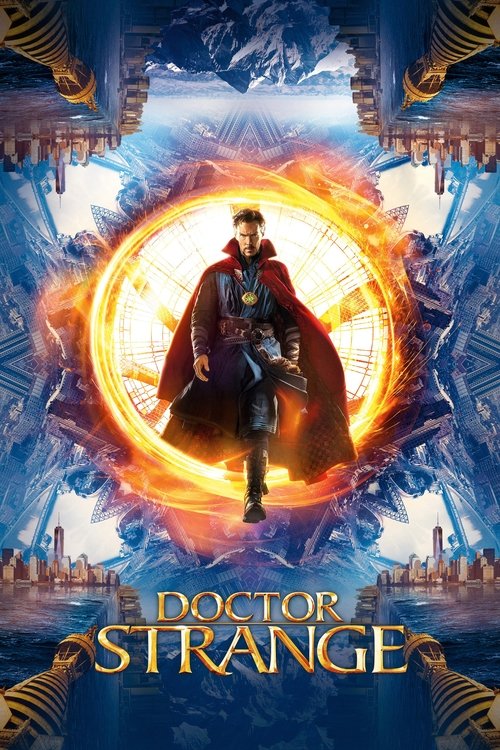
NOT A WOKE TRAP. Doctor Strange markets itself as a mind-bending origin story about a brilliant surgeon who discovers magic. That is exactly what you get. The Ancient One controversy (casting Tilda Swinton in a traditionally Tibetan role) was a pre-release media story, not something hidden inside the film. The movie does not lecture. The female mentor is present and powerful, but the film does not frame Strange's training as feminist corrective. Conservative audiences who enjoy well-crafted origin stories will find this comfortable viewing with no bait-and-switch.
Doctor Strange is the MCU's most spiritually interesting film, and that is saying something given the franchise's general allergy to anything resembling genuine metaphysics. Credit goes almost entirely to director Scott Derrickson, one of the only openly Christian filmmakers working at this budget level in Hollywood, who understood that a character whose power comes from mastering the mystical arts needed more than flashy visuals. The result is a superhero origin story that takes seriously the idea that the material world is not all there is, that arrogance is genuinely destructive, and that greatness requires sacrifice. That is an unusually traditional set of convictions for a Marvel film.
The setup is efficient. Dr. Stephen Strange is a brilliant, arrogant neurosurgeon who crashes his car during a reckless phone call and destroys the fine motor control in his hands. His surgical career ends. Every conventional medical avenue fails. In desperation, he travels to Kathmandu and discovers the Kamar-Taj, a community of sorcerers guarded by a mysterious figure called The Ancient One. Magic is real. Parallel dimensions exist. Earth is perpetually defended from interdimensional threats by a hidden order of mystics. Strange, against all his materialist instincts, has to accept this and begin the humbling work of becoming a student again.
This is a story about ego death in the best sense. Strange's journey is not a political awakening, not a diversity lesson, not an ideological conversion. It is the classic arc of the gifted man who must lose everything to discover what actually matters. The Ancient One's central teaching, that Strange had always looked for ways to advance himself but never considered what he could offer the world, is a moral judgment delivered without irony. The film agrees with it. So does the plot. Strange's arc from prideful high achiever to self-sacrificing protector of humanity is the whole movie.
The villain, Kaecilius (Mads Mikkelsen, doing what Mads Mikkelsen does), is Strange's dark mirror. Both were gifted students who lost people they loved. Both questioned the Ancient One's authority. The difference is what they did with their grief and their power. Kaecilius chose to make deals with a dark dimension that promises eternal life by erasing time. Strange chooses to trap himself in a time loop, dying over and over, to outlast a cosmic being and protect the Earth. The film's moral is unambiguous: personal sacrifice for the protection of others is the highest virtue. Power used for self-preservation is corruption.
The Ancient One controversy deserves direct address. In the comics, The Ancient One is a Tibetan man. Tilda Swinton is a white British woman. Marvel changed the character for two stated reasons: avoiding Chinese box office complications related to Tibetan depictions, and director Derrickson's desire to subvert the 'exotic Asian mentor' trope by casting a woman. Both are legitimate creative rationales, but the result is awkward. The film gives The Ancient One a vaguely Celtic aesthetic, a British accent, and a lot of enigmatic pronouncements while stripping away the character's original cultural specificity. It does not read as a bold reimagining. It reads as a sidestep.
This is the film's primary ideological liability. Not feminism in the conventional woke sense, not DEI lecturing, not political messaging. Just a casting decision that replaced an Asian character with a white one for reasons that include commercial convenience. The VVWS scores it as a moderate woke penalty because the gender swap is the more intentional of the two decisions and it does land with a feminist undertone, an all-powerful woman putting an arrogant man in his place, even if that reading is not foregrounded.
Beyond that controversy, Doctor Strange is remarkably clean ideologically. The film does not lecture about race, gender, or identity. The romantic thread with Christine Palmer is minimal and chaste. The military and law enforcement are absent. The geopolitical content is nil. What the film has is a genuine investment in the spiritual and metaphysical: the existence of dark forces that want to consume reality, the necessity of guardians who are willing to sacrifice themselves, and the idea that materialism is an insufficient framework for understanding existence.
Derrickson shoots all of this with extraordinary visual imagination. The Escher-like city-folding sequences, the astral projection fights, the Mirror Dimension battles, are genuinely inventive in a way that most superhero films are not. This is a director who sees cinema as a medium for experiences that language cannot fully capture, and he uses Doctor Strange's premise to push into territory that Marvel has never attempted before or since.
Benedict Cumberbatch is an excellent Strange. The character's arrogance reads as genuine rather than performative, and his eventual humility lands because Cumberbatch earns the emotional arc rather than just checking plot boxes. Mads Mikkelsen brings gravity to an underwritten villain role. Tilda Swinton, controversy aside, is genuinely compelling as The Ancient One. Chiwetel Ejiofor plants seeds for Mordo's future disillusionment that pay off in later MCU entries.
The VVWS score reflects a film that is more traditional than most of its MCU contemporaries. Derrickson's Christian sensibility gives Doctor Strange a moral seriousness that the franchise largely abandoned after he left. The ego-to-humility arc is real. The sacrifice-as-virtue theme is central. The film's philosophical content, the inadequacy of pure rationalism, the reality of evil, the necessity of guardians, is conservative in the deepest sense. The woke penalty is almost entirely the Ancient One casting decision rather than any messaging content. For traditional audiences who want a superhero film with genuine moral weight, Doctor Strange delivers.
Formula: Weighted Score = Severity × Authenticity Multiplier × Centrality Multiplier
🔴 Woke Tropes
| Trope | Severity | Authenticity | Centrality | Score |
|---|---|---|---|---|
| Race and Gender Swap: The Ancient One | 3 | 1 | 1 | 3 |
| Feminist Mentor Dynamic | 2 | 1 | 1 | 2 |
| Anti-Materialism / Science is Not Enough | 1 | 0.7 | 0.5 | 0.35 |
| TOTAL WOKE | 5.3 | |||
🟢 Traditional Tropes
| Trope | Severity | Authenticity | Centrality | Score |
|---|---|---|---|---|
| Ego-to-Humility Arc | 5 | 0.7 | 1.8 | 6.3 |
| Self-Sacrifice as Ultimate Virtue | 4 | 0.7 | 1 | 2.8 |
| Order vs. Chaos / Defending Civilization | 4 | 0.7 | 1 | 2.8 |
| Mentorship and the Transmission of Wisdom | 3 | 0.7 | 1 | 2.1 |
| TOTAL TRADITIONAL | 14.0 | |||
Score Margin: +9 TRAD
Director: Scott Derrickson
CONSERVATIVE / CHRISTIAN. Derrickson is one of the few openly Christian directors working in mainstream Hollywood. He has spoken publicly about his faith, his interest in the intersection of the spiritual and the supernatural, and his belief that horror and fantasy genres can carry genuine moral weight. He directed The Exorcism of Emily Rose, Sinister, and Deliver Us From Evil before Doctor Strange. He is not an ideological propagandist, but his worldview is clearly conservative and traditionally religious. He left Doctor Strange 2 over creative differences with Marvel, which is telling.Scott Derrickson is a horror and fantasy specialist with a background in Christian theology and philosophy. He attended Biola University, a Christian liberal arts college, and has spoken extensively about how his faith informs his filmmaking. His body of work consistently grapples with genuine evil, spiritual warfare, and the limits of secular materialism. Doctor Strange was his biggest budget project and arguably his most mainstream, but the film's core themes, namely the inadequacy of pure rationalism and the reality of forces beyond material science, are deeply consistent with his Christian worldview.
Writer: Jon Spaihts, Scott Derrickson, C. Robert Cargill
Jon Spaihts (Prometheus, Dune) wrote the initial draft, which Derrickson and his frequent collaborator C. Robert Cargill rewrote substantially. Cargill, like Derrickson, comes from horror and shares his interest in supernatural themes. The script is lean and efficient. The ideological choices, particularly casting Tilda Swinton as The Ancient One over a Tibetan actor, were made partly to avoid Chinese box office complications (Tibet is politically sensitive in China) and partly because Derrickson wanted to cast a woman in the role. Both decisions are noted, but neither drives the film's actual content.
Adult Viewer Insight
Conservative adults who write off superhero films should make an exception for Doctor Strange. It is the only MCU film directed by an openly Christian filmmaker, and it shows. The film takes seriously the idea that material reality is not the whole story, that genuine evil exists and must be actively opposed, and that self-sacrifice for the protection of others is the highest virtue a person can achieve. Derrickson left the franchise over creative differences with Marvel before the sequel. That tells you something. The original film is a genuinely good movie with an unusually traditional moral core.
Parental Guidance
PG-13, appropriate for ages 10 and up. The car crash hand injury is disturbing and realistic. Fantasy violence is frequent but not gory. Occult and mystical themes are fantasy framing, not religious advocacy. Core moral arc, arrogance destroyed by catastrophe, rebuilt through humility and sacrifice, is strongly traditional.
Find Doctor Strange on Amazon Prime Video, rent, or buy:
▶ Stream or Buy on AmazonAs an Amazon Associate, VirtueVigil earns from qualifying purchases.
Community Discussion 0
Subscribe to comment.
Join the VirtueVigil community to share your perspective on this review.