
Doctor Strange in the Multiverse of Madness
Doctor Strange in the Multiverse of Madness is the MCU's most interesting mess. Sam Raimi brings genuine horror filmmaking to a franchise that desperately needed it, Elizabeth Olsen delivers a villain performance for the ages, and the multiverse concept finally gets the unhinged treatment it deserve…
Full analysis below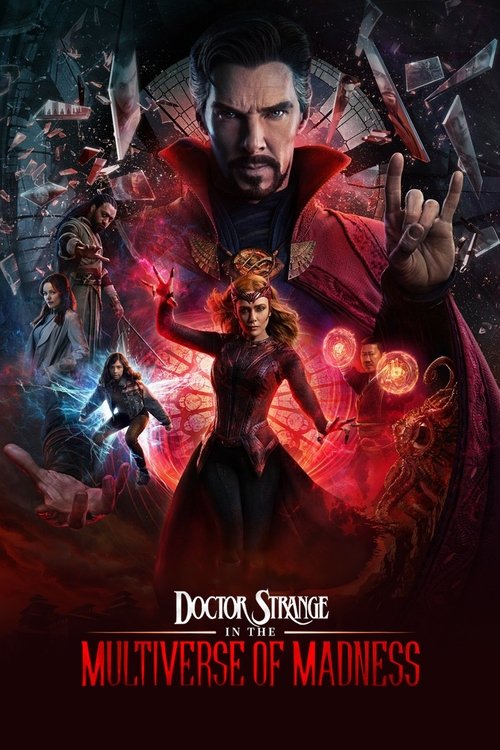
This film draws you in for a significant portion of its runtime with traditional or neutral content before springing its woke agenda. Know before you go!
NOT A WOKE TRAP. The woke elements in Multiverse of Madness are present from the introduction of America Chavez in the first act. Chavez wears a pride pin on her jacket, mentions her two moms, and the character is openly LGBTQ+ from her first appearance. The Illuminati sequence features gender-swapped and race-swapped legacy characters. Nothing is hidden or delayed. The film is upfront about its progressive elements from the opening.
Doctor Strange in the Multiverse of Madness is the MCU's most interesting mess. Sam Raimi brings genuine horror filmmaking to a franchise that desperately needed it, Elizabeth Olsen delivers a villain performance for the ages, and the multiverse concept finally gets the unhinged treatment it deserves. It is also a film that introduces a teenage character wearing a pride pin, features an Earth where Captain America is a woman and Captain Marvel is Black, and treats witchcraft as a legitimate power system. The culture war discourse writes itself.
The plot picks up after WandaVision and Spider-Man: No Way Home. Doctor Strange encounters America Chavez, a teenager who can punch star-shaped portals between universes. A demon is hunting her for this power. Strange discovers that Wanda Maximoff, corrupted by the Darkhold, is the one sending the demons. Wanda wants Chavez's power so she can travel to a universe where her sons Billy and Tommy are real and be their mother.
What follows is a multiverse chase that takes Strange and Chavez to Earth-838, where they meet the Illuminati: a council including Captain Carter (Peggy Carter as Captain America), Maria Rambeau as Captain Marvel, Reed Richards, Black Bolt, Professor X, and Mordo. Wanda dreamwalks into her Earth-838 counterpart and systematically murders the entire Illuminati in a sequence that is both thrilling and genuinely disturbing. Black Bolt's death, where Wanda removes his mouth and his own sonic scream implodes his skull, is one of the most horrific images in superhero cinema.
The traditional elements are strongest in the thematic core. Strange's arc is about learning that heroism means trusting others rather than controlling outcomes. Every other Strange variant tried to sacrifice Chavez or seize power. Our Strange is the one who chooses faith in another person. Wanda's story is a cautionary tale about grief consuming you, about a mother whose love for her children twisted into something monstrous. Her final act, destroying the Darkhold across all universes and sacrificing herself, is genuine redemption through self-destruction. These are powerful, classically structured moral arcs.
The woke elements are real but woven into the fabric rather than delivered as lectures. America Chavez is openly LGBTQ+ with two moms, wearing a pride pin throughout the film. This is faithful to the comic character, who has always been LGBTQ+. The film was banned or censored in Saudi Arabia, Egypt, and several other countries because of these elements. The Earth-838 Illuminati features Captain Carter replacing Captain America (woman replacing man) and Maria Rambeau as Captain Marvel (Black woman in the role held by a white woman in the main MCU). These are technically multiverse variants, which provides narrative justification, but the casting choices are clearly intentional representation.
Wanda as villain is a double-edged sword. On one hand, Elizabeth Olsen is magnificent and the story demands a powerful antagonist. On the other hand, taking the MCU's most prominent female character with her own Disney+ show and turning her into a mass-murdering psychopath is a choice. The Darkhold corruption explains it narratively, but it also means the MCU's biggest female hero arc ends with her buried under a mountain.
Raimi's direction elevates everything. The horror sequences are genuinely frightening. The musical note battle between Strange variants is wildly creative. The zombie Strange sequence, where our Strange reanimates his dead variant using the souls of the damned, is the kind of gonzo genre filmmaking the MCU rarely allows. Danny Elfman's score is excellent.
RT Critics: 74%. RT Audience: 86%. Metacritic: 60. IMDB: 6.9. Box office: $955.8M worldwide on $200M budget (net).
Formula: Weighted Score = Severity × Authenticity Multiplier × Centrality Multiplier
🔴 Woke Tropes
| Trope | Severity | Authenticity | Centrality | Score |
|---|---|---|---|---|
| LGBTQ+ Representation (America Chavez) | 3 | High | Moderate | 2.1 |
| Gender-Swapped Legacy Heroes (Illuminati) | 3 | Moderate | Moderate | 3 |
| Witchcraft / Occult as Legitimate Power System | 2 | High | High | 2.52 |
| Female Hero Turned Villain | 2 | Moderate | High | 3.6 |
| Diverse Supporting Cast | 2 | High | Low | 0.7 |
| Teen Girl as Key to Everything | 2 | High | Moderate | 1.68 |
| TOTAL WOKE | 13.6 | |||
🟢 Traditional Tropes
| Trope | Severity | Authenticity | Centrality | Score |
|---|---|---|---|---|
| Heroism Through Trust (Strange's Arc) | 3 | High | High | 3.78 |
| Redemption Through Sacrifice (Wanda) | 3 | High | High | 3.78 |
| Consequences of Dark Power | 2 | High | Moderate | 1.4 |
| Male Hero Remains Central | 2 | High | Low | 0.7 |
| Maternal Love as Motivation | 1 | High | Moderate | 0.56 |
| TOTAL TRADITIONAL | 10.2 | |||
Score Margin: -3 WOKE
Director: Sam Raimi
MODERATE. Raimi is an old-school genre filmmaker without a strong public ideological profile. His Spider-Man trilogy (2002-2007) celebrated traditional heroism, responsibility, and sacrifice. He was brought in as a replacement for Scott Derrickson and brought a horror sensibility rather than a political one.Sam Raimi is the legendary horror and superhero director behind the Evil Dead franchise, the original Spider-Man trilogy, and Drag Me to Hell. He pioneered low-budget horror in the 1980s and became one of Hollywood's most commercially successful directors with Spider-Man (2002). After a decade away from directing, he returned to the superhero genre with Multiverse of Madness. His directorial fingerprints are all over the film's horror sequences, jump scares, and creative camera work.
Writer: Michael Waldron
Michael Waldron was the head writer of the Loki Disney+ series (2021), which introduced the concept of variants and the multiverse to the MCU. He also wrote for Rick and Morty. Waldron replaced previous writer Jade Halley Bartlett. His script makes Wanda the villain, continuing her arc from WandaVision, and introduces America Chavez from the comics.
Adult Viewer Insight
Conservative adults will find more to appreciate here than expected. Sam Raimi is an old-school filmmaker who prioritizes craft over messaging. The horror elements give the film genuine teeth. Strange's arc is about personal responsibility and trusting others rather than seeking control. Wanda's story is a cautionary tale about what happens when grief overrides morality. The LGBTQ+ elements are present but brief: Chavez mentions her two moms and wears a pride pin, and that's essentially it. The Illuminati gender/race swaps are justified as multiverse variants. The witchcraft and occult elements may concern Christian viewers more than the progressive messaging. This is a flawed but ambitious film that rewards engagement.
Parental Guidance
Find Doctor Strange in the Multiverse of Madness on Amazon Prime Video, rent, or buy:
▶ Stream or Buy on AmazonAs an Amazon Associate, VirtueVigil earns from qualifying purchases.
Community Discussion 0
Subscribe to comment.
Join the VirtueVigil community to share your perspective on this review.