
Dune: Part Two
Dune: Part Two is a cinematic achievement of genuine rarity. A sequel that expands the scale, deepens the craft, and improves on its predecessor at nearly every technical level.…
Full analysis below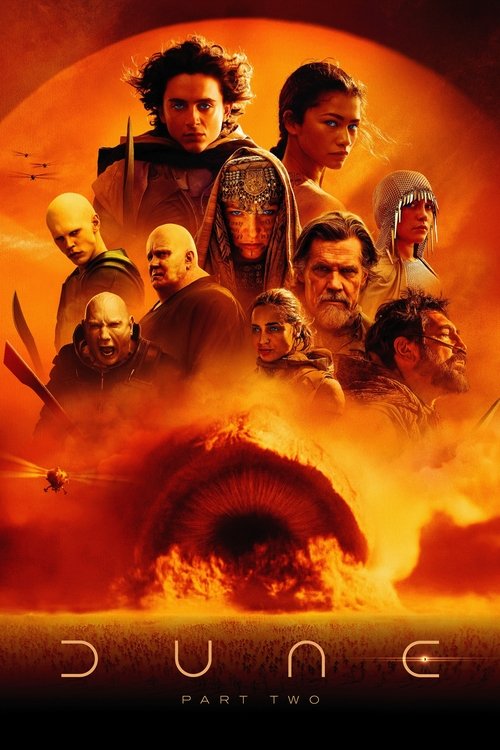
This film draws you in for a significant portion of its runtime with traditional or neutral content before springing its woke agenda. Know before you go!
WOKE TRAP. The spectacular visuals, Hans Zimmer score, and adventure setup in the first hour provide genuine cover for a film that pivots into an explicit anti-messiah political argument in its second half. The most ideologically charged content, including the reframing of Chani as the sole moral voice condemning Paul's rise and the film's explicit warning against religious nationalist leadership, does not fully surface until well past the 50% mark. Conservative viewers who identify with faith-based community and charismatic leadership structures may find the film's conclusion significantly more troubling than the opening suggested. Both conditions for a woke trap are met: the margin is negative, and the political thesis is withheld until the back half.
Dune: Part Two is a cinematic achievement of genuine rarity. A sequel that expands the scale, deepens the craft, and improves on its predecessor at nearly every technical level. Denis Villeneuve has accomplished something Hollywood rarely manages: he has adapted one of science fiction's most complex novels with the seriousness it deserves, without dumbing it down for multiplex audiences.
For the first two acts, the film is visually overwhelming in the best sense. The Harkonnen scenes, shot in black-and-white under a black sun, are among the most striking images in recent blockbuster cinema. Austin Butler's Feyd-Rautha is genuinely unsettling, a performance built on coiled menace that makes him the year's best film villain. Javier Bardem's Stilgar brings real gravity and dark comedy to a true-believer character who becomes more tragic as the story progresses.
But here is what conservative viewers need to know going in: this is not an adventure about a hero's triumph. By deliberate design, it is a story about why you should not follow charismatic leaders who claim divine sanction. Villeneuve has pushed Herbert's anti-messiah subtext into the foreground and made it the film's explicit argument. Paul Atreides does not become a hero in Part Two. He becomes something closer to a demagogue: a man who uses the Fremen's religious beliefs as a tool for power, who allows a Holy War to ignite knowing it will kill billions, and who chooses personal vengeance and empire over the humane alternative.
The vehicle for this argument is Zendaya's Chani, a character substantially rewritten from the source novel. In Herbert's book, Chani is Paul's partner who fully commits to him. In Villeneuve's version, she is the film's moral compass: the one Fremen who sees through the religious manipulation, refuses to follow Paul's messianic persona, and rides away at the film's end as the only character with genuine moral clarity.
This is not a subtle ideological argument. Villeneuve has confirmed in interviews that the film is a cautionary tale about charismatic leaders and the dangers of religious nationalism. The Fremen's faith in Muad'Dib is framed as dangerous credulity, not authentic belief. Lady Jessica's manipulation of Fremen prophecy is presented as cynical power politics.
For traditional conservatives, there are genuine values worth acknowledging. The Atreides code of duty and honor carries real weight in the film's first half. Paul's loyalty to the Fremen who sheltered him, Gurney Halleck's fierce personal loyalty, the warrior codes of Fremen culture that echo honor traditions across human history. The film is not contemptuous of tradition or faith per se. It is contemptuous of faith weaponized by cynics. That distinction is philosophically meaningful even if the execution leans in one direction.
The craft earns enormous respect regardless of ideology. Greig Fraser's cinematography is extraordinary. Hans Zimmer's score drives the film's emotional architecture. The sandworm sequences are the best executions of Herbert's signature set-pieces that cinema has produced. Timothee Chalamet handles Paul's moral complexity with real skill. The final sequence, Paul declaring Holy War before thousands of screaming Fremen while Chani rides away, is one of the most deliberately uncomfortable ending images in mainstream blockbuster history. It is doing exactly what it intends to do. Watch it, think about it, and have the conversation it provokes.
Formula: Weighted Score = Severity × Authenticity Multiplier × Centrality Multiplier
🔴 Woke Tropes
| Trope | Severity | Authenticity | Centrality | Score |
|---|---|---|---|---|
| Anti-Messiah Allegory / Charismatic Authority as Existential Danger | 5 | Moderate | High | 9 |
| Chani Rewritten as Female Moral Superior / Ideological Insertion | 3 | Low | High | 7.56 |
| Organized Religion as Cynical Manipulation Tool | 3 | High | Moderate | 2.1 |
| Colonialism Allegory | 2 | High | Low | 0.7 |
| TOTAL WOKE | 19.4 | |||
🟢 Traditional Tropes
| Trope | Severity | Authenticity | Centrality | Score |
|---|---|---|---|---|
| Duty and Personal Honor (Atreides Code) | 4 | High | Moderate | 2.8 |
| Warrior Code and Martial Virtue | 4 | High | Moderate | 2.8 |
| Protection of Community and the Innocent | 3 | High | Moderate | 2.1 |
| Personal Sacrifice for Others | 3 | High | Low | 1.05 |
| Masculine Heroism and Physical Courage | 4 | High | Moderate | 2.8 |
| TOTAL TRADITIONAL | 11.6 | |||
Score Margin: -8 WOKE
Director: Denis Villeneuve
PROGRESSIVE-SKEPTIC: anti-religion, anti-charismatic authority, pessimistic about mass movementsVilleneuve (Arrival, Blade Runner 2049, Incendies, Sicario, Enemy) is technically one of the most accomplished directors working today. His filmography tends toward moral complexity, institutional skepticism, and deep pessimism about human nature. Arrival is feminist-coded first-contact sci-fi. Sicario is a bleak critique of American institutions. His Dune adaptation is faithful in spectacle and revisionist in ideology: where Herbert's Paul is a tragic figure who fails to stop the jihad, Villeneuve's Paul is more culpable, more self-aware, and Chani's rejection of him is presented as the film's moral verdict on charismatic religious leadership. Villeneuve confirmed in interviews this is a cautionary tale about religious nationalism.
Writer: Denis Villeneuve & Jon Spaihts
Jon Spaihts co-wrote Part One and returns here with Villeneuve. Spaihts is primarily a genre craftsman (Doctor Strange, Prometheus) who follows the director's vision. The ideological heavy lifting is Villeneuve's, particularly the decision to rewrite Chani from devoted partner to principled critic. This departure from Herbert's novel is an authorial choice that fundamentally alters the story's moral valence.
Producers
- Mary Parent (Legendary Entertainment) — Legendary's production chief and one of Hollywood's most successful producers (Godzilla franchise, Interstellar, Dune). Parent pursues prestige blockbusters with awards potential. Ideologically neutral as an entity.
- Cale Boyter (Legendary Entertainment) — Senior executive at Legendary overseeing the Dune franchise. No independent ideological signal.
- Denis Villeneuve — Director-producer. His ideological fingerprint on the film is total. See director profile.
- Tanya Lapointe — Villeneuve's longtime collaborator and producing partner. No independent ideological signal.
Full Cast
Adult Viewer Insight
Conservative viewers drawn to the epic scope and production values should engage with Dune: Part Two with their eyes open. The film is making an argument about charismatic religious leadership and mass movements that has specific contemporary resonance Villeneuve has not concealed. The argument deserves critical engagement rather than passive consumption. The craft is extraordinary. The ideological thesis, that anyone who claims a divine mandate to lead is dangerous, deserves pushback rather than acceptance. Watch it, think about it.
Parental Guidance
Find Dune: Part Two on Amazon Prime Video, rent, or buy:
▶ Stream or Buy on AmazonAs an Amazon Associate, VirtueVigil earns from qualifying purchases.


Community Discussion 0
Subscribe to comment.
Join the VirtueVigil community to share your perspective on this review.