
Frozen II
Frozen II is the rare Disney sequel that takes bigger ideological swings than the original, and it connects with roughly half of them.…
Full analysis below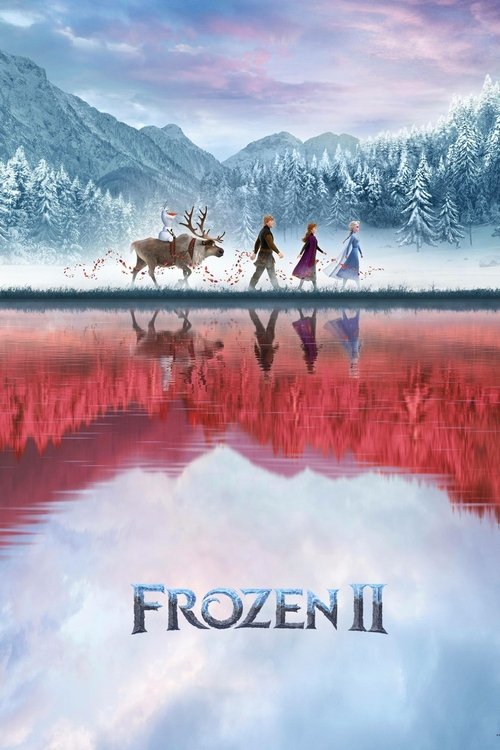
This film draws you in for a significant portion of its runtime with traditional or neutral content before springing its woke agenda. Know before you go!
NOT A WOKE TRAP. The anti-colonial themes are structurally embedded in the mystery that drives the entire plot. The reveal about Runeard's genocidal dam comes at roughly the 2/3 mark, but the film has been building toward it from the opening scene where Agnarr tells the story of the Northuldra conflict. Conservative critics noted the political themes immediately upon release.
Frozen II is the rare Disney sequel that takes bigger ideological swings than the original, and it connects with roughly half of them. Where Frozen (2013) was a personal story about sisters, self-acceptance, and the limits of fairy tale romance, the sequel expands into colonialism, historical reparations, and the moral obligation to dismantle the systems your ancestors built on exploitation. It is a more ambitious film than the original. It is also a messier one.
Set three years after Elsa's coronation, the story opens with a flashback to young Anna and Elsa hearing their father, King Agnarr, tell the story of an enchanted forest, the indigenous Northuldra people who live there, and a dam their grandfather King Runeard built as a gift of peace. A conflict erupted, Runeard died, and the forest was sealed behind a magical mist. In the present, Elsa begins hearing a mysterious voice calling her north. She follows it, accidentally awakening elemental spirits that threaten Arendelle, and the group sets off for the enchanted forest to find answers.
The mystery is the film's strongest element. Who is calling Elsa? Why was the forest sealed? What really happened between the Arendellians and the Northuldra? The answers arrive in the back third: King Runeard was not a peacemaker. He built the dam to weaken the Northuldra, whom he feared because of their connection to nature's magic. He murdered the Northuldra leader in cold blood and started the war. The dam, framed as a gift, was actually a weapon of colonial exploitation. Elsa and Anna's mother, Iduna, was Northuldra, the one who saved young Agnarr during the conflict. And Elsa's powers are nature's reward for Iduna's selfless act.
The political implications are not subtle. Frozen II is a film in which the heroines discover that their kingdom was founded on a lie, that their grandfather committed genocide against an indigenous people, and that the only way to make things right is to destroy the dam, even though doing so will flood and potentially destroy Arendelle itself. Anna makes this choice. She destroys the dam. The flood rushes toward Arendelle, and only Elsa's last-second intervention saves the kingdom. The message: reparations for colonial harm are morally necessary, even when they threaten the structures built on that harm. For a children's movie, this is remarkably bold. It is also the kind of framing that will hit conservative audiences like a brick.
The film's strengths are real. Idina Menzel delivers another showstopper with Into the Unknown, though it does not reach the cultural ubiquity of Let It Go. The animation is a significant leap forward, particularly the water and autumn forest sequences. Anna's emotional journey in the cave, believing Elsa is dead and forcing herself to take The Next Right Thing one step at a time, is the most emotionally sophisticated moment in either film. The song that accompanies it is devastating. Olaf's existential crisis about growing up and change provides surprisingly effective comic and emotional texture.
The weaknesses are equally real. The plot is overstuffed and confusing, especially for the target audience of children. Kristoff is again sidelined, this time into a running gag about failing to propose to Anna that goes nowhere interesting. The elemental spirits are introduced but never developed as characters. The Northuldra themselves are frustratingly generic, defined more by what they represent (indigenous wisdom, connection to nature) than who they are as individuals. Lieutenant Mattias, voiced by Sterling K. Brown, is the most interesting new character, an Arendellian soldier trapped in the forest for thirty years who must reckon with the discovery that he served a lie. He deserved more screen time.
The biggest problem is the climax. The dam's destruction should carry enormous weight: Anna choosing to potentially destroy her own kingdom to right a historical wrong. But the consequences are immediately neutralized when Elsa rides in on the water spirit and stops the flood. The film wants to make a statement about reparations without actually making its characters pay the cost. Arendelle survives. Nobody loses anything. The Northuldra are freed. Elsa stays in the forest. Anna becomes queen. Everyone is happy. The moral courage of the premise is undermined by the safety of the execution.
Elsa's arc concludes with her abdicating the throne and becoming the protector of the Enchanted Forest, while Anna becomes Queen of Arendelle. This split serves the character dynamics but also reinforces the film's ideological framework: the descendant of the colonizer inherits the kingdom, while the one connected to the indigenous world leaves civilized society to commune with nature. The film presents this as Elsa finding her true self, but the optics are complicated.
Frozen II grossed $1.45 billion worldwide, making it the second-highest-grossing animated film of all time. It earned a nomination for Best Original Song at the Academy Awards. National Review called out its radical politics. Slate praised its engagement with colonialism. The audience response was broadly positive but with a noticeable undercurrent of confusion about the plot and a sense that the sequel, while visually stunning, did not capture the emotional simplicity of the original.
The film is not propaganda. It is a sincere, sometimes clumsy attempt to grapple with real historical themes in a children's fantasy context. But its ideological commitments are clear, and they tilt significantly further left than the original. Parents who want their children exposed to stories about historical accountability and the moral complexity of inherited privilege will find a lot here. Parents who prefer their Disney movies without colonial guilt will find Frozen II a much harder sell than its predecessor.
Formula: Weighted Score = Severity × Authenticity Multiplier × Centrality Multiplier
🔴 Woke Tropes
| Trope | Severity | Authenticity | Centrality | Score |
|---|---|---|---|---|
| Anti-Colonial Narrative as Central Plot | 5 | High | High | 6.3 |
| Noble Indigenous People vs. Corrupt Western Kingdom | 3 | Moderate | Moderate | 2.1 |
| Reparative Justice as Moral Imperative | 4 | High | High | 5.04 |
| Ancestral Guilt and Historical Reckoning | 3 | High | Moderate | 2.1 |
| Female Characters Drive All Major Decisions | 2 | High | Moderate | 1.4 |
| Environmental Mysticism and Nature as Sacred | 2 | Moderate | Moderate | 1.4 |
| Sidelining of Male Characters | 2 | Moderate | Low | 0.7 |
| TOTAL WOKE | 19.0 | |||
🟢 Traditional Tropes
| Trope | Severity | Authenticity | Centrality | Score |
|---|---|---|---|---|
| Courage to Do What Is Right at Personal Cost | 4 | High | High | 5.04 |
| Family Legacy and Duty | 3 | High | Moderate | 2.1 |
| Marriage and Partnership as Positive Endpoint | 2 | High | Low | 1.4 |
| Truth-Seeking as Moral Obligation | 3 | High | High | 3.78 |
| Perseverance Through Grief (The Next Right Thing) | 3 | High | Moderate | 2.1 |
| TOTAL TRADITIONAL | 14.4 | |||
Score Margin: -5 WOKE
Director: Chris Buck & Jennifer Lee
PROGRESSIVE. By Frozen II, Lee was CCO of Disney Animation and had become one of Hollywood's most powerful creative executives. The sequel reflects a deliberate deepening of the franchise's progressive politics, moving from personal liberation themes to systemic and historical critique.Buck and Lee returned to co-direct the sequel, with Lee again writing the screenplay. The production team traveled to Norway, Finland, and Iceland for research and consulted with Sami cultural representatives. Lee has spoken publicly about wanting the sequel to explore deeper themes of identity, historical reckoning, and connection to nature. The collaboration with Sami consultants was genuine and resulted in a formal agreement regarding the depiction of indigenous culture.
Writer: Jennifer Lee
Lee wrote the screenplay from a story she developed with Buck, Marc Smith, and songwriters Kristen Anderson-Lopez and Robert Lopez. The story underwent significant revisions during production. The anti-colonial narrative was a deliberate creative choice, with Lee describing it as exploring what happens when you discover your family's history includes harm done to others.
Adult Viewer Insight
Conservative adults should be aware that Frozen II explicitly frames colonialism and historical reparations as central themes. The heroines' grandfather is revealed as a genocidal colonizer who exploited an indigenous people. The resolution requires destroying his legacy to make things right. Arendelle survives only through magical intervention, which softens the blow but does not change the ideological framework. The Northuldra are depicted as noble, nature-connected people victimized by Western expansion. That said, the film also contains genuine traditional values: Anna's courage, family loyalty, the emotional weight of doing what is right at personal cost, and a functioning engagement subplot. It is not a lecture, but it is not subtle either.
Parental Guidance
Recommended age: 6+. The film is darker and more emotionally intense than the original. Elsa appears to die (she freezes solid), and Olaf disintegrates, both of which may be distressing for young children, even though both are reversed. The themes of colonial genocide, historical betrayal, and moral reckoning are complex and will fly over most young viewers' heads. There is no violence, sexual content, or profanity. The emotional intensity of Anna's grief in The Next Right Thing may be heavy for sensitive viewers.
Find Frozen II on Amazon Prime Video, rent, or buy:
▶ Stream or Buy on AmazonAs an Amazon Associate, VirtueVigil earns from qualifying purchases.
Community Discussion 0
Subscribe to comment.
Join the VirtueVigil community to share your perspective on this review.