
Gladiator
Maximus is a general. He commands the armies of Rome, wins battles for a dying emperor, and wants nothing more than to go home to his farm in Spain, to his wife, to his son, to the smell of wheat and horses in the morning.…
Full analysis below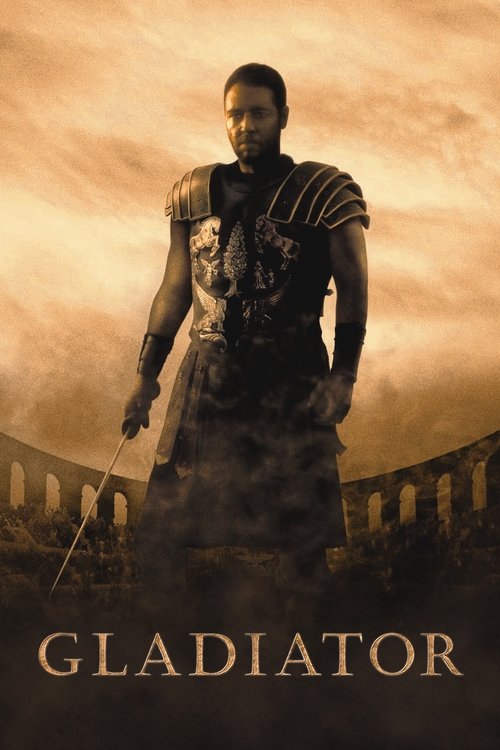
No trap. Gladiator is exactly what it advertises. A man loses everything. He fights to reclaim his honor and avenge his family. The Roman Senate is corrupt and weak; the emperor is a murderous coward; the general-turned-slave is the most moral man in the room. Nothing is hidden or bait-and-switched. The film's ideology is on its sleeve from the first frame: strength, honor, loyalty to family, and the idea that some things are worth dying for. Twenty-five years after its release, it holds up as one of the most unapologetically masculine blockbusters ever made.
Maximus is a general. He commands the armies of Rome, wins battles for a dying emperor, and wants nothing more than to go home to his farm in Spain, to his wife, to his son, to the smell of wheat and horses in the morning. Marcus Aurelius tells him he wants Maximus to succeed him, to restore Rome to a republic, to give power back to the Senate. Then Commodus finds out.
Gladiator is twenty-five years old and it still hits like a fist to the chest. This is one of those rare blockbusters where everything works: the visual scale, the score, the performances, the central moral architecture. Ridley Scott made a film about a man who loses everything and chooses to endure, not out of blind animal survival, but out of purpose. Maximus fights because he has something to live for and then something to die for. The distinction matters enormously and the film understands it.
Russell Crowe won the Oscar and he deserved it. His Maximus is not a smooth talker or a brooding antihero. He is competent, physically formidable, quietly devout, and deeply loyal to the men under his command. When he kneels to pray before battle, running his fingers through the grain, whispering to his family's spirits, it lands as completely believable. This is a man organized around duty, family, and faith. The film treats all three with absolute seriousness.
Joaquin Phoenix as Commodus is the film's masterstroke. Commodus is not a cartoon villain. He is something worse: a weak man who wants to be loved, who cannot earn respect and so takes power instead, who commits atrocities not from strength but from profound inadequacy. Phoenix plays every scene with this underlying tremor of insecurity. His incestuous attachment to Lucilla, his desperate need for the crowd's approval in the arena, his petulant murder of his own father because the old man would not say he loved him. The contrast with Maximus is the film's engine. Honor versus envy. Earned authority versus stolen power.
The arena sequences are spectacular and viscerally satisfying in a way that modern action films rarely manage. The Colosseum crowds chanting Maximus's name is not cheap fan service. It is the film making a point: the people recognize genuine virtue even when their rulers do not. When Maximus strips off his helmet and demands of the Emperor 'Are you not entertained?', it is not a joke. It is a dare. A man of real worth challenging a corrupt system to acknowledge him.
Hans Zimmer and Lisa Gerrard's score deserves its own paragraph. The Now We Are Free theme is one of the most recognizable pieces of film music of the last thirty years. It takes the Roman setting and makes it mythic, suffusing the whole enterprise with the feeling that we are watching something that matters beyond its historical setting. It is the sound of grief transformed into purpose.
The film's treatment of death and the afterlife is explicitly religious. Maximus believes he will be reunited with his murdered wife and son in the fields of Elysium. This is not treated as naive superstition. The film takes it completely seriously. His last words are to them, calling across whatever border separates this world from the next. Juba's final scene, burying the figurines in the arena sand, is the film's quiet coda: 'Now we are free. I will see you again. But not yet. Not yet.'
Gladiator has a few weaknesses. The subplot involving Senator Gracchus and the dream of restoring the republic feels somewhat rushed and underdeveloped. Some of the digital effects have aged. But these are minor complaints about a film that gets everything important exactly right.
Maximus Decimus Meridius. General of the Felix Legions. Father to a murdered son. Husband to a murdered wife. And he will have his vengeance, in this life or the next.
That's cinema.
Formula: Weighted Score = Severity × Authenticity Multiplier × Centrality Multiplier
🔴 Woke Tropes
| Trope | Severity | Authenticity | Centrality | Score |
|---|---|---|---|---|
| Sanitized or Minimized Violence Consequences | 2 | High | Low | 0.7 |
| Female Character as Moral Compass Only | 2 | Moderate | Low | 1 |
| TOTAL WOKE | 1.7 | |||
🟢 Traditional Tropes
| Trope | Severity | Authenticity | Centrality | Score |
|---|---|---|---|---|
| Warrior Protector Archetype | 5 | High | High | 6.3 |
| Family as Sacred Anchor | 5 | High | High | 6.3 |
| Earned Male Authority | 5 | High | High | 6.3 |
| Military Brotherhood | 5 | High | Moderate | 3.5 |
| Faith and the Afterlife | 4 | High | Moderate | 2.8 |
| Corrupt Elite Contrasted with Noble Common Man | 4 | High | Moderate | 2.8 |
| Virtuous Masculinity as Model | 4 | High | Moderate | 2.8 |
| Weak Villain Enabled by Corrupt System | 4 | High | Low | 1.4 |
| TOTAL TRADITIONAL | 32.2 | |||
Score Margin: +31 TRAD
Director: Ridley Scott
MODERATE (Apolitical Craftsman)Ridley Scott has directed some of the most visually distinctive films in Hollywood history: Alien, Blade Runner, Thelma and Louise, Black Hawk Down, The Martian. He is not an ideological filmmaker. He is a craftsman who picks material that interests him visually and dramatically. With Gladiator, he was interested in the spectacle of Rome and the psychology of a man stripped of everything. His instinct to anchor the epic in personal grief rather than political philosophy was exactly right. Scott has occasionally made films with progressive themes (Thelma and Louise, Prometheus) but Gladiator is not one of them. It is a film about what it means to be a man of honor in a corrupt world, told with extraordinary conviction.
Writer: David Franzoni, John Logan, William Nicholson
The screenplay passed through three hands, which is typical for large-scale studio productions. David Franzoni originated the concept after reading Daniel P. Mannix's 1958 book Those About to Die. John Logan (Skyfall, Sweeney Todd) did the major structural work, adding the Commodus-Maximus rivalry and the emotional backbone. William Nicholson (Shadowlands, Braveheart) polished the dialogue and deepened the family themes. The script is tighter than it has any right to be given the number of writers involved. The famous 'What we do in life echoes in eternity' line is Nicholson's. It fits the film perfectly.
Producers
- Douglas Wick (Red Wagon Entertainment) — Wick has produced across a wide range of genres. No strong ideological signal in his producing history.
- Branko Lustig (Independent) — Holocaust survivor and veteran producer of large-scale epics including Schindler's List. Known for commitment to historical authenticity in large productions.
Full Cast
Adult Viewer Insight
Gladiator works as entertainment. It also works as a meditation on what it means to be a man in a world that has stopped rewarding virtue. Maximus does not rage against his circumstances or look for someone to blame. He endures, he serves, he fights, and he chooses the moment of his death with the same clarity he brought to his life. For traditional audiences tired of male protagonists who are either incompetent or morally compromised, Maximus is a genuinely refreshing archetype. He is good at what he does because he takes it seriously. He is worth following because he follows principles that do not shift with circumstances.
Parental Guidance
Gladiator is rated R for intense sequences of graphic combat, including sword and arena combat, blood, and some brutality. A child and wife are shown murdered (offscreen but with visceral impact). There is brief non-explicit sexual content and one uncomfortable incestuous subplot involving Commodus and his sister. Best suited for mature teens and above. The themes of honor, sacrifice, and faith in the afterlife are handled seriously and could generate excellent family discussion with older children.
Find Gladiator on Amazon Prime Video, rent, or buy:
▶ Stream or Buy on AmazonAs an Amazon Associate, VirtueVigil earns from qualifying purchases.
Community Discussion 0
Subscribe to comment.
Join the VirtueVigil community to share your perspective on this review.