
Gladiator II (2024)
Ridley Scott made Gladiator II because he wanted to make another Gladiator. That is essentially the whole story behind this sequel, and it explains both its strengths and its limits.…
Full analysis below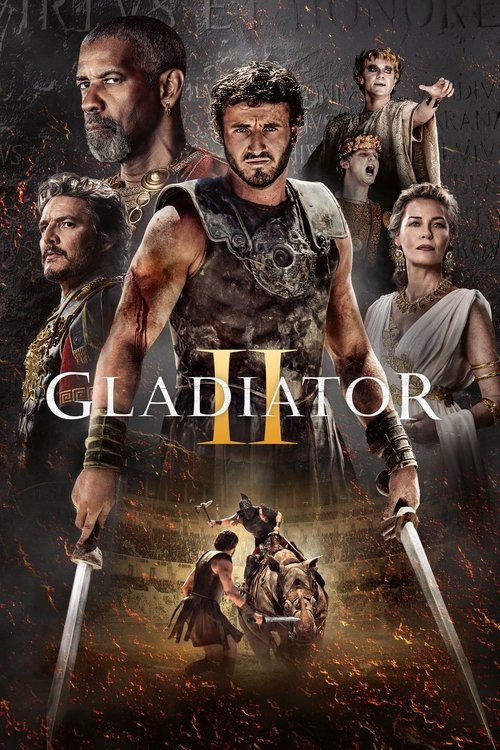
NOT A WOKE TRAP. Gladiator II is a crowd-pleasing action spectacle that wears its values on its sleeve from the first frame. The film celebrates Roman honor codes, martial virtue, masculine heroism, and the bond between a man and his purpose. What woke content exists, primarily an anti-imperial critique embedded in the sequel's premise and a sympathetically written Black antagonist, is visible and present throughout. There is no bait-and-switch. The film is what it looks like.
Ridley Scott made Gladiator II because he wanted to make another Gladiator. That is essentially the whole story behind this sequel, and it explains both its strengths and its limits. The original Gladiator (2000) was a film about personal honor, sacrifice, and the dignity of a man who chose death over compromise. Gladiator II is a film about a young man trying to become the kind of man the original was about. It is less mythic. It is also genuinely entertaining.
Lucius (Paul Mescal) is the son of Lucilla and grandson of the philosopher-emperor Marcus Aurelius. Blood royalty of Rome, living in exile as a soldier in North Africa. When Roman legions commanded by General Acacius (Pedro Pascal) conquer his adopted home and kill his wife, Lucius is sold into gladiatorial service to Macrinus (Denzel Washington), a former slave who has accumulated vast wealth and schemes to topple the corrupt co-emperors Caracalla and Geta (Joseph Quinn and Fred Hechinger, delivering genuinely unhinged performances). Lucius fights his way up through the Colosseum's ranks while slowly uncovering his true identity and deciding what to do with it.
The plot is operatic in the best sense: big gestures, grand stakes, clear moral architecture. Father and mother figures pull Lucius in different directions. Macrinus is seductive and dangerous. Acacius is honorable but complicit. Lucilla (Connie Nielsen, returning from the original) carries the weight of her family's legacy and her own failures.
Paul Mescal is genuinely impressive here. He came to this film as an actor known for quiet, emotionally interior performances in Normal People, Aftersun, and All of Us Strangers. He rebuilt himself from the ground up as a physical, commanding action lead. The transformation is convincing. Denzel Washington plays Macrinus with delicious theatricality. He is clearly enjoying himself in a role that lets him be charismatic, sinister, and ultimately pitiable. The combination works.
For conservative viewers, the film's value system is largely congenial. Honor matters. Family matters. Fighting for what is right matters. The empire critique exists but does not overwhelm. Lucius is not trying to destroy Rome. He is trying to restore it to something worthy of its founding ideals. That is a conservative impulse wearing ancient Roman clothes.
The sequel is not as good as the original. The original had Russell Crowe at the peak of his powers and a villain (Commodus) who was one of cinema's great sniveling monsters. Gladiator II has excellent craft and admirable ambition but never quite reaches the same mythic register. See it anyway. It is a genuinely good action film with a real moral core.
Formula: Weighted Score = Severity × Authenticity Multiplier × Centrality Multiplier
🔴 Woke Tropes
| Trope | Severity | Authenticity | Centrality | Score |
|---|---|---|---|---|
| Anti-Imperial Critique / Conquest as Oppression | 3 | High | Moderate | 2.1 |
| Former Slave Antagonist with Sympathetic Origin | 3 | Moderate | Moderate | 3 |
| Institutional Rot / Decadent Authority as Primary Villain | 2 | High | Moderate | 1.4 |
| Diverse Supporting Cast as Multicultural Signaling | 1 | Moderate | Low | 0.5 |
| TOTAL WOKE | 7.0 | |||
🟢 Traditional Tropes
| Trope | Severity | Authenticity | Centrality | Score |
|---|---|---|---|---|
| Personal Honor as Supreme Value | 5 | High | High | 6.3 |
| Masculine Heroism and Physical Courage | 5 | High | High | 6.3 |
| Family Legacy and Ancestral Duty | 4 | High | High | 5.04 |
| Maternal Sacrifice and Devotion | 3 | High | Moderate | 2.1 |
| Vengeance as Legitimate Moral Response to Injustice | 3 | High | Moderate | 2.1 |
| Order vs. Chaos / Institutions Worth Defending | 2 | Moderate | Low | 1 |
| TOTAL TRADITIONAL | 22.8 | |||
Score Margin: +16 TRAD
Director: Ridley Scott
Genre-first craftsman with minimal ideological footprintRidley Scott is one of cinema's great genre architects, now 86 years old and still directing ambitious films. His ideological footprint is lighter than almost any director of comparable stature. His output ranges from Alien (1979) to Gladiator (2000) to Black Hawk Down (2001) to The Martian (2015). Scott does not make films with ideological theses. He makes films about people in extreme circumstances making choices under pressure. That is an inherently traditionalist framework even when surface content varies. His one overtly political film, Napoleon (2023), was criticized from both left and right. Scott's response was essentially: I make movies, not arguments. Gladiator II reflects this. He wanted the combat, the spectacle, and to prove Paul Mescal could be an action star.
Writer: David Scarpa
Screenwriter known for All the Money in the World and Napoleon. Works primarily in prestige historical drama. Previously collaborated with Scott on Napoleon and follows the director's vision rather than imposing his own ideology. No significant independent ideological track record.
Producers
- Ridley Scott (Scott Free Productions) — Director-producer. As noted, his ideological fingerprint is minimal. He is a craftsman who prioritizes story and spectacle.
- Douglas Wick (Red Wagon Entertainment) — Produced the original Gladiator (2000) alongside Scott. Career producer of prestige action and drama with no significant ideological track record.
- Lucy Fisher (Red Wagon Entertainment) — Wick's partner at Red Wagon. Long career in prestige Hollywood. No independent ideological signal.
Full Cast
Adult Viewer Insight
Paul Mescal proves he can carry a franchise-scale action film. Denzel Washington is clearly having fun as the villain. For conservative viewers looking for a big-screen action film that treats honor and martial virtue as genuine goods rather than things to deconstruct, Gladiator II delivers. The sequel does not match the original's emotional power, but it respects it.
Parental Guidance
Find Gladiator II (2024) on Amazon Prime Video, rent, or buy:
▶ Stream or Buy on AmazonAs an Amazon Associate, VirtueVigil earns from qualifying purchases.



Community Discussion 0
Subscribe to comment.
Join the VirtueVigil community to share your perspective on this review.