
Glass Onion: A Knives Out Mystery
Here is what Rian Johnson is very good at: constructing mechanical puzzles. The Glass Onion mystery — Miles Bron's island, his orbit of enablers, the twist about who Janelle Monáe's character actually is — works as clockwork.…
Full analysis below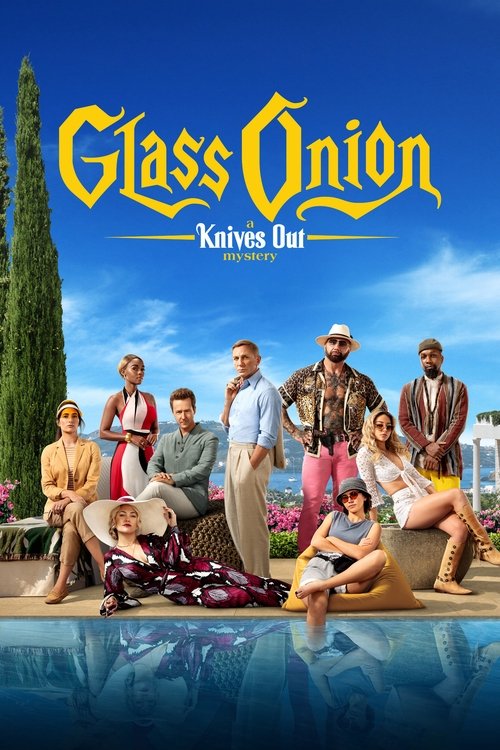
This film draws you in for a significant portion of its runtime with traditional or neutral content before springing its woke agenda. Know before you go!
Glass Onion is technically a woke trap — it presents itself as an equal-opportunity satire that mocks all flavors of elite hypocrisy, and the surface-level takedown of a charismatic tech billionaire can read as merely anti-establishment. But dig one layer and the film's sympathies are precise: Rian Johnson is a progressive, his villain is coded as a right-coded tech bro (complete with COVID-denier energy), his hero is a Black woman reclaiming stolen intellectual credit, and the film's climax requires the audience to celebrate the destruction of irreplaceable private property as righteous. Conservative audiences who enjoy the puzzle mechanics may not notice they've been served a progressive fable.
Here is what Rian Johnson is very good at: constructing mechanical puzzles. The Glass Onion mystery — Miles Bron's island, his orbit of enablers, the twist about who Janelle Monáe's character actually is — works as clockwork. The recontextualization sequence, where the audience sees the first act replayed through a new lens, delivers the specific pleasure that mystery writing promises and rarely achieves. If you are in the business of appreciating craft without caring about what the craft is in service of, Glass Onion will satisfy you.
Here is what Rian Johnson is equally good at: making sure you know what he thinks. The target of Glass Onion is a specific, carefully assembled composite: Miles Bron is a tech billionaire who built his brand on disruptive rhetoric, surrounded himself with talent he claimed as his own, promoted COVID skepticism when it was useful to his brand, and has successfully convinced his entire social circle that his proximity to genius is the same thing as genius. This is a portrait drawn from contemporary progressive anxieties about a specific class of man. Johnson is not confused about who he's drawing. Neither is the audience.
The supporting cast of enablers is where the film sharpens its critique into something genuinely uncomfortable. Each member of Bron's inner circle has made a private compromise to stay in his orbit — the politician who needed his endorsement, the scientist who needed his funding, the influencer who needed his platform, the influencer's assistant who needed her job. Johnson's argument is that this is how power works: not through overt coercion but through the slow accretion of dependencies that make honesty too expensive. This is a coherent and not entirely wrong reading of how elite social circles function. It is also a reading that happens to align perfectly with progressive populist politics circa 2022. Make of that what you will.
The film's climax requires the audience to cheer the deliberate destruction of Leonardo da Vinci's Mona Lisa as an act of righteous revenge. This is presented without ambiguity: the irreplaceable artifact burns, and we are meant to feel that justice has been served. I find this instructive about Johnson's actual values. He has spent two films constructing an audience relationship with Benoit Blanc as a figure of discernment, taste, and precision — and then used that relationship to extract applause for the destruction of Western civilization's cultural patrimony. The Mona Lisa isn't Miles Bron's property. It's everyone's. But in Johnson's moral universe, the symbolic power of the act outweighs what is actually lost.
That said, I won't pretend the film isn't entertaining. Daniel Craig's Blanc is one of the more enjoyable screen detectives in recent memory — Southern Gothic in his speech, surgically precise in his conclusions, constitutionally unable to be impressed by wealth or fame. The ensemble, for all its ideological freight, is genuinely fun to watch. Glass Onion is a skilled progressive filmmaker doing exactly what he does best, and if you walk in knowing that, you will have a good time. Just know what you're getting.
Formula: Weighted Score = Severity × Authenticity Multiplier × Centrality Multiplier
🔴 Woke Tropes
| Trope | Severity | Authenticity | Centrality | Score |
|---|---|---|---|---|
| Tech Billionaire as Villain | 4 | 0.9 | 2 | 7.2 |
| Stolen Credit — White Man Erases Black Woman Innovator | 4 | 0.8 | 1.8 | 5.76 |
| Property Destruction as Righteous Act | 5 | 0.9 | 1.6 | 7.2 |
| Same-Sex Relationship — Incidental Normalization | 2 | 0.7 | 0.7 | 0.98 |
| Elite Enabler Critique — Systemic Over Individual | 3 | 0.8 | 1.3 | 3.12 |
| TOTAL WOKE | 24.3 | |||
🟢 Traditional Tropes
| Trope | Severity | Authenticity | Centrality | Score |
|---|---|---|---|---|
| Detective as Arbiter of Truth | 3 | 0.9 | 1.5 | 4.05 |
| TOTAL TRADITIONAL | 4.0 | |||
Score Margin: -24 WOKE
Director: Rian Johnson
ProgressiveRian Johnson is one of Hollywood's more openly political filmmakers. He famously torched the Skywalker saga with The Last Jedi in service of messaging about legacy, identity, and institutional rot — a film that divided the Star Wars fandom in ways that still haven't healed. His Benoit Blanc films are structurally conservative (mysteries, after all, are the most Aristotelian of genres) but politically progressive in their targets and sympathies. Glass Onion makes no pretense of neutrality. Johnson designed the villain Miles Bron as a composite of tech-bro archetypes — the mask-skeptic swagger, the innovation-without-accountability schtick, the gravitational pull that brings sycophants to his orbit — and surrounded him with a supporting cast of enablers who represent specific progressive critique targets: the wellness-influencer airhead, the compromised politician, the self-interested scientist. The hero is a Black woman whose ideas were stolen by a white male fraud. This is not subtle, and Johnson does not want it to be.
Writer: Rian Johnson
As his own screenwriter, Johnson constructs a genuinely clever mechanical puzzle — the Glass Onion mystery is well-plotted and the recontextualization sequence in the second act is satisfying in the way only good mystery writing can be. But the scaffolding of the plot exists primarily to deliver a verdict about a specific type of man: the charismatic, well-connected, intellectually fraudulent man who rises to cultural power by surrounding himself with people too invested in his success to name him for what he is. The target is drawn from life, and Johnson knows it.
Adult Viewer Insight
Johnson sold this sequel to Netflix for a reported $450 million (covering both Knives Out films), which is one of the largest streaming deals in history. The irony of an anti-billionaire satire being bankrolled by a tech platform that has its own complicated relationship with creative compensation is one that Johnson has declined to address publicly. The COVID skepticism elements in Miles Bron's character were reportedly written during the peak of mask discourse in 2021, and the character's cavalier attitude toward public health mandates is almost certainly modeled in part on Elon Musk — who was, at the time of writing, the most prominent tech figure associated with COVID contrarianism. Johnson has not confirmed this but has not denied it either.
Parental Guidance
Find Glass Onion: A Knives Out Mystery on Amazon Prime Video, rent, or buy:
▶ Stream or Buy on AmazonAs an Amazon Associate, VirtueVigil earns from qualifying purchases.
Community Discussion 0
Subscribe to comment.
Join the VirtueVigil community to share your perspective on this review.