
Guardians of the Galaxy
Guardians of the Galaxy is one of the most purely enjoyable films the MCU ever produced, and by our scoring system it is also one of the most traditionally coded. The margin is not close. A +15 TRAD score means the traditional themes are not subtle undertones. They are the entire movie. Sacrifice.…
Full analysis below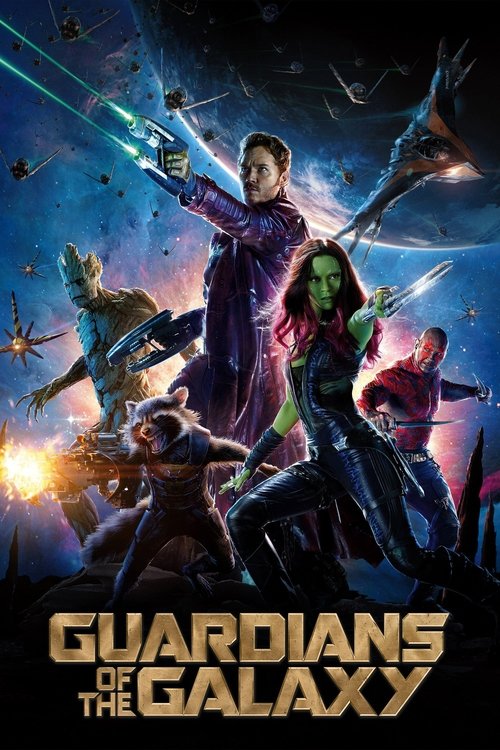
Not a woke trap. Guardians is a pure crowd-pleaser with no hidden progressive agenda. The minor woke elements present are incidental to a story primarily about redemption, sacrifice, and found family loyalty.
Guardians of the Galaxy is one of the most purely enjoyable films the MCU ever produced, and by our scoring system it is also one of the most traditionally coded. The margin is not close. A +15 TRAD score means the traditional themes are not subtle undertones. They are the entire movie. Sacrifice. Redemption. The transformative power of found family. A man honoring his dead mother. A sentient tree laying down his life without a word of explanation because his friends needed him to.
The premise sounds like it should not work: A thief from Earth, a green-skinned assassin, a talking raccoon, a muscle-bound literal alien, and a sentient tree form an unlikely alliance to keep a powerful artifact from a genocidal fanatic. James Gunn directed it with the instincts of a filmmaker who understood that the stakes of action blockbusters mean nothing unless the characters mean something. He was right, and the result is $773 million worldwide and a film that people still rewatch a decade later.
Peter Quill (Chris Pratt) was abducted from Earth the night his mother died of cancer. He was nine years old. He has spent 26 years in space, becoming a thief and con man, carrying a mixtape his mother made him as the only object connecting him to Earth. She asked him to take her hand as she died. He couldn't do it. He has never opened her second gift. The film is built on that grief and that failure, and when Peter finally opens the Walkman his mother left him at the end, it is one of the MCU's genuinely moving moments.
The other Guardians are equally well-constructed. Gamora (Zoe Saldana) is Thanos's adopted assassin daughter, seeking redemption for a life of killing. Drax the Destroyer (Dave Bautista) is consumed by grief over the murder of his wife and daughter and is using the mission as an excuse to pursue the man responsible. Rocket (voiced by Bradley Cooper) is a genetically engineered raccoon who has been modified against his will and covers his self-hatred with aggression and bravado. Groot (voiced by Vin Diesel) is a gentle giant tree creature whose vocabulary consists of three words. He sacrifices himself to save the others at the film's climax, wrapping his branches around the team to absorb an impact that would have killed them. 'We are Groot,' he says. It is one of the great movie moments of the last decade.
The film's traditional credentials are extensive. The redemption arc is not just present; it is the film's entire structural spine. Every character in the Guardians is broken in a specific way, and the film is about what happens when broken people choose to be responsible for each other anyway. Rocket, who has been designed to feel nothing, cries. Drax, who has been living only for revenge, discovers that the people next to him matter more than the target. Gamora, who has spent her life as an instrument of evil, chooses to let a stranger die rather than let Ronan get the Infinity Stone. The entire film is a set of redemption arcs synchronized around a single act of sacrifice.
Ronan the Accuser (Lee Pace) is the rare MCU villain who is genuinely frightening. He is a Kree fanatic pursuing genocide with religious conviction. The film does not ask you to understand him. It asks you to stop him. That is traditional moral clarity: some evil is not complicated and does not require sympathy. Ronan is a man who wants to commit genocide. He must be stopped. The heroes stop him through exactly the kind of improbable, sacrifice-requiring teamwork that the film has been building toward for two hours.
The progressive elements are minor. The found-family structure is the film's most culturally coded progressive element, but found family is also the oldest story in human history. Moses found a family. The disciples found a family. The Magnificient Seven found a family. The fact that contemporary progressive culture has adopted found family as a coded concept does not make the trope itself progressive. Gamora's competence as a female warrior is present but handled without the political assertion that defines later MCU female characters. She is capable because she was trained as an assassin since childhood, which is a narrative explanation, not an ideological argument. Rocket's arc about being modified against his will has been read as a trans allegory, but the film itself does not make this argument. It is the grief of someone who was hurt and cannot undo what was done to him. That grief is universal.
The film is funny, fast, and emotionally honest. The 1970s-80s mixtape soundtrack was simultaneously a commercial masterstroke and a thematic device: Peter's music is literally his connection to his dead mother, to the world he lost, to the version of himself that existed before he was alone in space. When the music plays, it is not just a fun needle drop. It is a man keeping his mother alive in the only way he knows how.
James Gunn made a traditional movie. He did not mean to, necessarily. But the movie he made is about grief, redemption, sacrifice, and the family you build when the one you were born into is gone. That is not a progressive agenda. That is a story as old as storytelling.
Formula: Weighted Score = Severity × Authenticity Multiplier × Centrality Multiplier
🔴 Woke Tropes
| Trope | Severity | Authenticity | Centrality | Score |
|---|---|---|---|---|
| Found Family Replacing Traditional Family Structure | 2 | 0.7 | 1.8 | 2.52 |
| Anti-Establishment / Outlaw Heroes Outside Institutional Authority | 2 | 0.7 | 1 | 1.4 |
| Female Warrior as Competent Equal to Male Heroes | 2 | 0.7 | 1 | 1.4 |
| Institutional Authority (Nova Corps) as Impotent | 1 | 1 | 0.5 | 0.5 |
| TOTAL WOKE | 5.8 | |||
🟢 Traditional Tropes
| Trope | Severity | Authenticity | Centrality | Score |
|---|---|---|---|---|
| Sacrificial Love / Laying Down Your Life for Your Friends (Groot) | 5 | 0.7 | 1.8 | 6.3 |
| Redemption Arc / Selfish Man Chooses His People | 4 | 0.7 | 1.8 | 5.04 |
| Found Family Through Loyalty Under Fire | 4 | 0.7 | 1.8 | 5.04 |
| Mother's Legacy Honored / Grief as Through-Line | 4 | 0.7 | 1 | 2.8 |
| Clear Moral Universe / Villain's Evil Is Unambiguous | 3 | 0.7 | 1 | 2.1 |
| TOTAL TRADITIONAL | 21.3 | |||
Score Margin: +15 TRAD
Director: James Gunn
LEFT. Gunn is a progressive filmmaker whose personal politics lean decidedly left. He has been vocal on social media about his political views, which contributed to his temporary firing by Disney in 2018 over old offensive tweets (he was reinstated and completed the trilogy). His politics rarely intrude on his Guardians films in any significant way: the MCU's commercial constraints and his instinct for emotional storytelling consistently override ideology in these films. His DC work (The Suicide Squad, Peacemaker) shows more political content. Guardians is his most traditionally coded major work.James Gunn is an American filmmaker who came up through the Troma Entertainment school before establishing himself with Slither (2006) and Super (2010). Marvel hired him to write and direct Guardians of the Galaxy in 2012, a high-risk project centered on obscure characters that most industry observers expected to fail. The film grossed $773 million worldwide and launched one of the MCU's most popular franchises. Gunn's background in practical horror comedy gave him an instinct for physical, irreverent character work that distinguishes the Guardians trilogy from other MCU entries. He has since moved to DC, where he serves as co-CEO of DC Studios alongside Peter Safran.
Adult Viewer Insight
Conservative adults who wrote off the MCU should find their exception here. Guardians of the Galaxy is fundamentally a film about broken people becoming responsible for each other, which is the foundational conservative argument about community: you don't choose your family, but you choose to show up for them anyway, and that choice makes you who you are. Peter Quill's unresolved grief over his mother is handled with surprising restraint for a blockbuster: the Walkman she left him is a physical object carrying emotional weight, and the film earns the moment when he finally opens her last gift. There are no lectures here, no diversity mandates visible in the narrative structure, no ideology disguised as entertainment. Just five broken people becoming something worth rooting for.
Parental Guidance
Rated PG-13 for intense sequences of sci-fi violence and action, and for some language. Suitable for ages 10 and up. The action violence is stylized and non-graphic. Language includes occasional mild to moderate profanity (one use of 's--t', various mild uses). The film includes the death of a parent from cancer depicted on screen: young Peter at his mother's deathbed, unable to take her extended hand before she dies. This is genuinely moving and potentially distressing for children who have experienced parental loss. Groot's sacrifice is emotionally impactful without being graphic. Thematic content includes grief, abandonment (Peter's absent/unknown father), and the emotional cost of a life lived without connection. No sexual content beyond mild suggestive banter. No drug content. For conservative Christian families: no specific spiritual concerns. The film treats the Infinity Stone as pure sci-fi McGuffin, not spiritual power. The family themes and sacrifice arc are consistent with traditional values.
Find Guardians of the Galaxy on Amazon Prime Video, rent, or buy:
▶ Stream or Buy on AmazonAs an Amazon Associate, VirtueVigil earns from qualifying purchases.
Community Discussion 0
Subscribe to comment.
Join the VirtueVigil community to share your perspective on this review.