
Hoppers
Let us be honest about what Pixar made here. Hoppers is a genuine return to form for a studio that had been coasting on nostalgia sequels and misfires for nearly a decade.…
Full analysis below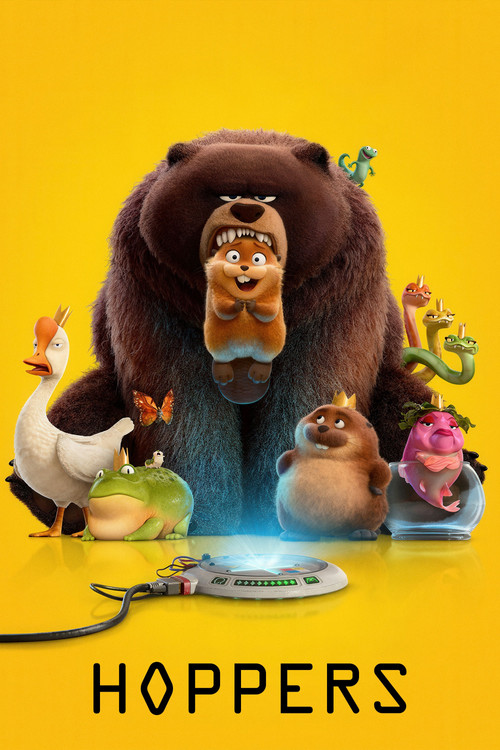
NOT A WOKE TRAP. Hoppers wears its environmental activism and anti-development messaging on its sleeve from the opening frames. Trailers showed Mabel as a self-described feral animal-rights activist battling a corrupt male mayor over her beloved glade. Critics discussed the eco-messaging in their first reviews. There is no deceptive packaging. The film is openly ideological and audiences knew what they were buying before they sat down.
Let us be honest about what Pixar made here. Hoppers is a genuine return to form for a studio that had been coasting on nostalgia sequels and misfires for nearly a decade. Brian Fee has made something emotionally alive -- a film that earns its tears, lands its jokes, and creates characters you actually care about. It is the first Pixar original that has felt essential since Soul. That is worth saying plainly.
It is also a film with a clear ideological agenda, and the job of VirtueVigil is to say that plainly too.
Mabel is a college student at Beaverton University who has spent her entire life in love with a glade behind her grandfather's property. She is, in the film's own words, a 'feral animal-rights activist.' Her antagonist is Mayor Jerry (Jon Hamm), a political caricature so broad he belongs in a Looney Tunes short -- a smarmy, glad-handing politician who wants to bulldoze the glade to build a beltway through it, presumably so his developer friends can profit. The film leaves zero ambiguity about who is right and who is wrong. Development is destruction. Activism is heroism. Corrupt political authority is the enemy.
For VirtueVigil readers, this is the fundamental irritant at the center of an otherwise delightful film. The film's world is one in which all official authority is venal, all development is desecration, and a passionate young woman with a Twitter account and animal friends is the only one who can stop it. The politics are progressive, and they are not subtle.
And yet.
The relationship between Mabel and Grampa Walt (Tom Hanks, delivering what might be the best vocal performance of his career in an animated film) is something genuinely special. Walt is the one who taught Mabel to love the glade. His gentle pride in her, his patient wisdom, and the way the film treats his age-earned perspective as something precious and worth preserving -- this is traditionalism of the deepest kind. The film is, at its heart, about what we owe to the people who shaped us and the places they gave us.
Fee has described the film's genesis as autobiographical -- a creek behind his childhood home that was paved over for a strip mall. There is real grief in the film's relationship to place, a mourning for irreplaceable things that goes beyond political programming. The love of particular, familiar, small-scale things -- a glade, a grandfather's hands, the sound of specific animals at dawn -- is the most genuinely conservative emotion in modern cinema, even when it arrives wrapped in eco-activist packaging.
The comedy is also genuinely funny. John Mulaney and Awkwafina as Mabel's sidekicks provide the kind of energetic physical comedy that Pixar does better than anyone. Sam Rockwell's Ranger Dodd is a surprisingly layered secondary character who could carry a short film of his own.
The verdict, per our methodology, is WOKE LEAN -- a negative margin driven primarily by the film's explicit political framing of its villain and its heroic environmentalism. But this is a film worth seeing. The woke elements are front-loaded and clearly advertised. They are not hidden or deceptive. And the traditional emotional core -- the grandfather, the love of place, the courage of an individual against institutional corruption -- is genuine enough to carry real weight.
Hoppers is a better film than its politics deserve. Take your kids. Have a conversation about why cartoon politicians are not the only way to understand development and community. And then let Tom Hanks make you cry about a glade.
Formula: Weighted Score = Severity × Authenticity Multiplier × Centrality Multiplier
🔴 Woke Tropes
| Trope | Severity | Authenticity | Centrality | Score |
|---|---|---|---|---|
| Environmental activism as heroic framework | 5 | High | High | 6.3 |
| Corrupt conservative-coded male politician as primary villain | 4 | Moderate | High | 7.2 |
| Anti-development / anti-growth politics framed as wisdom | 3 | High | Moderate | 2.1 |
| Institutional authority depicted as corrupt and serving wealth | 2 | Moderate | Moderate | 2 |
| TOTAL WOKE | 17.6 | |||
🟢 Traditional Tropes
| Trope | Severity | Authenticity | Centrality | Score |
|---|---|---|---|---|
| Grandparent-grandchild bond as emotional heart | 4 | High | High | 5.04 |
| Love of place and community as intrinsic good | 3 | High | High | 3.78 |
| Self-sacrifice and loyalty to loved ones | 3 | High | Moderate | 2.1 |
| Courage against seemingly insurmountable institutional opposition | 2 | High | Moderate | 1.4 |
| TOTAL TRADITIONAL | 12.3 | |||
Score Margin: -5.74 WOKE
Director: Brian Fee
CENTER-LEFT. Fee is a Pixar veteran and co-writer of Cars 3. His environmental themes in Hoppers are genuine and organically expressed rather than bluntly didactic, but the progressive scaffolding is unmistakable: a female eco-activist heroine vs. a corrupt conservative-coded male politician using development as the villain's tool.Brian Fee joined Pixar in 2005 as a storyboard artist and worked on Cars, Ratatouille, WALL-E, and Up before stepping up to direct Cars 3 (2017). Hoppers is his second feature and his first original Pixar property. Fee has described the film as a deeply personal story about 'the places we love and the people who love us back,' drawn from childhood memories of a small creek behind his house that was paved over for a strip mall. The film's anti-development animus is autobiographical, not ideological on the surface, though the political framing (corrupt male politician vs. passionate young female activist) reflects contemporary progressive aesthetics.
Adult Viewer Insight
Hoppers is worth seeing, but go in with eyes open. The environmental politics are front and center and will not hide from parents paying attention. The stronger message for conservative audiences to engage with is actually embedded in what the film does well: the love of a particular place, the wisdom of an older generation, and the responsibility to fight for things worth preserving. These are deeply traditional values, even if the film's political framing drags them in a progressive direction. The film also raises a genuinely interesting cultural question: why does Hollywood consistently frame development as villain and stasis as virtue? It is worth asking your kids what they think about that after the credits roll.
Parental Guidance
Rated PG. Clean family film with no objectionable content in terms of violence, language, or sexuality. The primary parental concern is the film's unambiguous political framing: environmental activism is heroic, development is evil, and all political authority is corrupt. Parents who want to balance this message should be prepared for a follow-up conversation about the legitimate purposes of infrastructure, the complexity of land use, and the limits of activist framing. The film is warm, funny, and emotionally generous. Ages 6 and up will enjoy it. The political content requires context for younger viewers.
Find Hoppers on Amazon Prime Video, rent, or buy:
▶ Stream or Buy on AmazonAs an Amazon Associate, VirtueVigil earns from qualifying purchases.



Community Discussion 0
Subscribe to comment.
Join the VirtueVigil community to share your perspective on this review.