
Horizon: An American Saga - Chapter 1
Kevin Costner's Horizon: An American Saga - Chapter 1 is an old-fashioned American epic Western of a kind that Hollywood has largely abandoned - sweeping, unhurried, deeply patriotic, and unapologetically romantic about the American frontier.…
Full analysis below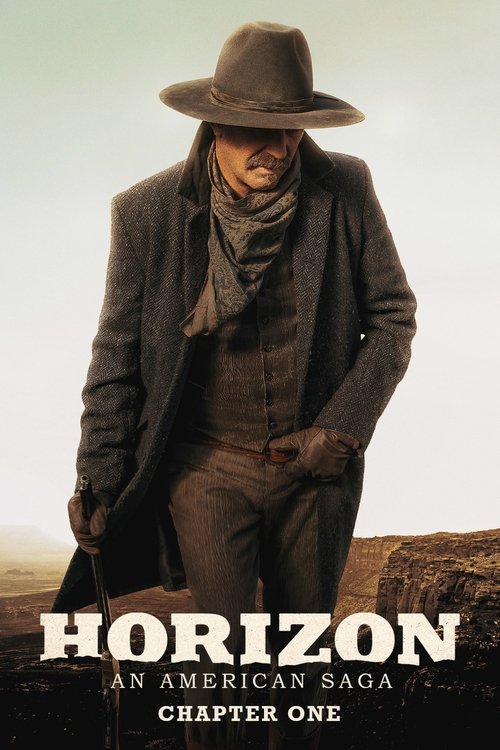
Not a woke trap. Horizon is a Kevin Costner passion project 35 years in the making, transparently conceived as an old-fashioned American epic Western in the tradition of Dances with Wolves and Tombstone. The marketing was explicit about its scope, its Western genre, its celebration of American frontier history, and Costner's personal investment. Conservative audiences who enjoy traditional Westerns, American history, and frontier heroism will find exactly what was promised. The film's nuanced treatment of the Apache conflict is not activist messaging - it is the moral complexity that has characterized the best Westerns since John Ford grappled with the same territory in the 1950s.
Kevin Costner's Horizon: An American Saga - Chapter 1 is an old-fashioned American epic Western of a kind that Hollywood has largely abandoned - sweeping, unhurried, deeply patriotic, and unapologetically romantic about the American frontier. Conceived over 35 years and personally funded to the tune of $38 million by Costner himself, it is an act of filmmaking conviction that deserves to be seen on those terms before it is judged on conventional commercial metrics.
The film covers multiple storylines across the 1859-1873 American West, centered on the founding and destruction of a frontier settlement called Horizon in Arizona Territory, the journeys of various characters converging on this promise of the West, and the Apache conflicts that define the violence and moral complexity of the period. Costner plays Hayes Ellison, a wandering horse trader who represents the classic Western frontier archetype: a man of competence, independence, and quiet heroism who protects those who cannot protect themselves.
For VirtueVigil's audience, Horizon is among the most traditionally-oriented films released in 2024. American frontier spirit is not just present but central and celebrated. Masculine heroism is the genre's first language. Family protection drives multiple characters across multiple storylines. Military honor and moral leadership are embodied in Lt. Gephardt, who opposes his colonel's indiscriminate approach to indigenous conflict not from progressive ideology but from a soldier's code of honor. The project of building American civilization - towns, families, futures - is treated as genuinely noble and worth the sacrifice it demands.
The film's moral complexity comes from its honest treatment of the Apache conflict. Horizon does not whitewash history: Apache raids kill settlers, including a woman's husband and son. But the film also shows a posse massacring an innocent Apache village - killing women, children, and elderly - in retaliation. This is not progressive revisionism; it is the same moral ambiguity John Ford wrestled with in The Searchers. The best Westerns have always understood that the American frontier was purchased at enormous cost and that cost was not abstract. Costner, who made Dances with Wolves, has always treated indigenous perspectives with care without abandoning his celebration of American expansion.
The film's commercial disappointment ($38.7 million on a $50 million budget for Chapter 1 alone) is genuinely unfortunate. Horizon is the kind of ambitious, patriotic American filmmaking that has no equivalent elsewhere in contemporary Hollywood. Its 181-minute runtime and unresolved multi-chapter structure frustrated mainstream audiences. But for viewers who love traditional Westerns, American history, and genuinely heroic archetypes, it offers rewards that are increasingly rare.
Formula: Weighted Score = Severity × Authenticity Multiplier × Centrality Multiplier
🔴 Woke Tropes
| Trope | Severity | Authenticity | Centrality | Score |
|---|---|---|---|---|
| Moral Ambiguity in American Manifest Destiny | 3 | High | Moderate | 3 |
| American Posse Massacres Indigenous Innocents | 3 | High | Moderate | 3 |
| Secular / Non-Faith-Based Moral Framework | 1 | High | Low | 0.35 |
| TOTAL WOKE | 6.3 | |||
🟢 Traditional Tropes
| Trope | Severity | Authenticity | Centrality | Score |
|---|---|---|---|---|
| American Frontier Spirit and National Pride | 5 | High | High | 6.3 |
| Masculine Heroism and Frontier Duty | 5 | High | High | 6.3 |
| Family Protection as Sacred Duty | 4 | High | High | 5.04 |
| Military Honor and Principled Moral Leadership | 4 | High | High | 5.04 |
| Western Civilization-Building as Noble and Worthy | 3 | High | Moderate | 2.1 |
| Consequences for Violence and Moral Cowardice | 3 | High | Moderate | 2.1 |
| Romantic Love Amid Hardship and Duty | 3 | High | Moderate | 2.1 |
| TOTAL TRADITIONAL | 29.0 | |||
Score Margin: +23 TRAD
Director: Kevin Costner
PATRIOTIC TRADITIONALIST. Costner is one of Hollywood's most openly American and traditionally-minded major filmmakers. His directorial work (Dances with Wolves, The Postman, Open Range) consistently celebrates American frontier spirit, masculine duty, self-reliance, and the protection of family and community. He has expressed deep personal love for American history and specifically the Western genre. Costner personally funded $38 million of Horizon's $100 million combined budget, a remarkable act of personal conviction in a project that is essentially a love letter to American expansionism and frontier heroism. He is not a progressive filmmaker masquerading as a traditionalist.Born January 18, 1955 in Lynwood, California. Costner became one of the biggest stars of the late 1980s and 1990s through Field of Dreams, Bull Durham, The Untouchables, JFK, The Bodyguard, and Tin Cup. His directorial debut Dances with Wolves (1990) won seven Academy Awards including Best Picture and Best Director. Open Range (2003) is one of the finest traditional Westerns of the modern era. Costner conceived Horizon in 1988 and spent three decades developing it into a planned four-film saga covering the post-Civil War American frontier. He is among the last major Hollywood figures genuinely committed to the traditional American epic.
Writer: Kevin Costner and Jon Baird
Costner co-wrote the screenplay with Jon Baird. The film is based on an original story by Costner, Baird, and Mark Kasdan. The screenplay reflects Costner's deep engagement with Western American history and his belief in the epic as a form worthy of serious cinematic investment. The film covers multiple storylines across the pre- and post-Civil War frontier, drawing on real historical periods including Apache conflicts in Arizona Territory and the settlement of the Midwest.
Adult Viewer Insight
Parental Guidance
Find Horizon: An American Saga - Chapter 1 on Amazon Prime Video, rent, or buy:
▶ Stream or Buy on AmazonAs an Amazon Associate, VirtueVigil earns from qualifying purchases.
Community Discussion 0
Subscribe to comment.
Join the VirtueVigil community to share your perspective on this review.