
House of the Dragon
House of the Dragon is Game of Thrones's best legacy: a prequel that proves the world Martin built is deep enough to sustain great television without the Stark family at its center. It is also, from a VirtueVigil perspective, genuinely complicated. Let me explain what I mean.
Full analysis below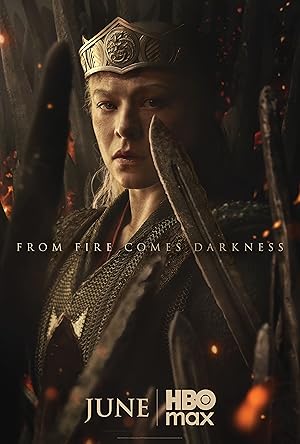
NOT A WOKE TRAP. House of the Dragon's progressive elements, particularly the feminist succession argument and Rhaenyra's bodily autonomy framing, are present from episode one and foregrounded in the marketing. The show is explicitly sold as a story about women fighting for power in a patriarchal system. Conservative viewers who missed this framing were not ambushed; they simply did not read the premise. The margin lands in MIXED territory with a slight traditional lean, which is accurate: the show's medieval court hierarchy, dynastic loyalty, and consequence-driven storytelling are traditional in form, while its dominant narrative thrust is progressive in framing.
House of the Dragon is Game of Thrones's best legacy: a prequel that proves the world Martin built is deep enough to sustain great television without the Stark family at its center. It is also, from a VirtueVigil perspective, genuinely complicated. Let me explain what I mean.
The premise is the Targaryen civil war known as the Dance of the Dragons. King Viserys I names his daughter Rhaenyra his heir after his son dies in infancy. When Viserys dies and his council bypasses Rhaenyra's claim to install her half-brother Aegon II, war follows. Dragons fly against dragons. Families fracture. Westeros bleeds.
The show is built around a central progressive argument: Rhaenyra was robbed of her inheritance by a patriarchal system that would not accept a female ruler. This is the show's thesis, and it is stated explicitly and repeatedly. Rhaenyra is the rightful queen. Her exclusion is unjust. The war is fought over whether women can hold power in a system designed to exclude them.
From a VirtueVigil perspective, this is the show's defining woke element and it is not minor. The succession argument is the entire engine of the narrative. You cannot separate the story from its feminist reading of medieval power dynamics. Conservative viewers should know this going in.
And yet. The show is so well-made, and its traditional elements are so substantial, that the VVWS score lands in MIXED territory rather than the woke column. Let me work through why.
Paddy Considine's King Viserys is one of the finest performances in recent television. He is a man who loved his first wife deeply, who made a politically necessary second marriage and tried to love that wife too, who held his family together through sheer force of will and personal warmth for fifteen years, and who died slowly while watching everything he built begin to fracture. Considine plays his deterioration, a disease that robs him of his body piece by piece, with heartbreaking authenticity. Viserys is a traditional patriarch: he wants peace, he wants his family to be whole, he wants his legacy to matter. He is not a feminist hero; he is a king who loved his daughter and tried to protect her claim because he believed it was right and because he loved her. His death scene, in which he murmurs words from a shared family dream that his second wife misinterprets as a political instruction that launches the war, is one of the great tragic moments in television drama.
Matt Smith as Daemon Targaryen is the show's most compelling character and its most traditional masculine figure. He is violent, ambitious, loyal to those he considers his, contemptuous of weakness, and genuinely skilled in ways that command respect. He is not a good man by any conventional moral standard. He has murdered people, including a wife, without losing a night's sleep. But he is fully committed to Rhaenyra's cause, because she is family and because her claim is his claim. His loyalty is tribal and absolute rather than principled and conditional, which is the oldest kind of loyalty.
The show's dynastic politics are traditional in form even when progressive in content. The intrigue operates through marriages, alliances, bloodlines, and the weight of oaths. The council debates the legitimacy of succession claims not through democratic principles but through feudal law and family obligation. The world of the show takes hierarchy, blood, and duty seriously. It is the specific application of those traditional frameworks, specifically which heir the system should recognize, where the show's feminist argument enters.
Alicent Hightower, Rhaenyra's former friend and now political rival, is arguably the show's most interesting figure. She is the traditional choice: a woman who accepted the system's terms, married the king her father wanted her to marry, raised her children to claim what she believed was rightfully theirs, and used every political tool available within the patriarchal system rather than fighting the system itself. The show does not straightforwardly endorse her position or condemn it. Her sons become the Greens, fighting against Rhaenyra's Blacks. The show presents both sides with genuine moral complexity, which is its greatest achievement.
Olivia Cooke's performance as the adult Alicent is extraordinary. She plays a woman who has suppressed her own desires and judgments for two decades in service of her family's political survival, and the suppression has left her unable to distinguish her own feelings from her sense of duty. Her relationship with Ser Criston Cole, her loyalty to her sons, her long grief over the friendship she destroyed with Rhaenyra: all of this is played with extraordinary precision. Alicent is the show's most fully realized character.
Now for the honest accounting of what tips the score toward MIXED rather than TRADITIONAL LEAN.
The feminist succession argument is the show's spine. Rhaenyra's cause is framed as obviously just. The men who oppose her are either self-interested (Ser Otto Hightower) or fanatically loyal to tradition for tradition's sake. The show does not seriously engage with the traditional argument for male succession, which in the historical context it is drawing from was not simply misogyny but a specific system of inheritance designed to prevent exactly the kind of contested succession that the show is depicting.
Rhaenyra's personal conduct is treated with enormous sympathy despite being genuinely scandalous by any traditional standard. She has children by a man who is not her husband and passes them off as legitimate heirs. The show treats this as understandable given the constraints placed on her, which is a very contemporary reading of medieval sexual politics.
The bodily autonomy framing around childbirth, particularly in the pilot's devastating sequence and in Season 2's miscarriage, is explicit. The show is making a statement about women's suffering in childbirth as a specifically political form of oppression.
Emma D'Arcy, who plays adult Rhaenyra, is non-binary in real life and uses they/them pronouns. The casting does not affect the character's presentation as female within the story.
There is also the race-swapping of the Velaryon family, which has generated significant discussion. Lord Corlys Velaryon is played by Steve Toussaint, a Black British actor. The change is handled with consistency; the Velaryons have their own distinct identity in the show's world, and Toussaint is excellent in the role. Viewers who object on source-fidelity grounds have a legitimate point about consistency with established world-building. The casting decision is a visible diversity choice.
None of this makes House of the Dragon bad television. It is sometimes great television, particularly in Season 1. What it makes it is exactly what the score says: MIXED. A show that takes traditional forms (dynasty, blood, duty, consequence) and fills them with contemporary content (feminist succession argument, bodily autonomy, sympathy for marital violation). The traditional machinery and the progressive fuel are both real. Neither overwhelms the other by enough to shift the verdict.
Formula: Weighted Score = Severity × Authenticity Multiplier × Centrality Multiplier
🔴 Woke Tropes
| Trope | Severity | Authenticity | Centrality | Score |
|---|---|---|---|---|
| Feminist Succession Argument as Narrative Spine | 5 | 0.7 | 1.8 | 6.3 |
| Female Bodily Autonomy as Political Theme | 4 | 0.7 | 1 | 2.8 |
| Sympathy for Adultery and Illegitimate Children | 3 | 1 | 1 | 3 |
| Race-Swapped Source Casting | 2 | 1 | 0.5 | 1 |
| Non-Binary Actor in Female Role | 1 | 1 | 0.5 | 0.5 |
| TOTAL WOKE | 13.6 | |||
🟢 Traditional Tropes
| Trope | Severity | Authenticity | Centrality | Score |
|---|---|---|---|---|
| Dynastic Loyalty and Blood Obligation | 5 | 0.7 | 1.8 | 6.3 |
| Consequences for Every Betrayal and Miscalculation | 4 | 0.7 | 1.8 | 5.04 |
| The Weight of Oaths and Political Obligation | 4 | 0.7 | 1 | 2.8 |
| Sacrifice and Duty Over Personal Happiness | 3 | 0.7 | 1 | 2.1 |
| Masculine Competence and Warrior Virtue | 3 | 0.7 | 1 | 2.1 |
| Family Relationships as Political Reality | 3 | 0.7 | 0.5 | 1.05 |
| Viserys as Tragic Traditional Patriarch | 4 | 0.7 | 0.5 | 1.4 |
| TOTAL TRADITIONAL | 20.8 | |||
Score Margin: +2 TRAD
Director: Ryan Condal (co-creator, showrunner); Miguel Sapochnik (co-creator, Season 1 director); Clare Kilner, Geeta Patel, Greg Yaitanes (Season 2 directors)
CENTER-LEFT. Ryan Condal and Miguel Sapochnik built the show around a specific political argument: succession laws that exclude women from the throne are unjust, and Rhaenyra Targaryen's fight against this exclusion is the show's moral center. This is a contemporary feminist reading of medieval succession politics dressed in fantasy clothing. The show is not shy about this framing; it is explicit about it from the pilot. At the same time, Condal is a craftsman who respects the source material's complexity, which means the show is better than its thesis suggests.Ryan Condal is primarily known as a genre writer before House of the Dragon, with credits on Helix and Colony. His work on the show has been praised for structural discipline and character fidelity to George R.R. Martin's source text, Fire and Blood. Miguel Sapochnik directed some of the finest Game of Thrones episodes, including Hardhome and Battle of the Bastards, and his Season 1 directorial work gives the show its visual grandeur. After his departure between seasons, the show's visual identity became less consistent but its character work deepened.
Adult Viewer Insight
Conservative viewers who loved Game of Thrones will be watching House of the Dragon through complicated glasses. The show is technically superior to the later seasons of its predecessor in almost every way. The politics are more explicitly progressive, however. The feminist succession argument is the premise, not subtext. Whether you can enjoy the genuine craft on display while disagreeing with the show's central political argument depends on you. For viewers who could watch Cersei Lannister as a compelling villain without endorsing her, Rhaenyra Targaryen as a compelling protagonist whose claim you may not fully accept should be manageable. Viserys and Daemon make it worth the effort.
Parental Guidance
Find House of the Dragon on Amazon Prime Video, rent, or buy:
▶ Stream or Buy on AmazonAs an Amazon Associate, VirtueVigil earns from qualifying purchases.
Community Discussion 0
Subscribe to comment.
Join the VirtueVigil community to share your perspective on this review.