
Hurry Up Tomorrow
Let's get something out of the way. Hurry Up Tomorrow is a vanity project. It may be the most unambiguous vanity project to receive a wide theatrical release in recent memory. Abel Tesfaye, known to the world as The Weeknd, plays a lightly fictionalized version of himself. He co-wrote the script.…
Full analysis below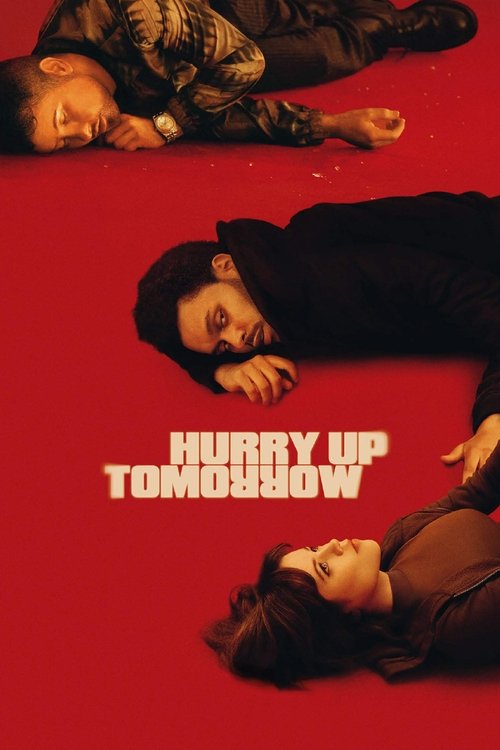
No bait-and-switch. The film is too absorbed in its protagonist's feelings to bother with politics. The pre-viewing prediction of NEUTRAL was confirmed. Conservative viewers should be warned about content (drug use, violence, language) but not about ideology.
Let's get something out of the way. Hurry Up Tomorrow is a vanity project. It may be the most unambiguous vanity project to receive a wide theatrical release in recent memory. Abel Tesfaye, known to the world as The Weeknd, plays a lightly fictionalized version of himself. He co-wrote the script. He co-produced the film. He co-composed the score. The movie exists as a companion piece to his album of the same name. The entire apparatus of cinema has been marshaled in service of one man's feelings about being famous and sad. Whether you find that compelling or insufferable will determine your experience far more than any ideological content.
The plot is straightforward enough once you strip away the moody cinematography and dream sequences. Abel is a superstar struggling with depression, insomnia, and the aftermath of a breakup. His voice gives out during a concert, inspired by a real 2022 incident at SoFi Stadium. His manager Lee, played by Barry Keoghan with more energy than anyone else on screen, pushes him to keep performing. Meanwhile, a mysterious young woman named Anima, played by Jenna Ortega, burns down a house and drives to Los Angeles to attend his concert. They meet backstage. They spend a night together. Then Anima knocks Abel unconscious with a champagne bottle, ties him to a bed, and demands he confront his psychological demons. She kills Lee when he shows up looking for Abel. She douses Abel in gasoline. He sings. She releases him and sets the room on fire. He walks through a hallway and ends up backstage before another concert, staring at his reflection.
If that summary sounds like a particularly overwrought music video stretched to 105 minutes, that is because it basically is. Director Trey Edward Shults, who made the genuinely excellent Waves in 2019, brings real visual craft to the proceedings. Chayse Irvin's cinematography, shot on a mix of 35mm, 16mm, and Super 8 film, gives the movie a textured, dreamy quality that is frequently more interesting than anything happening in the story. The score by Tesfaye and Daniel Lopatin pulses with atmospheric menace. On a pure sensory level the film occasionally works. As storytelling, it is a disaster.
The central problem is Abel Tesfaye himself. Playing a version of yourself requires either the self-awareness to be genuinely revealing or the charisma to make navel-gazing entertaining. Tesfaye has neither here. He mopes. He stares. He delivers lines with the flatness of someone reading a teleprompter in a language he learned last week. The film asks us to care deeply about the inner torment of a man whose torment consists of being extremely rich, extremely famous, and bad at relationships. There is no entry point for a viewer who is not already invested in The Weeknd as a cultural figure.
Jenna Ortega tries. Anima is a borderline impossible role. A fan, a stalker, a therapist, a killer, and ultimately a symbolic catalyst for the protagonist's rebirth, all crammed into one underwritten character. Ortega brings genuine intensity to several scenes. But the script gives her nothing to work with beyond mysterious damaged woman who exists to fix a man. She burns down a house in the opening minutes and the film never bothers to explain why in any satisfying way. Her mother calls. She cries. That is the extent of her interiority. Ortega deserved better material.
Barry Keoghan is the film's secret weapon and also its most frustrating element, because his screen time is limited and his character is killed off two-thirds of the way through. Lee is the only person on screen who feels alive. Keoghan plays him as a manic, manipulative, oddly affectionate enabler. The dynamic between Lee and Abel is the one relationship that crackles with genuine complexity. When Anima stabs Lee in the neck, the movie loses its pulse along with him.
From a values perspective, this film is largely ideologically inert. It does not push progressive social messaging. No diversity lectures. No institutional critique. No revisionist history. The film is too absorbed in its protagonist's feelings to bother with politics. What it does contain is a worldview worth examining. The entire film operates within a framework of celebrity suffering as the ultimate human experience. Abel's depression is treated with the gravity of a war documentary. His inability to maintain relationships is presented as existential tragedy rather than the predictable consequence of hedonism, drug abuse, and emotional selfishness. The film never once suggests that Abel's lifestyle choices might be the cause of his suffering rather than a response to it. This is not woke ideology in the traditional sense. It is the therapeutic worldview in which personal accountability dissolves into psychological explanation.
Conservative viewers can read against the grain here. The consequences of Abel's choices are visible on screen even when the script refuses to name them as consequences. The voice loss. The isolation. The emotional emptiness. The film shows what happens when a life is organized around self-gratification, even if it lacks the courage to say so plainly. The ending is the film's one moment of genuine honesty or its final act of denial, depending on how charitable you are feeling. Abel walks from the burning hotel room directly into another performance. The cycle continues. The man in the mirror is unchanged. That circular structure, intentional or not, carries a traditional moral weight: without accountability, without change, the fire follows you everywhere.
The film bombed. $7.8 million worldwide against a $15 million budget. Five Golden Raspberry nominations. Audiences stayed away because the film is not very good. It is a 105-minute therapy session that forgot to bring the therapist. Beautiful images in search of a story. Talented actors stranded in a script that serves no one but its star. Conservative viewers will find nothing to be outraged about and very little to be entertained by.
| Trope | Category | Location | Authenticity |
|---|---|---|---|
| Therapeutic Determinism | WOKE | Throughout - Abel's destructive behavior framed as psychological symptoms rather than choices; drug use, emotional cruelty, and self-sabotage all presented as things that happened to him | Mixed. The psychological framing is a real phenomenon (the 2022 voice loss was real). The editorial choice to remove personal accountability is the woke element. |
| The Disposable Male | WOKE | Approx. 70 min - Lee, the film's most vital character, is stabbed to death by Anima as a plot mechanism; his death is not mourned or explored beyond its utility to the protagonist's psychological journey | Forced. Keoghan brings Lee to life; the script throws him away. His death serves Anima's arc and Abel's confrontation, not Lee as a person. |
| Female Violence Without Consequence | WOKE | Final third - Anima commits arson, assault, kidnapping, murder, and threatens immolation; she faces zero criminal consequences; her violence is aestheticized as unconventional therapy | Forced. If the genders were reversed, the character would be unambiguously framed as a villain. The double standard is real and the film is oblivious to it. |
| Celebrity Victimhood | WOKE | Throughout - Abel's experience of wealth and fame treated as suffering deserving deep sympathy; no acknowledgment that most people would trade their problems for his | Borderline. Based on real events, but the total lack of perspective is the editorial failure. |
| Consequences of Hedonism | TRADITIONAL | Throughout - drug use, sexual hedonism, emotional unavailability have left Abel hollow; voice loss is psychosomatic; relationships have collapsed; isolation despite wealth and fame | Unintentionally traditional. The consequences are visible even when the filmmakers refuse to name them. Conservative viewers can read the moral lesson the script cannot articulate. |
| Industry and Perseverance | TRADITIONAL | Concert sequences - Lee's insistence that Abel get on stage embodies 'the show must go on'; duty to craft and audience outweighs personal feelings | Authentic to the entertainment industry. Genuine traditional value present in Lee's character even when the film's overall message is self-indulgent. |
| Cycle of Destruction | TRADITIONAL | Final scene - Abel walks from burning hotel room through a hallway that leads directly backstage at another concert; cycle continues; the man is unchanged | Authentic. Tesfaye has publicly continued touring after the real 2022 incident, lending the cycle meta-textual authenticity. Without accountability, the fire follows you everywhere. |
| The Mirror | TRADITIONAL | Final shot - Abel stares at his own reflection backstage; self-knowledge as prerequisite for genuine change; the image carries more weight than the screenplay earns | Organic to the film's visual symbolism. One of the oldest narrative devices in storytelling and the one moment the film achieves genuine insight, even accidentally. |
Director: Trey Edward Shults
NEUTRALTexas-born independent filmmaker who came up through micro-budget cinema and worked as a production assistant for Terrence Malick. His career has been defined by intense, formally ambitious character studies rather than political filmmaking. Krisha (2015) and It Comes at Night (2017) carry no ideological signal. Waves (2019) treated a Black family's traditional values with genuine respect despite some progressive framing around race. His involvement in Hurry Up Tomorrow appears to be a professional opportunity, not an ideological project.
Writer: Trey Edward Shults, Abel Tesfaye, Reza Fahim
Tesfaye is the creative force. His artistic persona centers on hedonism, toxic relationships, and the darkness beneath pop glamour. His previous screen work includes co-creating The Idol (2023) for HBO, savaged critically for gratuitous sexuality. Reza Fahim is his longtime creative collaborator. Their writing partnership consistently produces material centered on celebrity excess without clear ideological direction. Apolitical but culturally decadent.
Producers
- Abel Tesfaye & Reza Fahim (Manic Phase) — See writer profiles. This is their production vehicle. The signal is the project itself: celebrity self-mythologizing with no external political agenda.
- Kevin Turen (deceased) (Independent) — Prolific producer whose credits include Euphoria, The Idol, Waves, and Malcolm & Marie. Turen's portfolio leaned toward provocative, boundary-pushing content. He passed away in November 2023 during post-production. The film is dedicated to him.
- Live Nation Entertainment (Live Nation) — The world's largest live entertainment company. Involvement is purely commercial, connected to Tesfaye's touring relationship with them. No ideological signal whatsoever.
Full Cast
Adult Viewer Insight
Conservative adult viewers should know upfront that this film is not going to challenge their values. It is going to challenge their patience. Hurry Up Tomorrow is not ideologically offensive. It is artistically self-indulgent. If you do watch it, the most interesting exercise is reading against the grain. The film refuses to hold Abel accountable for his choices, but the evidence of those choices is everywhere on screen. A conservative viewer can see what the filmmakers cannot or will not articulate: that a life organized around self-gratification produces exactly the misery depicted here. The treatment of Anima is worth noting as a cultural data point. In 2025, a film can depict a woman committing arson, assault, kidnapping, and murder, and frame it as an act of emotional liberation for the male protagonist, without anyone in the production apparently noticing the implications. This is not woke ideology specifically. It is the storytelling blindness that comes from a project built entirely around one person's perspective. Skip it unless you are specifically interested in contemporary celebrity culture as a subject of study. There are better thrillers, better psychological dramas, and better uses of Jenna Ortega's and Barry Keoghan's talents.
Parental Guidance
Violence: Moderate to strong. A character is stabbed to death on screen. The protagonist is knocked unconscious, tied to a bed, and doused in gasoline. Buildings are set on fire. Dream sequences contain unsettling imagery. Sexual Content: Mild to moderate. An implied sexual encounter between Abel and Anima. Suggestive post-show party behavior. No explicit nudity, but the atmosphere is charged throughout. Language: Strong. Frequent profanity including a particularly vile voicemail Abel leaves for his ex-girlfriend. Substance Use: Significant. Drug use (cocaine and alcohol) is shown during party scenes without moral commentary. Presented as part of the lifestyle rather than as a cautionary element. DisturbingContent: The kidnapping and psychological manipulation sequences may disturb younger viewers. The film's nihilistic tone offers no reassurance or resolution. Age Recommendation: Not appropriate for viewers under 16. The content concerns are secondary to the worldview: the film presents a wealthy celebrity's depression as the most important experience in the room, and frames violent intervention by a stranger as healing. That is a framework teenagers should encounter with adult guidance, not alone. Discussion Points: Does the film hold Abel responsible for his choices? Should it? Is Anima a fully realized character or does she exist only to serve Abel's story? What does the ending mean, and does the film earn it?
Find Hurry Up Tomorrow on Amazon Prime Video, rent, or buy:
▶ Stream or Buy on AmazonAs an Amazon Associate, VirtueVigil earns from qualifying purchases.


Community Discussion 0
Subscribe to comment.
Join the VirtueVigil community to share your perspective on this review.