
Immaculate
Sydney Sweeney spent years developing Immaculate as a vehicle that would let her operate in the horror genre while carrying a message she clearly believed in.…
Full analysis below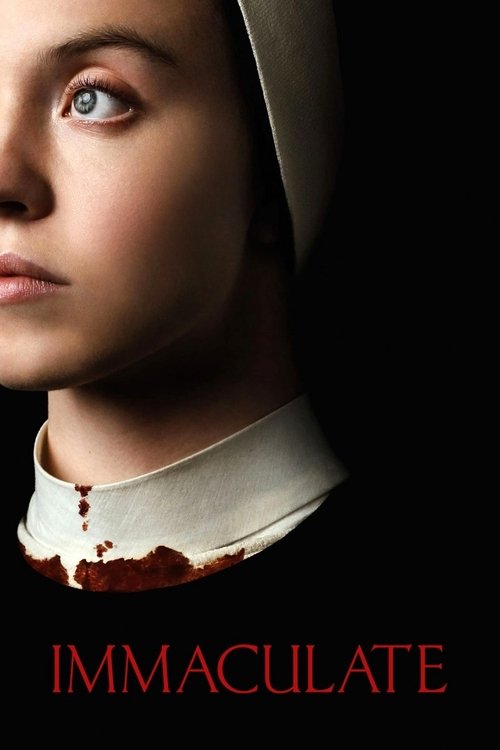
This film draws you in for a significant portion of its runtime with traditional or neutral content before springing its woke agenda. Know before you go!
Religious horror with feminist themes from the opening. The pro-abortion climax intensifies but the framework is there early.
Sydney Sweeney spent years developing Immaculate as a vehicle that would let her operate in the horror genre while carrying a message she clearly believed in. The film that emerged - shot in Italy, dressed in Catholic iconography, structured as Rosemary's Baby filtered through contemporary reproductive politics - became one of 2024's most discussed horror films and one of its most precisely crafted woke traps.
Classification: WOKE
Woke Trap Assessment
SIGNIFICANT WOKE TRAP. Immaculate is one of the most technically precise woke traps of the past several years for a specific audience: devout Catholic and religious conservative viewers who are drawn to films that engage seriously with faith. The premise - an American nun in an Italian convent who discovers she is carrying a miraculous pregnancy - sounds like the setup for a devotional horror film in the tradition of The Order (2003) or The Rite (2011). The Catholic aesthetics are genuinely employed with craft: the convent is beautiful, the rituals are depicted with accuracy, the protagonist's faith is treated as real and sincere in the film's early passages.
Then the trap closes. Director Michael Mohan has confirmed in interviews that the film is a direct abortion allegory. The pregnancy Cecilia carries is one she did not consent to. The institution that impregnated her refuses to explain what happened, refuses to acknowledge her autonomy, and regards her as a vessel for their purposes rather than as a person. Her final choice - to destroy the infant on the convent steps rather than allow it to be born into the institution's control - is presented as an act of liberation and reclaimed agency. This is not a subtext that requires interpretation. It is the film's stated intent.
Religious conservative viewers who went expecting a Catholic horror film received an anti-religious, pro-choice horror film instead.
Creative Team at a Glance
- Director: Michael Mohan - American director, confirmed the film's pro-choice allegorical intent in interviews
- Writer: Andrew Lobel - Black List script, horror-thriller background
- Lead Producer: Sydney Sweeney (Fifty-Fifty Films)
- Composer: Will Bates - Italian horror conventions
- Top Cast: Sydney Sweeney (Cecilia), Alvaro Morte (Father Sal Tedeschi), Benedetta Porcaroli (Gwen)
- Pre-Viewing Prediction: WOKE - Once the director's stated intent was known, the verdict was clear. Confirmed.
- Fidelity Casting: ACCURATE - Original screenplay, Italian setting, international cast.
Cecilia (Sydney Sweeney) is a young American woman with a devout Catholic faith who has survived a childhood near-drowning she interprets as a sign of divine purpose. She arrives at a beautiful, remote Italian convent - Villa Camellia - to join its order as a novitiate. Father Sal Tedeschi (Alvaro Morte), a charismatic and attentive priest, greets her warmly. The convent cares for elderly and dying nuns, and Cecilia's work there is physically demanding but spiritually fulfilling in its early days.
She makes a friend in Gwen (Benedetta Porcaroli), a more cynical novitiate who has doubts about the order and about Father Sal specifically. Gwen begins to notice things. Cecilia does not.
Cecilia discovers she is pregnant. She is a virgin. The convent's leadership - Father Sal, Cardinal Franco Merola (Giorgio Colangeli) - treats this as a miracle. The immaculate conception has happened again. Cecilia is venerated, monitored, confined. She has been chosen, they tell her. She is blessed.
As the pregnancy progresses, Cecilia begins to understand what has happened. The convent is not what it claims to be. The miracle was manufactured - a secret laboratory beneath the convent has been using the preserved DNA of Jesus Christ (supposedly recovered from a relic) to create an engineered pregnancy in a devout, genetically suitable host. Cecilia was selected, assessed, and impregnated without her knowledge or consent.
Gwen investigates and is killed. Others who ask questions disappear. The convent is a closed system that protects its project at any cost.
In the film's final sequence, Cecilia escapes, goes into labor on the convent steps, gives birth to the child - and strangles it. The camera holds on her face as she makes the decision. She looks directly into the lens. The film ends.
Mohan has described this ending as the film's thesis statement: a woman who was impregnated without consent, by an institution that treated her as a vessel, makes the choice to refuse that institution its goal. The film frames it as the reclamation of bodily autonomy.
Trope Analysis - VVWS Weighted Scoring
Formula: Weighted Score = Severity x Authenticity Multiplier x Centrality Multiplier
Authenticity: High=0.7, Moderate=1.0, Low/Injected=1.4 | Centrality: Low=0.5, Moderate=1.0, High=1.8
Red Woke Tropes
| Trope | Severity (1-5) | Auth | Centrality | Weighted Score |
|---|---|---|---|---|
| Reproductive Autonomy as Film's Central Thesis | 5 | 1.4 | 1.8 | 12.6 |
| Religious Institution as Oppressive Conspiracy | 4 | 1.0 | 1.8 | 7.2 |
| Male Church Authority as Predatory Control | 4 | 1.4 | 1.0 | 5.6 |
| Female Victim Reclaims Agency Through Destruction | 3 | 1.4 | 1.0 | 4.2 |
| Faith Used as Cover for Institutional Violence | 2 | 1.0 | 1.0 | 2.0 |
| WOKE TOTAL | 31.6 |
Green Traditional Tropes
| Trope | Severity (1-5) | Auth | Centrality | Weighted Score |
|---|---|---|---|---|
| Female Protagonist's Faith Depicted as Sincere | 3 | 0.7 | 1.0 | 2.1 |
| Institutional Deception as Horror Source | 3 | 0.7 | 1.0 | 2.1 |
| Individual Courage Against Corrupt Power | 2 | 0.7 | 1.0 | 1.4 |
| Evil Has Consequences for Those Who Practice It | 2 | 0.7 | 1.0 | 1.4 |
| TRAD TOTAL | 7.0 |
Score Margin: -21 WOKE
Director Track Record
Michael Mohan's directorial career is relatively short, anchored by his producing partnership with Sydney Sweeney. The Voyeurs (2021) is an erotic thriller on Amazon Prime that generated attention primarily through Sweeney's profile rather than Mohan's directorial credentials. Immaculate is a significant step up in craft, budget, and ambition.
What is notable about Mohan as a director is not his filmography but his stated intent. He has been unusually candid about Immaculate's allegorical architecture - describing the film in terms of bodily autonomy, non-consensual pregnancy, and institutional control of female bodies. These are not interpretations imposed on the film by critics; they are the director's description of what he made.
Pattern Assessment: Limited directorial history, but stated ideological intent is unambiguous. Ideological tendency: PROGRESSIVE, pro-reproductive autonomy, anti-religious institution. The film is his most significant directorial statement and it is ideologically clear.
Full Cast
| Actor | Role |
|---|---|
| Sydney Sweeney | Cecilia |
| Alvaro Morte | Father Sal Tedeschi |
| Benedetta Porcaroli | Gwen |
| Dora Romano | Sister Isabelle |
| Giorgio Colangeli | Cardinal Franco Merola |
| Simona Tabasco | Sister Lucia |
Adult Viewer Insight
Religious conservative viewers - and Catholic viewers specifically - should approach Immaculate with their eyes open. The film is beautifully made. The Italian convent photography is genuinely stunning. Sydney Sweeney's performance is committed and technically accomplished. If you watch the film purely as a horror experience, there is real craft on display.
But the film's intent is not ambiguous, and the ending makes it explicit. A devout woman is impregnated without her consent by a religious institution that regards her as a means to its ends. She reclaims her agency by destroying the product of that non-consensual pregnancy on the institution's doorstep. The director has confirmed this is exactly what the film is saying. The Catholic setting is not context for a devotional horror experience - it is the target of the film's critique. The Church in Immaculate is an organized system of male control over female bodies that uses faith as its cover story.
For Catholic and religious conservative viewers, the film's woke trap mechanism deserves specific attention. The premise sounds like it could be a film about faith tested and sustained. Cecilia's faith is genuine in the opening act and treated with something like respect. The film earns enough trust in the first half to land its betrayal in the second. That betrayal is ideological as much as narrative.
Adult viewers who are not religious conservatives can engage with the film as a technically accomplished horror-allegory hybrid that operates in the tradition of Rosemary's Baby (1968) and The Handmaid's Tale. The allegory is not particularly subtle, but the execution is professionally accomplished.
Parental Guidance
Rated R for violent content, terror, some sexual content and language.
Violence - SEVERE:
- Characters are murdered within the convent. Deaths depicted graphically.
- Cecilia witnesses violence against other novitiates.
- The film's climactic birth sequence is graphically depicted.
- The film ends with Cecilia strangling the newborn infant. This is depicted directly.
Sexual Content:
- No explicit sexual activity. The pregnancy is non-consensual and non-physical (laboratory origin), but the violation is the film's central horror.
- Some mild sensual content early in the film.
Language - MODERATE:
- Strong language throughout.
Religious Content:
- Catholic rituals, iconography, and settings depicted extensively and with production accuracy.
- The Church is presented as an organized conspiracy against female autonomy.
- Cecilia's genuine faith is depicted sympathetically in the first act, then weaponized against her by the institution.
- The film ends with the protagonist killing an infant the Church considers miraculous.
Age Recommendation: ADULTS ONLY. The violence - including the final infanticide - makes this completely unsuitable for minors. Catholic and religiously observant families should be particularly aware that the film is a direct anti-religious allegory, not a devotional horror film. The woke trap is real and potentially damaging for younger viewers who lack the critical framework to identify the film's allegorical intent.
Review by VirtueVigil Editorial Team | February 19, 2026
Immaculate (2024) | Dir. Michael Mohan | Black Bear / Hulu
VVWS Score: WOKE -21 | authIndex: 72
Formula: Weighted Score = Severity × Authenticity Multiplier × Centrality Multiplier
🔴 Woke Tropes
| Trope | Severity | Authenticity | Centrality | Score |
|---|---|---|---|---|
| Reproductive Autonomy as Film's Central Thesis | 5 | Low | High | 12.6 |
| Religious Institution as Oppressive Conspiracy | 4 | Moderate | High | 7.2 |
| Male Church Authority as Predatory Control | 4 | Low | Moderate | 5.6 |
| TOTAL WOKE | 25.4 | |||
🟢 Traditional Tropes
| Trope | Severity | Authenticity | Centrality | Score |
|---|---|---|---|---|
| Female Protagonist's Faith Depicted as Sincere | 3 | High | Moderate | 2.1 |
| Individual Courage Against Corrupt Institutional Power | 2 | High | Moderate | 1.4 |
| TOTAL TRADITIONAL | 3.5 | |||
Score Margin: -21 WOKE
Director: Michael Mohan
PROGRESSIVE - director of projects developed with Sydney Sweeney (their producing partnership). Has confirmed the film's pro-choice allegorical intent in multiple interviews. Career includes streaming thrillers and collaborative projects.American director whose feature work includes The Voyeurs (2021, Amazon Prime, erotic thriller starring Sydney Sweeney) and Immaculate (2024). He and Sweeney form a producing partnership through her Fifty-Fifty Films company. Mohan has been candid about Immaculate's allegorical intent - the pregnancy Cecilia carries is one she did not consent to, carried in a religious institution that refuses to explain what happened to her or acknowledge her agency, and her final choice to destroy the baby rather than allow it to be raised by the institution is framed as an act of liberation. He has described the ending as 'the most explicit statement of what the film is about.' The film was developed specifically to give Sweeney a vehicle that operated in the horror genre while carrying a contemporary political message.
Writer: Andrew Lobel
American screenwriter whose script for Immaculate was on the Black List (Hollywood's annual list of outstanding unproduced scripts) before Sweeney's company acquired it. The script's Black List status suggests industry recognition of its craft quality and commercial potential. Lobel has a background in horror and thriller. The script's allegorical dimensions were present from its Black List version.
Producers
- Sydney Sweeney (Fifty-Fifty Films) — Sweeney's production company developed the project specifically as a vehicle combining horror genre with contemporary allegorical content. Sweeney has publicly identified as someone who doesn't feel fully represented by either political party, but she clearly aligned herself with the film's pro-choice allegorical message by championing and producing it.
- Black Bear Pictures (Black Bear Pictures) — American production and distribution company known for prestige and genre films. No specific ideological signal.
Fidelity Casting Analysis ACCURATE
Original screenplay set in a fictional Italian convent. American protagonist, Italian and international supporting cast accurately reflects the cosmopolitan nature of religious institutions.
Immaculate is an original screenplay set in a fictional contemporary convent in Italy. The casting of Sydney Sweeney as an American nun in an Italian institution is plausible - religious orders accept international postulants. The supporting cast of Italian actors grounds the convent setting authentically. No fidelity casting concerns for an original horror screenplay.
Adult Viewer Insight
Immaculate is the most precise woke trap for religious conservative audiences in 2024. The Catholic setting is employed with genuine craft - the Italian convent photography is beautiful, the rituals are accurate, Cecilia's early faith is treated as sincere. The film earns enough trust to land its betrayal effectively. That betrayal is ideological: the film's director has confirmed in interviews that it is a direct abortion allegory, with a woman impregnated without consent by a religious institution that treats her as a vessel for its purposes, who reclaims her agency by destroying the child rather than allowing it to be raised by the institution. The ending - Cecilia strangling the newborn on the convent steps - is not ambiguous. This is a pro-choice horror film that uses Catholic aesthetics as its delivery mechanism. Religious conservative viewers deserve to know what they are walking into.
Parental Guidance
Rated R. ADULTS ONLY. Graphic violence throughout including murders within a convent and a graphically depicted birth sequence. The film ends with the protagonist strangling a newborn infant - depicted directly on screen. This alone makes the film completely unsuitable for any minor. Sexual content is limited but the violation premise is central. Language is strong throughout. Religious families should be aware that this is a direct anti-religious allegory in which the Catholic Church is an organized conspiracy against female autonomy. The film's Catholic aesthetics are a trap, not a devotional offering.
Find Immaculate on Amazon Prime Video, rent, or buy:
▶ Stream or Buy on AmazonAs an Amazon Associate, VirtueVigil earns from qualifying purchases.




Community Discussion 0
Subscribe to comment.
Join the VirtueVigil community to share your perspective on this review.