Inception
Christopher Nolan spent ten years writing Inception. It shows. This is one of the most structurally ambitious mainstream films ever produced: a heist story operating across five simultaneous dream levels, each with its own physics, each with its own time dilation, all anchored to one man's guilt ove…
Full analysis below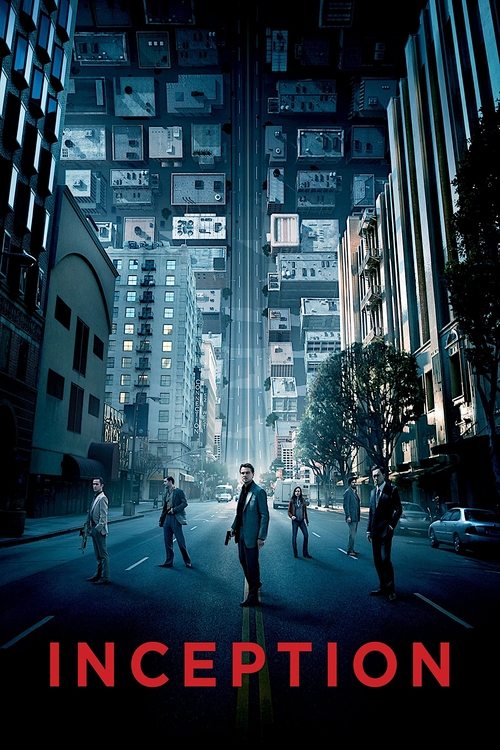
Not a woke trap. The film's progressive elements, such as they are, are minimal and not hidden behind traditional marketing. Conservative viewers will not feel ambushed.
Christopher Nolan spent ten years writing Inception. It shows. This is one of the most structurally ambitious mainstream films ever produced: a heist story operating across five simultaneous dream levels, each with its own physics, each with its own time dilation, all anchored to one man's guilt over his dead wife and his desperation to return to his children. It made $836 million globally. It has an 8.8 on IMDb, making it one of the highest-rated films in the database's history. It won four Academy Awards. It is, by almost any measure, a modern masterpiece.
But what does it say? That is the VirtueVigil question, and with Inception the answer is surprisingly clean.
Dom Cobb (Leonardo DiCaprio) is a professional thief who operates inside the dreams of corporate targets to steal their secrets. He has been living in exile since his wife Mal (Marion Cotillard) died by suicide, an event for which he carries profound guilt: he planted an idea in her subconscious that made her unable to distinguish dream from reality. He is offered a way home, a chance to have his criminal record erased so he can return to his children, in exchange for one job. Instead of extraction, this time it is inception: planting an idea deep enough in Robert Fischer's (Cillian Murphy) mind that it reshapes his entire worldview.
The heist structure is immaculate. Nolan stacks the dream levels like matryoshka dolls: the van level, the hotel level, the snow fortress, and the deepest level of limbo where time moves so slowly that decades pass in minutes. The ensemble, Arthur (Joseph Gordon-Levitt), Ariadne (Elliot Page), Eames (Tom Hardy), Yusuf (Dileep Rao), has genuine chemistry and complementary skills. The action setpieces, including Gordon-Levitt's hallway fight sequence shot without wires in a rotating set, remain among the most technically impressive achievements in modern cinema.
But Nolan is not interested in spectacle for its own sake. The dream architecture is a metaphor for grief. Cobb's version of limbo is a city he and Mal built together over fifty years of dream-time, now crumbling because he cannot let go. Mal exists in his subconscious as a projection, beautiful and dangerous, the embodiment of his guilt. She keeps sabotaging his missions because he keeps refusing to admit what he did. The story is about a man who must choose between the comfortable version of his dead wife and the real children waiting for him in the waking world.
This is a deeply traditional moral framework. Cobb's guilt is not dismissed or processed through therapy-speak. It is carried. It has weight. The film treats his culpability in Mal's death with genuine seriousness: he did do something wrong, he did plant an idea in her mind, he is responsible for consequences he did not intend. His path back to his children requires him to face that guilt rather than submerge it in one more dream.
The film's villains are not systems or institutions. They are a corporation (Cobol Engineering) and a dead woman living in a man's subconscious. Neither is political. Both are specific. The story is personal rather than ideological, and Nolan keeps it that way throughout two and a half hours of immense formal complexity.
What about Robert Fischer? The inception target is himself a compelling figure. His father is dying. He has spent his life trying to earn approval from a man who always seemed to prefer his business partner. The idea Cobb's team plants is not sinister: they want Fischer to believe his father loved him and wanted him to find his own way rather than inherit the family empire. This is, at its core, a film about fathers and sons and whether the next generation can ever really hear what the previous one was trying to say. That Fischer dissolves his father's empire at the end based on a planted idea is morally complicated, but Nolan lets that complication stand without resolving it.
The final shot, the spinning top, is one of cinema's great ambiguous endings. Did Cobb make it home, or is he still dreaming? The question cuts both ways: if he is dreaming, he is trapped in a lie he chose over painful truth. If he is awake, his children are real and his redemption is real. Nolan has said he does not answer the question deliberately. What matters is that Cobb chooses to believe he is home. After two and a half hours of watching a man tortured by the gap between comfortable fantasy and painful reality, the film earns that final act of faith.
Ideologically, Inception is almost entirely clean. There is no progressive lecturing. No diversity-box-checking that distorts the story. No villain who is a symbol for conservative values. The ensemble is diverse without comment, which is how it should be. The film is about grief, guilt, love, and the difference between truth and comfort. These are themes conservatives and progressives share.
The one note worth flagging is Elliot Page's casting as Ariadne. Page came out as transgender in 2020, a decade after the film was made. In 2010, Page (then billed as Ellen Page) was a respected indie actress. The character of Ariadne is written and performed as female, and conservative viewers who have followed Page's transition may find the viewing experience complicated. This is a matter of personal conscience; it does not affect the film's content, which was made before Page's transition.
This is Nolan at his peak: a director who trusts his audience enough to give them a genuinely complex puzzle, wraps it in world-class filmmaking, and anchors it to a father's love for his children. Conservative audiences should feel entirely comfortable watching this.
Formula: Weighted Score = Severity × Authenticity Multiplier × Centrality Multiplier
🔴 Woke Tropes
| Trope | Severity | Authenticity | Centrality | Score |
|---|---|---|---|---|
| Token Female Authority Figure (Ariadne as Surrogate Therapist) | 2 | 0.7 | 0.5 | 0.7 |
| Moral Ambiguity Around Corporate Espionage (Anti-Business Undertone) | 2 | 0.7 | 0.5 | 0.7 |
| Manipulation as Heroic Tool (Inception as Non-Consensual Mind Control) | 3 | 1 | 0.5 | 1.5 |
| TOTAL WOKE | 2.9 | |||
🟢 Traditional Tropes
| Trope | Severity | Authenticity | Centrality | Score |
|---|---|---|---|---|
| Father's Love as Absolute Motivation | 5 | 0.7 | 1.8 | 6.3 |
| Guilt as Moral Accountability (Not Processed Away) | 4 | 0.7 | 1.8 | 5.04 |
| Reality Over Comfortable Illusion (Truth as Moral Imperative) | 4 | 0.7 | 1 | 2.8 |
| Mentor Figure (Michael Caine as Professor Miles) | 3 | 0.7 | 0.8 | 1.68 |
| Masculine Competence (The Team as Expert Professionals) | 3 | 0.7 | 1 | 2.1 |
| Sacrifice and Risk for Family (Male Duty) | 3 | 0.7 | 1.2 | 2.52 |
| TOTAL TRADITIONAL | 20.4 | |||
Score Margin: +18 TRAD
Director: Christopher Nolan
CENTER. Nolan is one of Hollywood's few genuinely apolitical mainstream directors. He has resisted studio pressure to include diversity quotas, consistently cast on merit, and structured his narratives around ideas rather than ideology. His stated influences are practical filmmaking over messaging. He does not give political interviews and does not embed progressive lecture material in his films.Christopher Nolan is the rare blockbuster director who operates on pure craft. Born in London, raised between England and America, he built his career with zero-budget psychological thrillers (Following, Memento) before becoming one of Hollywood's most trusted directors of large-scale projects. The Dark Knight trilogy, Interstellar, Dunkirk, Oppenheimer: Nolan makes serious films about serious things without condescending to audiences or weaponizing entertainment for ideology. Inception, written over a decade, was his passion project: a heist film set inside the architecture of the human mind. It remains his most technically ambitious original screenplay.
Writer: Christopher Nolan
Nolan wrote Inception over approximately ten years, beginning with the concept of shared dreaming during his career on Memento. The screenplay is a masterclass in structural complexity: five narrative layers, each with its own physics and time dilation, all interconnected through a single emotional core. The film's central thesis is not about dream technology but about grief, guilt, and the choice between living in a comforting lie versus accepting painful truth. Nolan consistently puts masculine grief and moral accountability at the center of his stories.
Adult Viewer Insight
Conservative adults will find Inception one of the most ideologically comfortable mainstream blockbusters of its era. Nolan consistently puts masculine grief and moral accountability at the center of his stories, and Inception is no exception. The film does not offer Cobb cheap absolution: his guilt is real, his culpability in Mal's death is real, and his path back to his children requires facing rather than suppressing those facts. The final act of faith, choosing to believe he is home, is not a rejection of reality but an earned release from a grief that was consuming him. Fathers in this film are central figures. Michael Caine's Professor Miles is a reliable moral anchor. The father-son dynamic between Fischer and his dying father is treated with unexpected tenderness. Nolan made a film that believes families matter, that guilt must be faced not medicated away, and that truth is worth more than comfortable lies. That is a conservative worldview embedded in a sci-fi thriller, and it works beautifully.
Parental Guidance
PG-13. Appropriate for ages 13 and up. Intense action throughout. Suicide is depicted and discussed as a serious moral event, not treated casually. Mature themes of grief and guilt. No sexual content, no drug use, minimal language. Strong recommendation for family discussion about truth versus comfortable illusion.
Find Inception on Amazon Prime Video, rent, or buy:
▶ Stream or Buy on AmazonAs an Amazon Associate, VirtueVigil earns from qualifying purchases.
Community Discussion 0
Subscribe to comment.
Join the VirtueVigil community to share your perspective on this review.