
Iron Man
Iron Man is the movie that started it all. Not just the Marvel Cinematic Universe, though that is the historical fact. It started the era of the franchise superhero film as the dominant mode of big-budget Hollywood storytelling.…
Full analysis below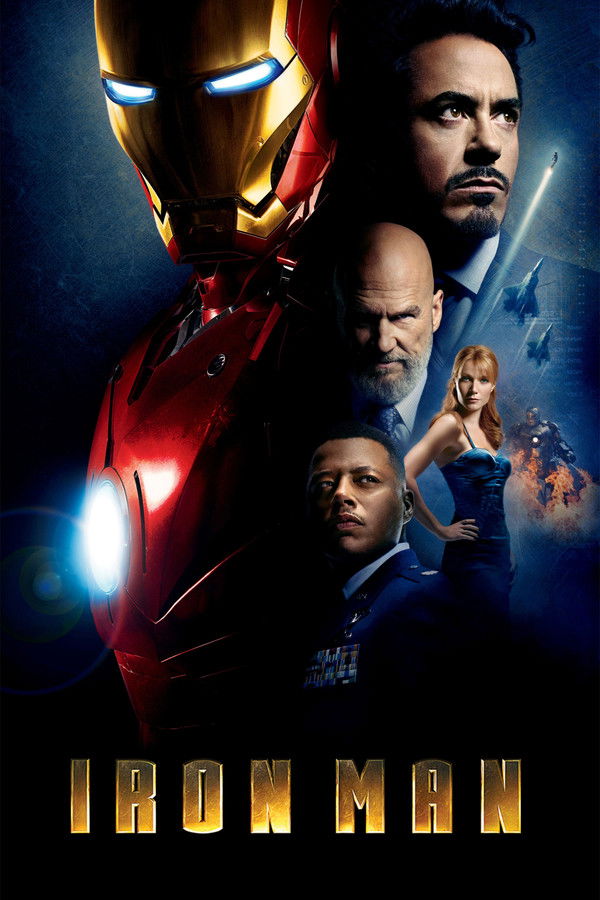
NOT A WOKE TRAP. Iron Man is exactly what it looks like in every trailer and poster: a crowd-pleasing origin story about a weapons billionaire who builds a suit of armor and becomes a hero. The marketing was honest. The film delivers. No bait and switch. No hidden agenda. The politics in the film - a critique of weapons dealing that ultimately affirms American ingenuity and individual heroism - are plainly visible from the first frame. Conservative audiences who enjoy action blockbusters will find Iron Man comfortable viewing.
Iron Man is the movie that started it all. Not just the Marvel Cinematic Universe, though that is the historical fact. It started the era of the franchise superhero film as the dominant mode of big-budget Hollywood storytelling. Seventeen years and dozens of sequels later, it is worth going back to the beginning to ask: is the original any good, and where does it land ideologically?
The answers, in order, are: yes, genuinely good, and solidly traditional.
The setup is clean. Tony Stark is a billionaire weapons manufacturer, playboy, and brilliant engineer who lives entirely without consequences until a weapons demonstration in Afghanistan goes wrong and he is captured by terrorists using his own weapons. His captor Obadiah Stane has been selling Stark Industries weapons off-book to the highest bidder, including people who want to kill Americans. Tony builds an armored suit to escape and, upon returning to America, decides to shut down Stark Industries weapons division and become Iron Man - a one-man correction of his own legacy of damage.
The ideological content here deserves careful reading. The film has been accused of both pro-military and anti-war readings, and both camps have a point. Tony Stark starts the film as a defense contractor who genuinely believes his weapons protect freedom. The film's early scenes at the weapons demonstration, with Stark cracking jokes and basking in applause from U.S. soldiers, are not ironic. They are presented approvingly. Tony's weapons are good. Tony's salesmanship is charming. The critique that follows is not of the military or of American defense - it is of corporate corruption. Obadiah Stane, the villain, sells weapons to the enemy. Tony's transformation is from careless profiteer to responsible warrior. He does not become a pacifist. He builds a better weapon and aims it himself.
This is a fundamentally conservative narrative arc. The problem with weapons is not weapons. The problem is who has them and why. Tony's solution is not disarmament - it is accountability. He shuts down the company's weapons division to stop the corrupt supply chain, then personally re-enters the weapons business as Iron Man. The distinction matters. Tony does not reject power. He rejects irresponsible power. He does not flee violence. He masters it and directs it toward genuine protection.
The relationship between Tony and Pepper Potts (Gwyneth Paltrow) is one of the most genuinely appealing romantic threads in the superhero genre. Pepper is competent and capable but is not written as Tony's equal in the 'strong woman who does not need a man' mode that would dominate MCU writing later. She needs Tony's protection, and she knows it. She is also his moral compass and the person who grounds him. Their dynamic is old-fashioned in the best sense: a brilliant, reckless man who needs a good woman to keep him from destroying himself, and a capable woman who is genuinely attracted to that brilliance even while managing its chaos.
The villain structure is worth noting. Obadiah Stane is not a systemic critique of capitalism or America. He is a bad individual inside an otherwise legitimate institution. The film's resolution is not reform of the system but removal of the corrupt individual. Tony rebuilds Stark Industries as a force for good. Corporate America is not the enemy. One corrupt executive was the enemy.
Robert Downey Jr. is the entire movie. His performance as Tony Stark is one of the great pieces of casting in blockbuster history - not just because Downey is talented but because Tony Stark is essentially Downey's own personal narrative (the talented, self-destructive man who hit bottom and rebuilt himself) mapped onto a comic book character. The performance has a specificity and lived-in quality that most superhero films never achieve. Tony Stark feels like a real person. That is almost entirely Downey's doing.
Jon Favreau directs with efficiency and confidence. The film moves fast, trusts its lead, and does not get distracted by the universe-building obligations that would eventually weigh down MCU films. The Jericho weapons demonstration, the cave escape, the first test flights, the Malibu mansion workshop sequences - all of them have a kinetic pleasure that comes from a director who actually likes movies about people doing things.
Shaun Toub as Yinsen deserves mention. Yinsen is a Middle Eastern physicist captured alongside Tony who helps him build the suit and sacrifices himself to buy Tony time to escape. He is Muslim, dignified, wise, and brave. His death is earned and genuinely moving. In a film released in 2008 at the height of American military involvement in the Middle East, depicting a Muslim man as a hero who dies helping an American is a choice that deserves acknowledgment. It is a generous and humanizing choice.
The VVWS score reflects a film that is not preaching traditional values but organically embodies them. Tony's arc is personal accountability. His relationship with Pepper is old-fashioned romantic. The villain is corrupt individual, not corrupt system. The military is treated with respect. Violence is presented as sometimes necessary and purposeful. Family and mentorship are valued (Tony's relationship with his late father, Howard Stark, is a recurring undercurrent). The woke content is minimal: the film's critique of weapons dealing stops well short of anti-military messaging, and the female characterization, while not feminist by design, gives Pepper genuine agency within a traditional romantic framework.
Iron Man aged well. It is not the deepest superhero film ever made - The Dark Knight has that claim - but it is among the most entertaining, and it launched a franchise that would go in ideologically complicated directions while remaining, at its foundation, a story about a man who takes responsibility for his own mess and fights for something larger than himself. That is traditional. That is good.
Formula: Weighted Score = Severity × Authenticity Multiplier × Centrality Multiplier
🔴 Woke Tropes
| Trope | Severity | Authenticity | Centrality | Score |
|---|---|---|---|---|
| Anti-Corporate / Defense Industry Critique | 3 | 1 | 1 | 3 |
| Playboy Lifestyle Presented Without Moral Judgment | 2 | 1 | 0.5 | 1 |
| Light Middle East / War on Terror Critique | 1 | 1 | 1 | 1 |
| TOTAL WOKE | 5.0 | |||
🟢 Traditional Tropes
| Trope | Severity | Authenticity | Centrality | Score |
|---|---|---|---|---|
| Personal Accountability Arc | 5 | 0.7 | 1.8 | 6.3 |
| Military Respect and Heroism | 4 | 0.7 | 1 | 2.8 |
| Complementary Male-Female Dynamic | 3 | 0.7 | 1 | 2.1 |
| Corrupt Individual vs. Corrupt System | 3 | 0.7 | 0.5 | 1.05 |
| Self-Reliance and American Ingenuity | 3 | 0.7 | 0.5 | 1.05 |
| Sacrifice as Virtue | 3 | 0.7 | 0.5 | 1.05 |
| TOTAL TRADITIONAL | 14.4 | |||
Score Margin: +9 TRAD
Director: Jon Favreau
CENTRIST / INDUSTRY CRAFTSMAN. Favreau is not an ideological filmmaker. He is a storytelling technician who gravitates toward crowd-pleasing entertainment. His later career includes The Jungle Book (2016) and The Lion King (2019) live-action remakes for Disney, plus The Mandalorian, which is widely regarded as one of the more traditionally friendly entries in the Star Wars universe. He has spoken positively about traditional values in storytelling - specifically about The Mandalorian's Western and samurai genre roots. Favreau directed Iron Man as a pure genre exercise, trusting the material and Robert Downey Jr.'s chemistry with the camera.Jon Favreau began his career as an actor and writer before transitioning to directing. His directorial credits before Iron Man include Elf (2003) and Zathura (2005). Iron Man launched the Marvel Cinematic Universe and made Favreau one of the most powerful directors in Hollywood. He has since directed both MCU sequels and major Disney properties. His approach is consistently craft-first, story-second, ideology-distant.
Writer: Mark Fergus, Hawk Ostby, Art Marcum, Matt Holloway
Four-writer credits usually signal extensive studio rewrites and development. Mark Fergus and Hawk Ostby (Children of Men, Cowboys and Aliens) handled early drafts; Art Marcum and Matt Holloway did additional work. The script is lean and functional - an origin story that trusts its lead actor to do the heavy lifting. The political content (weapons manufacturing, corporate corruption) is handled broadly enough to avoid partisan readings. Tony Stark's transformation is fundamentally a story of personal responsibility and redemption, which aligns with traditional values regardless of the writers' politics.
Adult Viewer Insight
Parental Guidance
PG-13, appropriate for ages 10 and up with parental discussion. Combat violence is intense but not gory. Brief suggestive content includes an implied sexual encounter and casino scenes. Tony Stark's drinking is present but not glorified. Core message - personal accountability and choosing to protect others over personal gain - is strongly traditional.
Find Iron Man on Amazon Prime Video, rent, or buy:
▶ Stream or Buy on AmazonAs an Amazon Associate, VirtueVigil earns from qualifying purchases.
Community Discussion 0
Subscribe to comment.
Join the VirtueVigil community to share your perspective on this review.