
Joker
Joker made a billion dollars. Critics gave it a 69% on Rotten Tomatoes. Audiences gave it an 88%. The FBI and several law enforcement agencies issued security warnings before its release, fearing it would inspire mass violence.…
Full analysis below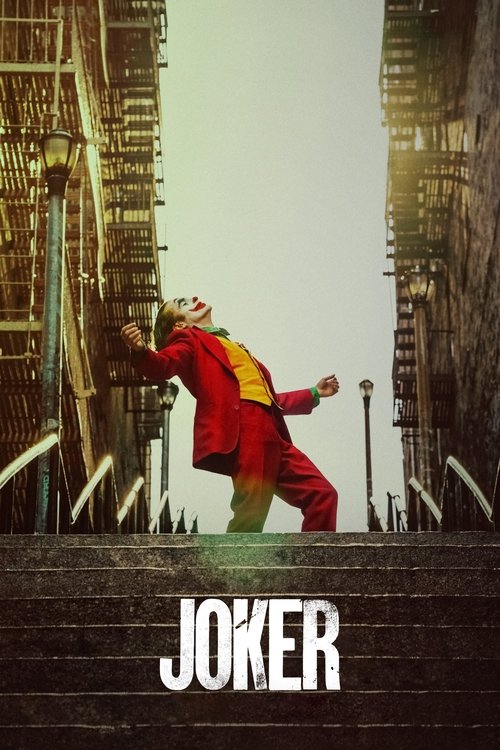
Not a woke trap. The film's ideological complexity is evident in its marketing, R rating, and director Todd Phillips' public statements. Conservative viewers knew what they were getting.
Joker made a billion dollars. Critics gave it a 69% on Rotten Tomatoes. Audiences gave it an 88%. The FBI and several law enforcement agencies issued security warnings before its release, fearing it would inspire mass violence. The New York Times called it 'a toxic rallying cry for self-pitying incels.' The Atlantic called it 'a dangerous film.' Todd Phillips called woke culture a cancer on comedy and said he made the film because comedy was no longer possible.
So: who is right?
All of them. Joker is simultaneously a masterwork of performance, a politically incoherent provocation, a genuine study of social failure, and a film whose cultural anxieties cannot be neatly claimed by either side of the culture war. It is not the violent incitement its critics feared. It is not the anti-woke manifesto its defenders wanted. It is something more interesting and more uncomfortable than either reading allows.
Joaquin Phoenix lost 52 pounds for the role of Arthur Fleck, a failed clown comedian living in a decaying Gotham City with his delusional mother. He has a condition that causes involuntary laughing fits at inappropriate moments. He is poor, isolated, medicated, and invisible. The city is rotting around him: the garbage workers are on strike, crime is up, and a billionaire named Thomas Wayne is running for mayor on a platform of contempt for the city's 'clowns.' Arthur's idols are Murray Franklin (Robert De Niro, deliberately evoking his own role in The King of Comedy), a late-night TV host who mocks ordinary people for sport.
The film is a portrait of a man failed by every institution. His social worker loses her job in budget cuts and can no longer access his medication. His mother's past, involving a possible relationship with Thomas Wayne, is built on lies. His colleagues are hostile. The one moment of genuine human kindness, a gun given to him by a coworker, ends catastrophically. When three drunk Wayne Enterprises employees beat him on the subway, he shoots them in self-defense and is briefly transformed, in the eyes of Gotham's poor, into a symbol of resistance.
Phoenix's performance is genuinely one of the great screen performances of the decade. The physical transformation is part of it: his spine curves, his ribs protrude, his laugh is a prolonged convulsion that he cannot control. But the emotional precision is what elevates it. There are moments, particularly the scene where Arthur reads his mother's letter about Thomas Wayne and the blood drains from his face, where Phoenix conveys more complex feeling with his body than most actors can with three pages of dialogue. The Academy Award was warranted.
Now for the ideological content, which is where Joker gets genuinely complicated.
The film's left-wing content is substantial. Thomas Wayne is depicted as a contemptuous plutocrat who calls the city's poor 'clowns' and gets a standing ovation from Gotham's elite for doing so. The rich are oblivious to suffering. Institutions meant to help the poor are defunded. The Joker's emergence as a symbol of class resentment has explicitly populist undertones. The rioters who follow the Joker's example are killing rich people in the streets, and while the film does not exactly celebrate this, it presents it as an understandable consequence of systemic neglect.
The film's right-wing or anti-progressive content is equally substantial. The mental health system is depicted as useless and quickly defunded, but the film does not argue for more funding. It shows that no institution could have saved Arthur. The social worker can't help him. His therapist can't help him. His mother couldn't help him. Thomas Wayne may have been his father and abandoned him, or may have been a victim of his mother's delusion. The film is agnostic about whether the system could be fixed. The message is closer to: some people fall through every net, and the net is never going to catch everyone. That is a more conservative reading of social failure than a progressive one.
The film has no heroes. Thomas Wayne is callous and possibly abusive. Murray Franklin is a smirking culture vulture who mocks ordinary people's dreams for ratings. The social workers are powerless. The cops are hostile. Even the mentor figure, the one kind colleague who gives Arthur a gun, does so for selfish reasons and then throws Arthur under the bus when it goes wrong. There is no institution, no system, and no relationship in this film that functions as it should. This is nihilism, not ideology.
The most politically charged element is Thomas Wayne as the villain. Comics fans will recognize this as a significant departure from the canonical Thomas Wayne, who is Gotham's most generous benefactor. Phillips' Thomas Wayne is specifically modeled on a particular type of 2010s plutocrat: contemptuous of the poor, convinced of his own superiority, running on a 'competence' platform that translates to 'these people need to be managed, not helped.' Whether this reads as an anti-Trump metaphor (as many critics argued) or as a broader critique of elite arrogance (which applies across the political spectrum) depends heavily on the viewer's priors.
The controversy about the film inspiring mass violence deserves direct address. Joker was released in October 2019 without incident. No mass shootings were attributed to the film. The incel panic proved unfounded. What the film actually does with its potentially incendiary material is more cautious than its reputation suggests: Arthur's violence is presented as a tragedy, not a triumph. The film does not give him a redemption arc or a righteous victory. His final scene, dancing in an institution, suggests he has lost his grip on what is real entirely. The clown riots are Gotham's problem, not Arthur's victory. The film is about a man who breaks rather than rises.
Where does this leave conservative viewers? The honest answer is: in uncomfortable company. The film's critique of elite contempt for the poor is one conservatives can endorse. Its nihilism about institutions is compatible with limited-government skepticism. Its horror at the consequences of defunded mental health resources points in a conservative direction (family and community cannot be replaced by bureaucracy). But the class-warfare framing, the Thomas Wayne villain, and the film's basic sympathy for the rioters are genuinely progressive elements.
Joker is not a film with a coherent political message. It is a film about a man in pain made by a director frustrated with his cultural moment, filtered through performances of extraordinary intensity. The culture war around it was always louder than the film itself.
Formula: Weighted Score = Severity × Authenticity Multiplier × Centrality Multiplier
🔴 Woke Tropes
| Trope | Severity | Authenticity | Centrality | Score |
|---|---|---|---|---|
| Plutocrat as Primary Villain (Class Warfare Framing) | 4 | 1 | 1.8 | 7.2 |
| Government Cuts Cause Social Breakdown (Defunding Narrative) | 3 | 1 | 1 | 3 |
| Populist Violence Framed as Understandable Consequence | 3 | 1 | 0.5 | 1.5 |
| Black Love Interest (Minor Racial Casting Signal) | 1 | 0.7 | 0.5 | 0.35 |
| Media as Exploitation Machine (Murray Franklin as Villain) | 2 | 1 | 0.5 | 1 |
| TOTAL WOKE | 13.0 | |||
🟢 Traditional Tropes
| Trope | Severity | Authenticity | Centrality | Score |
|---|---|---|---|---|
| Institutions Cannot Replace Human Connection (Anti-Bureaucracy) | 4 | 1 | 1.8 | 7.2 |
| Consequences of Family Dysfunction (Broken Home as Root Cause) | 4 | 1 | 1 | 4 |
| Moral Universe with Clear Consequences | 3 | 1 | 0.8 | 2.4 |
| TOTAL TRADITIONAL | 13.6 | |||
Score Margin: +1 TRAD
Director: Todd Phillips
CONTRARIAN CENTER-LEFT. Phillips came from comedy (The Hangover trilogy) and publicly blamed 'woke culture' for killing comedy in 2019. He said he turned to serious drama because 'go try to be funny nowadays with this woke culture.' That makes him unusual in Hollywood. His sympathies are not with the progressive establishment, but Joker is not a conservative film. It is a nihilistic film that borrows equally from left-wing class critique and right-wing anti-institutional anger.Todd Phillips built his career on raucous R-rated comedies. The transition to Joker was jarring to his collaborators and critics alike. His stated motivation was frustration with comedy in the age of social media sensitivity. Joker was developed with Scott Silver and drew heavily from Martin Scorsese's Taxi Driver and The King of Comedy, both of which Phillips studied intensively. Scorsese himself was attached as producer for a time (he departed the project but remained an executive producer). The film won the Golden Lion at the 2019 Venice Film Festival.
Writer: Todd Phillips, Scott Silver
Phillips and Silver wrote the screenplay as a character study rather than a superhero origin story. Their stated intention was to make a film about a man who was 'failed by every institution': the mental health system, the social welfare system, the family, the culture of celebrity. The screenplay draws from two Scorsese films: Rupert Pupkin's delusions in The King of Comedy and Travis Bickle's descent in Taxi Driver. The film is not really about the Joker as Batman's nemesis. It is about Arthur Fleck as a social casualty.
Adult Viewer Insight
Conservative adults who have avoided Joker based on its reputation deserve a more honest assessment. The film is not a progressive manifesto. It is a nihilistic character study that refuses to land on any clean ideology. The Thomas Wayne villain is the most overtly political element and it cuts both ways: plutocrat contempt for the poor is a target for left and right populists alike. The mental health commentary is actually more conservative than progressive in its implications: no amount of social spending could have saved Arthur Fleck, because what he needed was not a system but a human being who actually saw him. The film is deeply uncomfortable. It is also genuinely excellent. Phoenix gives one of the great screen performances of the decade. The Scorsese influences (Taxi Driver, King of Comedy) are worn openly and honored skillfully. If you can handle the darkness, this is serious cinema rather than dangerous provocation.
Parental Guidance
Rated R. Adults only. Graphic violence, disturbing mental illness depiction, suicide ideation. Not appropriate for anyone under 17. Not suitable for viewers currently struggling with mental health challenges. This is serious dramatic cinema for adult audiences only.
Find Joker on Amazon Prime Video, rent, or buy:
▶ Stream or Buy on AmazonAs an Amazon Associate, VirtueVigil earns from qualifying purchases.
Community Discussion 0
Subscribe to comment.
Join the VirtueVigil community to share your perspective on this review.