
Killers of the Flower Moon
The most disorienting thing about Killers of the Flower Moon is not its three-and-a-half-hour runtime. It is not the murders - dozens of them, deliberate and methodical.…
Full analysis below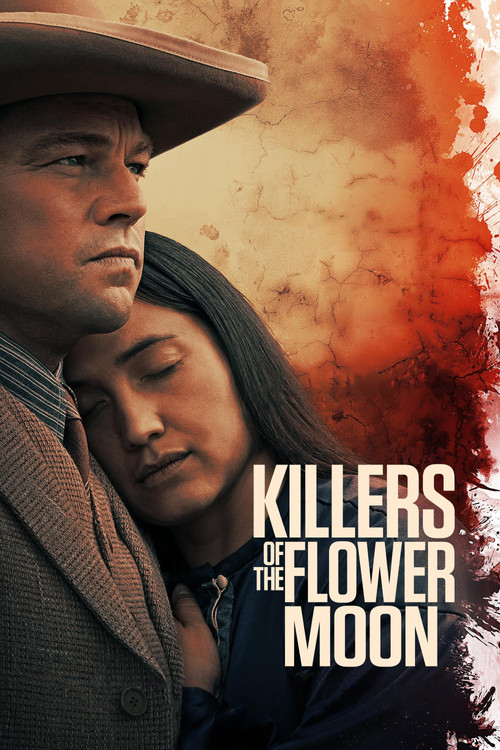
This film draws you in for a significant portion of its runtime with traditional or neutral content before springing its woke agenda. Know before you go!
NOT A WOKE TRAP. The appropriate comparison is not Barbie or Strange World - it is Schindler's List: a serious film about a real historical atrocity that does not pull its punches, made by a director whose goal was witness and preservation, not political point-scoring. The Osage Reign of Terror is one of the most well-documented atrocities in 20th-century American history. Depicting it accurately is honest filmmaking. Conservative viewers who are uncomfortable with the systemic critique embedded in the film should examine whether their discomfort is with ideological framing or with the historical record itself - because the historical record is damning. The legitimate artistic critique - that Scorsese centered the story on the white perpetrator rather than the Osage victims - is a question about whose perspective gets centered in a true account, not about fabricated ideology.
⚠️ SPOILER ALERT: This review contains detailed plot analysis and reveals key story elements including the film's ending.
The most disorienting thing about Killers of the Flower Moon is not its three-and-a-half-hour runtime. It is not the murders - dozens of them, deliberate and methodical. It is not even the fact that the killers were the husbands, doctors, and civic leaders of Osage County, Oklahoma, men who wore Sunday suits and attended church and told themselves they were civilizing the frontier. The most disorienting thing is how long it took America to notice - and how thoroughly the story was then buried. David Grann's 2017 book excavated a wound that never fully healed. Martin Scorsese's film turns that wound into an unflinching 206-minute portrait of greed, genocide-by-increment, and - in one of cinema's most unsettling pairings - genuine love coexisting with unforgivable betrayal.
This is not a woke propaganda film disguised as a prestige period piece. It is also not a culturally neutral document. It is a serious, difficult, artistically exceptional work that forces viewers to sit inside a morally catastrophic chapter of American history and resist the comfortable distance that most historical epics provide. Scorsese's choice to center the story on Ernest Burkhart, the white perpetrator - rather than Tom White, the FBI investigator, or Mollie Burkhart, the Osage wife - remains the film's most contested decision. It also may be its most honest one.
It is the early 1920s in Osage County, Oklahoma. The Osage Nation, forced onto land the federal government considered worthless, discovered that the land sat atop one of the richest oil deposits in North America. Overnight, the Osage became among the wealthiest people per capita in the world - wearing tailored clothes, hiring white chauffeurs, driving Pierce-Arrows through dirt roads where white settlers still rode horses. The federal government, unwilling to let this stand, imposed a guardian system: Osage who were deemed "incompetent" (a term applied broadly and racistly) were required to have white guardians control their finances. The Osage were rich on paper. Getting to that wealth required white permission.
Ernest Burkhart (Leonardo DiCaprio) arrives in Osage County from Texas to work for his uncle, William Hale (Robert De Niro), a cattle rancher and self-styled "King of the Osage Hills" who has carefully cultivated relationships within the tribe. Hale is all warm handshakes, native-language pleasantries, and community benevolence - a man the Osage trusted, who was also engineering their systematic murder.
Ernest meets and genuinely falls in love with Mollie (Lily Gladstone), an Osage woman of quiet dignity and deep faith. They marry. They have children. And all the while, Hale is directing Ernest to arrange the killings of Mollie's family members - her sisters, eventually her mother - to funnel their oil headrights, which pass through inheritance, to Mollie, and thereby to Ernest, and thereby to Hale. Mollie herself is being slowly poisoned with insulin injections that Ernest administers, purportedly as her diabetes treatment.
The "Reign of Terror," as it came to be known, claimed dozens of Osage lives. When the Bureau of Investigation (the FBI's predecessor) finally takes notice, agent Tom White (Jesse Plemons) arrives to conduct what becomes one of the Bureau's first major criminal investigations. Ernest eventually cracks under federal pressure, confesses, and testifies against Hale. Hale is convicted of murder. Ernest receives a lighter sentence in exchange for his testimony - a fact that haunts the film's moral accounting.
The film closes with a remarkable formal invention: a radio-play recreation of the case's broadcast on The Lucky Strike Hour, the 1930s program through which J. Edgar Hoover's FBI co-opted the story as a self-promotional exercise. Scorsese himself walks on stage and reads Mollie Burkhart's real-life obituary - a brief document that mentions nothing of the murders, nothing of the trial, as though her life's defining trauma had been quietly erased. It is one of the most devastating final images in recent American cinema.
Trope Analysis - VVWS Weighted Scoring
Formula: Weighted Score = Severity × Authenticity Multiplier × Centrality Multiplier
Authenticity: High=0.7 (historically documented), Moderate=1.0, Low (injected)=1.4 | Centrality: Low=0.5, Moderate=1.0, High=1.8
🔴 Woke Tropes
| Trope | Severity (1-5) | Authenticity | Centrality | Weighted Score |
|---|---|---|---|---|
| Systemic White Racism as Institutional/Structural | 5 | High (0.7) | High (1.8) | 6.3 |
| Anti-Colonial Settler Violence as Central Narrative | 4 | High (0.7) | High (1.8) | 5.0 |
| Government/Federal Complicity in Racial Exploitation | 4 | High (0.7) | Moderate (1.0) | 2.8 |
| White Gaze: Centering Perpetrator Over Victim Perspective | 3 | Moderate (1.0) | Moderate (1.0) | 3.0 |
| Racist Guardian System Enabling Legal Wealth Theft | 3 | High (0.7) | Moderate (1.0) | 2.1 |
| WOKE TOTAL | 19.2 |
Important caveat: Every woke-coded element above reflects documented historical reality. The Osage murders happened. The guardian system was law. Federal authorities were complicit or negligent. Because this material is historically grounded rather than ideologically injected, authenticity scores High (0.7 multiplier) throughout - the scoring system appropriately discounts penalty for depicting real history.
🟢 Traditional Tropes
| Trope | Severity (1-5) | Authenticity | Centrality | Weighted Score |
|---|---|---|---|---|
| Marriage Bond - Genuine Love Complicating Moral Evil | 4 | High (0.7) | High (1.8) | 5.0 |
| Justice System Eventually Prevails - Perpetrators Convicted | 4 | High (0.7) | Moderate (1.0) | 2.8 |
| Moral Consequence - Evil Is Not Rewarded | 4 | High (0.7) | Moderate (1.0) | 2.8 |
| Osage Faith and Cultural Tradition Portrayed with Dignity | 3 | High (0.7) | Moderate (1.0) | 2.1 |
| Law Enforcement Heroism (Tom White / FBI Investigation) | 3 | High (0.7) | Low (0.5) | 1.05 |
| Family Loyalty and Ancestral Bonds | 3 | High (0.7) | Low (0.5) | 1.05 |
| TRAD TOTAL | 14.8 |
Score Margin: -4 WOKE
Woke Trap Assessment
✅ NOT A WOKE TRAP
Killers of the Flower Moon does not qualify as a woke trap, and calling it one would be an analytical error. A woke trap is a film that conceals an ideological agenda beneath misleading packaging. This film does not hide what it is. Its marketing was entirely transparent: a three-and-a-half-hour Martin Scorsese historical crime epic about the murder of Native Americans by white settlers in 1920s Oklahoma, based on a bestselling nonfiction book. There was no bait-and-switch.
More importantly, the film's depiction of racial violence and institutional corruption reflects documented historical fact, not manufactured ideology. The Osage Reign of Terror is one of the most well-documented atrocities in 20th-century American history. Depicting it accurately is not "woke" - it is honest filmmaking. The appropriate comparison is not to Barbie or Strange World. It is closer to Schindler's List: a serious film about a real historical horror that does not pull its punches, made by a director whose goal was preservation and witness, not political point-scoring.
The film does carry ideological weight. The systemic critique - that the federal guardian system, local law enforcement, and civic institutions were all complicit in the dispossession of the Osage - is not presented neutrally. It is presented as the truth, because it was. Conservative viewers who are uncomfortable with that should examine whether their discomfort is with ideological framing or with the historical record itself.
The fair critique on ideological grounds is a different one: Scorsese chose to center the story on Ernest Burkhart, a white perpetrator, rather than on Mollie Burkhart, the Osage victim. This "white gaze" decision was criticized by the film's own Osage consultant, Christopher Cote, and by some Indigenous viewers. It is a legitimate artistic and ethical question. But it is a question about whose story gets centered in a true account - not about whether the film fabricated an agenda.
Woke Trap: NOT PRESENT.
Creative Team at a Glance
- Director: Martin Scorsese - Career-long interest in crime, morality, and American institutional corruption. Not a politically ideological filmmaker in the conventional sense. Killers of the Flower Moon is his most explicitly historical social-justice-adjacent work, but it reads as an artist confronting history, not an activist deploying cinema.
- Writer: Eric Roth - Oscar winner for Forrest Gump, six total Academy nominations. Known for large-canvas American stories (The Insider, Munich, Benjamin Button, Dune). Not a political provocateur; primarily interested in moral complexity and the weight of history.
- Lead Producer: Dan Friedkin (Imperative Entertainment) / Apple TV+ / Paramount Pictures
- Top Cast: Leonardo DiCaprio (Ernest Burkhart), Robert De Niro (William Hale), Lily Gladstone (Mollie Burkhart), Jesse Plemons (Tom White), Tantoo Cardinal (Lizzie Q), John Lithgow (prosecutor), Brendan Fraser (defense attorney)
- Pre-Viewing Prediction: MIXED - Scorsese's track record suggested moral seriousness over political advocacy. Confirmed.
Director Track Record
Director: Martin Scorsese
Martin Scorsese is 81 years old and still making films that demand full attention and carry full moral weight. His career defies easy ideological classification. He is a practicing Catholic whose films are saturated with guilt, sin, consequence, and the impossible human desire for redemption. His recurring subject - men doing wrong in an unjust world, and what that costs them - is neither progressive nor conservative. It is something older and harder to categorize.
Relevant filmography:
- Goodfellas (1990): The definitive gangster film. Morally unsparing - Henry Hill's world is seductive and then devastating, without Hollywood redemption. Violence has weight. Glamour has a price.
- The Departed (2006): His most recent Best Picture/Director Oscar win. A film about institutional corruption (police, organized crime) that refuses to offer institutional consolation. Characters die because systems fail.
- Gangs of New York (2002): The closest predecessor to Killers of the Flower Moon - a violent account of American city-building as tribal combat, immigrant exploitation, and ethnic cleansing. Scorsese has always been interested in how America's founding mythology obscures its founding violence.
- The Irishman (2019): His most direct meditation on guilt, legacy, and the lies men tell themselves about the lives they've lived.
Pattern assessment: Scorsese has consistently made films about moral failure and consequence. Killers of the Flower Moon is continuous with that project, not a departure from it. The racial dimensions are new in his work, but the moral framework - the meticulous anatomy of how men justify doing evil - is unchanged.
Ideological tendency: MORALLY SERIOUS, INSTITUTIONALLY SKEPTICAL. Not politically ideological in the conventional sense. Operates from Catholic guilt more than progressive politics.
Writer: Eric Roth
Roth is Hollywood's preeminent adapter of large-canvas American stories. His Oscar win for Forrest Gump and six total nominations reflect a career spent translating complex historical and biographical material into emotionally grounded narratives. He is not a polemicist. The Insider (corporate whistleblowing) and Munich (Israeli retaliation for the Olympic massacre) both tackle charged political subjects with deliberate moral complexity rather than ideological resolution. Killers of the Flower Moon is consistent with this pattern: Roth is interested in justice as a concept, not justice as a political platform.
Ideological tendency: MORALLY COMPLEX. Gravitates toward American historical reckoning but resists polemic. Not an ideological provocateur.
Adult Viewer Insight
Killers of the Flower Moon is a film that conservative adults will find genuinely complicated - and that complication is its greatest merit.
The easy instinct is to categorize it as a Hollywood lecture about white evil. That is not wrong, but it is incomplete. The film's most powerful element is not its indictment of systemic racism - that indictment is historically valid and needs no apology - but its portrait of how ordinary human capacity for love and evil can inhabit the same man. Ernest Burkhart genuinely loves Mollie. The film makes this clear and does not offer the easy escape of suggesting the love was only performance. He marries her, fathers her children, holds her hand, and poisons her slowly at his uncle's direction. That is not a politically convenient character. That is a morally devastating one.
Conservative viewers will find genuine traditional terrain in the film:
- Marriage as a bond that complicates everything: Ernest's love for Mollie is real, and it ultimately becomes the lever that breaks him. He cannot fully commit to her destruction. That ambivalence, in a twisted way, is the film's most traditional moral insight: love imposes obligation even on those who have betrayed it.
- Justice eventually works: Hale is convicted. Ernest testifies against him. The American legal system, slow and imperfect and operating in the context of profound institutional racism, ultimately functions. The film does not present the outcome as fully satisfying - Ernest's sentence is commuted, Mollie divorces him, the headrights are gone - but the conviction of the architect of mass murder is presented as meaningful, not ironic.
- The dignity of Osage faith and tradition: The film's portrayal of Osage cultural and religious life - the dances, the Christian faith woven into Osage practice, the deep familial bonds - is respectful and humanizing throughout. Scorsese is not using the Osage as symbols. He is depicting them as a fully realized people with a civilization worth mourning.
- Moral consequence is real: No character who commits evil in this film escapes consequence.
What is uncomfortable, and appropriately so, is the film's insistence that the institutions meant to protect the Osage - the legal guardian system, local law enforcement, federal oversight - were compromised or weaponized against them. This is historical fact. Viewers who find this framing ideologically aggressive should ask whether they are objecting to ideology or to history.
The 0 Oscars despite 10 nominations remains a curiosity. The Academy's failure to award a film of this scope and craft - particularly Lily Gladstone's quietly shattering performance and Rodrigo Prieto's cinematography - likely reflects the competitive field (Oppenheimer dominated) and perhaps Oscar voters' difficulty sitting inside a three-and-a-half-hour portrait of American moral failure when a shinier option was available. It extends Scorsese's baffling Oscar record: he is now the only director with multiple films to receive 10+ nominations without a single win.
Parental Guidance
Recommended minimum age: 16+
Killers of the Flower Moon is rated R. This is a mature, serious, and at times deeply disturbing film. It is not appropriate for younger children, and even teenagers should watch it with parental context about the history.
Violence:
- Multiple onscreen murders by gunshot, explosion, poisoning, and bludgeoning. The violence is not gratuitous in the action-film sense, but it is frequent, realistic, and deliberately disturbing. A home is blown up with a family inside; this scene is harrowing.
- A woman (Mollie) is gradually poisoned across the film's runtime, with her physical deterioration shown progressively. The medical horror of this is sustained and unsettling.
- Dead bodies are shown, including disturbing aftermath imagery. One dead child.
Sexual content:
- Brief and non-explicit. A flirtatious courtship between Ernest and Mollie. Suggestion of marital intimacy but nothing graphic.
- Brief suggestion of sexual coercion involving a secondary character. Not shown explicitly.
Thematic content:
- Racism, racial murder, and institutional discrimination are central and explicit themes.
- The film depicts the deliberate targeting and killing of an entire family for inheritance purposes. Deeply disturbing.
- Themes of betrayal by a loved one (husband poisoning wife) carry significant psychological weight.
- Discussion of suicide.
Language: Moderate. Some profanity; racial language appropriate to the historical period.
Runtime: 3 hours 26 minutes. This alone makes the film unsuitable for young children regardless of content.
For parents who watch with teenagers: This is one of the most important historical films made about a chapter of American history that most Americans know nothing about. The Osage Reign of Terror is real, documented, and largely absent from standard history curricula. Use the film as an entry point to discuss the actual historical events, the guardian system, and how the U.S. legal system eventually - imperfectly - responded. The marriage at the film's center is also a powerful discussion point: how a person can simultaneously love and harm, and how complicity works gradually, incrementally, through small moral failures that accumulate into catastrophe.
Formula: Weighted Score = Severity × Authenticity Multiplier × Centrality Multiplier
🔴 Woke Tropes
| Trope | Severity | Authenticity | Centrality | Score |
|---|---|---|---|---|
| Systemic White Racism as Institutional and Structural | 5 | High | High | 6.3 |
| Anti-Colonial Settler Violence as Central Narrative | 4 | High | High | 5 |
| Government and Federal Complicity in Racial Exploitation | 4 | High | Moderate | 2.8 |
| White Gaze: Centering White Perpetrator Over Osage Victim Perspective | 3 | Moderate | Moderate | 3 |
| Racist Legal Guardian System Enabling Wealth Theft | 3 | High | Moderate | 2.1 |
| TOTAL WOKE | 19.2 | |||
🟢 Traditional Tropes
| Trope | Severity | Authenticity | Centrality | Score |
|---|---|---|---|---|
| Marriage Bond - Genuine Love Complicating Moral Evil | 4 | High | High | 5 |
| American Justice System Eventually Prevails | 4 | High | Moderate | 2.8 |
| Moral Consequence - Evil Is Not Rewarded | 4 | High | Moderate | 2.8 |
| Osage Faith and Cultural Tradition Portrayed with Dignity | 3 | High | Moderate | 2.1 |
| Law Enforcement Heroism - Tom White and the FBI Investigation | 3 | High | Low | 1.05 |
| Family Loyalty and Ancestral Bonds | 3 | High | Low | 1.05 |
| TOTAL TRADITIONAL | 14.8 | |||
Score Margin: -4 WOKE
Director: Martin Scorsese
MORALLY SERIOUS, INSTITUTIONALLY SKEPTICAL - operates from Catholic guilt and moral complexity rather than conventional progressive politicsMartin Scorsese is 81 years old and still making films that demand full attention and carry full moral weight. His career defies easy ideological classification. A practicing Catholic whose films are saturated with guilt, sin, consequence, and the impossible human desire for redemption, his recurring subject - men doing wrong in an unjust world, and what that costs them - is neither progressive nor conservative. Goodfellas, The Departed, Gangs of New York, The Irishman: a consistent portrait of American ambition and its moral costs. Killers of the Flower Moon is continuous with that project. The racial dimensions are new in his work, but the moral framework - the meticulous anatomy of how men justify doing evil - is unchanged. This is not a filmmaker who found ideology late in life. It is a filmmaker who found a story that demanded his particular sensibility.
Writer: Eric Roth
Oscar winner for Forrest Gump (1994), with six total Academy nominations for Best Adapted Screenplay including The Insider, Munich, The Curious Case of Benjamin Button, A Star Is Born, and Dune. Roth is Hollywood's preeminent adapter of large-canvas American stories. He is not a polemicist - his instinct is for human contradiction rather than thesis. Both The Insider and Munich tackle charged political subjects with deliberate moral complexity rather than ideological resolution. Roth has described Killers of the Flower Moon as fundamentally 'about justice.' Note: the original script was structured around Tom White's FBI perspective; it was DiCaprio who pushed for the shift to Ernest's perspective, making the moral intimacy with the perpetrator partly the actor's artistic choice.
Adult Viewer Insight
Conservative adults should not dismiss Killers of the Flower Moon as a Hollywood lecture about white evil - that framing is incomplete. The film's most powerful element is not its indictment of systemic racism (historically valid, needs no apology) but its portrait of how love and evil can inhabit the same man. Ernest genuinely loves Mollie and yet poisons her. That is not a politically convenient character - it is a morally devastating one. Traditional elements run deep: the marriage bond becomes the lever that breaks Ernest; the American justice system ultimately convicts the murderers; Osage faith and cultural tradition are portrayed with dignity and fullness; moral consequence is real and inescapable. The 0 Oscars despite 10 nominations likely reflects the competitive field (Oppenheimer dominated) rather than political bias - though Gladstone's performance is one of the decade's finest.
Parental Guidance
Recommended minimum age: 16+. Rated R. Multiple onscreen murders by gunshot, explosion, poisoning, and bludgeoning - frequent, realistic, and deliberately disturbing. A family home is blown up; a woman is slowly poisoned across the film's runtime with her deterioration shown progressively; one dead child is depicted. Brief non-explicit sexuality; suggestion of sexual coercion involving a secondary character. Central themes of racism, racial murder, and institutional discrimination. Runtime of 3 hours 26 minutes alone makes this unsuitable for young children. For parents watching with teenagers: this is one of the most important historical films about a chapter of American history largely absent from school curricula. Use it as an entry point to discuss the Osage Reign of Terror, the guardian system, and how complicity works - how small moral failures accumulate into catastrophe.
Find Killers of the Flower Moon on Amazon Prime Video, rent, or buy:
▶ Stream or Buy on AmazonAs an Amazon Associate, VirtueVigil earns from qualifying purchases.

Community Discussion 0
Subscribe to comment.
Join the VirtueVigil community to share your perspective on this review.