
Kinds of Kindness
Kinds of Kindness is a nearly three-hour endurance test from Yorgos Lanthimos that systematically dismantles any structure that might give human life meaning. Family, authority, devotion, faith, community - each of the film's three stories constructs one of these structures and then destroys it.…
Full analysis below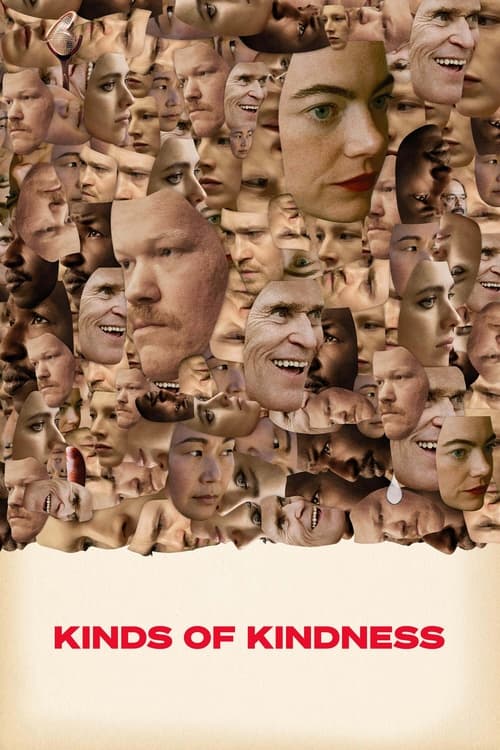
This film draws you in for a significant portion of its runtime with traditional or neutral content before springing its woke agenda. Know before you go!
Lanthimos's style is well-known. Anyone seeing a Yorgos Lanthimos film knows what they're getting.
Kinds of Kindness is a nearly three-hour endurance test from Yorgos Lanthimos that systematically dismantles any structure that might give human life meaning. Family, authority, devotion, faith, community - each of the film's three stories constructs one of these structures and then destroys it. The experience is expertly made and deeply unpleasant.
The film is an anthology of three loosely connected stories, each featuring the same actors in different roles. The first follows Robert, a man whose wealthy boss Raymond controls every aspect of his life - his house, his car, his marriage, his sexual schedule. When Raymond orders Robert to crash his car and kill a specific man, Robert cannot do it. Raymond casts him out. Robert's life collapses. In a desperate bid to regain Raymond's approval, Robert eventually does kill the man and is welcomed back into the fold. The film presents this as grotesque, but Lanthimos refuses to offer any alternative. The need for approval and belonging is shown as so deep that murder is its logical extension.
The second story follows a police officer convinced that the wife who returned from a near-drowning is not actually his wife. His paranoia escalates into violence. The third story follows a woman in a cult-like community searching for a special individual prophesied to have extraordinary powers. This story features graphic sexual content and cannibalism imagery.
All three stories carry the same thesis: human devotion - whether to a boss, a spouse, or a spiritual leader - is ultimately coercive. The person who demands devotion is a manipulator. The person who gives devotion is a victim. There is no authentic love or genuine community in the Lanthimos universe. There is only control, compliance, and the illusion of connection.
This worldview has consistent ideological implications. Traditional institutions that conservative Americans value - the family, the church, hierarchical authority, devotion to a cause - are precisely what Lanthimos is dissecting. He is not presenting them as flawed implementations of good ideas. He is presenting them as inherently coercive by nature.
The performances are extraordinary in the technical sense. Jesse Plemons won Best Actor at Cannes. Emma Stone continues her collaboration with Lanthimos with complete commitment. But the question of what these performances are in service of is unanswerable, because the film is not in service of anything except provocation.
The 164-minute running time is a particular concern. This is not a film that earns its length. It repeats its thesis three times in three different settings. By the third story, the point has been made - repeatedly, graphically, and without mercy. The additional fifty minutes do not add insight. They add footage.
For conservative viewers, Kinds of Kindness is essentially a filmed argument that every form of human devotion is a mechanism of control. That is a deeply anti-traditional premise, and Lanthimos pursues it with the conviction of someone who genuinely believes it. This is not the film for you. It is not the film for most people.
| Trope | Category | Location | Authenticity |
|---|---|---|---|
| Institutional Evil (Authority as Abuse) | WOKE | Entire film - all three stories present authority figures (boss Raymond, husband Daniel, cult leader Omi) as fundamentally coercive; devotion to them is presented as psychological bondage | Authentic to Lanthimos's filmmaking philosophy. This is not injected ideology; it is his entire artistic thesis sustained across multiple films. |
| Anti-Marriage / Anti-Family | WOKE | All three stories feature marriages or couple relationships that are mechanisms of control; none is presented as genuinely loving | Defining. The film does not permit any functional loving relationship to exist. Every bond is coercive by definition within Lanthimos's worldview. |
| Religious / Spiritual Community as Cult | WOKE | Third story - the community that Andrew and Emily serve is a cult with ritualistic practices, sexual demands, and prophetic claims; framed as exploitation | Intentional. Lanthimos consistently treats organized devotion - spiritual, professional, romantic - as indistinguishable from cult dynamics. |
| Sexual Transgression as Provocation | WOKE | Multiple segments - graphic nudity and sexual acts; cannibalistic sexual content in third story | Signature Lanthimos. He uses sexuality and bodily transgression as a consistent tool for disorientation and provocation. |
| LGBTQ+ Casting Signal | WOKE | Hunter Schafer in a supporting role - Schafer is a prominent transgender actress; casting is a deliberate creative choice | Reflects Lanthimos's casting philosophy. No source material is violated since this is original IP. |
| Nihilistic Worldview | WOKE | Throughout - the film offers no redemption, no genuine human connection, no framework for meaning; the final images of all three stories are empty or disturbing | Defining. Lanthimos's nihilism is philosophical rather than incidental. |
| Craft and Cinematic Excellence | TRADITIONAL | Production-level throughout - the cinematography, production design, and performance work are all exceptional by objective technical standards | Authentic. Whatever one thinks of the film's content, the technical filmmaking is excellent. |
| Commitment to Artistic Vision | TRADITIONAL | The film refuses to compromise its vision for commercial appeal; it runs 164 minutes and makes no concession to audience comfort | Authentic, though this is a formal quality the content does not deserve. |
Director: Yorgos Lanthimos
STRONGLY PROGRESSIVE / TRANSGRESSIVEGreek-born filmmaker who has become one of art cinema's most celebrated provocateurs. The Favourite, Poor Things, The Lobster, The Killing of a Sacred Deer. Lanthimos systematically dismantles traditional institutions - marriage, family, authority, faith - through absurdist premises and deliberately dehumanizing direction. His films treat human beings as subjects of quasi-sociological experiments designed to expose the coerciveness underlying all social arrangements. He is not interested in affirming any traditional structure. He is interested in dissecting them until they look monstrous. Ideological tendency: TRANSGRESSIVE PROGRESSIVE. Consistent across career.
Writer: Yorgos Lanthimos and Efthimis Filippou
Lanthimos's longtime Greek collaborator. They co-wrote Dogtooth, Alps, and The Killing of a Sacred Deer before Lanthimos moved to English-language projects with Tony McNamara (The Favourite, Poor Things). The Filippou collaboration represents Lanthimos's more extreme register - colder, more abstract, less emotionally accessible. Kinds of Kindness is their first English-language collaboration.
Producers
- Ed Guiney (Element Pictures) — Irish producer who has backed Lanthimos across multiple films (The Lobster, The Favourite, Poor Things, Kinds of Kindness). Element Pictures is a prestige art house production entity. Guiney consistently backs transgressive, award-oriented art cinema. His track record is essentially a catalog of progressive-coded prestige films. No independent political agenda but his taste runs entirely progressive.
- Andrew Lowe (Element Pictures) — Producing partner with Guiney at Element. See above. No independent signal.
- Yorgos Lanthimos (Film4) — See director profile. Self-produces his own work. Ideological imprint is total.
Full Cast
Fidelity Casting Analysis FAITHFUL
Kinds of Kindness is an original screenplay with no source material, historical figures, or prior adaptations to compare against. The Fidelity Casting Score framework does not apply. Hunter Schafer's casting in a supporting role (she is a transgender actress) carries a signal given Lanthimos's progressive ideology, but as an original work there is no 'correct' casting to compare against.
All characters and stories in Kinds of Kindness are original creations with no prior versions. Fidelity Casting Score: N/A (original IP). The casting of Hunter Schafer (a transgender actress who became famous as Jules in Euphoria) in a supporting role does signal Lanthimos's progressive casting philosophy. However, since this is an original film, her casting cannot be measured against any prior source. The triple-role structure for the main cast is an artistic device without fidelity implications.
Adult Viewer Insight
Kinds of Kindness is worth understanding as a cultural artifact even if it isn't worth watching as entertainment. Lanthimos is one of the most celebrated directors in contemporary art cinema, and his worldview is entirely representative of a certain strain of progressive intellectual culture that finds all traditional institutions suspect by definition. The film's thesis - that devotion is coercion, that authority is abuse, that belonging requires self-destruction - is not original to Lanthimos. It is essentially the Frankfurt School applied to narrative film. Foucault, Butler, and decades of critical theory argue precisely this. Lanthimos is simply making it cinematic. Conservative viewers who want to understand why art cinema consistently attacks traditional institutions will find Kinds of Kindness clarifying. This is what the progressive intellectual tradition looks like when it runs entirely without the moderating influence of commercial entertainment or Christian moral framework. It looks like three stories where everyone who seeks love finds control, and everyone who tries to escape control finds emptiness. That is a view of human existence that conservative Christianity flatly rejects. Faith, family, and devotion to something beyond the self are precisely what Christianity offers as answers to the emptiness Lanthimos finds everywhere. He doesn't find Christianity interesting enough to engage with. He just makes films in a world where God isn't even a question worth asking.
Parental Guidance
Rated R. This rating is inadequate for the content. Sexual Content: Heavy and graphic. Multiple scenes of nudity. Sexual acts depicted. Cult activities include sexual rituals. Cannibalism-adjacent imagery in the third segment. Violence: Moderate to heavy. A man is intentionally run over and killed. Domestic violence. A shooting. Violence is presented clinically, which makes it more disturbing. Language: Moderate. Substance Use: Minimal but present. Cult Content: The third story features a cult-like organization with controlling rituals. This content may be disturbing for faith communities. Ideological Content: Anti-authority, anti-family, anti-devotion. All traditional institutions are presented as mechanisms of control. No redemptive framework is offered. Age Recommendations: Not appropriate for anyone under 18. Adults with strong traditional values may find this film genuinely distressing. This is not casual entertainment. Family Discussion: This film is not appropriate for family viewing. Adults who choose to watch it might use it as a discussion of the nihilistic worldview underlying contemporary art cinema - but only after careful consideration of whether the content warrants exposure.
Find Kinds of Kindness on Amazon Prime Video, rent, or buy:
▶ Stream or Buy on AmazonAs an Amazon Associate, VirtueVigil earns from qualifying purchases.





Community Discussion 0
Subscribe to comment.
Join the VirtueVigil community to share your perspective on this review.