Lisa Frankenstein
Lisa Frankenstein is Diablo Cody's Jennifer's Body with worse reviews and a better aesthetic. That sentence is both a description and a verdict.
Full analysis below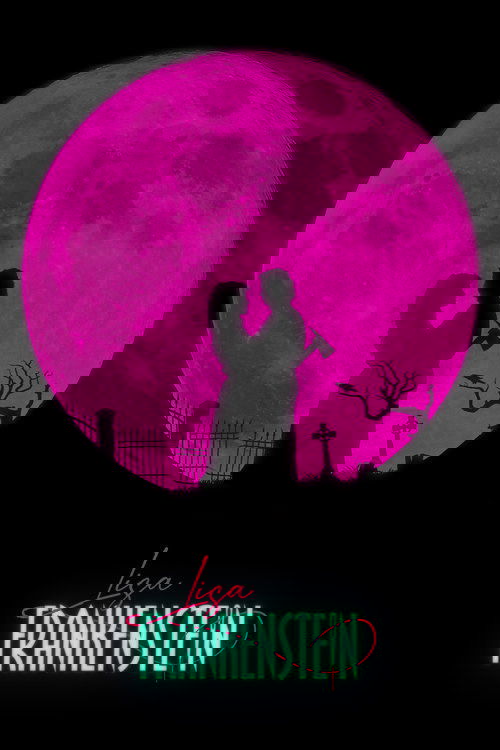
This film draws you in for a significant portion of its runtime with traditional or neutral content before springing its woke agenda. Know before you go!
The trap is real but soft. The film's feminist revenge framework is present from the opening act, but the marketing does not signal it loudly. Viewers who enjoyed Stranger Things's 1980s aesthetic without its politics may feel misled. The film is more overtly feminist than its trailer suggests.
Lisa Frankenstein is Diablo Cody's Jennifer's Body with worse reviews and a better aesthetic. That sentence is both a description and a verdict.
Cody's Jennifer's Body (2009) was a horror film about a girl possessed by a demon who ate male victims. Critics dismissed it on release and it was later reclaimed as a feminist cult classic when its target audience grew up and recognized what it was. Lisa Frankenstein follows the same template: misfit female protagonist, supernatural acquisition of power, male targets consumed or dispatched, cathartic empowerment as the film's thesis. The difference is that Jennifer's Body was genuinely sharp and occasionally scary. Lisa Frankenstein is mostly just earnest.
The setup takes place in 1989, and the production design is the film's most reliable pleasure. Director Zelda Williams and cinematographer Paula Huidobro have built a pastel-and-neon vision of a small midwestern town that looks like someone had Stranger Things and Edward Scissorhands playing simultaneously on two screens and then split the difference. The 80s aesthetic is lovingly executed. The film knows what it is going for visually and achieves it.
Kathryn Newton plays Lisa Swallows, a teenage girl still raw from the murder of her mother two years earlier. She has a new stepmother, Janet, who is vain and dismissive. She has a new stepsister, Taffy, who is blonde and popular but secretly kind. She has a crush named Michael who does not notice her and a lab partner named Doug who sexually harasses her. The script frames all of this through a very specific female gaze: the world is full of people who fail Lisa, dismiss Lisa, or actively harm Lisa, and they will pay for it.
The supernatural element arrives when a bolt of lightning resurrects the Victorian man whose grave Lisa has been visiting in the local cemetery. The Creature, played by Cole Sprouse in a purely physical performance, breaks into Lisa's house and she decides to hide him in her closet. He is initially missing body parts, which he recovers over the course of the film by taking them from the people Lisa considers her enemies. This is the film's central mechanism and it is presented as justice.
Doug, who sexually harassed Lisa at a party, loses his hand. Janet, who belittles Lisa relentlessly, is killed and her ear harvested. The film treats both killings as cathartic events scored with period pop songs, which is the clearest possible signal about its ideological priorities. The violence is the point. The violence is feminist liberation.
Cody is a skilled writer and the film has its pleasures. The dialogue is often sharp. Newton and Sprouse develop a credible chemistry despite his muteness. The 1989 period detail is handled with genuine affection rather than algorithmic nostalgia. Carla Gugino commits fully to Janet's cartoonish villainy. When the film is working, it works because the craft is real.
But the ideology is inescapable. This is a film about female rage as a righteous force. The men who harm women are targets. The women who enforce patriarchal standards are accessories to be destroyed. Lisa's transformation from passive victim to empowered killer is the film's arc, and the film wants the audience to celebrate it without complication. The final act asks viewers to fully embrace Lisa and the Creature's partnership in murder, which the film frames as romantic fulfillment. Cody has never been subtle.
From a VirtueVigil perspective, this is a clearly woke film. The feminist revenge framework is the film's primary structural and ideological spine. The 1989 setting is decorative. The Frankenstein allusion is decorative. What the film is actually about is female rage as liberation, male sexual aggression as a death sentence, and the empowerment of outsider girls through violence. It delivers this thesis competently and with craft. But it is undeniably delivering it.
Conservative viewers should be aware of what they are walking into. Lisa Frankenstein is not a nostalgic 80s horror-comedy with incidental feminist elements. It is a feminist horror-comedy that uses 80s nostalgia as packaging. The distinction matters.
| Trope | Category | Location | Authenticity |
|---|---|---|---|
| Feminist Revenge Fantasy | WOKE | Entire film - Lisa acquires supernatural power and uses it specifically to kill or injure men who harassed her and the woman who dismissed her; each act of violence scored as liberation | Injected. The Frankenstein myth does not inherently require a feminist revenge structure. Cody and Williams have chosen this framing deliberately. The film's thesis is that female rage is righteous force. |
| Toxic Masculinity Target | WOKE | Doug's character arc - he sexually harasses Lisa at a party, is presented as deserving of violent punishment, and is mutilated by the Creature; his death is played as audience catharsis | Injected. The film constructs a male character specifically as a target for feminist violence. The sexual harassment is the scripted mechanism that justifies the killing for the intended audience. |
| Traditional Family as Obstacle | WOKE | Janet and Dale - the stepmother is a villain, the father is useless and enabling; the family structure is the source of Lisa's oppression rather than protection | Genre convention partially. Cinderella-style stepmother stories are ancient. But the Cody script adds a layer of feminist commentary: Janet specifically enforces patriarchal beauty standards and dismisses Lisa's pain. This is ideological injection into a genre frame. |
| Infallible Youth | WOKE | Lisa is consistently the smartest, most sensitive person in every room; every adult around her is either predatory, useless, or oblivious; her perspective is validated by supernatural events | Genre convention but amplified to ideological level. Cody's script makes every adult institution (the family, the school, the community) a source of harm for Lisa. There is no adult wisdom anywhere in the film. |
| Vigilante Justice Without Consequences | WOKE | Multiple killings - Lisa and the Creature murder Janet, kill Doug, and potentially others; the film ends without meaningful legal or moral consequence for Lisa | Injected. The consequence-free violence is a deliberate authorial choice. Cody's feminist horror blueprint requires the empowerment narrative to remain uninterrupted by consequence. This is ideological rather than narrative. |
| Girl Boss (Strong) | WOKE | Lisa's arc throughout - she begins passive and overlooked and ends as the dominant, empowered figure in every relationship; her agency is consistently validated and her aggression celebrated | Injected. The character's empowerment is specifically structured as feminist liberation rather than organic character development. |
| Romantic Devotion (Unconventional) | TRADITIONAL | Lisa's attachment to the Creature is genuine and singular; she shows up for him, restores him, and protects him; the romantic bond is presented as real love | Authentically romantic within its own framework. The film's one traditional value is its insistence on genuine, devoted romantic attachment. Lisa loves the Creature completely and exclusively. This is unconventional in subject but traditional in structure. |
| Period Nostalgia (Authentic) | TRADITIONAL | 1989 setting throughout - production design, costume, music, and cultural references are handled with evident love and considerable craft | Authentic. The 1989 aesthetic is a genuine production achievement. The film's visual love for the period is real, not algorithmic. This is the one area where the traditional sensibility shows through the feminist packaging. |
Director: Zelda Williams
WOKEZelda Williams, daughter of Robin Williams, is a filmmaker, actor, and writer whose public advocacy is consistently progressive. She has been open about her experiences with online abuse and has spoken extensively about mental health, identity politics, and the need for representation in film. Lisa Frankenstein is her feature directorial debut and it reflects her stated worldview: a film explicitly about female rage, the right to take up space, and the empowerment of women against male predation. In interviews promoting the film, Williams said she was drawn to the project because she connected with Lisa's sense of being overlooked and her transformation from passive to powerful. She described the film's violence as cathartic and intentional. Williams is not a covert progressive sneaking messaging into genre film. She is an open progressive making exactly the film she set out to make.
Writer: Diablo Cody
Diablo Cody is one of the most distinctive voices in American genre filmmaking and one of its most openly feminist. She wrote Juno (2007), which earned her an Academy Award and which she has since criticized for its anti-abortion messaging, saying she was not the right person to tell that story. She wrote Jennifer's Body (2009), a horror film about a female demon that kills men, which she explicitly framed as feminist mythology. She created the TV show United States of Tara. She wrote Tully (2018) and Young Adult (2011). Her sensibility is consistently feminist, often sharp, and occasionally brilliant in its deployment of genre to express female experience. Jennifer's Body is the clear predecessor to Lisa Frankenstein: female protagonist, male victims, feminist revenge coded as horror-comedy. Cody's involvement is the single clearest ideological signal the project sends. She is not a writer who accidentally generates feminist content.
Producers
- Mason Novick (MXN Entertainment) — Producer of Juno, Jennifer's Body, and Tully. Novick is Diablo Cody's longtime producing partner. His producing catalog is a mirror of Cody's writing career: female-centered, frequently feminist, deliberately provocative. His involvement here is expected given the project's origin. No independent ideological signal; he enables Cody's vision.
- Diablo Cody (Lollipop Woods) — See writer profile above. Cody produced her own script, which is consistent with her career pattern of creative control. Her production company Lollipop Woods reflects her aesthetic sensibility. As writer-producer, her ideological imprint on this film is total.
Full Cast
Fidelity Casting Analysis ORIGINAL
Lisa Frankenstein is an original screenplay that loosely invokes Mary Shelley's Frankenstein as a pop culture reference rather than an adaptation. The Creature is Victorian-era and his reanimation echoes the source myth, but the story, characters, and setting are entirely original. No fidelity scoring applies. The casting is diverse in minor roles, with Liza Soberano as Taffy (a Filipino-American actress in a role with no specified ethnicity). This is a standard original IP casting choice and not a fidelity deviation.
Kathryn Newton (Lisa): Newton is one of the most capable young actresses working in genre film. Her work in the Ant-Man franchise and Freaky (2020) demonstrated a genuine ability to play both vulnerability and physicality. She is well-cast here, though the character's arc asks her to slide from sympathetic outsider to gleeful accomplice to murder without adequate scripting to justify the transition. Newton does what she can. Cole Sprouse (The Creature): The Disney Channel alum, best known from Riverdale, plays a mute Victorian corpse being gradually restored to human form. It is a physical performance requiring him to communicate entirely through expression and movement for most of the film. He is more effective than expected. Carla Gugino (Janet): Gugino plays the cartoonishly villainous stepmother with committed malice. The role is written as a target rather than a character. Liza Soberano (Taffy): As the stepsister who is pretty, popular, and secretly kind, Soberano is the film's one straightforwardly sympathetic character who does not participate in the violence. Her presence provides moral contrast.
Adult Viewer Insight
Conservative adult viewers should approach Lisa Frankenstein with clear eyes about what it is. Diablo Cody wrote Jennifer's Body and then wrote this. The ideological through-line is direct and intentional: female rage is righteous, male sexual aggression is a death sentence, and the empowerment narrative is the film's actual subject. The 1980s aesthetic and the romantic subplot are delivery mechanisms for this thesis. The film's most significant problem from a values perspective is its consequence structure. Lisa and the Creature kill multiple people over the course of the film. The film frames each killing as cathartic justice. The audience is invited to cheer. The characters face no meaningful consequences for this within the story. This is not subtle: the message is that violent revenge against the people who harm or dismiss you is not only justified but liberating. This is not a message that conservative families will want to introduce to younger viewers without serious discussion. The craft is real and that complicates matters. Newton and Sprouse are genuinely appealing. The period detail is excellent. The dialogue has Cody's characteristic wit. Parents of teenage daughters may find the conversation about this film more valuable than the film itself: why does our culture produce stories about female empowerment that are specifically structured as revenge fantasies? What is being said about how young women understand agency? These are important questions that Lisa Frankenstein raises, even if it does not answer them well.
Parental Guidance
Rated PG-13, which is misleading. The content is more challenging than the rating suggests. Violence: Moderate but specific. Characters are killed and their body parts harvested. The violence is stylized but the acts themselves are graphic in concept. A stepmother is murdered. A sexual harasser has his hand cut off. These are presented as comedy. Sexual Content: The plot involves sexual harassment (Doug at a party). The romantic subplot between Lisa and the Creature involves increasing intimacy. A character is shown in a tanning bed with implied nudity. Not explicit but present throughout. Language: Moderate. Period-appropriate teen dialogue. Scary Content: The Creature's various stages of decomposition and restoration are unsettling, handled with practical effects that are more comic than horrifying. Age Recommendations: Not suitable for children under 14. For teens 14-17 who watch this, the conversation should happen before or after. The film frames violent revenge as empowering without examining the consequences. Teenagers who process their social frustrations through this lens need adults who can help them unpack it. Discussion Guidance: (1) The film frames killing people who hurt you as liberating. Do you agree? What does actual justice look like versus revenge? (2) Lisa's targets are all people who treated her badly. Does the severity of their treatment match the severity of the consequences they face? (3) The film is set in 1989 but it was made in 2024. What does the story say about how the culture has changed in terms of what female empowerment is supposed to look like?
Find Lisa Frankenstein on Amazon Prime Video, rent, or buy:
▶ Stream or Buy on AmazonAs an Amazon Associate, VirtueVigil earns from qualifying purchases.

Community Discussion 0
Subscribe to comment.
Join the VirtueVigil community to share your perspective on this review.