
Mickey 17
This review contains spoilers throughout.
Full analysis below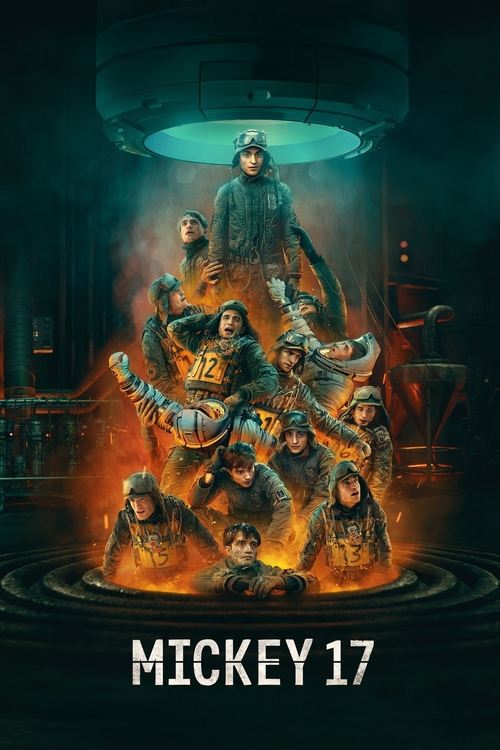
This film draws you in for a significant portion of its runtime with traditional or neutral content before springing its woke agenda. Know before you go!
Partial woke trap. The fun sci-fi premise and Pattinson's charismatic dual performance provide effective cover for a film that is, at its core, a political attack film with a $118 million budget. The Trump allegory is explicit and Bong has confirmed it publicly. Conservative audiences should know this going in.
This review contains spoilers throughout.
Let's dispense with the pretense: Mickey 17 is a Trump allegory. Bong Joon-ho has confirmed it publicly. The villain, Kenneth Marshall, is a populist politician who delivers speeches about making the colony great, wears distinctive fashion that reads as a visual joke on Trump, plans genocide against indigenous alien creatures to prevent them from interfering with human colonization, and is played by Mark Ruffalo, one of Hollywood's most vocally progressive activists. This is not coded or subtext. It is the text.
Knowing this, the question for conservative viewers becomes: is the film worth watching anyway? The answer, frustratingly, is yes, conditionally. Bong is one of cinema's most technically gifted directors and Robert Pattinson is giving one of the year's most entertaining performances. The film works as entertainment even when its politics are aimed directly at you. That is either a tribute to its craft or a warning about how effective political propaganda can be when it comes wrapped in genuine filmmaking talent.
The premise: in 2054, Mickey Barnes (Pattinson) joins a space colony expedition to escape a murderous loan shark. He signs up as an Expendable, a person assigned to extremely dangerous tasks, killed and cloned repeatedly using a process called reprinting. By the time the story begins, he is on his seventeenth iteration. When he falls into a fissure on the ice planet Niflheim and survives, only to find an aggressive Mickey 18 has been printed in his absence, the two have to coexist secretly because expedition leader Kenneth Marshall has declared that Multiples must be eliminated.
Pattinson's dual performance is the film's genuine pleasure. Mickey 17 is timid, self-deprecating, and genuinely sweet. Mickey 18 is aggressive, impulsive, and occasionally violent. Watching Pattinson hold these two performances simultaneously, allowing them to genuinely surprise each other in scenes, is a technical and emotional achievement that earns every bit of its praise. He has never been better.
The political scaffolding becomes impossible to ignore within the first act. Marshall gives stump-speech style addresses to the expedition crew that parody Trump's speaking cadence. His wife Ylfa (Toni Collette) is clearly a comment on the political spouse archetype. His security apparatus operates through loyalty tests and personal intimidation. His plan for the Creepers, the planet's native sentient creatures, is framed explicitly as a colonial genocide motivated by resource extraction and contempt for indigenous life.
The Creepers are the film's most politically pointed invention. In the novel, the native creatures are a survival threat. In Bong's version, they are sentient beings who help Mickey survive, can communicate, and have a social structure including a mother figure and young who are given names and allowed to be adorable. When Marshall kills a baby Creeper in a moment of panicked aggression, he triggers a diplomatic crisis that the film resolves through multicultural negotiation and a human sacrifice. The environmental and colonial allegory is not subtle. The Creepers are indigenous people. The humans are colonizers. Marshall is the eliminationist faction.
The anti-capitalist argument is similarly explicit. The Expendable program is capitalism reducing workers to disposable units. Mickey is reprinted when he dies because his labor is needed, not because his life is valued. His individuality and memories are maintained only because the reprinting process requires them for continuity. He has no rights that the expedition is bound to respect. The loan shark back on Earth represents the financial system that made him desperate enough to sign up for this. His friend Timo selling flamethrower fuel as drugs represents opportunistic corruption enabled by systemic inequality.
All of this is recognizably Bong. His previous films have made the same arguments. Snowpiercer was a literal train where class determined whether you were in the engine room or the tail. Okja was about corporate agriculture treating animals as commodities. Parasite was about class warfare between Seoul neighborhoods. The filmmaker's worldview is consistent and coherent, even when you disagree with it.
Where Mickey 17 differs from Bong's best work is in restraint. Parasite worked because the class allegory was embedded in a genuinely suspenseful thriller that could function for viewers who missed or rejected the political reading. Mickey 17 is less successful in that integration. The Marshall character in particular is played with a broadness, by both Ruffalo and Bong's direction, that tips from pointed satire into cartoon. When the villain is this obviously a joke at Trump's expense, the film's persuasive range narrows considerably. It preaches to the choir and makes the choir laugh.
What remains, stripped of the politics, is a film about loyalty, identity, and whether a person who has died seventeen times is still the same person. These questions, not the political allegory, are where Mickey 17 finds its genuine emotional core. Mickey's relationship with Nasha (Naomi Ackie) works because it asks something real: if I am a copy of the person you fell in love with, do you still love me? Ackie handles this with more subtlety than the script gives her. The self-sacrifice of Mickey 18 in the climax, blowing himself up to fulfill the Creepers' demand and kill Marshall, lands with genuine dramatic weight precisely because it operates on traditional terms that have nothing to do with the political allegory.
Conservative viewers going in with open eyes will find a well-made, entertainingly performed, ideologically hostile film that occasionally rises above its own agenda to touch something universal. The pacing flags in the second act. The political allegory grows tiresome before the third act because its target is so obvious and its treatment so broad. But Pattinson is remarkable, and the questions the film raises about identity and memory and what makes a person continuous with themselves are genuinely interesting ones that the political content keeps interrupting.
| Trope | Category | Location | Authenticity |
|---|---|---|---|
| The Trumpian Villain | WOKE | Throughout - Kenneth Marshall is an explicitly Trump-coded populist politician: stump speeches, Make the Colony Great rhetoric, authoritarian security apparatus, genocide against indigenous creatures | Forced. Bong has confirmed the Trump inspiration publicly. The character exists to make conservative politics the film's villain. |
| Anti-Colonial Allegory | WOKE | Creeper storyline throughout - native sentient creatures framed as indigenous people being colonized and threatened with genocide by arriving human colonizers | Forced ideology applied to sci-fi setting. The Creepers are adorable and sympathetic specifically to maximize the emotional charge of the colonial allegory. |
| Anti-Capitalist System Critique | WOKE | The Expendable program throughout - workers disposable and cloneable, labor valued over persons, loan shark system trapping workers into desperate choices | Organic to Bong's filmography but forced onto Ashton's novel. The novel's Expendable program is a survival thriller device; Bong's version is explicitly capitalism-as-metaphor. |
| Female Leadership Replaces Male Authoritarianism | WOKE | Denouement - Nasha becomes colony leader after Marshall is eliminated; immediately outlaws the Expendable program and destroys the reprinting machine | Forced. Nasha's leadership is positioned as the antithesis of Marshall's authoritarianism, coded by gender as much as ideology. |
| Institutional Betrayal | WOKE | Throughout - the expedition leadership lies to Mickey, uses him as a disposable tool, plans genocide; the institutions designed to enable survival are corrupted by the political leadership | Mixed. Institutional corruption is a real and non-partisan concern. Bong frames it as specifically conservative political corruption. |
| Diverse Ensemble as Default | WOKE | Cast includes Naomi Ackie (Black British), Steven Yeun (Korean-American), Anamaria Vartolomei (Romanian-French), Stephen Park (Korean-American) | Standard contemporary casting. Not ideologically pointed beyond reflecting current industry diversity norms. |
| Environmental Victimhood | WOKE | Creeper storyline - native creatures coded as an indigenous ecosystem under existential threat from resource-extracting human colonizers | Organic to Bong's Okja-era messaging. The Creepers are designed to generate environmental empathy. |
| Systemic Poverty as Character Motivation | WOKE | Mickey's backstory - forced into the Expendable program by predatory loan shark; class economics trap him into disposability | Mixed. Poverty driving desperate choices is real. The framing as systemic rather than personal is Bong's editorial lens. |
| The Self-Sacrificing Hero | TRADITIONAL | Mickey 18 detonates his bomb vest to kill Marshall and satisfy the Creepers' demand for human sacrifice - dies to protect Mickey 17 and enable peace | Authentic. Whatever the surrounding political context, Mickey 18's sacrifice operates on entirely traditional heroic terms. |
| Romantic Fidelity | TRADITIONAL | Mickey and Nasha throughout - he refuses Kai's seduction, flees back to Nasha; she accepts both versions of him; fidelity under extreme circumstances | Authentic. The romantic loyalty arc is genuine and emotionally effective. |
| Consequences of Betrayal | TRADITIONAL | Timo's arc - he leaves Mickey to die for convenience, runs a drug operation, ultimately faces consequences; betrayal is condemned by the narrative | Authentic. The traditional moral that betraying a friend has real costs is present and not undermined. |
| The Underdog Who Persists | TRADITIONAL | Mickey 17 throughout - repeatedly killed, reprinted, threatened, and still keeps making choices and moving forward | Authentic. The film's sympathy for the disposable worker who refuses to give up is traditional even when the anti-capitalist framing is not. |
| Identity and Personhood | TRADITIONAL | The Multiple storyline - who is Mickey 17 vs 18? What makes a person continuous with themselves? Memories, choices, relationships? | Authentic. These are ancient philosophical questions that the film engages seriously and that have traditional roots in questions of soul and identity. |
Director: Bong Joon-ho
STRONGLY WOKESouth Korean director who won the Best Picture Oscar for Parasite (2019), became the first non-English-language film to do so. His filmography is built on anti-capitalist, anti-class, anti-authoritarian themes: Memories of Murder, The Host, Snowpiercer, Okja. Every film is a political allegory. He is not subtle. He has described American capitalism and political populism as primary targets of his work. Snowpiercer was explicitly a class-warfare allegory. Okja was anti-corporate animal rights filmmaking. Mickey 17 is his most direct American political allegory yet. He has confirmed in interviews that Kenneth Marshall is inspired by Donald Trump.
Writer: Bong Joon-ho (screenplay); based on the novel Mickey7 by Edward Ashton
Bong adapted Ashton's 2022 novel extensively, adding the Trump-coded villain Kenneth Marshall, the anti-colonialism framing of the Creeper genocide, and the explicit anti-capitalist Expendable program critique. The novel is a survival thriller about a cloned worker; the film converts it into a full political allegory. The additions are all Bong's and all ideologically consistent with his filmography.
Producers
- Dede Gardner & Jeremy Kleiner (Plan B Entertainment) — Brad Pitt's production company. Credits include 12 Years a Slave, Moonlight, The Big Short, and Okja. Plan B's output is consistently progressive in orientation, gravitating toward films that challenge power structures, critique capitalism, and center marginalized perspectives. Their involvement is a reliable ideological signal.
- Bong Joon-ho (Offscreen) — See director profile. Full creative control.
- Dooho Choi (Kate Street Picture Company) — Korean producer who has worked with Bong on multiple projects. No independent political signal beyond the Bong collaboration itself.
Full Cast
Fidelity Casting Analysis ADJUSTED
Edward Ashton's novel 'Mickey7' features a largely unspecified-race cast. The most significant fidelity issue is the invention of Kenneth Marshall, a Trump-coded villain who does not exist in the novel. The novel's antagonist is institutional rather than personified in a single Trumpian political figure. Bong's addition of Marshall transforms the source material from a survival thriller into an explicit political allegory. The casting itself is otherwise unremarkable.
Mickey Barnes: Pattinson plays the character as a bumbling, anxious everyman with considerable charm. The character in the novel is similarly unspecified. Faithful in spirit. Nasha: Naomi Ackie (British, of Nigerian and Jamaican heritage) plays the security agent love interest. Race is unspecified in the source material. This is a standard contemporary casting choice. Timo: Steven Yeun (Korean-American) plays Mickey's untrustworthy friend. Race unspecified in source. No ideological signal in the casting. Kenneth Marshall: Does not exist in the novel. Entirely Bong's invention, placed by Mark Ruffalo (a vocal progressive activist). The choice to cast Ruffalo as the Trump avatar has an interesting irony: a committed progressive playing a conservative villain with evident relish. The political messaging is in the character's existence, not Ruffalo's performance per se. Toni Collette as Ylfa: English actress playing a devious political wife. Effective casting.
Adult Viewer Insight
Conservative adult viewers should approach Mickey 17 as exactly what it is: a major studio film made by a director who has publicly stated his contempt for Trump-style populism, starring one of Hollywood's most progressive activists in the villain role, and structured as an anti-capitalist, anti-colonialist political allegory that has been given enough budget and craft to be entertaining. Knowing this, there are legitimate reasons to see it. Pattinson's performance is genuinely exceptional and worth studying. The questions the film raises about identity and consciousness are philosophically interesting and handled with more intelligence than the surrounding political content deserves. The self-sacrifice subplot has genuine emotional weight and operates on traditional moral terms that transcend the political framing. The most useful thing conservative viewers can do with this film is use it as an exercise in critical engagement. What assumptions does the film make about its audience? How does Bong's technique make progressive politics more persuasive? What does the film get right about political demagoguery, and what does it get wrong? The Marshall character is broad enough that his satirical target becomes clear to anyone paying attention, but studying why the caricature works on an emotional level, even for people who disagree with its politics, is worthwhile. Skip it if having your political beliefs caricatured as an alien genocide plot is not something you want from your entertainment. Watch it if you can engage critically with craft that is aimed at positions you hold.
Parental Guidance
Mickey 17 is rated R. The content is substantial but the R rating reflects mature themes more than gratuitous content. Violence: Moderate. Mickey dies multiple times and the reprinting process is depicted with some grotesquerie. Mickey 18 detonates a bomb vest and dies on screen. The Creeper baby's death is emotionally disturbing though not graphically violent. Overall the violence is present but not relentless. Sexual Content: Moderate. Mickey and Nasha's relationship includes physical intimacy. A security agent attempts to seduce Mickey. No explicit nudity. Language: Strong throughout. Consistent with genre. Thematic Content: The film deals extensively with identity, consciousness, and personhood. Is a clone the same person as the original? Do memories make a person? These are genuinely interesting questions for teenagers. The political content is overt and one-sided. Age Recommendation: Not appropriate for viewers under 15. For mature teenagers 16+, this is a legitimate discussion starter about political satire, how films use allegory to make arguments, and the difference between effective political art and propaganda. These conversations are more valuable than the film itself. Discussion Points: Is Kenneth Marshall a fair portrayal of conservative populism or a caricature? Does the Expendable program accurately represent how capitalism treats workers, or does it distort the comparison? If Mickey 18 sacrifices himself heroically, does that change how you feel about the rest of the film? Can you separate the craft from the politics? Should you?
Find Mickey 17 on Amazon Prime Video, rent, or buy:
▶ Stream or Buy on AmazonAs an Amazon Associate, VirtueVigil earns from qualifying purchases.



Community Discussion 0
Subscribe to comment.
Join the VirtueVigil community to share your perspective on this review.