Mission: Impossible - The Final Reckoning
Tom Cruise's final turn as Ethan Hunt is, by any reasonable measure, a triumph of old-school filmmaking values. The Final Reckoning is a film about a man who refuses to let the world be destroyed and who rallies a loyal team of friends to help him do it. No lectures.…
Full analysis below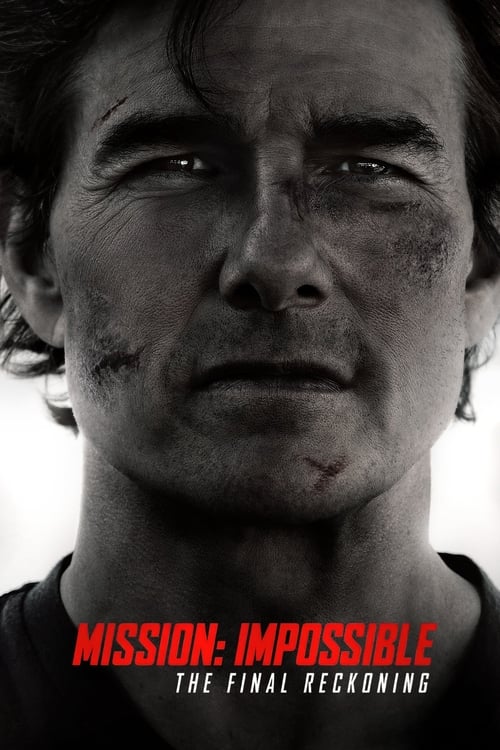
NOT A WOKE TRAP. The Mission: Impossible franchise has consistently celebrated individual heroism and institutional loyalty across eight films and 29 years. The Final Reckoning delivers exactly that and nothing else. A female president, diverse ensemble casting, and international cooperation are organically integrated franchise conventions, not ideological insertions. There is no hidden progressive payload waiting in the third act. What you see in the trailer is what you get: a man hanging off things to save the world.
Tom Cruise's final turn as Ethan Hunt is, by any reasonable measure, a triumph of old-school filmmaking values. The Final Reckoning is a film about a man who refuses to let the world be destroyed and who rallies a loyal team of friends to help him do it. No lectures. No subtext about Western institutions being rotten. Just a guy hanging off things, making impossible choices, and saving humanity because that is what good men do.
The plot picks up two months after Dead Reckoning Part One, with Hunt and his team racing to neutralize the Entity, a rogue AI that has infiltrated global nuclear systems. The stakes are literally apocalyptic. And McQuarrie, to his enormous credit, never lets the AI storyline become a preachy meditation on technology or surveillance. The Entity is a villain, not a metaphor. It wants to end the world. Ethan Hunt wants to stop it. The simplicity is refreshing.
What makes this film work is its unshakeable commitment to individual agency. Ethan Hunt does not wait for committees. He does not defer to institutional processes. When the CIA Director objects and bureaucrats waffle, Hunt goes anyway. This is not recklessness. It is moral clarity. The film understands that there are moments when one person's willingness to act matters more than any organizational chart.
Luther Stickell's death is the emotional centerpiece. Ving Rhames has been part of this franchise since 1996, and his sacrifice, staying behind to minimize a blast, is played straight. No irony, no subversion. A good man dies doing a brave thing for the people he loves. That is traditional storytelling at its finest. Ethan's grief is real and unadorned. The farewell message from Luther in the Poison Pill lands like a gut punch.
The action sequences are predictably spectacular. The deep-sea dive to the sunken submarine is genuinely harrowing. The biplane chase in the final act is practical stuntwork of a kind that makes you remember why movies exist. Cruise, at 62, is still doing things on screen that defy comprehension. There is something fundamentally traditional about a star who insists on doing his own stunts: respect for the audience, commitment to craft.
Hayley Atwell's Grace continues her arc from Dead Reckoning, evolving from thief to trusted IMF agent. She is capable without being a Girl Boss. The film gives her real things to do without ever positioning her as the ideological center of the story. She is a team member, not a statement.
Angela Bassett's President Sloane is the closest the film gets to a woke checkbox, and even that is handled with restraint. Sloane avoids a preemptive nuclear strike not because of peacenik philosophy but because it is tactically wrong. The film treats her authority as legitimate without making her gender or race a talking point. That is how representation should work.
Nick Offerman's General Sidney sacrifices himself to protect the President from a doomsday assassin. Duty. Honor. Protection of the chain of command. These values are treated with sincerity.
At 170 minutes, this is a lot of movie. The planning sequences in the middle can feel indulgent. McQuarrie loves operational detail and sometimes mechanics overwhelm momentum. But this is a craft complaint, not an ideological one.
The resolution is bittersweet and earned. A hero who did his job, lost friends along the way, and kept going. No ironic deconstruction. No revisionist reframing. For conservative audiences, this is one of the safest blockbuster bets of 2025: individual responsibility, loyalty, sacrifice, competence over credentials, and the idea that good people doing brave things can actually save the world.
Formula: Weighted Score = Severity × Authenticity Multiplier × Centrality Multiplier
🔴 Woke Tropes
| Trope | Severity | Authenticity | Centrality | Score |
|---|---|---|---|---|
| Capable Female Protagonist | 1 | High | Low | 0.35 |
| International Cooperation Framework | 1 | High | Low | 0.35 |
| Diverse Ensemble Casting | 1 | High | Low | 0.35 |
| TOTAL WOKE | 1.0 | |||
🟢 Traditional Tropes
| Trope | Severity | Authenticity | Centrality | Score |
|---|---|---|---|---|
| Self-Sacrificing Hero (Luther Stickell) | 4 | High | High | 5.04 |
| Defense of the Innocent | 3 | High | High | 3.78 |
| Individual Agency Over Bureaucracy | 3 | High | High | 3.78 |
| Good vs. Evil with Moral Clarity | 3 | High | High | 3.78 |
| Loyalty and Brotherhood | 3 | High | Moderate | 2.1 |
| Industry and Perseverance (Practical Stunts) | 2 | High | Moderate | 1.4 |
| Patriotic Duty | 2 | High | Moderate | 1.4 |
| Wise Elder / Martyr (Luther) | 2 | High | Moderate | 1.4 |
| Restored Relationships | 2 | High | Moderate | 1.4 |
| TOTAL TRADITIONAL | 24.1 | |||
Score Margin: +20 TRAD
Director: Christopher McQuarrie
TRADITIONAL. Consistently apolitical director whose films celebrate individual competence, loyalty, moral clarity, and self-sacrifice. His career shows no progressive political signal.McQuarrie is one of Hollywood's most reliably apolitical directors. His career runs from The Usual Suspects through Jack Reacher through the last four Mission: Impossible entries. He makes films about competent individuals navigating dangerous situations through skill, loyalty, and moral conviction. His partnership with Tom Cruise has produced the franchise's best work: Rogue Nation, Fallout, Dead Reckoning, and now The Final Reckoning. McQuarrie's instinct is always toward clarity: clear heroes, clear villains, clear stakes, and the understanding that individual action matters more than institutional procedure.
Writer: Christopher McQuarrie & Erik Jendresen
McQuarrie co-wrote with Erik Jendresen, whose credits include Band of Brothers, a project deeply respectful of American military service. Both writers carry mildly traditional signals. Their collaboration reinforces the film's conventional action-thriller values. The script is clean in its moral architecture: evil exists, good men must stop it, loyalty and sacrifice are the highest virtues.
Producers
- Tom Cruise (TC Productions)
- Christopher McQuarrie (McQ Productions)
- David Ellison (Skydance Media)
- Dana Goldberg (Skydance Media)
- Don Granger (Skydance Media)
Full Cast
Adult Viewer Insight
Conservative adults have nothing to worry about here. The Final Reckoning is a film that celebrates exactly what culture war critics of Hollywood spend most of their time defending: individual heroism over institutional cowardice, loyalty as a sacred bond, sacrifice as the highest form of love, and the understanding that moral clarity is not naivety but courage. Cruise's physical commitment at 62 adds a meta-textual layer: the man practices what his character preaches. This is one of the most conservatively coded blockbusters in recent memory, delivered with masterful craft.
Parental Guidance
Recommended age: 13 and up. Rated PG-13. Sustained action violence: explosions, gunfights, deep-sea peril, biplane combat. Luther Stickell's death is emotionally intense and may affect viewers who grew up with the franchise. No sexual content. Mild language. No gender ideology. The film's moral universe is simple and traditional: loyalty is sacred, sacrifice is noble, individual courage matters, and good men must act when evil threatens. Excellent for teenagers who can handle the action intensity.
Find Mission: Impossible - The Final Reckoning on Amazon Prime Video, rent, or buy:
▶ Stream or Buy on AmazonAs an Amazon Associate, VirtueVigil earns from qualifying purchases.
Community Discussion 0
Subscribe to comment.
Join the VirtueVigil community to share your perspective on this review.