
Nope
Jordan Peele's third film is his most formally ambitious and his most politically restrained, which may be why it polarized audiences in ways his earlier work didn't.…
Full analysis below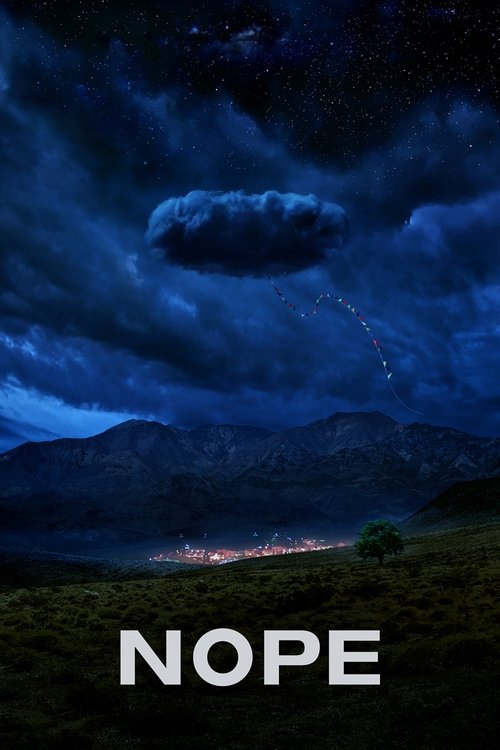
Nope is not a woke trap — it's an honest genre film with a Black filmmaker's thematic preoccupations baked visibly into its DNA. The film's central argument about spectacle and exploitation is made through horror mechanics rather than political lecture, and the Black family at its center is defined by work ethic, craft, and legacy rather than victimhood. Conservative audiences may not love every element but they won't feel ambushed.
Jordan Peele's third film is his most formally ambitious and his most politically restrained, which may be why it polarized audiences in ways his earlier work didn't. Get Out operated as a precise political metaphor — white liberals harvesting Black bodies — and the clarity of that metaphor was part of its pleasure. Nope refuses that clarity. It has a thesis about spectacle and exploitation, but the thesis lives in the film's structure and imagery rather than in its dialogue. This is more interesting and less satisfying, which is exactly the trade-off serious filmmaking tends to make.
The Haywood family runs a horse ranch in Agua Dulce, California. Their father's business is supplying horses to Hollywood productions — an honest, skilled, unglamorous trade. When something in the sky starts eating their horses, the film becomes a UFO thriller that is also, somehow, a meditation on who gets credit for images and who gets consumed by them. The film opens with a cryptic Biblical epigraph from Nahum: 'I will cast abominable filth upon thee, and make thee vile, and will set thee as a spectacle.' Peele is not making a subtle film. He is making a film whose subtlety lives in how it earns its thesis rather than in whether it has one.
The decision to cast Daniel Kaluuya as OJ Haywood is the most consequential creative choice in the film, and it earns its own paragraph. OJ is a stoic — a man who communicates through the physical language of horse training, through the competence and patience his work requires, through a quietness that reads as depth rather than blankness. Kaluuya plays him as a Western-genre archetype: the laconic ranch hand who is the most capable person in any situation and needs no one to acknowledge it. In a Hollywood landscape that typically requires Black male leads to perform emotional accessibility, this is a pointed choice. OJ Haywood is not here to explain himself to you. He's here to do the work.
The Gordy subplot — in which a former child star named Jupe Park (Steven Yeun) witnessed the on-set massacre perpetrated by a trained chimpanzee named Gordy — is the film's most formally daring gambit and its most disturbing passage. Peele cuts between the present-day UFO plot and the Gordy incident in a way that establishes the film's thematic argument without stating it: both plots are about the cost of trying to domesticate something wild and spectacular for human entertainment. The chimpanzee was trained to perform. The creature in the sky is being trained to perform. The people who built their personalities around proximity to the spectacle are the ones who get consumed. This is not a subtle reading, but it's an earned one.
Nope's final sequence — OJ on horseback, attempting to hold the creature's attention long enough for Emerald to photograph it, Holst ascending with his IMAX camera to be devoured — is the film's thesis made visual. What we see, and whether seeing it dignifies or exploits what is seen, is the film's real subject. Peele doesn't resolve this tension; he frames it, which is the more honest choice. For a filmmaker whose first two films offered the reassurance of clear villains and clear victims, Nope is a genuine evolution. It will reward the viewer who brings patience and frustrate the one who came for another Get Out.
Formula: Weighted Score = Severity × Authenticity Multiplier × Centrality Multiplier
🔴 Woke Tropes
| Trope | Severity | Authenticity | Centrality | Score |
|---|---|---|---|---|
| Spectacle as Exploitation — Anti-Consumption Thesis | 3 | 0.8 | 1.5 | 3.6 |
| Historical Erasure of Black Labor | 3 | 0.85 | 1.2 | 3.06 |
| TOTAL WOKE | 6.7 | |||
🟢 Traditional Tropes
| Trope | Severity | Authenticity | Centrality | Score |
|---|---|---|---|---|
| Stoic Masculine Competence | 4 | 0.95 | 1.8 | 6.84 |
| Family Legacy and Craft | 4 | 0.9 | 1.5 | 5.4 |
| Sacrifice for Others | 4 | 0.9 | 1.4 | 5.04 |
| Sibling Bond as Emotional Core | 3 | 0.9 | 1.3 | 3.51 |
| TOTAL TRADITIONAL | 20.8 | |||
Score Margin: +10 TRAD
Director: Jordan Peele
Progressive/AfrocentricJordan Peele is one of contemporary Hollywood's most interesting filmmakers and one of its most politically self-conscious. Get Out (2017) announced him as a filmmaker with an original and specific voice — a horror auteur using genre mechanics to process Black American anxieties about white liberal spaces. Us (2019) was more ambitious and more obscure, and Nope is the most formally confident and narratively opaque film of the three. Peele's politics are progressive and his films are marked by them — he is interested in racial history, in the mechanics of exploitation, in who gets to tell stories and who gets erased from them. But he is also a genuine craftsman who understands that ideology delivered as lecture kills genre. His best instincts are as a filmmaker first. Nope shows him at his most technically ambitious — the cinematography (Hoyte van Hoytema, the DP for Dunkirk and Interstellar) is extraordinary — and at his most thematically restrained. The film's argument about spectacle emerges from what you watch, not from what characters say.
Writer: Jordan Peele
Peele's screenplay is his most structurally unusual. Nope operates on two parallel tracks — the UFO horror plot and the Gordy's Home chimpanzee massacre subplot — that are thematically connected but causally independent. The screenplay trusts the audience to hold both tracks in mind and make the thematic connection without being walked through it. This is ambitious writing, and it mostly works. The Gordy flashback sequences are the film's most formally daring material.
Adult Viewer Insight
Nope was Peele's biggest budget to date — Universal gave him $68 million, up significantly from Get Out's $4.5 million — and the film's use of that budget is instructive. Rather than scale up the horror-thriller formula that made him bankable, Peele spent the money on IMAX cameras, practical effects, and a DP (Hoyte van Hoytema) associated with Christopher Nolan's most technically ambitious work. The result looks unlike any other major studio horror film of its era. Peele is clearly using his cultural capital to make the kind of formally serious genre cinema that studios rarely fund — and the film's mixed commercial reception ($171M on a $68M budget is profitable but not the hit Get Out was) may explain why the fourth Peele film has been slow to materialize.
Parental Guidance
Find Nope on Amazon Prime Video, rent, or buy:
▶ Stream or Buy on AmazonAs an Amazon Associate, VirtueVigil earns from qualifying purchases.
Community Discussion 0
Subscribe to comment.
Join the VirtueVigil community to share your perspective on this review.