
Nosferatu
Robert Eggers' Nosferatu is one of the most uncompromisingly traditional horror films made by a major director in the past decade.…
Full analysis below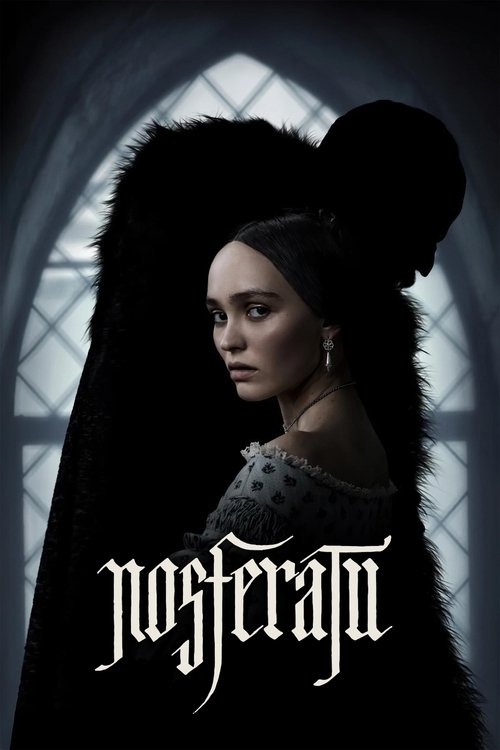
No bait-and-switch. This is a faithful Gothic horror remake with a clear moral framework: absolute evil versus human love and sacrifice. The sexual undertones of the vampire myth are present but serve the horror rather than a progressive agenda. The film's conclusion, in which self-sacrificial virtue destroys the monster, is thoroughly traditional.
Robert Eggers' Nosferatu is one of the most uncompromisingly traditional horror films made by a major director in the past decade. It takes the Gothic source material, Murnau's 1922 silent masterpiece and Bram Stoker's novel behind it, and treats it with a reverence that refuses any contemporary update to the moral architecture. Evil is absolute. Love is sacrificial. Virtue costs everything. These are not progressive values. They are ancient ones.
The film opens with a young Ellen Hutter's childhood prayer for companionship, a prayer answered by the wrong entity. Count Orlok is not a metaphor; he is evil in the most pre-modern, pre-psychological sense of the word. He does not have a backstory that explains his corruption. He is simply darkness that has learned to walk. Bill Skarsgård, unrecognizable under layers of physical transformation, creates a figure of genuine dread. He is repulsive and compelling in equal measure, exactly as the vampire tradition demands. Lily-Rose Depp, playing Ellen as a woman torn between the creature's preternatural pull and her devotion to her husband and community, delivers the most surprising performance in recent horror memory. She is not a final girl in the modern subversive sense. She is a woman doing what women have always done in the Gothic tradition: sacrificing herself to protect the people she loves.
Nicholas Hoult's Thomas Hutter makes the classic mistake of dismissing the supernatural as superstition, traveling to Transylvania to complete a real estate deal for the reclusive Count. His journey into the castle is handled with the patient, suffocating dread that Eggers does better than almost anyone working today. Thomas escapes but returns to find his city under plague siege. The community of Wisborg, where the second act unfolds, is rendered as a coherent society under siege, not a backdrop for individual grievance. This is a community worth saving, and the film treats it as such.
Willem Dafoe's Professor Von Franz is the film's most overtly traditional character. He is the scholar of the occult whose knowledge of evil is the community's only hope. He is an old man who knows things the modern rational world has forgotten. The film positions him, without irony, as a figure of genuine wisdom. His counsel is eventually heeded. His framework for understanding the crisis, that this is a metaphysical conflict between good and evil, not a medical or psychological problem, turns out to be correct. In contemporary cinema, the old man with ancient knowledge is often treated as a liability, a figure to be superseded by younger, more progressive protagonists. Not here. Von Franz is right, and following his guidance is what saves what can be saved.
Eggers does not sanitize the film's darker currents. The vampire's obsession with Ellen carries unmistakable sexual menace. The plague imagery is genuinely disturbing. Ellen's suffering is prolonged and real. But these elements serve the horror rather than a modern agenda. The film does not read the vampire as a metaphor for repressed female sexuality that deserves liberation. It reads the vampire as a predator who must be destroyed. The resolution is Ellen's voluntary self-sacrifice: she invites Orlok to feed on her until dawn, destroying him through her selfless act. This is explicitly framed as a sacrifice made out of love for her husband and community. It is not empowerment. It is devotion. The film treats these as the same thing.
Conservative viewers will find Nosferatu a genuinely rare artifact: a Hollywood film with a pre-modern moral framework that does not apologize for itself. The supernatural is real. Evil is absolute. Sacrifice is redemptive. The family and community are worth protecting at any cost. None of this requires extraction from beneath a layer of progressive messaging. It is simply the film.
| Trope | Category | Location | Authenticity |
|---|---|---|---|
| Defense of the Innocent | TRAD | Throughout -- Thomas, Von Franz, and ultimately Ellen act to defend their community | Organic |
| The Self-Sacrificing Hero | TRAD | Final act -- Ellen sacrifices herself to destroy Count Orlok | Organic |
| Faith in Adversity | TRAD | Throughout -- religious and occult frameworks as the only legitimate defense against evil | Organic |
| The Wise Elder | TRAD | Throughout -- Von Franz as the scholar whose ancient knowledge is ultimately correct | Organic |
| Traditional Femininity | TRAD | Throughout -- Ellen's arc is defined by devotion to husband and community, not self-actualization | Organic |
| The Nuclear Family Under Siege | TRAD | Throughout -- Thomas and Ellen's marriage is the emotional stakes of the film | Organic |
| Absolute Evil | TRAD | Throughout -- Count Orlok is evil without redemptive arc or explanatory trauma | Organic |
| Restored Home | TRAD | Final act -- the community is saved through Ellen's sacrifice | Organic |
| Industry and Perseverance | TRAD | Throughout -- Thomas's journey and return despite supernatural terror | Natural |
| Infallible Youth | WOKE | Ellen's childhood contact with Orlok positions her as uniquely knowing from girlhood | Organic |
| Female Supernatural Authority | WOKE | Ellen's special psychic connection to Orlok positions her as the one character with unique power over the monster | Organic |
| The Bigoted Traditionalist | WOKE | Community's initial response to plague scapegoats the outsider rather than accepting Von Franz's supernatural explanation | Natural |
| Institutional Evil | WOKE | Medical establishment dismisses spiritual/supernatural diagnosis throughout | Natural |
Director: Robert Eggers
IDEOLOGICALLY NEUTRAL (aesthetically maximalist, morally conservative in narrative structure)Eggers is a period-obsessed craftsman whose films are defined by historical authenticity, psychological dread, and pre-modern moral frameworks. The Witch (2015), The Lighthouse (2019), The Northman (2022), and now Nosferatu (2024) share a consistent DNA: isolated characters, ancient evil, and traditional virtue tested to its limits. His films have no contemporary political agenda. They are exercises in historical immersion and primal horror. Eggers is the rare major director whose work shows zero progressive ideological signature.
Writer: Robert Eggers
Sole credited writer. Eggers' scripts are historical research projects as much as screenplays. His Nosferatu screenplay draws from Murnau's 1922 film, Galeen's original script, and Bram Stoker's novel. The ideological valence is the source material's: good vs. evil, love vs. corruption, sacrifice vs. surrender. No modern political layer is introduced.
Producers
- Jeff Robinov (Studio 8) — Former Warner Bros. president who launched Studio 8 for prestige independent projects. Ideologically neutral; follows quality. Credits include Flight (2012) and Grudge Match (2013).
- Chris Columbus & Eleanor Columbus (Birch Hill Road Entertainment) — Chris Columbus is best known for Home Alone, Mrs. Doubtfire, and the first two Harry Potter films. A mainstream commercial filmmaker with no strong ideological signal. Father-daughter producing team.
- Robert Eggers — See director profile. As producer on his own films, his creative control is total. No ideological agenda beyond period authenticity.
- John Graham (Maiden Voyage Pictures) — Emerging producer. No strong independent ideological signal.
Full Cast
Fidelity Casting Analysis FAITHFUL
Casting is consistent with the 19th-century European setting. All leads are white European actors appropriate to the period and geography.
Nosferatu is set in 1830s Germany and Transylvania. Every principal cast member is cast faithfully to the historical and geographic setting. Bill Skarsgård brings a genuinely monstrous physicality to Count Orlok. Lily-Rose Depp, Nicholas Hoult, Aaron Taylor-Johnson, Emma Corrin, and Willem Dafoe are all cast as they would have been. Emma Corrin, who identifies as nonbinary in real life, plays a female character with no on-screen identity politics. There are no canon swaps, no historical incongruities, and no DEI insertions. Fidelity score: FAITHFUL.
Adult Viewer Insight
Conservative viewers will find Nosferatu refreshingly free of contemporary ideology. This is a film that takes the pre-modern moral universe of its source material seriously. Evil is not explained away by trauma or social circumstance; it simply is. The sacrificial conclusion, in which Ellen willingly gives her life to destroy the monster and protect her husband and city, carries genuine weight precisely because the film has established these relationships as worth protecting. This is what traditional horror looks like when a skilled director takes it seriously.
Parental Guidance
Nosferatu is rated R for strong horror violence and some sexuality. The film is not appropriate for children or younger teens. Violence is disturbing and atmospheric rather than gory, but the dread is sustained and oppressive throughout. The vampire's obsession with Ellen has sexual dimensions that, while not explicit, are clearly present. The plague sequences show death on a community scale. Appropriate for mature teens 16 and older with parental screening first. No progressive ideological content. Strong themes of self-sacrifice, marital devotion, and the reality of spiritual evil.
Find Nosferatu on Amazon Prime Video, rent, or buy:
▶ Stream or Buy on AmazonAs an Amazon Associate, VirtueVigil earns from qualifying purchases.


Community Discussion 0
Subscribe to comment.
Join the VirtueVigil community to share your perspective on this review.