
One Battle After Another
Paul Thomas Anderson makes movies for people who love movies. That has always been true. And One Battle After Another might be his most entertaining work, period.…
Full analysis below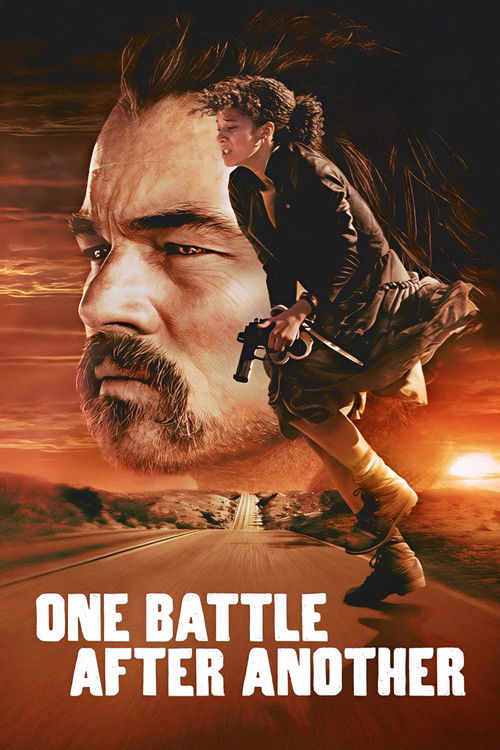
This film draws you in for 15% of its runtime with traditional or neutral content before springing its woke agenda. Know before you go!
PARTIAL WOKE TRAP. The trailer sells car chases, gunfights, and Leonardo DiCaprio doing his thing. Those elements are genuinely there. But beneath the surface-level thrills, Paul Thomas Anderson has constructed a deeply political film about immigration, race, white supremacy, and state violence. The action movie veneer gets conservative viewers in the door. The progressive politics are what they find once seated.
Paul Thomas Anderson makes movies for people who love movies. That has always been true. And One Battle After Another might be his most entertaining work, period. It is also his most politically explicit, which creates a strange experience for conservative viewers who appreciate craft but bristle at being lectured.
Leonardo DiCaprio is terrific as a washed-up revolutionary turned paranoid stoner living off the grid with his teenage daughter Willa. He is funny, pathetic, and deeply loving in a way he cannot articulate because his brain is swimming in THC. Sean Penn is genuinely terrifying as Colonel Lockjaw, a corrupt military officer who built his career on anti-immigration operations and murders revolutionary group members without trial. Chase Infiniti, in her film debut, is the revelation. She carries the emotional heart of the film with a naturalism that would be impressive from a veteran actress.
The action sequences are outstanding, shot in VistaVision with startling depth and clarity. The car chase through Baktan Cross and the final highway confrontation are beautifully staged.
But the politics are relentless. The film opens with revolutionaries breaking detained immigrants out of a real facility. Immigration enforcement is presented as state violence. The Christmas Adventurers Club, a white supremacist secret society, represents organized, institutional racism. A sanctuary city is raided by military forces using immigration operations as cover. Conservative viewers who hold different views on immigration will find their positions coded as villainous throughout.
There are moments of genuine moral complexity. Perfidia, Willa's mother, is a revolutionary who is also a terrible person. She abandons her child, murders a guard, betrays her comrades. The bounty hunter Avanti refuses to harm a child and dies protecting her.
$208 million worldwide against a $130-175 million budget. 13 Oscar nominations, 4 Golden Globes. But the American public did not turn out in the numbers Warner Bros. hoped for.
Bottom line: brilliantly made, performances outstanding across the board, and politics unrelentingly progressive. If you can hold two thoughts at once, there is a great movie here.
| Trope | Category | Location | Authenticity |
|---|---|---|---|
| Immigration Allegory / Pro-Immigration Framing | WOKE | Throughout - opens with jailbreak at real detention facility, sanctuary city raided by military | Organic to story, derived from Pynchon and Anderson's original material |
| Institutional Evil / Corrupt Military | WOKE | Throughout - Colonel builds career through anti-immigration operations and extrajudicial killings | Organic, derived from Pynchon's distrust of government |
| White Supremacy as Institutional Power | WOKE | Second half - Christmas Adventurers Club: wealthy, organized white supremacist secret society | Original to Anderson's screenplay |
| Sanctuary City as Moral Good | WOKE | First half - Baktan Cross presented as thriving community destroyed by military raids | Original to Anderson's screenplay |
| Revolutionary Heroes | WOKE | Throughout - far-left French 75 are the film's heroes despite violent methods | Derived from Pynchon's Vineland |
| Interracial Relationships as Threat to Power | WOKE | Second half - Lockjaw's relationship with Black woman used to destroy him by white supremacists | Original to Anderson |
| Militarized Police State | WOKE | Middle - troops raid sanctuary city with armored vehicles, storm school dance | Anderson's original material |
| Director's Political Framing | WOKE | External - Anderson discussed film as response to 'the feeling in the air' in America | External |
| Father's Love / Protective Parent | TRADITIONAL | Throughout - Bob's entire motivation is protecting Willa, tearful reunion at end | Derived from Vineland's central relationship |
| Defense of the Innocent | TRADITIONAL | Multiple scenes - Sergio evacuates people, Avanti dies protecting Willa, Bob crosses state for daughter | Organic to the story |
| Consequences of Betrayal | TRADITIONAL | Perfidia's arc - abandons family, betrays comrades, spends sixteen years in exile | Anderson's original material |
| Community / Chosen Family | TRADITIONAL | First half - Baktan Cross functions as genuine community with mutual aid | Original to Anderson |
| Villain's Downfall | TRADITIONAL | Final act - Lockjaw killed by the white supremacist institution he tried to join | Original to Anderson |
| Coming of Age / Independence | TRADITIONAL | Willa's arc - sheltered teenager to young woman who survives and chooses her own path | Derived from Vineland |
Director: Paul Thomas Anderson
PROGRESSIVE - most politically explicit work to dateOne of the most acclaimed American filmmakers working today. Career spans Hard Eight through There Will Be Blood through Phantom Thread. His films have always carried political undertones, but One Battle After Another is his most overtly progressive work. Described it as emerging from 'the feeling in the air' in America.
Writer: Paul Thomas Anderson
Sole credit. Inspired by Thomas Pynchon's 1990 novel Vineland, combined with two original story ideas. Political dimensions drawn from both Pynchon's anarchic distrust of government and Anderson's response to current events.
Fidelity Casting Analysis ENHANCED
Loosely inspired by Pynchon's Vineland with significant original material. No strict source fidelity to assess.
Anderson drew inspiration from Vineland but created largely original characters. The casting is diverse by design: the French 75 is a multiracial revolutionary group, the protagonist's partner and daughter are Black, and the community of Baktan Cross is explicitly multicultural. None of this contradicts the source material because the source material was only a starting point. Chase Infiniti was discovered through a six-month audition process and is the film's genuine revelation.
Adult Viewer Insight
Conservative adult viewers will admire the craft and resist the ideology. The performances are outstanding. The action is exhilarating. The filmmaking is masterful. And the politics are unrelentingly progressive. The father-daughter emotional core will move you regardless of where you stand on immigration. Watch it because it is a genuinely great film, and recognize it as political art from a specific perspective.
Parental Guidance
Rated R. Significant violence: multiple shootings, car crashes, explosions, a teenager shoots a man in self-defense. Moderate sexual content: implied encounters, crude dialogue. Strong language throughout. Heavy substance use: protagonist is a habitual marijuana user. Intense scenes: school dance raid, kidnapping, highway confrontation. Age 15+ minimum. Older teenagers may benefit from guided viewing to discuss political content critically.
Find One Battle After Another on Amazon Prime Video, rent, or buy:
▶ Stream or Buy on AmazonAs an Amazon Associate, VirtueVigil earns from qualifying purchases.





Community Discussion 0
Subscribe to comment.
Join the VirtueVigil community to share your perspective on this review.