
Oppenheimer
There's a moment roughly two-thirds through Oppenheimer when J. Robert Oppenheimer - fresh from watching the bomb he built vaporize 80,000 people - stands before a cheering crowd in Los Alamos and tries to look triumphant.…
Full analysis below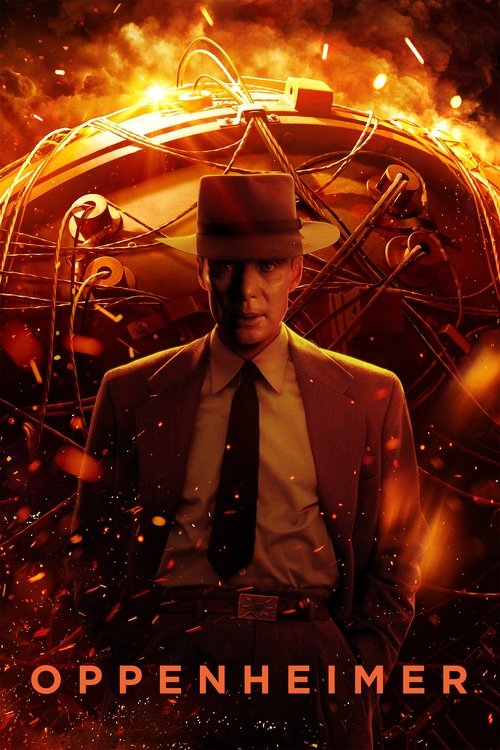
This film draws you in for a significant portion of its runtime with traditional or neutral content before springing its woke agenda. Know before you go!
NOT A WOKE TRAP - Oppenheimer is not a woke trap. The film's political sympathies are real but not concealed. Christopher Nolan marketed this as exactly what it is: a morally complex, historically dense biographical drama about the most consequential scientist of the 20th century and the political forces that destroyed him. Adults who bought a ticket knew they were getting difficulty. The ideological framing - sympathy for Oppenheimer's communist-adjacent past, condemnation of the conservative security establishment, sustained ambivalence about American military power - is present throughout and would not surprise any attentive viewer. Nolan's intelligence and seriousness as a filmmaker mean that even viewers who disagree with his political instincts can recognize the honest engagement. Contrast with a film like Barbie, where the feminist manifesto was buried beneath an avalanche of pink nostalgia marketing. Oppenheimer wears its complexity on its sleeve.
⚠️ SPOILER ALERT: This review contains detailed plot analysis and reveals key story elements including the film's ending.
There's a moment roughly two-thirds through Oppenheimer when J. Robert Oppenheimer - fresh from watching the bomb he built vaporize 80,000 people - stands before a cheering crowd in Los Alamos and tries to look triumphant. Nolan cuts between the adulation and Oppenheimer's vision: bodies burning, a woman's skin peeling away in nuclear flash, the hollow-eyed knowledge of what he's done. It's the most honest thing the film does, and it sets up the central question Christopher Nolan spends three hours refusing to fully answer: was it worth it?
That refusal is either artistic integrity or ideological cowardice, depending on where you sit. What's certain is this: Oppenheimer is not a simple patriotic war story. It is not anti-American propaganda. It is not a woke morality play. It is something rarer and more genuinely complicated - a serious historical film that earns its complexity even when that complexity occasionally serves a progressive framing, and that celebrates American genius even when it cannot quite bring itself to say the genius was fully righteous.
For our audience, the relevant questions are: Can conservative viewers engage with this film? Yes - with open eyes. Is it being honest with you about what it is? Mostly. Is it the great American story it's sometimes sold as? Partly. And that "partly" deserves a full accounting.
Christopher Nolan structures Oppenheimer across three overlapping timelines told in his signature non-linear style. In color, we follow "Fission" - Oppenheimer's subjective experience from his brilliance-haunted early career through the Manhattan Project and its aftermath. In black-and-white, we follow "Fusion" - the 1959 Senate confirmation hearings for Lewis Strauss (Robert Downey Jr.), the AEC chairman who orchestrated Oppenheimer's political destruction. Both threads converge on the 1954 security clearance hearing that ended Oppenheimer's government career.
The color thread opens with the young Oppenheimer at Cambridge - brilliant, volatile, troubled enough to attempt poisoning his professor out of academic jealousy. He migrates to Germany to absorb quantum physics at its source, returns to Berkeley, and becomes the most brilliant theoretical physicist in America. Along the way, he falls into the orbit of the American left: Communist Party meetings, Spanish Civil War fundraisers, left-wing friends, lovers, and a brief but documented dalliance with the Party itself. His girlfriend Jean Tatlock (Florence Pugh) is a committed Communist. His future wife Kitty (Emily Blunt) was briefly a Party member. His brother Frank is a Party member.
None of this disqualifies him in 1942, when General Leslie Groves (Matt Damon) recruits him to lead the Manhattan Project. At Los Alamos, Oppenheimer reveals his other gift: he is not only a genius but a leader of geniuses - a rare talent that Nolan renders beautifully, showing a man who could hold together the country's most brilliant and fractious scientific minds under wartime secrecy in a New Mexico desert. The bomb is built. The Trinity test succeeds. Hiroshima and Nagasaki follow.
After the war, Oppenheimer becomes the most famous scientist in America - and immediately uses that platform to argue against the hydrogen bomb and for international nuclear controls. This puts him in direct conflict with Lewis Strauss, who views Oppenheimer's influence as dangerous. In 1954, a rigged security hearing - secret, with evidence denied to Oppenheimer's defense - strips him of his clearance, effectively ending his influence on American nuclear policy. Strauss wins. The black-and-white Strauss thread reveals that his 1959 Senate confirmation for Commerce Secretary becomes the venue for Oppenheimer's posthumous vindication: the manipulation is exposed, witnesses turn against Strauss, and his confirmation fails. The film ends with Oppenheimer realizing, in a moment of quiet horror, that the nuclear chain reaction he set off will never stop.
Trope Analysis - VVWS Weighted Scoring
Formula: Weighted Score = Severity × Authenticity Multiplier × Centrality Multiplier
Authenticity: High=0.7 (organic), Moderate=1.0, Low=1.4 (ideologically injected) | Centrality: Low=0.5, Moderate=1.0, High=1.8
🔴 Woke Tropes
| Trope | Severity (1-5) | Authenticity | Centrality | Weighted Score |
|---|---|---|---|---|
| Communist Associations Portrayed Sympathetically | 4 | Low (1.4) | High (1.8) | 10.1 |
| Conservative Establishment as Villain (Strauss) | 4 | Low (1.4) | High (1.8) | 10.1 |
| Atomic Bomb Moral Ambiguity / Military-Industrial Guilt | 4 | Moderate (1.0) | High (1.8) | 7.2 |
| Gratuitous Sexual Content (nude scenes) | 3 | Low (1.4) | Low (0.5) | 2.1 |
| WOKE TOTAL | 29.5 |
🟢 Traditional Tropes
| Trope | Severity (1-5) | Authenticity | Centrality | Weighted Score |
|---|---|---|---|---|
| American Scientific Genius / Manhattan Project Triumph | 4 | Moderate (1.0) | High (1.8) | 7.2 |
| American Wartime Patriotism and Sacrifice | 5 | High (0.7) | High (1.8) | 6.3 |
| Moral Weight of Power / Burden of Responsibility | 4 | High (0.7) | High (1.8) | 5.0 |
| Great Man History / Individual Leadership | 3 | Moderate (1.0) | Moderate (1.0) | 3.0 |
| Heroic Sacrifice and Personal Cost of Duty | 3 | High (0.7) | Moderate (1.0) | 2.1 |
| Faith in American Democratic Accountability | 2 | Moderate (1.0) | Moderate (1.0) | 2.0 |
| TRAD TOTAL | 25.6 |
Score Margin: -5 WOKE
Woke Trap Assessment
✅ NOT A WOKE TRAP
Oppenheimer is not a woke trap. A woke trap disguises its ideology behind a warm or familiar exterior; this film makes no such attempt. It's a three-hour, R-rated, structurally complex historical drama with no family-friendly pretensions and a serious-minded marketing campaign that accurately represented what the film was. Adults who bought tickets knew they were getting a demanding, morally complicated prestige film about a man who built the atomic bomb and had Communist friends. They got exactly that.
The film has ideological leanings - documented above - but they are the leanings of a thoughtful, serious filmmaker engaging honestly with difficult history, not the leanings of someone hiding an agenda beneath a false surface. Christopher Nolan is not Greta Gerwig. He has not made a film designed to smuggle a political program into your living room. He has made a film that reflects his genuine belief that the Oppenheimer story is one of the most important and morally consequential American stories ever told - and that the conservative establishment that destroyed Oppenheimer was wrong to do so. You can disagree with his conclusions while respecting the honesty of his engagement.
Creative Team at a Glance
- Director: Christopher Nolan - Widely considered the greatest technically ambitious filmmaker of his generation. Generally apolitical craftsman; Oppenheimer is his most politically engaged film.
- Writer: Christopher Nolan (adapted from American Prometheus by Kai Bird and Martin J. Sherwin) - His fidelity to the source biography is high; his framing choices are deliberate and politically significant.
- Lead Producer: Emma Thomas (Syncopy/Universal) - Nolan's longtime producing partner and wife. No independent political signal.
- Top Cast: Cillian Murphy (Oppenheimer), Robert Downey Jr. (Lewis Strauss), Emily Blunt (Kitty Oppenheimer), Matt Damon (General Leslie Groves), Florence Pugh (Jean Tatlock), Josh Hartnett (Ernest Lawrence), Casey Affleck, Rami Malek, Kenneth Branagh.
- Pre-Viewing Prediction: MIXED - Nolan's apolitical track record tempered against the subject matter's inherent left-liberal historical readings. Confirmed.
Director Track Record - Christopher Nolan
Christopher Nolan is the closest thing 21st-century Hollywood has to a filmmaker who transcends the culture war. His films have been embraced by conservatives (the Dark Knight trilogy's unflinching portrayal of evil, its defense of surveillance in crisis) and progressives (its critique of vigilante justice and unchecked power). He is not a political filmmaker in the way Greta Gerwig or Spike Lee are political filmmakers. He is a craftsman of the highest order who picks stories based on their dramatic and intellectual magnitude.
Key films with ideological notes:
- The Dark Knight Trilogy (2005-2012): Genuinely ambiguous - can be read as endorsing or critiquing the security state. Nolan has said he was engaging with post-9/11 complexity rather than advocating a position. Assessment: Politically ambiguous by design.
- Dunkirk (2017): Celebrates ordinary soldiers and civilian courage without jingoism. Refuses to let the war become propaganda. Assessment: Traditional-leaning in the best sense.
- Interstellar (2014): A father's love for his daughter as the force that saves civilization. Strongly traditional emotional core. No significant political content.
- Oppenheimer (2023): His most politically engaged film by a wide margin. For the first time, Nolan makes choices that align with an identifiable political perspective: sympathy for the left-liberal Oppenheimer, condemnation of the conservative security establishment, sustained moral ambiguity about American military power.
Pattern Assessment: Nolan is not a progressive ideologue. His films consistently celebrate individual excellence, sacrifice, the weight of moral responsibility, and the capacity of ordinary people to be extraordinary. These are traditional values. What Oppenheimer reveals is that when the subject matter demands political choices, Nolan's instincts lean toward the liberal critique of Cold War conservatism. That's worth knowing.
Ideological tendency: CENTRIST-CRAFTSMAN. Most conservative-compatible major director in Hollywood. Oppenheimer is an outlier - and even here, the traditional elements are genuine.
Adult Viewer Insight
Conservative adults who want to engage with Oppenheimer should understand what they're walking into - and also what's genuinely worth their three hours.
What you're walking into: A film that sympathizes with a man who had documented Communist associations and presents those associations as largely irrelevant to his patriotism. A film that frames the conservative national security establishment as the villain of the postwar story. A film that refuses to conclude the bombing of Japan was simply right, insisting instead that it was necessary but also catastrophic. And a film with explicit sexual content between the historical Oppenheimer and his Communist girlfriend - content that exceeds what the narrative strictly requires.
What's genuinely worth your time: Oppenheimer is, by any objective measure, one of the most technically accomplished and intellectually serious films made in the 21st century. Murphy's haunted interiority, Downey Jr.'s venomous political cunning, Blunt's steely marital resilience - performances among the best of their respective careers. The Trinity sequence is one of the most extraordinary pieces of filmmaking in cinema history.
Beyond craft: the film's traditional elements are not decoration. The story of J. Robert Oppenheimer is a great American story - a brilliant man, a patriot with complicated politics, who subordinated everything to serve his country in its hour of greatest need, built the weapon that ended the deadliest war in human history, and was then destroyed by the very government he served. The portrait of American scientific genius - the assembled brilliance of Los Alamos, the organizational marvel of the Manhattan Project, the triumph of American ingenuity under wartime pressure - is legitimately inspiring.
Conservative viewers who want the bomb to be simply the correct decision will find the film frustrating in its refusal to provide that closure. But the historical Oppenheimer didn't provide that closure either. The frustration may be with history as much as with Nolan.
Parental Guidance
Recommended minimum age: 17+ (R-rated; sexual content is significant)
Content warnings:
- Sexual content and nudity (significant): Multiple scenes between Cillian Murphy and Florence Pugh include full nudity from both actors. One scene depicts sexual intercourse; another uses nudity in a surreal security-hearing sequence. Pugh is fully nude in her primary scenes. Not appropriate for anyone under 17. This is the film's most significant content concern.
- Mature thematic content: The film engages seriously with mass civilian casualties, survivor guilt, nuclear existential dread, political persecution, and paranoia. Handled with adult seriousness.
- Language: Moderate profanity throughout. Not a primary concern.
- Communist ideology: The film portrays Communist Party associations and meetings sympathetically. Younger viewers without historical context may absorb this framing uncritically.
- Atomic bomb aftermath: Oppenheimer's imagined visions of the bomb's effects - burning skin, bodies in nuclear flash - are brief but emotionally disturbing.
- Complexity and length: Three hours, non-linear, dialogue-driven. Not suitable for children or younger teens.
For parents of older teens (17+) who do watch: Use the film as a discussion opportunity. Was the security hearing legitimate security concern or political persecution? Was dropping the bomb right? These are genuine historical and moral questions the film raises without resolving. A teenager who can watch Oppenheimer and articulate a reasoned position on those questions has received a genuine education.
Formula: Weighted Score = Severity × Authenticity Multiplier × Centrality Multiplier
🔴 Woke Tropes
| Trope | Severity | Authenticity | Centrality | Score |
|---|---|---|---|---|
| Communist Associations Portrayed Sympathetically | 4 | Low | High | 10.1 |
| Conservative Establishment as Villain | 4 | Low | High | 10.1 |
| Atomic Bomb Moral Ambiguity | 4 | Moderate | High | 7.2 |
| Gratuitous Sexual Content | 3 | Low | Low | 2.1 |
| TOTAL WOKE | 29.5 | |||
🟢 Traditional Tropes
| Trope | Severity | Authenticity | Centrality | Score |
|---|---|---|---|---|
| American Scientific Genius / Manhattan Project Triumph | 4 | Moderate | High | 7.2 |
| American Wartime Patriotism and Sacrifice | 5 | High | High | 6.3 |
| Moral Weight of Power / Burden of Responsibility | 4 | High | High | 5 |
| Great Man History / Individual Leadership | 3 | Moderate | Moderate | 3 |
| Heroic Sacrifice and Personal Cost of Duty | 3 | High | Moderate | 2.1 |
| Faith in American Democratic Accountability | 2 | Moderate | Moderate | 2 |
| TOTAL TRADITIONAL | 25.6 | |||
Score Margin: -4 WOKE
Director: Christopher Nolan
CENTRIST-CRAFTSMAN with progressive sympathies revealed under pressure - Oppenheimer is his most politically engaged workChristopher Nolan is the closest thing 21st-century Hollywood has to a filmmaker who transcends the culture war. His films have been embraced across the political spectrum - the Dark Knight trilogy's unflinching portrayal of evil and its defense of surveillance in crisis situations appealed to conservatives; its critique of vigilante justice and unchecked power appealed to progressives. He has consistently described himself as uninterested in political filmmaking, preferring to explore moral complexity without resolving it into advocacy. Oppenheimer represents a meaningful departure: for the first time, Nolan makes choices that align with an identifiable political perspective. His portrait of Oppenheimer's communist associations is sympathetic; his portrayal of Lewis Strauss and the conservative security establishment is damning; his treatment of the atomic bomb refuses the closure the conventional patriotic narrative would provide. Whether this represents genuine political evolution or simply the demands of this particular historical material, it is the most significant political signal he has sent in his career. His filmmaking craft remains peerless - Trinity is one of the greatest sequences in cinema history - but Oppenheimer reveals that under sufficient historical pressure, Nolan's instincts lean left of center.
Writer: Christopher Nolan
Nolan adapted Oppenheimer from 'American Prometheus: The Triumph and Tragedy of J. Robert Oppenheimer' by Kai Bird and Martin J. Sherwin (2005 Pulitzer Prize winner). His fidelity to the source biography is high - most major scenes have documentary grounding. His structural choices (the non-linear three-timeline format, the color/black-and-white split between subjective and objective perspectives) are his signature innovations on the material. His framing choices - which events to include, which to elide, how to weight the communist associations against the patriotism, how much screen time to give Strauss's villainy - are where his political sympathies are most visible. The screenplay is densely intelligent and demands full adult attention.
Adult Viewer Insight
Conservative adults walking into Oppenheimer should know what they're getting: a film sympathetic to a man with documented Communist associations, which frames the conservative national security establishment (in the form of Lewis Strauss) as the villain of the postwar story, and which refuses to deliver a clean patriotic verdict on the dropping of the atomic bomb. These are real ideological choices. But they exist alongside a genuinely inspiring portrait of American scientific genius, wartime sacrifice, and the weight of moral responsibility - and Nolan's engagement with the material is honest, not sneaky. The Manhattan Project sequences are legitimately awe-inspiring. The Trinity test is one of the most extraordinary pieces of filmmaking in cinema history. The traditional elements of the story - a brilliant patriot who gave everything for his country and was then destroyed by it - are real and moving. Conservative viewers can and should engage with this film with eyes open, ready to push back on its politics while respecting its craft and its honesty.
Parental Guidance
Recommended minimum age: 17+. The film is rated R primarily for sexual content: multiple scenes involving full nudity from Florence Pugh and Cillian Murphy, including a scene depicting sexual intercourse and a jarring surreal sequence using nudity in the context of the security hearing. These scenes significantly exceed what the narrative requires and are the film's most significant content concern. Additional warnings: mature thematic content including mass civilian casualties, survivor guilt, existential dread, and political persecution; depictions of nuclear bomb aftermath through Oppenheimer's imagination; moderate profanity; and a sympathetic portrayal of Communist Party associations that younger viewers may absorb without historical context. The film's three-hour runtime and non-linear structure also require sustained adult attention. Not appropriate for anyone under 17.
Find Oppenheimer on Amazon Prime Video, rent, or buy:
▶ Stream or Buy on AmazonAs an Amazon Associate, VirtueVigil earns from qualifying purchases.





Community Discussion 0
Subscribe to comment.
Join the VirtueVigil community to share your perspective on this review.