
Past Lives
Celine Song's Past Lives is a film about what you give up when you choose to become someone. It is quiet, devastating, and almost defiantly apolitical in a cultural moment when apolitical means brave.
Full analysis below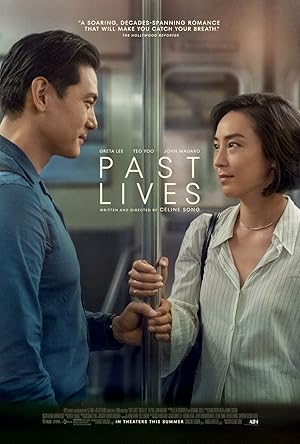
Margin is positive. Not a woke trap. The film's emotional complexity around marriage, immigration, and unresolved longing is present throughout and never hidden.
Celine Song's Past Lives is a film about what you give up when you choose to become someone. It is quiet, devastating, and almost defiantly apolitical in a cultural moment when apolitical means brave.
The premise: In Seoul, 12-year-old Na Young and her classmate Hae Sung develop a childhood crush. Na Young's family immigrates to Canada. She changes her name to Nora. Twelve years pass. They reconnect via social media for a brief online courtship that ends when Nora decides she cannot build a life looking backward. Another twelve years pass. Hae Sung comes to New York, where Nora now lives with her husband Arthur, to finally see her in person. The film covers those 24 years in three movements.
What the Film Is Actually About
Past Lives is not an immigration film, though immigration shapes everything in it. It is not a film about interracial marriage, though that is part of its texture. It is a film about inyeon, a Korean concept the film paraphrases as: the layers of fate-woven connection between people, built up over multiple lifetimes, that explain why certain people keep finding each other. Hae Sung uses inyeon to explain the pull between himself and Nora. Nora's husband Arthur listens, and worries, and ultimately understands.
The film's emotional architecture rests on a genuine tension between two legitimate claims. Hae Sung represents Nora's roots, her Korean self, the girl she was before she chose to become American. Arthur represents the self she chose to build: her ambitions, her work, her English-language life. The film refuses to resolve this tension in either direction. It honors both men and both selves without declaring either right.
That refusal to declare is the film's most remarkable quality. Hollywood, in 2023, does not often make films that honor a woman's choice to stay married to her husband as a genuine and emotionally costly choice. Past Lives does.
What the Film Values
The dignity of commitment. Nora chose Arthur. She chose America. The film never suggests she chose wrong. Her marriage is portrayed as real and loving: Arthur is not a convenient or hollow husband, not a narrative obstacle to be cleared. When Nora cries on the sidewalk after Hae Sung's taxi pulls away, she is grieving something genuine, not choosing wrongly. The tears honor the life she might have had without repudiating the life she has.
The seriousness of marriage as identity. The film's most quietly radical scene is Arthur's late-night conversation with Nora in which he confesses his insecurity about being the white American husband in what feels, from outside, like a Korean love story. Nora's response is clear: he is not incidental to her story. He is her story. This is a film about a married woman who truly loves her husband even while feeling the pull of something she can never fully have. That is not a common thing in contemporary cinema.
The Korean concept of inyeon itself. The film treats the idea of fate-woven connection across lifetimes with genuine seriousness, not condescension. Hae Sung's suggestion in the final scene, that he and Nora may be inyeon in a future life rather than this one, is not presented as superstition or a cope. It is a way of honoring the connection without betraying the commitment. The film allows both things to be true.
Where It Gets Complicated
The film is not ideologically aggressive but it is not ideologically neutral either. Its specific concern with Korean-American hyphenated identity, the emotional cost of immigration on the immigrant, and the strangeness of assimilation are the perspectives of a specific cultural-progressive milieu. The film does not lecture about these themes. But a viewer with traditional concerns about immigration, assimilation, and the primacy of American identity will find the film's implicit sympathy for the cost of becoming American to be a quiet challenge.
More substantively: the film's emotional climax is a woman crying on a sidewalk because she said goodbye to a man she loves who is not her husband. The film frames this correctly, as the price of adult commitment rather than as romantic tragedy. But it is emotionally available as a validation of the idea that all of us have 'what might have been' loves that remain with us forever, which is a sentiment that sits uneasily with a strict theology of married fidelity.
These are honest complications, not fatal flaws. Past Lives is a serious film that takes marriage seriously and honors fidelity even while depicting the gravity of what fidelity costs. That is more than most of its contemporaries manage.
Score Margin: +2 TRAD
Parental Guidance
Appropriate for adults and mature older teenagers.
- Language: Very mild. The film is largely in Korean with English subtitles.
- Themes: Immigration, cultural identity, cross-cultural marriage, romantic longing, the emotional cost of adult commitments.
- Sexual content: A single brief bedroom scene, tasteful and non-explicit.
- Violence: None.
- Emotional content: The film is quiet but emotionally demanding. Its final 20 minutes are devastating for adult viewers.
- Ideology: The film is culturally specific to Korean-American immigrant experience. Its sympathies lie with the emotional cost of assimilation, handled with restraint rather than political advocacy.
Age recommendation: 16+. Younger viewers will not have the life experience to understand what the film is about. Adults who have made large, costly commitments will find it unbearably precise.
Review by the VirtueVigil Editorial Team | March 15, 2026 | VVWS v1.1
Formula: Weighted Score = Severity × Authenticity Multiplier × Centrality Multiplier
🔴 Woke Tropes
| Trope | Severity | Authenticity | Centrality | Score |
|---|---|---|---|---|
| Immigration experience framed as identity loss and emotional amputation | 3 | High | High | 2.1 |
| Hyphenated Korean-American identity presented as inherent tension | 3 | High | Moderate | 3 |
| Romantic longing for man other than husband given extensive emotional validation | 2 | High | Low | 0.7 |
| TOTAL WOKE | 5.8 | |||
🟢 Traditional Tropes
| Trope | Severity | Authenticity | Centrality | Score |
|---|---|---|---|---|
| Marriage honored as identity choice, not constraint | 5 | High | High | 6.3 |
| The concept of inyeon treated with spiritual seriousness | 3 | High | Moderate | 2.1 |
| The husband portrayed with dignity and emotional intelligence | 3 | High | Low | 1.05 |
| Adult commitment honored as requiring genuine sacrifice | 3 | High | Low | 1.05 |
| TOTAL TRADITIONAL | 10.5 | |||
Score Margin: +2 TRAD
Director: Celine Song
Autobiographical humanist. Song's debut feature is closely drawn from her own life: she emigrated from South Korea as a child, reconnected with a childhood friend two decades later, and eventually married a Jewish-American writer. Her film does not pursue a political agenda. It explores the emotional reality of inyeon, the Korean concept of fate-driven connection, with seriousness and restraint.Korean-Canadian playwright and filmmaker, Past Lives is her feature debut. The film premiered at Sundance 2023 and received immediate critical acclaim. Song has been open that the film is semi-autobiographical: the character of Nora is essentially herself, her husband Arthur Zaturansky is the model for the character Arthur Zaturansky (the name unchanged), and Hae Sung represents a real childhood connection. Her theatrical background is visible in the film's long, dialogue-centered scenes and its extreme economy of incident. She is a significant new voice in American independent cinema.
Writer: Celine Song
Also the director. Song's screenplay is notable for its tonal restraint: the film does not moralize about immigration, cultural identity, or interracial marriage. It simply shows what these things feel like from the inside. The three-way conversation between Nora, Hae Sung, and Arthur in the final bar scene is one of the finest pieces of dialogue in recent American cinema: funny, painful, and impossibly precise about how adults negotiate love and loss across cultural and linguistic distance.
Adult Viewer Insight
Past Lives is one of the few films in recent memory to take marriage seriously as an identity choice rather than a constraint. Nora chose Arthur, chose America, chose to become someone new. The film never suggests she chose wrong. Her tears at the end are not the tears of a woman who made the wrong choice. They are the tears of a woman who made the right one and still has to live with what it cost. Hae Sung represents her Korean self, the girl she was before the choice. Arthur represents the self she built. The film honors both without declaring either superior. That honesty is rare and worth respecting even for viewers who will find the film's immigrant-perspective sympathies unfamiliar.
Parental Guidance
Appropriate for adults and mature older teenagers (16+). Very mild language, a brief non-explicit bedroom scene, no violence. Themes include immigration, cultural identity, cross-cultural marriage, and the emotional cost of adult commitments. The film is largely in Korean with English subtitles. Its emotional demands are high: the final 20 minutes are devastating for adult viewers who have made large life choices and wondered about the alternatives. Younger viewers will not yet have the life experience to understand what it is about.
Find Past Lives on Amazon Prime Video, rent, or buy:
▶ Stream or Buy on AmazonAs an Amazon Associate, VirtueVigil earns from qualifying purchases.
Community Discussion 0
Subscribe to comment.
Join the VirtueVigil community to share your perspective on this review.