
People We Meet on Vacation
People We Meet on Vacation is the rom-com BookTok has been waiting for, and it delivers exactly what that audience wants: two impossibly attractive leads with crackling chemistry, beautiful international locations, a will-they-won't-they structure that stretches across a decade, and an ending that e…
Full analysis below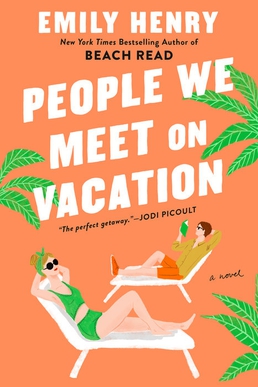
This film draws you in for a significant portion of its runtime with traditional or neutral content before springing its woke agenda. Know before you go!
MILD WOKE TRAP. The marketing sells a breezy friends-to-lovers rom-com with beautiful European backdrops. The film delivers that, but also includes: a same-sex wedding as the climactic setting, casual drug use played for laughs, a sex-positive mother who gives her daughter boxes of condoms before a trip with a man, skinny-dipping with visible nudity, and references to oral sex. The trailers emphasize the picturesque travel montages and charming banter. Traditional audiences will get the rom-com they expected but with more progressive content woven throughout than the marketing suggests.
People We Meet on Vacation is the rom-com BookTok has been waiting for, and it delivers exactly what that audience wants: two impossibly attractive leads with crackling chemistry, beautiful international locations, a will-they-won't-they structure that stretches across a decade, and an ending that earns its emotional payoff.
The film, based on Emily Henry's 2021 mega-bestseller, follows Poppy Wright (Emily Bader) and Alex Nilsen (Tom Blyth), two college acquaintances from Linfield, Ohio who become improbable best friends. Poppy is a free-spirited, impulsive travel writer who collects experiences like stamps in a passport. Alex is a cautious, book-loving high school teacher who would happily never leave his hometown. Despite being polar opposites, they develop a tradition of taking one summer vacation together every year.
The film alternates between their present-day estrangement (something happened two years ago in Croatia that neither will fully discuss) and flashbacks to their annual trips: a disastrous camping trip in Canada where they meet the gloriously unhinged Buck (Lukas Gage), a wine-soaked Tuscan idyll, a sweat-drenched New Orleans weekend, and finally, the Barcelona wedding that serves as both the climax and the setting for their reckoning.
The structure works because director Brett Haley understands that the destination isn't the point. The trips are just the backdrop for Poppy and Alex slowly orbiting each other, getting closer, then pulling away when the gravity becomes too much. Each vacation reveals a new layer: Alex's grief over his mother's death, Poppy's fear that she's fundamentally too much for anyone to handle, and the unspoken truth that they're both measuring every other relationship against each other.
Bader and Blyth are genuinely excellent. Bader plays Poppy's manic energy without making her exhausting, revealing the anxiety underneath the adventure. Blyth's Alex is a masterclass in restraint, communicating volumes through jaw clenches, half-smiles, and the way he watches Poppy when she's not looking. Their chemistry is the real deal, the kind that makes you forget the screenplay is engineering their connection beat by beat.
The supporting cast provides texture. Lucien Laviscount as Trey and Sarah Catherine Hook as Sarah play the respective 'wrong person' love interests with enough charm that you understand why Poppy and Alex try to make those relationships work. Lukas Gage absolutely steals the Canada sequence as Buck, a former finance bro turned backwoods hedonist who facilitates the film's loosest, funniest set piece. Molly Shannon and Alan Ruck are delightful as Poppy's parents, though Shannon's sex-positive Wanda may alarm traditional audiences who don't expect a mother to enthusiastically present her daughter with multiple boxes of condoms.
Now for the ideological breakdown.
The Barcelona wedding in the film's third act is between Alex's brother David (Miles Heizer) and his fiancé Nam (Tommy Do). This is a same-sex wedding presented without comment, reservation, or conflict. No character objects. No family tension about it. It simply is. Director Haley told press that honoring this wedding from the book was 'nonnegotiable.' For traditional audiences, this is the film's most notable progressive element: a same-sex wedding is the backdrop for the film's most emotionally charged scenes, and it's treated as completely normal.
Beyond the wedding, the film has additional progressive signifiers. The skinny-dipping sequence in Canada includes visible male nudity (strategically covered) and casual drug use played for laughs. Poppy's lifestyle, rootless, commitment-averse, career-focused, is presented as aspirational rather than something she needs to 'fix.' The film's sexual content is frank by rom-com standards: references to oral sex, Poppy and Alex's physical relationship is depicted with more heat than most PG-13 fare allows, and the overall attitude toward sex is casual and positive.
But the film also carries strong traditional undercurrents that are easy to overlook.
At its core, this is a story about a woman who discovers that what she really wants isn't another adventure, it's a person. Poppy's globe-trotting lifestyle is explicitly shown to be hollow: she comes home to an empty apartment with nothing in the fridge, she can't maintain relationships, and her career success doesn't fill the void. Alex, the stable, family-oriented, small-town teacher, is presented as the answer. He's loyal, patient, self-sacrificing, and deeply rooted. The film ultimately validates his way of life over hers.
The ending is significant: one reader on Reddit noted it gave 'trad-wife ick' compared to the book's more ambiguous conclusion where the couple enters therapy. The film's ending is more conventional, more romantic, and more traditionally satisfying. Poppy doesn't just choose Alex; she chooses rootedness over rootlessness, commitment over freedom, depth over breadth. That's a profoundly traditional arc dressed in progressive aesthetics.
Alex's devotion to his family, especially his relationship with his brother David and his unresolved grief over his mother, provides the film's emotional backbone. Family bonds, loyalty, and showing up for people you love are presented as the highest virtues. Alex's willingness to put others before himself isn't framed as codependency; it's framed as his greatest strength.
The tension between the film's progressive surface and traditional core is what makes it interesting from an ideological standpoint. It looks like a progressive rom-com. It feels, in its bones, like a story about choosing commitment and rootedness. Our scoring reflects both dimensions.
Formula: Weighted Score = Severity × Authenticity Multiplier × Centrality Multiplier
🔴 Woke Tropes
| Trope | Severity | Authenticity | Centrality | Score |
|---|---|---|---|---|
| Same-Sex Wedding as Normative Event | 4 | Moderate | Moderate | 2.8 |
| Sex-Positive Messaging | 3 | High | Low | 1.05 |
| Career-Focused Woman as Aspirational Default | 2 | Moderate | Moderate | 1.4 |
| Casual Drug Use Played for Laughs | 2 | High | Low | 0.7 |
| Diverse Ensemble Cast | 1 | High | Low | 0.35 |
| Female Independence Celebrated | 2 | Moderate | Moderate | 1.4 |
| TOTAL WOKE | 7.7 | |||
🟢 Traditional Tropes
| Trope | Severity | Authenticity | Centrality | Score |
|---|---|---|---|---|
| Choosing Commitment Over Freedom | 4 | High | High | 5.04 |
| Family Bonds as Emotional Foundation | 3 | High | Moderate | 2.1 |
| Male Emotional Steadfastness | 2 | High | Moderate | 1.4 |
| Small-Town Values Validated | 2 | Moderate | Low | 0.7 |
| Friendship as Foundation for Romance | 2 | High | High | 2.52 |
| TOTAL TRADITIONAL | 11.8 | |||
Score Margin: -3 WOKE
Director: Brett Haley
PROGRESSIVE-LEANING. Has publicly stated that honoring the gay wedding was 'nonnegotiable' for the adaptationBrett Haley is an indie darling known for intimate character studies like Hearts Beat Loud (2018, starring Nick Offerman), All Bright Places (2020), and The Hero (2017). His filmography reveals a filmmaker drawn to emotional authenticity and interpersonal connection rather than ideological messaging. Hearts Beat Loud featured a queer subplot handled with unusual restraint and warmth. People We Meet on Vacation is his biggest project by far, and his indie sensibility shows in the film's commitment to character over spectacle. His public comments about the gay wedding being 'nonnegotiable' suggest genuine conviction rather than performative progressivism. He's a craftsman who happens to hold progressive views, not an activist who happens to make films.
Writer: Yulin Kuang, Amos Vernon & Nunzio Randazzo
Yulin Kuang is an increasingly prominent screenwriter who also adapted Emily Henry's Beach Read. She brings BookTok literacy to the adaptation, understanding which moments readers will demand to see onscreen. Amos Vernon and Nunzio Randazzo contributed to the screenplay. Emily Henry's source novel is a New York Times bestseller that became a BookTok phenomenon, selling millions of copies largely through social media word-of-mouth. The adaptation hews closely to the book's structure (alternating timelines between past summer trips and the present) while tightening for film pacing.
Adult Viewer Insight
Conservative adults should go in with eyes open. The same-sex wedding in the third act is presented without any ambiguity or counterpoint. It's simply there, normalized and celebrated. If that's a dealbreaker, this isn't your film. The sexual content is frank for PG-13: skinny-dipping with nudity, casual drug use, sex-positive parenting played for laughs, and references to oral sex. The language includes occasional F-bombs. That said, the film's actual emotional message is surprisingly traditional. The protagonist abandons her nomadic, commitment-free lifestyle to choose a stable, devoted man who values family above all else. The man she chooses is a small-town teacher, not a jet-setting adventurer. The film validates patience, loyalty, and putting down roots. It's a traditional love story in progressive packaging. For the BookTok audience (largely women 18-35), this is the adaptation they've been dreaming of. The chemistry between the leads is genuine, the production values are high, and the emotional beats land. It's a competently made, emotionally satisfying rom-com that will dominate Netflix's algorithm for months.
Parental Guidance
MPAA Rating: PG-13 (sexual content, drug use, nudity, and brief strong language). Common Sense Media recommends age 13+. Sexual Content: This is where parents need to pay attention. There are kissing scenes throughout, a sex scene (no intimate parts shown but clearly implied), a skinny-dipping sequence with bare male bottoms and strategically covered nudity, and dialogue referencing oral sex, condoms, and sexual slang. Poppy's mother gives her multiple boxes of condoms before a trip. The overall attitude toward sex is casual and affirmative. Language: 'F--k' (sparingly), 's--t,' 'bulls--t,' 'ass,' and milder terms throughout. Substance Use: Characters drink alcohol and get drunk in multiple scenes. One scene involves smoking marijuana. References to meth. A character falls asleep after taking a beta-blocker. Violence: Minimal. A grandmother's death is discussed. Someone sprains an ankle. Someone throws out their back. Thematic Content: A same-sex wedding is a significant plot element in the third act. The death of Alex's mother is discussed and provides emotional weight. Themes of commitment, fear of abandonment, and growing up. Bottom Line: This is a teen-and-up rom-com, not a family film. Age 13+ is appropriate if parents are comfortable with frank sexual references and a same-sex wedding subplot. Conservative families with younger teens may want to preview first.
Find People We Meet on Vacation on Amazon Prime Video, rent, or buy:
▶ Stream or Buy on AmazonAs an Amazon Associate, VirtueVigil earns from qualifying purchases.
Community Discussion 0
Subscribe to comment.
Join the VirtueVigil community to share your perspective on this review.