
Predator: Badlands
Dan Trachtenberg clearly loves the Predator franchise. That much is obvious from three films in three years. With Badlands, his most ambitious entry yet, he swings for the fences by making the Predator himself the protagonist for the first time in franchise history. It is a bold creative decision.…
Full analysis below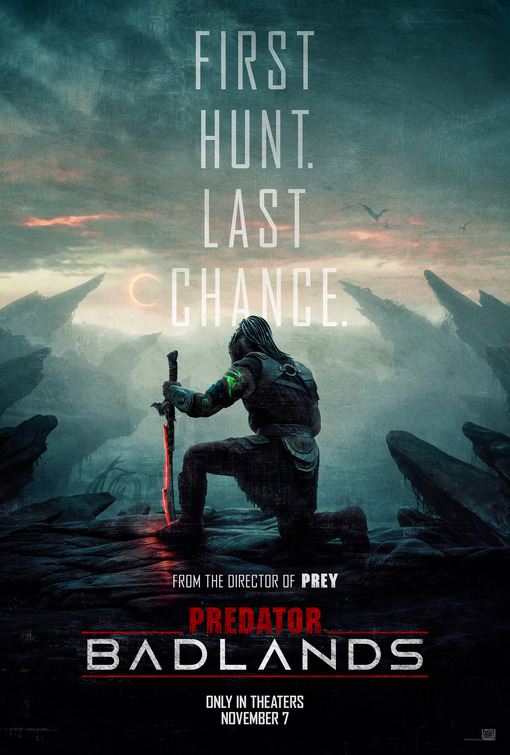
This film draws you in for a significant portion of its runtime with traditional or neutral content before springing its woke agenda. Know before you go!
The Predator brand carries decades of goodwill with conservative audiences who love the original R-rated masculine action films. Badlands exploits that goodwill to deliver a PG-13 family adventure with systematic feminist messaging, a defanged male lead, an all-female found family, and a cute toyetic sidekick. This is Disney's house style applied to a franchise built on the opposite values.
Dan Trachtenberg clearly loves the Predator franchise. That much is obvious from three films in three years. With Badlands, his most ambitious entry yet, he swings for the fences by making the Predator himself the protagonist for the first time in franchise history. It is a bold creative decision. It is also a decision that opens the door to every Disney instinct that conservative audiences have learned to dread.
The setup is genuinely promising. Dek is a Yautja runt, the undersized son of clan leader Njohrr, who wants to prove himself by hunting the Kalisk, an apex predator on a hostile planet called Genna. When Njohrr orders Dek killed for being too weak, Dek's older brother Kwei sacrifices himself to get Dek off-world. Njohrr executes Kwei as Dek watches helplessly from his departing ship. That is a strong opening. The fraternal sacrifice, the tyrannical father, the exile with something to prove. It works on a primal level.
Then Dek crash-lands on Genna and immediately loses all his weapons. Every single one. Because the movie needs him stripped of his Predator gear so he can be dependent on Thia, a damaged Weyland-Yutani android played by Elle Fanning. And this is where things go sideways.
Thia is not just Dek's guide. She is his moral teacher, his emotional therapist, and his philosophical compass. She tells him about wolves on Earth and how the real alpha takes care of the pack rather than simply killing the most. She teaches him that strength means something different than what his violent, patriarchal clan taught him. She is the female character who exists to civilize the toxic masculine protagonist. If you have watched any Disney property in the last decade, you know this character. She shows up in every single one.
The pattern extends beyond Thia. Every helpful character in Dek's new life is female. Thia guides him. Bud, a cute alien creature who bonds with Dek (think Baby Yoda with extra steps), is female. Bud's parent, the Kalisk itself, is a single mother. Even the antagonist Tessa answers to MU/TH/UR, a female-coded AI. Meanwhile, Dek's entire biological family, all male, ranges from murderous (Njohrr) to dead (Kwei). The message is not subtle. Your male family is toxic. Your real family is the women you meet along the way.
Bud deserves special attention because Bud is the clearest symptom of what critics have called the Disneyfication of the Predator franchise. This creature was designed to sell toys. It makes cute noises. It bonds with the hero. Big expressive eyes. It is Baby Groot crossed with Toothless. In a franchise built on the terror of an alien hunter stalking soldiers through a jungle, the introduction of a cuddly sidekick represents a fundamental genre shift. This is not an action horror film. This is a family adventure movie wearing Predator's skin.
The PG-13 rating confirms the shift. Every previous standalone Predator film carried an R rating. Badlands is the first to go PG-13, and you feel it. The violence is present but sanitized. No humans are killed on screen. The horror element that defined the franchise is completely absent. What replaces it is a coming-of-age buddy comedy between a sulky alien teenager and a wisecracking robot.
To Trachtenberg's credit, the film looks fantastic. The visual effects from Industrial Light and Magic and Weta Workshop are genuinely impressive. Genna feels like a real alien ecosystem. The fight choreography has real weight, particularly a sequence where Dek crafts improvised weapons from natural resources. Sarah Schachner and Benjamin Wallfisch deliver a score that carries emotional heft. And Elle Fanning commits fully to a dual performance as both the warm Thia and the cold Tessa. These are not small achievements.
But the ideological architecture is impossible to ignore. Dek's entire arc is about rejecting masculine authority (his father, his clan, the Yautja warrior code) and embracing a female-coded found family. His climactic return to Yautja Prime to defeat Njohrr would be a satisfying revenge story on its own terms, except the film frames Njohrr's entire clan structure as the problem. Strength, hierarchy, competition, the warrior ethos... these are symptoms of toxic masculinity rather than values worth preserving. The alternative the film offers is Thia's wolf lecture: real alphas nurture. Real strength is emotional. Your biological family is garbage if they do not affirm you.
The so-called queer Predator controversy is worth addressing. The film does not explicitly code Dek as gay. What it does is strip him of every traditionally masculine trait and replace them with female-coded emotional growth, then surround him exclusively with female companions. Whether you read that as queer-coding or simply as the standard Disney formula of defanging male characters is a matter of interpretation. Either way, Dek bears little resemblance to the terrifying alien hunter audiences signed up for.
There are traditional elements worth acknowledging. The brother's sacrifice in the opening act is genuinely moving and operates on entirely traditional terms. Dek's determination to prove himself despite being a runt echoes classic underdog narratives. The final duel with his father has real dramatic weight. These moments work because they draw on storytelling instincts older and stronger than any house style.
Conservative viewers should understand exactly what this film is. It is the Disneyfication of one of the last major R-rated action franchises. The PG-13 rating, the cute sidekick, the feminist messaging, the defanged male lead, the found-family-over-blood-family thesis. That is Disney's house style applied to a property that was built on the opposite values. The craft is real. The agenda is equally real. And the franchise you grew up with is not coming back.
| Trope | Category | Location | Authenticity |
|---|---|---|---|
| The Girl Boss | WOKE | Throughout - Thia guides Dek emotionally and tactically, teaches him a new philosophy of strength, enables his transformation; she is the intellectual and moral center of the film | Forced. Dek's dependence on Thia is manufactured by stripping him of all his weapons immediately upon landing. |
| The Bigoted Traditionalist | WOKE | Opening act and climax - Njohrr, the Yautja clan leader, represents traditional patriarchal authority taken to its villainous extreme | Forced. Njohrr exists purely to make traditional masculine hierarchy the enemy. No positive counterexample from within the clan system. |
| Found Family Over Blood Family | WOKE | Throughout, culminates in the climax - Dek's arc moves from toxic all-male biological family to virtuous all-female found family | Forced. The gender divide between toxic biological family (all male) and virtuous found family (all female) is total and intentional. |
| Defanged Male Lead | WOKE | Throughout - Dek is stripped of weapons, given scared facial expressions to humanize him, and spends most of the film relying on a female android for guidance | Forced. The Predator brand is built on an alien so dangerous that elite soldiers cannot survive it. Dek is the opposite: a scared runt dependent on female helpers. |
| Corporate / Institutional Villainy | WOKE | Second and third acts - Weyland-Yutani Corporation as secondary antagonist exploiting alien life and threatening its own android creations | Mixed. Weyland-Yutani has been a villain since 1979 in this franchise universe, giving this some precedent, but the messaging is amplified by the broader progressive framework. |
| Toyetic Cute-ification | WOKE | Second act onward - Bud, a small alien creature who bonds with Dek, licks him affectionately, and is designed to sell merchandise | Forced. The Predator franchise has never had a cute sidekick. This is Disney's commercial instinct applied to a property whose audience was historically adult men. |
| The Girl Boss (Second Instance) | WOKE | Climax - Tessa (also Elle Fanning) pilots a power loader mech, wields Kwei's plasmacaster, and kills the Kalisk from inside its body; more capable than any male character besides Njohrr | Forced. The consistent pattern of female competence vs. male disposability is systematic and deliberate. |
| Anti-Masculine Messaging (Wolf Lecture) | WOKE | Second act - Thia teaches Dek that the real alpha takes care of the pack rather than simply killing the most; Dek's entire arc is learning she was right and his warrior culture was wrong | Forced. The debunked wolf alpha myth is deployed as the film's explicit thesis statement on gender politics. |
| Infallible Youth | WOKE | Throughout - young outcast Dek proves the entire established order wrong; tradition equals toxic patriarchy, youthful rebellion equals progressive enlightenment | Borderline. The underdog trope is ancient; the specific values Dek rejects and embraces are modern and progressive. |
| The Self-Sacrificing Hero | TRADITIONAL | Opening act - Kwei defies Njohrr's order to kill Dek, fights their father to buy time, and is executed as Dek watches from the departing ship | Organic. An older brother sacrificing everything to protect a younger sibling is one of the oldest narrative structures in storytelling. The film's strongest moment. |
| Defense of the Innocent | TRADITIONAL | Third act - Dek returns to rescue Thia from Weyland-Yutani captivity and reunites the Kalisk with Bud | Organic. The rescue mission operates on traditional terms: loyalty and protectiveness drive the action. |
| Industry and Perseverance | TRADITIONAL | Throughout - Dek refuses to quit despite losing all weapons, being outmatched, and being rejected by his own species; improvises weapons from Genna's natural resources | Organic. The underdog who refuses to stay down is genuinely compelling here. Dek's resourcefulness in the field gives the film its best action beats. |
| Honor Among Warriors | TRADITIONAL | Climax - Dek returns to Yautja Prime, presents a trophy, and challenges Njohrr to single combat; defeats him through skill and courage | Partially organic. The duel itself is traditionally coded, but the film uses it as a means to an ideological end rather than an affirmation of warrior values. |
| Faith in Adversity (Family Bond) | TRADITIONAL | Throughout - Kwei's memory serves as Dek's emotional anchor; his love for his brother drives him forward when he might otherwise give up | Organic. The traditional thread of fraternal love runs beneath the louder progressive messaging and does the emotional heavy lifting the film cannot otherwise achieve. |
Director: Dan Trachtenberg
MODERATE PROGRESSIVE (trending woke)Genre filmmaker who has become Hollywood's go-to Predator director after Prey (2022) and Predator: Killer of Killers (2025). The trajectory from neutral 10 Cloverfield Lane to moderately progressive Prey to overtly progressive Badlands tracks with his deepening relationship with Disney/20th Century Studios. His feminist-coded heroines and systematic defanging of masculine leads are consistent across his recent work.
Writer: Patrick Aison (screenplay); story by Trachtenberg & Aison
Wrote Prey and Badlands. Television credits include Treadstone and Kingdom. The feminist messaging in Badlands suggests either Aison's own progressive inclinations or significant creative direction from Trachtenberg and Disney. Uncredited contributions from Brian Duffield, Bryan Fuller, Patrick Somerville, and Ben Schwartz reflect a writers'-room approach.
Producers
- John Davis (Davis Entertainment) — One of Hollywood's most prolific producers. Produced the original Predator (1987) and multiple franchise entries. Commercial producer who follows the market, not an ideologue. His franchise stewardship role does not indicate ideological investment in Badlands's messaging.
- Lawrence Gordon (Executive Producer (legacy role)) — Legendary producer of the original Predator (1987), Die Hard (1988), and 48 Hrs (1982). His executive producer credit is likely a legacy/rights position. His classic filmography represents the peak of masculine action cinema - the opposite of what Badlands delivers.
- Dan Trachtenberg (Independent) — Co-producer on his own film. Creative vision undiluted as writer-director-producer.
Full Cast
Fidelity Casting Analysis N/A
Predator: Badlands is set on alien worlds in the far future with a cast of CGI aliens and synthetic androids. There is no historical or literary source material that creates casting fidelity benchmarks.
The concept of fidelity casting does not meaningfully apply to an original sci-fi setting. That said, the choice to make all sympathetic characters female while making every male character villainous, dead, or incompetent is a casting philosophy worth noting. The female Weyland-Yutani androids (Thia, Tessa) replace Bishop, the franchise's most famous android, who was male. This is a deliberate creative choice, not a fidelity issue.
Adult Viewer Insight
Conservative adult viewers should approach Predator: Badlands with clear eyes about what it is and what it is not. It is not a Predator film in the tradition of the 1987 original. It is a Disney family adventure film wearing the Predator franchise's skin. If you adjust your expectations accordingly, there is real entertainment value here. The visual effects are legitimately impressive, the alien world-building is creative, and several action sequences deliver genuine thrills. The feminist messaging is persistent but not as suffocating as the worst examples of modern Disney output. The brother's sacrifice in the opening act is powerful enough to carry you through the film's softer stretches. And the final duel between Dek and Njohrr, whatever its ideological framing, is satisfying action cinema. The real concern for conservative audiences is not this individual film but the trajectory it represents. The Predator franchise has been systematically transformed from R-rated masculine action horror into PG-13 family entertainment with progressive gender messaging. Badlands is step three of that process. If you value the franchise as it was, this film is a eulogy. If you can treat it as its own thing, separate from the legacy, you might enjoy the ride. Skip if feminist messaging in your action movies is a dealbreaker. Watch with your kids if you can compartmentalize strong craft from weak ideology, and be ready to have the conversation afterward.
Parental Guidance
Predator: Badlands carries a PG-13 rating, making it the first standalone Predator film appropriate for younger teens. Violence: Significant sci-fi action violence throughout. Alien creatures are stabbed, slashed, shot, and dismembered. A character is executed on screen. The Kalisk is killed from inside its own body. No human characters are killed, and the violence, while intense, lacks the gore of previous R-rated franchise entries. Sexual Content: None. Zero romantic or sexual content. Language: Minimal. Most dialogue is in the constructed Yautja language with subtitles. Substance Use: None. Scary Content: Some intense creature sequences may frighten younger children. The Kalisk is a large, aggressive predatory creature. Age Recommendation: Suitable for viewers 10 and up who enjoy sci-fi action. Parents should be aware of the feminist messaging and the found-family-over-blood-family theme, which directly contradicts traditional family values. Discussion Guidance: Use this film to discuss why it presents Dek's biological family as entirely negative, whether strength and competition are inherently villainous, and what the difference is between a film that happens to have female characters and one that systematically makes every female character superior to every male one. These conversations help younger viewers develop critical thinking skills to recognize ideological messaging rather than absorbing it passively.
Find Predator: Badlands on Amazon Prime Video, rent, or buy:
▶ Stream or Buy on AmazonAs an Amazon Associate, VirtueVigil earns from qualifying purchases.




Community Discussion 0
Subscribe to comment.
Join the VirtueVigil community to share your perspective on this review.