
Puss in Boots: The Last Wish
Let me tell you what nobody expected in December 2022: that an eleventh-year sequel to a DreamWorks spin-off, featuring a talking cat from the Shrek franchise, would turn out to be one of the best animated films in a decade. Puss in Boots: The Last Wish is not just good.…
Full analysis below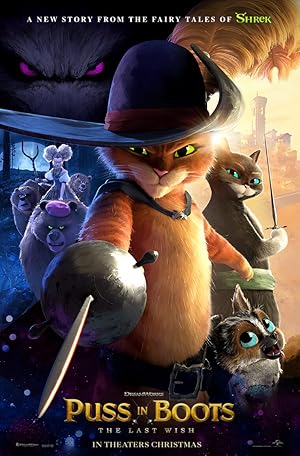
Not a woke trap. Puss in Boots: The Last Wish is exactly what it appears to be: a traditional fairy-tale adventure about courage, humility, and the value of life. The marketing, the premise, and the execution are all consistent. Conservative audiences get what they came for. There is no hidden ideological agenda lurking after the halfway point. The villain is a greedy magical artifact collector, not a stand-in for any political ideology. The romance is heterosexual. The hero's arc is about learning to value life over personal glory. Nothing here is designed to catch traditional viewers off guard.
Let me tell you what nobody expected in December 2022: that an eleventh-year sequel to a DreamWorks spin-off, featuring a talking cat from the Shrek franchise, would turn out to be one of the best animated films in a decade. Puss in Boots: The Last Wish is not just good. It is genuinely great, and it is great in ways that matter to traditional audiences.
The premise is deceptively simple. Puss in Boots, the swaggering fairy-tale hero voiced by Antonio Banderas, has burned through eight of his nine lives through reckless adventure. He has one life left. A doctor tells him to retire. His ego rejects the advice, and he nearly dies again immediately. So Puss goes looking for the mythical Last Wish of a fallen wishing star, hoping to restore all nine lives and return to the adventure he cannot imagine living without.
What the film does with that premise is something special.
The opening title card reads: 'Puss has lived a big, bold, fearless life. But lately, he's been feeling... not himself.' That understatement sets the tone perfectly. Joel Crawford, the director, is not making a film about identity politics or social systems. He is making a film about what it means to be mortal, and whether the person you've been is the person you want to die as.
The villain is Wolf, voiced by Wagner Moura in a terrifying departure from anything DreamWorks has put on screen before. Wolf is Death personified. He whistles while he works. He has twin sickles. He doesn't hate Puss. He is simply insulted that Puss has never taken any of his nine deaths seriously. This is not a Saturday morning cartoon villain with a scheme to foil. This is Ingmar Bergman's Death from The Seventh Seal, repackaged in a children's film, and it works completely.
The scene where Puss first encounters Wolf in the pub is one of the best-directed sequences in any animated film I have seen in years. The Spaghetti Western visual language is not a gimmick. It is a genuine tribute to Leone's technique of using extreme close-ups to reveal the interior of characters before the action begins. You see Wolf's eyes before you understand what he is. You feel Puss's fear before you know its source. Crawford studied the right films.
Now, the film also has Kitty Softpaws (Salma Hayek), Puss's ex-fiancee who left him at the altar, or rather: Puss left her at the altar, and she gave him the same treatment in return. Their reunion is one of the better romantic arcs in recent animated cinema because it is built on genuine complexity. He loved her but loved himself more. She protected herself by treating him the same way. The resolution is earned through honesty and vulnerability, not through one character conveniently becoming a different person.
From a VVWS perspective, this film is a clear traditional win. The hero's journey is about learning to value life over personal glory. The climax rejects recklessness and embraces the simple, present-tense gifts of friendship and love over the fantasy of restored invincibility. Puss gives up the wish for nine new lives. He chooses the one life he has, and the people he wants to spend it with. This is a traditional values message delivered through one of the most entertaining animated films in years: life is precious, courage without wisdom is just ego, and the people who love you matter more than the legend you want to be.
The film also features Perrito, a small terrier voiced by Harvey Guillen, who is relentlessly optimistic and kind and serves as the film's moral compass. In a lesser film, Perrito would be annoying. Here, he is the heart. His simple faith in people, including people who don't deserve it, eventually saves the day in ways that feel genuinely moving rather than cheap.
Jack Horner (John Mulaney) is the secondary villain, a corrupt pastry chef who collects magical artifacts and has no redemption arc. He is purely evil and finds it delightful. Some critics found this unsatisfying. I found it refreshing. Not every villain needs a trauma origin story. Some people are just greedy and cruel, and the film is confident enough to let that stand.
Goldilocks (Florence Pugh) and the Three Bears are a minor antagonist faction who soften into something more sympathetic by the third act. Their arc is about a foundling who built her own family out of bears, which plays as sweet rather than political. The bears clearly love her. She clearly loves them. The chosen-family theme is present but handled without any ideological agenda attached.
Visually, the film is a revelation. DreamWorks deliberately shifted away from the realistic 3D rendering style that had defined the studio since Shrek. The Last Wish has a painterly, hand-drawn look in its key moments, particularly the sequences in the Dark Forest, where Puss confronts his past lives. The art direction earns its ambition. This is not a lazy visual upgrade. It is a genuine artistic statement.
Box office: $484 million worldwide on a $90-110 million budget. That is a massive hit. Audiences voted clearly. The 98% Rotten Tomatoes audience score confirms what the box office told us: people love this film, and they are right to.
The bottom line is this. Puss in Boots: The Last Wish is the rarest kind of blockbuster: a film that entertains brilliantly while also meaning something. It takes death seriously without being morbid. It takes courage seriously without celebrating recklessness. It takes love seriously without being saccharine. And it does all of this without ever interrupting the story to deliver a lecture.
Conservative families can watch this film without any reservations. You might want to prepare younger children for the Wolf/Death imagery. Everyone else should just enjoy it. It is one of the best animated films made this century.
Formula: Weighted Score = Severity × Authenticity Multiplier × Centrality Multiplier
🔴 Woke Tropes
| Trope | Severity | Authenticity | Centrality | Score |
|---|---|---|---|---|
| Greedy Male Capitalist Villain (Jack Horner) | 2 | 1 | 0.5 | 1 |
| Female Competence Equal to Male Lead | 2 | 0.7 | 1 | 1.4 |
| TOTAL WOKE | 2.4 | |||
🟢 Traditional Tropes
| Trope | Severity | Authenticity | Centrality | Score |
|---|---|---|---|---|
| Confronting Mortality with Courage and Humility | 4 | 1 | 1.8 | 7.2 |
| Redemption Through Vulnerability and Honesty | 3 | 1 | 1 | 3 |
| Male Heroism and Sacrifice of Pride for Others | 3 | 1 | 1 | 3 |
| Friendship and Loyalty as Moral Compass | 3 | 1 | 1 | 3 |
| TOTAL TRADITIONAL | 16.2 | |||
Score Margin: +14 TRAD
Director: Joel Crawford
CENTER. Crawford's filmography (The Croods: A New Age, this film) shows no discernible political agenda. His instinct is craft-first: visual storytelling, comedy timing, emotional payoff. The Last Wish suggests a director who studied Sergio Leone and the Spider-Verse team in equal measure. No public statements on politics. No ideological fingerprints on the work beyond a straightforward commitment to entertaining families.Joel Crawford joined DreamWorks Animation in 2007 and worked his way from story artist to director. He directed The Croods: A New Age (2020) before taking on The Last Wish. His collaboration with head of story Januel Mercado on this film produced one of the most visually distinctive animated features in years, consciously drawing from Spaghetti Western aesthetics and the painterly frame-by-frame technique popularized by Spider-Man: Into the Spider-Verse. Crawford has cited Sergio Leone's The Good, the Bad and the Ugly as the primary visual reference for the film, particularly in how Leone used extreme close-ups to establish character psychology before action.
Adult Viewer Insight
Conservative adults who skipped this because it's a sequel to a Shrek spin-off made a mistake. Puss in Boots: The Last Wish is a genuinely thoughtful film about mortality dressed up as a children's adventure. The Wolf as Death is not a metaphor for anything political. He is Death. The film asks its audience to take their own lives seriously, to value the people around them, and to recognize that recklessness is not courage. These are traditional values, and they are delivered with craft and wit. The film's greatest achievement is that it treats its audience, children and adults alike, with intelligence. It doesn't explain the metaphors. It trusts you to feel them.
Parental Guidance
Find Puss in Boots: The Last Wish on Amazon Prime Video, rent, or buy:
▶ Stream or Buy on AmazonAs an Amazon Associate, VirtueVigil earns from qualifying purchases.
Community Discussion 0
Subscribe to comment.
Join the VirtueVigil community to share your perspective on this review.