
Saltburn
They sold you a gothic aesthetic. They delivered a manifesto wrapped in designer lighting.
Full analysis below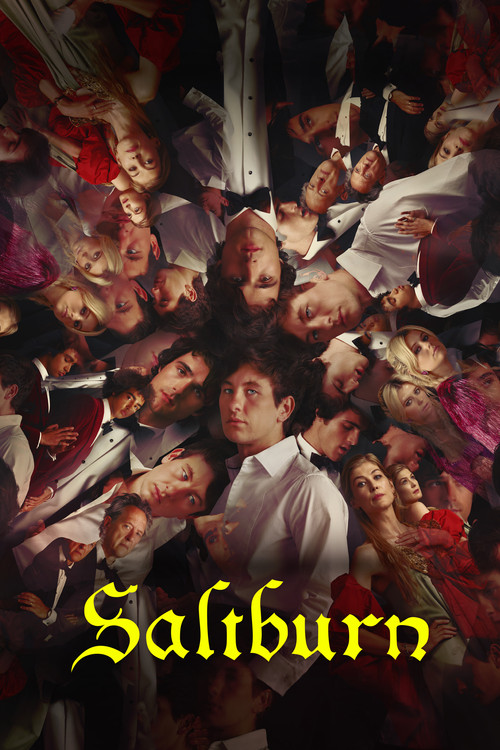
This film draws you in for a significant portion of its runtime with traditional or neutral content before springing its woke agenda. Know before you go!
Queer themes and class critique are front-loaded from opening scenes. Not hidden.
⚠️ SPOILER ALERT: This review contains full plot details including the twist ending. Read on only if you've seen the film or don't mind knowing everything.
They sold you a gothic aesthetic. They delivered a manifesto wrapped in designer lighting.
Saltburn arrived in late 2023 draped in the visual language of prestige British cinema - lush Northamptonshire countryside, Jacob Elordi's jawline catching golden-hour light, a brooding Barry Keoghan radiating wolfish hunger. The trailers suggested a stylish psychological thriller in the Talented Mr. Ripley tradition: class envy, dangerous obsession, the outsider who slips inside a charmed world and can't find the exit. It felt like smart, adult entertainment. Critics swooned. Awards nominations followed. When it hit Amazon Prime Video on December 22, 2023, viewership quadrupled within a fortnight. It became one of the most streamed films on the platform. Millions of people sat down expecting a tense, beautiful thriller.
They got something considerably more deliberate - and considerably more extreme.
What Emerald Fennell actually built beneath Saltburn's gorgeous surface is a class warfare revenge fantasy dressed in art-house clothing, loaded with some of the most graphically transgressive sexual content in mainstream streaming history, and ending in unambiguous celebration as a sociopathic outsider inherits an aristocratic family's estate after systematically murdering every last one of them. Dancing naked through the mansion to Sophie Ellis-Bextor. The clothes come off. The mask comes off. And anyone who thought this was just a twisty thriller about obsession missed the ideological instruction manual beneath the gilded floorboards.
Emerald Fennell made this film. Remember that name. She also made Wuthering Heights (2026) - which VirtueVigil has already reviewed - and Promising Young Woman (2020). There is a pattern. There has always been a pattern. Saltburn is where it becomes impossible to ignore.
Oxford, 2006. Oliver Quick (Barry Keoghan) is a scholarship student adrift in a world he doesn't belong to. Awkward, quiet, apparently from a troubled working-class home in Prescot - or so he tells anyone who will listen. What he actually is, we'll learn much later, is something altogether colder.
Felix Catton (Jacob Elordi) is everything Oliver isn't: impossibly handsome, effortlessly popular, draped in the easy confidence of a man who has never worried about money or belonging because money and belonging have always been there waiting for him. Felix is also, to his credit, genuinely kind. When Felix helps Oliver after a series of social humiliations and Oliver confides his father's sudden death and his parents' substance abuse issues, Felix responds with warmth. He invites Oliver to spend the summer at Saltburn - the Catton family's sprawling ancestral estate.
Oliver arrives in paradise. Saltburn is the kind of country house that movies used to put on a pedestal without irony. Emerald Fennell puts it on a pedestal too - but she's loaded it with dynamite.
At the estate, Oliver meets Felix's parents, the gloriously useless Sir James and Lady Elspeth Catton (Richard E. Grant and a magnificently vampiric Rosamund Pike), his sensitive sister Venetia (Alison Oliver), and Felix's American cousin Farleigh (Archie Madekwe), who sees through Oliver immediately. Farleigh and Oliver dislike each other on instinct - they're the only two people at Saltburn not born into this world, and they recognize each other for what they are.
What follows is an extended seduction - Oliver seducing the entire family, one by one, by identifying and exploiting their specific emotional needs. The summer scenes at Saltburn are genuinely hypnotic filmmaking: sun-drenched, languid, shot in a boxy 1.33:1 aspect ratio that makes everything feel both beautiful and slightly wrong. Something is always slightly wrong with Oliver.
The graphic content arrives without warning. In the bathtub scene - the one that made the internet gasp - Oliver watches Felix masturbate in a tub, then bends down and drinks from the bathwater after Felix is gone. Later, he performs oral sex on Venetia while she is menstruating. He initiates aggressive sexual advances on Farleigh. None of this is presented apologetically. It is the natural extension of Oliver's consuming obsession - he wants everything Felix has, including pieces of his body and his family's bodies, as raw material for possession.
Farleigh alerts Felix to Oliver's approach to Venetia. Felix does something more damaging: he takes Oliver on a surprise birthday trip to see his 'family' in Prescot. There, Felix discovers the lie. Oliver's parents are alive, sober, and thoroughly middle class. There was no tragic backstory. There was only calculation.
Horrified and hurt, Felix quietly orders Oliver to leave after the birthday party. Oliver expresses something that sounds like genuine love - Felix, movingly, tells him it isn't enough.
The next morning, Felix is dead in the hedge maze. Oliver plants the suggestion that Farleigh supplied bad drugs. Farleigh is expelled and cut off. Venetia grows increasingly unstable, accusing Oliver of destroying the family. Days later, she is found dead in the bathtub - wrists slashed. Oliver had placed the razor blades there. Sir James eventually bribes Oliver to leave. He takes the money.
Years pass. 2022. Oliver 'happens' upon a recently widowed Elspeth at a café. She invites him back to Saltburn. He accepts. She falls ill. On her deathbed, Oliver tells her everything: he planned the meeting with Felix at Oxford, he poisoned Felix in the maze, he placed the razor blades for Venetia, he engineered the café reunion. She has already changed her will, leaving him everything. He removes her life support.
The film ends with Oliver - naked, dancing, wild - running through the rooms of Saltburn, the mansion now entirely his. Sophie Ellis-Bextor's 'Murder on the Dancefloor' plays. He has won. The aristocracy is dead. Long live Oliver Quick.
Trope Analysis - VVWS Weighted Scoring
Formula: Weighted Score = Severity × Authenticity Multiplier × Centrality Multiplier
Authenticity: High=0.7, Moderate=1.0, Low (injected/provocateur)=1.4 | Centrality: Low=0.5, Moderate=1.0, High=1.8
🔴 Woke Tropes
| Trope | Severity (1-5) | Authenticity | Centrality | Weighted Score |
|---|---|---|---|---|
| Class Warfare Revenge Fantasy as Triumphant Ending | 5 | Low (1.4) | High (1.8) | 12.6 |
| Aristocracy Portrayed as Vapid, Decadent, and Disposable | 4 | Moderate (1.0) | High (1.8) | 7.2 |
| Systematic Destruction of Traditional Family and Inherited Heritage | 4 | Low (1.4) | Moderate (1.0) | 5.6 |
| Transgressive Shock Sexuality as Cultural Provocation | 4 | Low (1.4) | Moderate (1.0) | 5.6 |
| Working-Class Outsider Framed as Inevitable Victor Over Entitled Elite | 3 | Moderate (1.0) | Moderate (1.0) | 3.0 |
| Queer/Bisexual Desire Weaponized as Transgression | 2 | Low (1.4) | Low (0.5) | 1.4 |
| WOKE TOTAL | 35.4 |
🟢 Traditional Tropes
| Trope | Severity (1-5) | Authenticity | Centrality | Weighted Score |
|---|---|---|---|---|
| Individual Cunning Rewarded Over Inherited Status (Meritocracy angle) | 2 | Moderate (1.0) | Moderate (1.0) | 2.0 |
| Consequences of Misplaced Trust and Naivety | 2 | High (0.7) | Low (0.5) | 0.7 |
| Classical Gothic/Psychological Thriller Architecture | 2 | High (0.7) | Low (0.5) | 0.7 |
| TRAD TOTAL | 3.4 |
Score Margin: -31 WOKE
Note: The 'meritocracy' reading is contested - the film ultimately celebrates Oliver's cunning as transgressive triumph rather than moral good. The traditional column reflects structural elements with classical precedents, not the film's ideological endorsement of them.
Woke Trap Assessment
⚠️ WOKE TRAP WARNING - Degree: Severe
Saltburn is a textbook woke trap, and a more sophisticated one than most.
The marketing presented a stylish, aesthetically gorgeous psychological thriller: beautiful people at a beautiful English country estate, class tensions simmering toward violence, a rising young filmmaker with serious critical credentials. The trailer was designed to make you think of Patricia Highsmith. Everything about the pre-release packaging signaled prestige - the kind of adult thriller Hollywood used to make before it abandoned adults. Critics at Telluride fell in love. BAFTA nominations followed. Amazon put their full streaming machine behind it.
What the packaging carefully omitted: that audiences would witness a character drink semen-laced bathwater. That they would watch another character lie naked on a fresh grave and masturbate on it. That the film would contain explicit oral sex during menstruation. That every member of a traditional aristocratic family would be systematically murdered - two of them by the protagonist directly - and that the film would close not on horror but on naked, triumphant celebration.
The trap operates on multiple levels. First, the aesthetic misdirection: the cinematography, the lush production design, the Barry Keoghan performance that reads as sympathetic vulnerability - all of this trains the audience to engage as if they are watching literary drama rather than a shock-delivery system wrapped in class theory. Second, the critical consensus legitimizes it: when prestige outlets award this four stars and Golden Globe nominations, audiences arrive primed to receive rather than question. Third, the twist creates a built-in excuse: Saltburn invites viewers to retroactively reframe everything they've watched as clever narrative architecture rather than ideological instruction.
But here's the instruction: the ruling class is stupid, vain, and exploitable. They are brought down not by someone morally superior to them, but by someone more ruthlessly focused - which amounts to the same endorsement. Oliver wins. The Cattons are gone. The estate is his. The audience is invited to feel, in that final dancing sequence, something between satisfaction and exhilaration. Fennell shoots it that way. She scores it that way. The triumph is not ambiguous.
The twist about Oliver's middle-class origins partially complicates but doesn't resolve the class warfare reading. If he was never actually working class, does the story lose its political dimension? Not really. The film's ideology doesn't depend on Oliver being authentically proletarian. It depends on the viewer finding the Cattons' destruction entertaining. Whether Oliver is a genuine outsider or a performance of one, the aristocracy is still mocked, still diminished, and still eliminated. Fennell gets the class warfare cake and eats it too.
Creative Team at a Glance
- Director/Writer: Emerald Fennell - Progressive feminist auteur with a consistent track record of ideologically charged provocation. Promising Young Woman (Academy Award winner), Saltburn, Wuthering Heights (2026, also reviewed by VirtueVigil). Exceptional technical craft in service of agenda-driven filmmaking.
- Lead Producer: Margot Robbie / LuckyChap Entertainment - Robbie's production company bankrolled both Promising Young Woman and Saltburn. Her own career arc (Barbie, reviewed separately) places her firmly in the progressive-feminist Hollywood ecosystem.
- Studio: Amazon MGM Studios (US) - Streaming giant with consistent appetite for prestige progressive filmmaking. Distributed this content to tens of millions of subscribers without content warnings adequate to the material.
- Top Cast: Barry Keoghan (Oliver Quick), Jacob Elordi (Felix Catton), Rosamund Pike (Lady Elspeth Catton), Richard E. Grant (Sir James Catton), Alison Oliver (Venetia Catton), Archie Madekwe (Farleigh Start), Carey Mulligan (Pamela, cameo)
- Pre-Viewing Prediction: WOKE - Fennell's track record following Promising Young Woman made the ideological direction highly predictable. Confirmed. Severity exceeded predictions.
Director Track Record
Emerald Fennell: The Pattern Is the Point
Emerald Fennell is not a filmmaker who hides what she's doing. The problem is that she hides it inside such beautiful containers that audiences and critics habitually mistake the aesthetic for the meaning.
She is also a filmmaker of genuine talent - that is not a charitable concession, it's what makes her worth analyzing seriously. Incompetent ideological filmmakers make easy targets. Fennell is not incompetent. She has an extraordinary eye, a gift for tension, and an instinct for the scene that will make audiences lean forward even as they ought to be leaning back. That combination of craft and agenda makes her one of the most important directors to track in contemporary Hollywood.
Filmography with ideological assessment:
- Promising Young Woman (2020): Fennell's debut feature. Marketed as a rape revenge thriller; celebrated by progressive critics as a searing feminist statement on rape culture. Won Fennell the Academy Award for Best Original Screenplay - making her the fifth woman ever to win in that category. Described by academic film journals as part of the 'Feminist New Wave' of post-Weinstein filmmaking, specifically as a 'rape-revolt narrative.' No ambiguity about the ideological project.
- Saltburn (2023): See this entire review. Class warfare plus transgressive shock content plus the destruction of aristocratic heritage, all wrapped in aesthetic splendor. Another Academy and BAFTA nomination cycle. Another massive streaming phenomenon.
- Wuthering Heights (2026): Fennell's third feature - reviewed separately by VirtueVigil - is a steamy, explicitly feminist adaptation of Emily Brontë's novel. The pattern is now fully legible: Fennell operates in source material or genre structures that provide cultural legitimacy while delivering progressive ideology and transgressive content to audiences who arrive expecting something else. Wuthering Heights completes a trilogy in which Fennell has consistently: (1) adopted a prestigious, recognizable form; (2) used aesthetic beauty to disarm critical resistance; (3) delivered a feminist or class-war ideological payload significantly more aggressive than the marketing suggests.
The Margot Robbie Connection: LuckyChap Entertainment - Robbie's production company - has produced both Promising Young Woman and Saltburn. Robbie also played Barbie in the 2023 Greta Gerwig film that VirtueVigil scored WOKE TRAP at -32. She is not an ideologically neutral producer following the talent. She is an active architect of the Fennell brand. These are connected choices, not coincidences.
Ideological tendency: AGGRESSIVELY PROGRESSIVE-FEMINIST. Consistent and escalating across all three features.
Adult Viewer Insight
The first thing conservative adults should understand about Saltburn is that it is not the film it appears to be in the trailer, and the gap between the two is not an accident.
The second thing is that the graphic content is genuinely extreme by any standard. The bathtub scene, the grave scene, and the period oral sex sequence are not brief or incidental - they are central, deliberate, and staged to shock. Viewers who are disturbed by this content are not being prudish. They are responding appropriately to material that was designed to produce disturbance. Fennell deploys the shock content as part of the film's transgressive project: Oliver's consumption of Felix's family operates literally and metaphorically, and the sexual acts are meant to make you uncomfortable with how much you've been complicit in enjoying them. That's the game.
The class warfare reading deserves careful attention. The Catton family is presented as everything that old money produces: beautiful, shallow, generous in a careless way that requires no real effort, ultimately helpless when confronted with someone who actually wants things and is willing to do whatever is necessary to get them. The film invites the audience to find this funny and somewhat satisfying. When the Cattons die, it doesn't feel tragic. It feels inevitable. And that's the ideological argument in a frame: inherited wealth and status produce people too soft to survive contact with the hungry outside world.
The twist complicates this but doesn't resolve it in any traditional direction. Oliver's fabricated poverty doesn't neutralize the class politics - it deepens them. The real critique is something darker: the class system is so powerful that gaining access to the aristocracy requires performing poverty as a credential. Oliver's lie is the film's sharpest satirical observation - that Felix's compassion was reserved specifically for people below his class, and Oliver knew how to exploit that. The class system doesn't come out looking better from this revelation. It comes out looking stupider.
For the conservative viewer who watches with eyes open: the film's portrait of Felix is genuinely sympathetic. He is the most decent person in the film - kind, generous, capable of recognizing deception without making it a public spectacle. His death is the film's only genuine moral loss. Jacob Elordi makes Felix worth mourning, which gives Saltburn more emotional weight than its shock content alone would earn. There is also something classically conservative in the film's subtext: the aristocracy that fails to defend itself against the destroyer within deserves what it gets. Excessive softness and naivety have consequences. That's not Fennell's intended moral - she's celebrating Oliver's victory - but it's what the story contains.
Parental Guidance
Recommended minimum age: ADULTS ONLY
This is not a PG-13 situation with a footnote. Saltburn is rated R and earns every stripe of it. The graphic content is significantly more extreme than most R-rated films and substantially more extreme than the trailers and prestige reviews suggest. Parents who filtered based on marketing alone and allowed teenagers to watch this on Amazon Prime were not given adequate warning.
Explicit Content Catalogue:
- Male full-frontal nudity: Extended and explicit. Barry Keoghan and Jacob Elordi both appear fully nude. The nudity is not incidental.
- Bathtub/semen scene: Oliver watches Felix masturbate in a bathtub and subsequently drinks from the water. Extended, graphic, and deliberate.
- Grave masturbation scene: Oliver lies naked on Felix's freshly dug grave and masturbates on it. This scene is frequently described as necrophiliac in character. Graphic and prolonged.
- Period oral sex scene: Oliver performs oral sex on Venetia while she is menstruating. Shown with enough clarity that what is occurring is unambiguous.
- Sexual coercion: Oliver sexually approaches Farleigh in a threatening manner.
- Drug use: Recreational drug use throughout, presented without significant negative framing.
- Murder: Oliver murders Felix (poisoning), facilitates Venetia's death (razor blades placed by her bathtub, presented as suicide), and kills Lady Elspeth (removes life support). None graphically gory, but the third is staged with cold intimacy.
- Suicide/self-harm: Venetia's wrist-slashing death is depicted.
- Sustained manipulation and psychological abuse: The entire film is structured around calculated psychological manipulation of vulnerable people.
Ideological content: The film celebrates the destruction of a traditional aristocratic family as its climactic payoff. The ending is framed as triumphant. Children and teenagers who watch without preparation will absorb as entertainment the annihilation of traditional institutions of wealth, family, and heritage - not coded as tragedy but as punchline.
Bottom line for parents: Saltburn is streaming on Amazon Prime with a standard R rating, accessible to any household with an account. The rating is accurate but inadequate. The content is significantly more extreme than 'R' conveys in the cultural imagination. Do not allow minors to watch this film. The award nominations are real. So are the bathtub, the grave, and the naked dance at the end.
Formula: Weighted Score = Severity × Authenticity Multiplier × Centrality Multiplier
🔴 Woke Tropes
| Trope | Severity | Authenticity | Centrality | Score |
|---|---|---|---|---|
| Class Warfare Revenge Fantasy as Triumphant Ending | 5 | Low | High | 12.6 |
| Aristocracy Portrayed as Vapid, Decadent, and Disposable | 4 | Moderate | High | 7.2 |
| Systematic Destruction of Traditional Family and Inherited Heritage | 4 | Low | Moderate | 5.6 |
| Transgressive Shock Sexuality as Cultural Provocation | 4 | Low | Moderate | 5.6 |
| Working-Class Outsider Framed as Inevitable Victor Over Entitled Elite | 3 | Moderate | Moderate | 3 |
| Queer/Bisexual Desire Weaponized as Transgression | 2 | Low | Low | 1.4 |
| TOTAL WOKE | 35.4 | |||
🟢 Traditional Tropes
| Trope | Severity | Authenticity | Centrality | Score |
|---|---|---|---|---|
| Individual Cunning Rewarded Over Inherited Status | 2 | Moderate | Moderate | 2 |
| Consequences of Misplaced Trust and Naivety | 2 | High | Low | 0.7 |
| Classical Gothic/Psychological Thriller Architecture | 2 | High | Low | 0.7 |
| TOTAL TRADITIONAL | 3.4 | |||
Score Margin: -32 WOKE
Director: Emerald Fennell
AGGRESSIVELY PROGRESSIVE-FEMINIST - consistent and escalating across all three featuresEmerald Fennell is the most consistently ideological filmmaker operating in mainstream prestige cinema today. Her work is not accidentally progressive - it is systematically so. Each of her three features has adopted a prestigious, recognizable form (revenge thriller, class thriller, literary classic), used aesthetic beauty to disarm critical resistance, and delivered a feminist or class-war ideological payload significantly more aggressive than the marketing suggests. Promising Young Woman (2020): celebrated as a feminist rape-revolt narrative, won the Academy Award for Best Original Screenplay. Saltburn (2023): class warfare shock cinema disguised as prestige psychological thriller. Wuthering Heights (2026): feminist literary adaptation with steamy transgressive content (VirtueVigil has reviewed this separately). The craft is genuine. The ideology is documented. Both deserve recognition. She is produced by Margot Robbie's LuckyChap Entertainment, establishing a recurring infrastructure for progressive-feminist prestige filmmaking.
Writer: Emerald Fennell
Fennell wrote Saltburn solo, as she did Promising Young Woman. Her screenwriting is technically accomplished - the Saltburn script is formally elegant, with a twist architecture that rewards re-viewing - but it exists entirely in service of an ideological project. The reveal that Oliver fabricated his working-class backstory is often read as a subversion of class politics, but it functions as a deepening: the aristocracy's credentialing of poverty as a claim on their generosity is exposed as the mechanism of their own destruction. Fennell's Academy Award-winning Promising Young Woman script was described by academic journals as part of the 'Feminist New Wave' of post-Weinstein filmmaking. Her Saltburn script continues that trajectory into class territory.
Adult Viewer Insight
Saltburn is not the film it appears to be in the trailer, and the gap between the two is not an accident. The graphic content (bathtub/semen scene, grave masturbation, period oral sex, full-frontal nudity) is genuinely extreme - viewers disturbed by it are responding appropriately to material designed to produce disturbance. Fennell deploys transgressive sexuality as part of the film's class-war argument: Oliver's literal consumption of the Catton family's bodies mirrors his consumption of their status and wealth. The class warfare reading is central even accounting for the twist: Oliver's fabricated working-class backstory doesn't neutralize the politics - it exposes the aristocracy's credentialing of poverty as the mechanism of its own destruction. There is something classically conservative in the subtext (excessive aristocratic softness earns its own annihilation) but this is not Fennell's intended moral. She is celebrating Oliver's victory. The film's only genuine moral weight is Felix himself - the most decent person in the film, made movingly human by Jacob Elordi, and the only real loss in the story.
Parental Guidance
ADULTS ONLY - do not allow minors to watch this film. Saltburn streams on Amazon Prime with a standard R rating that is accurate but wholly inadequate to the content inside. Explicit content includes: male full-frontal nudity (extended), semen-drinking bathtub scene, grave masturbation scene (necrophiliac in character), explicit oral sex during menstruation, sexual coercion, recreational drug use, three murders (poisoning, razor-blade-facilitated suicide, life support removal), and depiction of self-harm/suicide. The film's ideological payload - a class warfare revenge fantasy that celebrates the systematic murder of an aristocratic family, framed as triumphant entertainment - is woven throughout. The prestige awards packaging and Amazon Prime placement created a false safety signal for countless families. Treat this film as the extreme adult content it is.
Find Saltburn on Amazon Prime Video, rent, or buy:
▶ Stream or Buy on AmazonAs an Amazon Associate, VirtueVigil earns from qualifying purchases.






Community Discussion 0
Subscribe to comment.
Join the VirtueVigil community to share your perspective on this review.