Saving Private Ryan
The first twenty-five minutes of Saving Private Ryan are among the most important minutes in the history of American cinema. Not because they are the most technically impressive war footage ever shot, though they are that.…
Full analysis below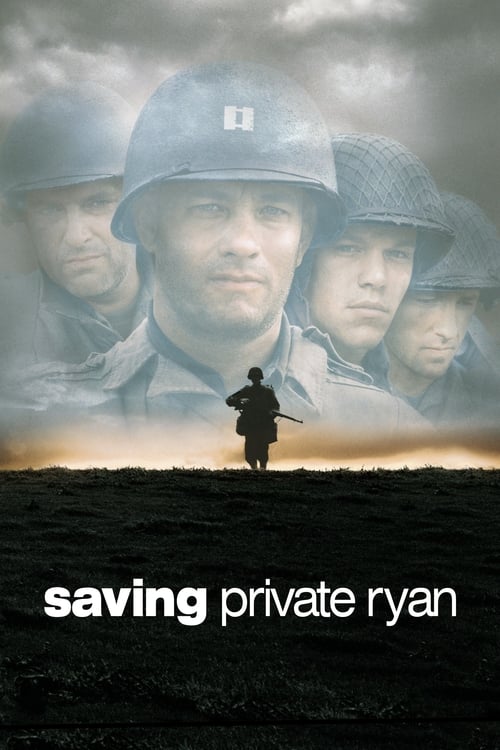
No trap. Saving Private Ryan is exactly what its title and marketing promise: the most honest, devastating, and reverential war film ever made about American soldiers in World War II. It does not bait viewers in with patriotism and then pivot to cynicism or anti-war messaging. The film holds the horror of combat and the dignity of sacrifice in the same frame, simultaneously and without contradiction. The final scene, where an aged Ryan asks his wife if he earned his life, is the film's thesis statement and it is a deeply conservative one. Spielberg does not tell you to feel good about war. He tells you to honor the men who fought it.
The first twenty-five minutes of Saving Private Ryan are among the most important minutes in the history of American cinema. Not because they are the most technically impressive war footage ever shot, though they are that. Because they do something that almost no war film before or since has done: they make you understand, at a cellular level, what those men went through on June 6, 1944.
The Omaha Beach sequence is not exciting. It is terrifying and exhausting and morally overwhelming in the way that real combat must be. Men die instantly, randomly, without purpose or narrative function. A soldier picks up his own severed arm and walks away in shock. A medic tries to plug a hole in a boy's stomach while the boy looks down at himself with incomprehension. Captain Miller's hand shakes and will not stop shaking and he breathes and steadies himself and keeps moving because the alternative is to let everyone around him die faster. That is the threshold the film takes you through and it never fully lets you back out.
After that opening, Spielberg builds the mission structure: eight men are sent inland to find and retrieve Private James Ryan, the last surviving son of a mother who has just lost three boys in three days. The mission is the kind of thing that seems obviously absurd when stated plainly. Eight soldiers must risk their lives and possibly die to bring one man home to his mother. The film does not pretend this is logical. It argues that it is right anyway. That is a conservative argument. The value of a single life. The debt owed to a grieving mother. The idea that some obligations cannot be reduced to a tactical calculation.
Tom Hanks gives one of his best performances. Captain Miller is not a born warrior. He was a high school English teacher in Pennsylvania. He took his pay envelope home on Fridays and coached baseball on weekends. The war has made him something else, someone whose hand shakes and who cries alone at night but who keeps moving forward because his men need him to. The famous scene where he finally tells his squad what he did before the war is quietly devastating. Not because it is surprising but because it makes the gap between who he was and who he now must be suddenly, painfully visible.
The film's moral heart is the question that Upham, the translator, poses: is the value of Private Ryan's life worth more than the value of the men sent to find him? The squad argues about this throughout. There is no easy answer and the film does not provide one. What it provides instead is Miller's response to the question, delivered near the end: 'Earn it.' Two words that carry the weight of an entire philosophy. The debt incurred by sacrifice can never be repaid. It can only be honored by living a life worthy of what it cost.
The film's final sequence, back on the beach with an elderly Ryan asking his wife if he's been a good man, whether he's earned it, is one of the most emotionally precise endings in any film. It does not answer the question. It passes the question to you, the viewer, and to the old man's family gathered around him. What does it mean to honor the dead? What does a life look like that earns the sacrifice made for it? These are not comfortable questions. They are essential ones.
Saving Private Ryan won five Oscars including Best Director for Spielberg. The film lost Best Picture to Shakespeare in Love in one of the Academy's most notorious decisions. History has corrected that verdict. This is one of the twenty or thirty greatest American films ever made.
Formula: Weighted Score = Severity × Authenticity Multiplier × Centrality Multiplier
🔴 Woke Tropes
| Trope | Severity | Authenticity | Centrality | Score |
|---|---|---|---|---|
| Institutional Dehumanization of Soldiers | 2 | Moderate | Low | 1 |
| Moral Complexity of Violence | 2 | Moderate | Low | 1 |
| Critique of Command from Below | 1 | Moderate | Low | 0.5 |
| TOTAL WOKE | 2.5 | |||
🟢 Traditional Tropes
| Trope | Severity | Authenticity | Centrality | Score |
|---|---|---|---|---|
| Sacrifice and Duty Above Self | 5 | High | High | 6.3 |
| Military Brotherhood | 5 | High | High | 6.3 |
| The Value of a Single Life | 5 | High | High | 6.3 |
| Traditional Masculinity Under Pressure | 5 | High | Moderate | 3.5 |
| Faith in Combat | 4 | High | Moderate | 2.8 |
| Family as the Reason to Return | 4 | High | Moderate | 2.8 |
| Earned Legacy and Accountability | 4 | High | Moderate | 2.8 |
| TOTAL TRADITIONAL | 30.8 | |||
Score Margin: +28 TRAD
Director: Steven Spielberg
MODERATE-LEFT (Generally progressive personal politics; traditional storytelling instincts)Steven Spielberg is one of the most technically accomplished filmmakers who has ever lived. His personal politics skew liberal, and some of his later work (The Post, West Side Story) reflects those sympathies more directly. But Saving Private Ryan is not a political film. It is a film made by a Jewish-American director who took the sacrifice of the Greatest Generation as a moral obligation, not a political cause. Spielberg spent years preparing for this production, consulting with veterans, studying historical footage, and building the Normandy beach assault from the ground up. The result is a film that honors the men who fought without romanticizing what they endured. His directorial restraint here, his refusal to make heroism look clean or comfortable, is what elevates this above every other war film of its era.
Writer: Robert Rodat
Robert Rodat wrote the original screenplay based loosely on the true story of the Niland brothers, four Iowa brothers who all served in World War II. His script is structurally disciplined: the bookend sequences with the elderly Ryan at Normandy, the Omaha Beach assault as the threshold into the film's world, and then the systematic journey from the coast inward. Rodat gave Spielberg a screenplay that treated every soldier in Miller's squad as a full human being with a distinct perspective, not as props for the war machine. The debate scenes, particularly about whether one man's life is worth eight others, are among the most morally serious passages in any war film.
Producers
- Steven Spielberg (Amblin Entertainment) — Spielberg's personal production banner. This project was clearly a labor of personal obligation for him.
- Mark Gordon (Mark Gordon Company) — Veteran producer with credits across multiple genres. No strong ideological signal.
Full Cast
Adult Viewer Insight
Saving Private Ryan is not a comfortable film for anyone, regardless of politics. But for traditional audiences, it offers something increasingly rare: a war film made with genuine reverence for the men who fought, without apologizing for their country or their cause. The film does not editorialize about American foreign policy. It says: these men came across an ocean to stop something evil, and many of them died doing it, and that deserves to be witnessed honestly. The moral question it leaves you with, whether you have earned your life, is the most traditionally conservative question a film can ask.
Parental Guidance
Find Saving Private Ryan on Amazon Prime Video, rent, or buy:
▶ Stream or Buy on AmazonAs an Amazon Associate, VirtueVigil earns from qualifying purchases.
Community Discussion 0
Subscribe to comment.
Join the VirtueVigil community to share your perspective on this review.