
Spider-Man: Across the Spider-Verse
Across the Spider-Verse is the most technically ambitious animated film ever made. That is not hyperbole. Director Joaquim Dos Santos, Kemp Powers, and Justin K.…
Full analysis below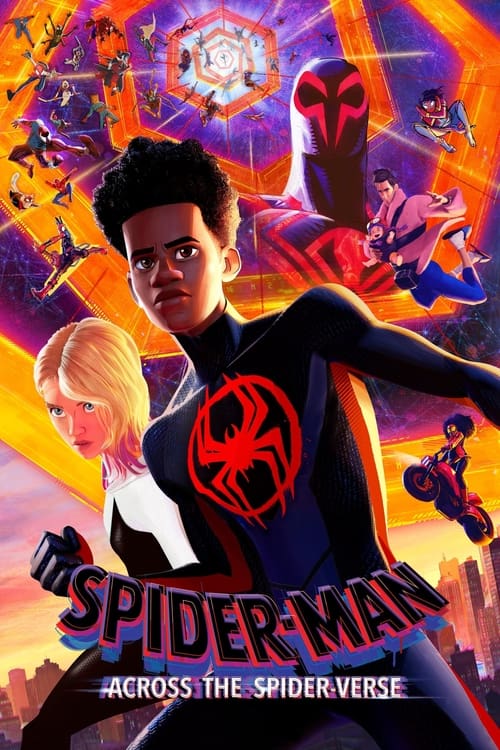
This film draws you in for a significant portion of its runtime with traditional or neutral content before springing its woke agenda. Know before you go!
NOT A WOKE TRAP. The film's progressive ideology is front-loaded and visible from the first act. Miles Morales's identity struggles, Gwen Stacy's transgender-flagged bedroom, and the multiverse-as-diversity metaphor are all present early in the runtime, not concealed until the second half. The marketing for Across the Spider-Verse showcased its visual style and multiverse concept honestly. Conservative families who saw Into the Spider-Verse know exactly what kind of creative environment produced it. There are no hidden surprises. The film announces its values openly.
Across the Spider-Verse is the most technically ambitious animated film ever made. That is not hyperbole. Director Joaquim Dos Santos, Kemp Powers, and Justin K. Thompson, working with a Sony Animation team that spent years developing new visual systems, have created something that defies the normal vocabulary of film criticism. There are sequences in this movie where six different animation styles are running simultaneously in a single frame: Spider-Punk rendered in collage-cut anarchist zine art, Miles Morales in expressive watercolor, Miguel O'Hara in sleek future-noir, Pavitr Prabhakar in Bollywood-influenced Rajasthani miniature painting. It is genuinely unlike anything that has existed before. If you care about the art of animation, Across the Spider-Verse is a landmark.
The emotional story is also genuinely good. Miles Morales is 15 months past the events of Into the Spider-Verse. He is Spider-Man in his universe, but he cannot tell his parents. His father Jefferson (Brian Tyree Henry) is about to be promoted to captain. His mother Rio (Luna Lauren Velez) prays for him. Neither knows what he is. Miles is carrying this secret because he loves them and believes they would be frightened by the truth, and the film pays serious attention to the cost of that choice. The sequence where Jefferson leaves Miles a voicemail about how proud he is, not knowing his son is in another dimension facing death, is one of the most quietly devastating things in any animated film of this decade.
Gwen Stacy gets her own origin story in the opening act. Her father, Captain Stacy, believed she was responsible for the death of her universe's Peter Parker. He hunted her. She had to leave her home universe entirely. Her storyline is about being misunderstood by the father who loves her, and it is genuinely affecting. Hailee Steinfeld voices her with a carefully controlled sadness that makes the character feel real rather than symbolic.
The plot mechanics involve Miles being recruited by the Spider-Society, a multiverse-spanning organization led by Miguel O'Hara (Spider-Man 2099, voiced by Oscar Isaac) that monitors and preserves canon events across universes. Canon events are fixed points in the multiverse: a police captain always dies, certain tragedies are baked in. Miguel's argument is that if canon events are changed, universes collapse. Miles's argument is that he will not accept a predetermined fate for people he loves.
This is philosophically interesting material. The film presents both sides with more fairness than you might expect: Miguel is not wrong that changing canon events has catastrophic consequences. He has watched universes die. His certainty is earned through genuine loss. Miles is not wrong that accepting predetermined tragedy without resistance is its own kind of moral failure. The argument between them is genuinely the film's intellectual core.
Here is where we have to be honest with our audience.
The film embeds its progressive worldview at the structural level, not as a surface decoration. The Spider-Society as an institution that enforces fixed outcomes against individual will is explicitly framed as the oppressive antagonist. Spider-Punk is designed as the film's coolest character and exists primarily to articulate anarchist anti-institutional politics. Hobie Brown lives to say 'the system is the villain,' and the film endorses him. This is not subtle. It is the film's ideology made flesh in a leather jacket covered in safety pins.
Gwen Stacy's bedroom has a transgender pride flag on the wall. The film does not address this in dialogue. It is simply there. The production team confirmed it was intentional, with the specific context of Gwen's father struggling to understand his child being made parallel to the experience of parents of trans children. You can agree or disagree with that choice. It is there, and parents should know.
Miles Morales's defiance of authority, both his parents and the Spider-Society, is framed as heroic throughout. The film does not interrogate the cost of lying to his parents beyond the emotional texture of the voicemail scene. His deception is excused by his good intentions. This is a common progressive story structure: individual instinct overrides institutional rule because the individual is right. It is not a traditional moral framework.
All of that said: the domestic scenes between Miles and his parents are the most genuinely traditional content in the film. Jefferson Davis is written and voiced as a loving, present, protective father. His relationship with his son is central. His pride in Miles is real. The film's treatment of the father-son relationship is substantially more traditional than most of what Marvel Studios has produced in the last five years. Jefferson is not a problem to be solved. He is a man whose love is the film's emotional foundation.
The animation is the story, though. What Sony has built here has to be seen to be understood. The Mumbattan sequence, where Miles and Pavitr Prabhakar move through an Indian city rendered in an animation style that blends multiple South Asian visual traditions, is one of the most beautiful things in modern cinema. The Spider-Society headquarters sequence, with thousands of Spider-People animated in dozens of different styles simultaneously, is the kind of filmmaking achievement that happens once a decade. Whatever you think of the film's ideology, the craft is undeniable.
Box office: $690.5M worldwide on a $100M budget. Critics: 96% on Rotten Tomatoes. Audience: 94%. It earned every cent of that and most of that praise.
RT Critics: 96%. RT Audience: 94%. IMDB: 8.6. Box Office: $690.5M worldwide. One of the highest-grossing animated films ever made. Critical near-consensus that it is among the best animated films of the decade.
Formula: Weighted Score = Severity × Authenticity Multiplier × Centrality Multiplier
🔴 Woke Tropes
| Trope | Severity | Authenticity | Centrality | Score |
|---|---|---|---|---|
| Anti-Institutional Authority Framing | 4 | High | High | 5.04 |
| Anarchist Character as Coolest Hero | 3 | High | Moderate | 2.1 |
| Progressive Identity Symbolism | 3 | High | Low | 1.05 |
| Defiance of Parents Framed as Heroic | 2 | High | Moderate | 1.4 |
| Multiverse as Diversity/Representation Metaphor | 2 | Moderate | Moderate | 2 |
| Villain as System Not Person | 1 | Moderate | Moderate | 1 |
| TOTAL WOKE | 12.6 | |||
🟢 Traditional Tropes
| Trope | Severity | Authenticity | Centrality | Score |
|---|---|---|---|---|
| Loving and Present Black Father | 4 | High | High | 5.04 |
| Nuclear Family as Emotional Foundation | 3 | High | Moderate | 2.1 |
| Mother's Faith and Prayer | 2 | High | Low | 0.7 |
| Son's Protective Love for Father | 3 | High | Moderate | 2.1 |
| Villain Driven by Real Grief | 2 | High | Low | 0.7 |
| TOTAL TRADITIONAL | 10.6 | |||
Score Margin: -2 WOKE
Director: Joaquim Dos Santos, Kemp Powers, Justin K. Thompson
PROGRESSIVE. Kemp Powers co-directed Pixar's Soul (2020) and wrote One Night in Miami (2020), a drama about Malcolm X, Cassius Clay, Jim Brown, and Sam Cooke. He has spoken extensively about representing Black identity on screen. Joaquim Dos Santos is a veteran animation director with a long resume at DC and Nickelodeon. Justin K. Thompson served as production designer on Into the Spider-Verse and brings an extraordinary visual imagination. Together they have built one of the most ambitious animated films ever made, but the ideological fingerprints are Kemp Powers's, and they are progressive.The three-director structure is unprecedented for a mainstream animated feature. Joaquim Dos Santos brings storyboarding and action-sequence expertise from years of work on animated series like Avatar: The Last Airbender and Justice League Unlimited. Kemp Powers brings character depth and cultural specificity, his years as a playwright and writer before his film career show in how precisely the dialogue defines each character's inner life. Justin K. Thompson's role was primarily visual, designing the film's different animation styles for each Spider-Universe. Their collaboration produced a film that works as both technical achievement and emotional drama, though not without ideological cost.
Writer: Phil Lord, Christopher Miller, Dave Callaham
Phil Lord and Christopher Miller are among the most commercially reliable comedy-action filmmakers working today. Their credits include Cloudy with a Chance of Meatballs (2009), 21 Jump Street (2012), The Lego Movie (2014), and Into the Spider-Verse (2018). They are funny, inventive, and technically gifted. They are also progressive in their worldview, a fact that becomes more visible in Across the Spider-Verse than in their earlier work. Dave Callaham joined the writing team and brought experience from Wonder Woman 1984 and Mortal Kombat. The screenplay is genuinely clever in its multiverse mechanics but embeds progressive messaging about identity, institutional authority, and self-determination at the structural level.
Adult Viewer Insight
Adults accompanying teenagers will find Across the Spider-Verse more rewarding than most animated films aimed at this age group. The film's philosophical argument about free will versus determinism is genuinely interesting. The Miguel O'Hara character, a man who has made terrible decisions in the name of preventing worse outcomes, is adult-level moral complexity delivered in an animated package. The Brian Tyree Henry performance is extraordinary. The Anderson .Paak, Metro Boomin, and Lil Uzi Vert musical contributions are the best animated film soundtrack since Into the Spider-Verse. The ideology is present but the quality is also present. Adults can engage critically with both.
Parental Guidance
Rated PG. Recommended age 10+ with parental guidance. Conservative parents should watch alongside their children and be prepared to discuss the anti-institutional messaging, the anarchist character, and the transgender flag. The film is not aggressively woke but it is not neutral either. The quality is undeniable. Engage with it rather than avoiding it.
Find Spider-Man: Across the Spider-Verse on Amazon Prime Video, rent, or buy:
▶ Stream or Buy on AmazonAs an Amazon Associate, VirtueVigil earns from qualifying purchases.
Community Discussion 0
Subscribe to comment.
Join the VirtueVigil community to share your perspective on this review.