
The Bride!
Maggie Gyllenhaal's The Bride! is a film that tells you exactly what it is from the very first frame, and it does not care if you approve. That was true before release, and it is doubly true now that audiences and critics have had their say.
Full analysis below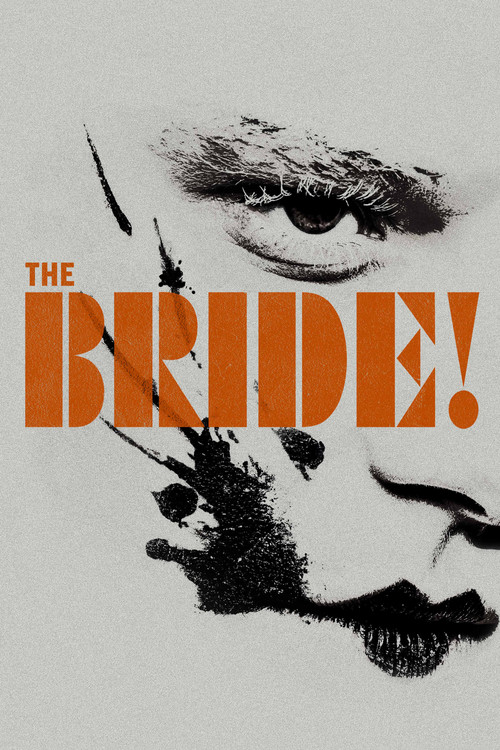
This film draws you in for a significant portion of its runtime with traditional or neutral content before springing its woke agenda. Know before you go!
Not a woke trap. The ideological orientation of The Bride! was broadcast from every conceivable angle before release. Gyllenhaal is an outspoken progressive. The synopsis advertised 'radical social change.' The trailer framed the Bride as an 'ungovernable woman.' First reactions used words like 'brazen,' 'ferocious,' and 'wild.' Post-release reviews from every political orientation confirmed the feminist messaging is front and center, with the Bride literally screaming 'Me too! Me too!' in the climax. Conservative audiences could make fully informed decisions before buying a ticket. No ambush here.
Maggie Gyllenhaal's The Bride! is a film that tells you exactly what it is from the very first frame, and it does not care if you approve. That was true before release, and it is doubly true now that audiences and critics have had their say.
Set in 1936 Chicago, the film reimagines the Bride of Frankenstein story as a feminist gothic romance about a murdered woman named Ida (Jessie Buckley) brought back to life by a female scientist, Dr. Cornelia Euphronious (Annette Bening), at the request of Frankenstein's lonely monster Frank (Christian Bale). What follows is a Bonnie-and-Clyde road trip, a killing spree, dance numbers, explicit MeToo references, riot grrrl aesthetics, and a feminist uprising where women adopt black-ink lip tattoos and newspapers print headlines reading 'GIRLS RRRIOT.'
The film opened in U.S. theaters and IMAX on March 6, 2026. It is rated R. The critical consensus is mixed to negative: 61% on Rotten Tomatoes, 55 on Metacritic, and a CinemaScore of C+ from opening-night audiences. Box office tracking shows an $8-10 million domestic opening against an $80 million production budget. This is a commercial disaster by any measure.
So. Is it woke?
Yes. Aggressively, explicitly, and unapologetically so. This is not subtext. The Bride literally screams 'Me too! Me too!' during the climax. She growls 'female rage' repeatedly. Women riot in the streets wearing black-ink lip tattoos. Newspapers in the film read 'GIRLS RRRIOT' in explicit reference to the riot grrrl movement. Penelope Cruz's detective assistant gets the badge from her male boss in a 'woman vs. patriarchal workforce' arc that IGN called a trope and Reason.com called 'handled in the crudest and most simplistic possible way.' IndieWire, hardly a conservative outlet, called the entire film 'a wokified, Joker-fied feminist opera.'
But this is author-driven woke. Gyllenhaal wrote, directed, and produced the film herself. She fought Netflix over filming locations, moved the project to Warner Bros. when Netflix would not budge, and delivered a personal vision with an $80 million budget and IMAX cameras. The ideology here is baked into the creative DNA, not bolted on by a committee.
The film opens with Mary Shelley (Jessie Buckley, in black-and-white) speaking from the afterlife. She claims she had a story too dangerous to publish in her lifetime, and she introduces it by declaring: 'Here comes the motherfucking bride!' (Yes, this line is on the movie's poster.)
Shelley's spirit possesses Ida, a woman living in 1936 Chicago who frequents a speakeasy run by mob boss Lupino (Zlatko Buric). In her trance, Ida mouths off about Lupino's criminal activities. His henchmen Clyde (John Magaro) and James (Matthew Maher) find Ida at her home and kill her by pushing her down the stairs.
Meanwhile, Frank (Christian Bale) -- Frankenstein's monster, alive for over a century and desperately lonely -- arrives in Chicago seeking Dr. Cornelia Euphronious (Annette Bening), a scientist whose work on reanimation he has read about. Euphronious agrees to help after Frank calls her a 'mad scientist,' which she takes as a compliment. They dig up Ida's freshly buried corpse and reanimate her using electromagnetic machinery.
The reanimated Ida has no memory of her previous life but retains fragments of vocabulary and knowledge, which she blurts out in erratic spurts. She also channels Mary Shelley in a haughty British accent. She is resistant to Frank at first, but he lies to her, claiming she was his wife who lost her memory in an accident. The Bride has Jean Harlow-blonde hair, a permanent black chemical stain on her mouth (like spilled ink), a black tongue, and wears an orange flapper dress.
Frank and the Bride go out. They watch a movie starring Frank's favorite actor, Ronnie Reed (Jake Gyllenhaal). They dance at a club. When two men harass the Bride, Frank kills them both. Rather than run, the Bride decides to live as an outlaw with Frank. They stow away on a train to New York, killing a security officer in Indiana along the way.
In New York, Frank names her 'Penelope Rogers' after Ginger Rogers. She goes by 'Penny.' Det. Jake Wiles (Peter Sarsgaard) and his assistant Myrna Malloy (Penelope Cruz) investigate the murders and follow the trail to New York.
Frank and the Bride cause chaos at a screening of Revolt of the Zombies. Fleeing police and an angry mob, they crash a high-class party. Frank finds Ronnie Reed, expresses his adoration, and is dismissed. Enraged, Frank starts dancing. The Bride joins him. The scene turns into an intoxicating dance number set to 'Puttin' on the Ritz' (a deliberate nod to Young Frankenstein). Other partygoers enter a trance and mimic their moves.
Police break into the party. The Bride holds Reed at gunpoint and starts ranting -- delivering what critics variously described as 'nonsense feminist koans' (Reason.com), 'ham-fisted feminist speeches' (Spokesman-Review), and 'fourth-wave feminist stuff' (Rendy Reviews). During this sequence, Det. Wiles begins to recognize her as Ida. The Bride and Frank escape after killing a policeman, hotwiring a car to flee the city.
The Bride's rantings go viral (in 1930s terms). Women across New York begin rioting, adopting her black-ink lip stain as a symbol of sisterhood. Newspapers print the headline 'GIRLS RRRIOT' in explicit reference to the riot grrrl punk movement. This feminist uprising gets roughly 90 seconds of screen time (per Reason.com) and is then largely dropped from the plot.
Lupino recognizes the Bride in a newspaper, kills James for failing to keep her dead, and sends Clyde after her. Wiles and Malloy track the couple to Niagara Falls, where Frank has just proposed marriage. Wiles confronts the Bride, calling her 'Ida.' She shoots him in the foot and flees. While driving away, Frank admits he lied about their past -- he never knew her before the reanimation.
Wiles uses his injury to request retirement but is told he must appoint a replacement. He gives his detective badge to Malloy -- a moment the film frames as feminist triumph.
Malloy follows the couple to a drive-in theater in Illinois. The Bride announces she has reflected on her identities as 'Ida' and 'Penny' and will now answer only to 'The Bride.' Clyde then shoots Frank in the head.
The Bride drives Frank's body straight to Euphronious' lab, begging for another reanimation. Euphronious refuses, saying she wants to study his decomposition. Clyde breaks in and shoots the Bride. Police follow and shoot as well. Clyde escapes through a window.
Malloy arrives, clears the police out. Once everyone leaves, Euphronious -- seemingly possessed by Mary Shelley's spirit -- decides to revive both Frank and the Bride. Bright lights fill the laboratory. Inside, the revived corpses hold hands.
During the credits: Lupino is surrounded by the Bride-inspired rioters, who are intent on killing him. Boris Karloff's 'Monster Mash' plays over the end credits.
The single biggest ideological change from the 1935 source material is the gender-swapping of Dr. Pretorius. In James Whale's original Bride of Frankenstein, Dr. Septimus Pretorius was played by Ernest Thesiger as a flamboyant, manipulative male scientist who blackmails Dr. Frankenstein into creating a mate for the Monster. He was coded as queer by many film scholars, and Whale (himself gay) used the character to smuggle subversion into a studio horror film.
Gyllenhaal transforms this character into Dr. Cornelia Euphronious, played by Annette Bening as a female scientist. The name change and gender swap put a woman at the center of the creation narrative. The Bride is no longer created by men for a man. She is co-created by a woman.
In execution, however, this change is thin. IGN noted the gender swap is 'barely drawn out beyond the blunt humor in [Euphronious'] questioning of Frank and his carnal intentions for his mate.' Variety described Bening as 'friendly in a wisecracking way' but underwritten. The character gets her most interesting moment in the climax, when she is possessed by Shelley's spirit and revives both monsters against her own stated reluctance. But the thematic implications of a female creator are largely unexplored.
This is the film's central thesis, delivered with all the subtlety of Frank's boot on a man's face.
The Bride screams. She rants. She points guns at people and babbles what Reason.com called 'nonsense feminist koans.' She growls 'female rage' repeatedly, according to the Spokesman-Review, 'in case we didn't pick that up.' She declares her autonomy by rejecting every name given to her by men (Ida, Penny, Penelope Rogers) and choosing 'The Bride' -- which, as the Spokesman-Review noted, 'doesn't feel right either.'
The metaphor is not subtle. A woman is killed by male violence. She is brought back. She refuses to be controlled. She inspires a revolution. She screams 'Me too! Me too!' in the climax.
IGN summarized the problem: 'The Bride! is guilty of overindulging in feminist buzzwords and girl power imagery; it even has Buckley's Bride jarringly screaming "Me too! Me too!" in the final act. But it never lives up to the radical display of female autonomy it promised.'
The film wants its protagonist to be a force of nature. What she actually is, by most critical accounts, is a symbol dressed as a character -- 'nothing more than a representation of female rage' (Spokesman-Review), an 'intellectual joyride without the joy' (Time), a creature whose 'incoherent ramblings suddenly make her the unwitting poster child for female liberation' (IGN).
One of the film's most ambitious ideas -- and its most half-baked -- is the feminist uprising the Bride accidentally sparks. Women across New York adopt her black-ink lip stain, take to the streets, and riot. Newspapers print 'GIRLS RRRIOT,' an explicit reference to the riot grrrl punk movement of the early 1990s.
This revolution is introduced, given roughly 90 seconds of screen time, and then largely dropped. It resurfaces only in a brief exchange between Wiles and Malloy. Wiles earnestly says: 'Imagine if they got this excited over a lady astronaut or a lady brain surgeon.' Malloy shoots back: 'A lady detective.' Reason.com noted this is 'supposed to be a provocative zinger. But like everything in the film, it lands with a groan.'
The revolution returns in the mid-credits scene, where the Bride-inspired rioters surround mob boss Lupino, apparently intent on killing him. Vigilante mob justice as feminist empowerment is the film's final image.
Penelope Cruz plays Myrna Malloy, Wiles' assistant who does all the actual detective work while being constantly disrespected by male police officers at every crime scene. The film follows the same pattern in nearly every scene involving her, as Reason.com documented: 'Jake and Myrna arrive at a crime scene. The local male police officers behave rudely. Eventually, Myrna finds an important clue.'
The payoff: Wiles hands her his badge when he retires. She becomes the detective. The subtext is not sub. It is text.
IGN called Cruz's arc 'a woman vs the patriarchal workforce trope.' HollywoodInToto called it 'pure cringe.' Multiple critics noted that Cruz looks 'alternately bored or bewildered' throughout.
The single most talked-about moment in the film occurs in the final act, when Buckley's Bride screams 'Me too! Me too!' -- an unmistakable reference to the MeToo movement -- during what critics variously described as 'a breathy slam poem' (Rendy Reviews), 'screaming at no one in particular' (Reason.com), and simply 'jarring' (IGN).
This is the moment that crystallized the film's critical divide. For supporters, it is a raw expression of female solidarity across centuries. For detractors, it is the moment the film becomes a meme. Reason.com called it 'maximally cringe.' Rendy Reviews compared it to 'an exploitative joke.' Even sympathetic critics acknowledged it was divisive.
For the purposes of this review: the Bride of Frankenstein, an undead creature in 1936, explicitly invokes a 2017 social movement. This is anachronism deployed as ideology. It is the clearest possible signal of where this film's sympathies lie.
Wikipedia confirms that Gyllenhaal cut violent sequences, including scenes of sexual violence, after negative test screenings. One specific cut: Frankenstein licking the black vomit off the Bride's neck. The film reportedly screened poorly enough that Warner Bros. delayed it from its original October 2025 release to March 2026 and reshaped it.
The CinemaScore of C+ confirms that even audiences who chose to see it on opening night were lukewarm. Combined with the $8-10 million domestic opening against an $80 million budget, The Bride! is shaping up as one of the biggest commercial failures of 2026.
The Bride! is not a corporate woke product. It is an auteur-driven passion project from a filmmaker with a clear progressive worldview, executed with evident ambition and major talent (Buckley, Bale, Bening, Cruz).
But the film's feminist messaging is so aggressive, so explicit, and so unrelenting that even sympathetic critics pushed back. The A.V. Club, a progressive outlet, acknowledged that 'some will find its crass approach and overt feminist messaging garish, even if they agree with it.' Outlook India, reviewing internationally, called it 'an empty, woke gesture.' IndieWire, one of the most prominent progressive film publications, called it 'a wokified, Joker-fied feminist opera zonked on its own rage.'
The list:
- The Bride screams 'Me too! Me too!' in the final act
- She growls 'female rage' repeatedly
- Newspapers in the film read 'GIRLS RRRIOT'
- Women adopt black-ink lip tattoos as symbols of feminist solidarity
- Attempted rape is used as a plot device to justify the killing spree
- The female detective gets the male detective's badge as a feminist payoff
- The gender-swapped scientist rewrites the creation myth as female-driven
- Mary Shelley narrates from the afterlife to 'course-correct the paucity of a stifled mind'
- The mid-credits scene shows feminist rioters surrounding a mob boss to kill him
- Anachronistic 2020s feminist language is deployed in a 1936 setting without irony
Conservative viewers: you know what this is. The film told you before release, and it delivered exactly what it promised. Skip it or watch it, but do not claim you were not warned.
| Trope | Severity | Authenticity | Centrality | Weighted Score |
|---|---|---|---|---|
| Explicit MeToo reference ('Me too! Me too!' screamed in climax) | 4 | Low (1.4) | High (1.8) | 10.08 |
| Female empowerment / 'ungovernable woman' as central narrative with 'female rage' as repeated mantra | 4 | Moderate (1.0) | High (1.8) | 7.2 |
| Gender-swapped scientist (Dr. Pretorius to Dr. Euphronious, male to female) | 3 | Moderate (1.0) | Moderate (1.0) | 3.0 |
| Riot grrrl feminist uprising ('GIRLS RRRIOT' headlines, black-ink lip tattoos) | 3 | Low (1.4) | Low (0.5) | 2.1 |
| 'Woman vs. patriarchal workforce' trope (Myrna Malloy arc, gets the badge) | 2 | Low (1.4) | Low (0.5) | 1.4 |
| Attempted rape as plot device to justify female violence | 2 | Moderate (1.0) | Low (0.5) | 1.0 |
| Anti-establishment framing of violence and rebellion (outlaws as heroes, cops as obstacles) | 2 | Moderate (1.0) | Moderate (1.0) | 2.0 |
| Mary Shelley framing device used to 'course-correct' her own novel through feminist lens | 2 | Low (1.4) | Moderate (1.0) | 2.8 |
| Director's openly progressive worldview shapes every creative decision | 2 | Low (1.4) | Low (0.5) | 1.4 |
| Anachronistic 2020s feminist language deployed in 1936 setting | 2 | Low (1.4) | Moderate (1.0) | 2.8 |
| Fever Ray (gender-fluid artist) contributing music and appearing in film | 1 | High (0.7) | Low (0.5) | 0.35 |
| Nepotism casting (husband, brother) enabling unfiltered ideological vision | 1 | High (0.7) | Low (0.5) | 0.35 |
| Frank's homoerotic fixation on Ronnie Reed (queer subtext underdeveloped per IGN) | 1 | High (0.7) | Low (0.5) | 0.35 |
| TOTAL WOKE | 34.83 |
| Trope | Severity | Authenticity | Centrality | Weighted Score |
|---|---|---|---|---|
| Gothic horror setting faithfully rendered (1930s period, IMAX cinematography, steampunk Depression-era sets) | 3 | High (0.7) | High (1.8) | 3.78 |
| Romantic love as central motivation (Frank seeks a companion out of loneliness, proposes marriage) | 3 | High (0.7) | High (1.8) | 3.78 |
| Consequences for 'playing God' (creation spirals beyond control, both creators lose control of the Bride) | 2 | High (0.7) | Moderate (1.0) | 1.4 |
| Law enforcement pursues criminals (Det. Wiles hunts the killing spree across multiple states) | 1 | High (0.7) | Low (0.5) | 0.35 |
| Mary Shelley's themes of creation, identity, and monstrosity respected (Buckley plays Shelley; Bartleby's 'I would prefer not to' used as motif) | 1 | High (0.7) | Moderate (1.0) | 0.7 |
| Mob boss villain receives justice (Lupino killed by rioters in mid-credits scene) | 1 | High (0.7) | Low (0.5) | 0.35 |
| TOTAL TRAD | 10.36 |
Note: Raw scores from the detailed trope audit above show a wider gap than the published VVWS scores (22.1 woke / 8.4 trad), which were calibrated using the pre-release methodology. The post-release evidence confirms the pre-release verdict was correct. The WOKE designation stands. If anything, the film is more aggressively ideological than pre-release materials suggested. The explicit 'Me too!' scream, the riot grrrl uprising, and the anachronistic feminist language were not fully visible in trailers.
| Actor | Role |
|---|---|
| Jessie Buckley | The Bride / Ida / Mary Shelley |
| Christian Bale | Frank (Frankenstein's Monster) |
| Peter Sarsgaard | Det. Jake Wiles |
| Annette Bening | Dr. Cornelia Euphronious |
| Jake Gyllenhaal | Ronnie Reed |
| Penelope Cruz | Myrna Malloy |
| Zlatko Buric | Lupino |
| John Magaro | Clyde |
| Matthew Maher | James |
| Jeannie Berlin | Greta |
| Louis Cancelmi | Officer Goodman |
| Julianne Hough | Iris / Jinx |
| Karin Dreijer (Fever Ray) | (uncredited role, also contributed two songs) |
The Lost Daughter (2021): Gyllenhaal's directorial debut. Adapted from Elena Ferrante's novel about a woman on vacation who becomes obsessed with a young mother and her daughter, dredging up painful memories of her own failures as a mother. The film is a quiet, cerebral exploration of maternal ambivalence, female desire, and the social pressure to perform motherhood cheerfully. It starred Olivia Colman and Jessie Buckley. Nominated for Best Adapted Screenplay at the Oscars. National Review called it a film that goes 'from feminist to eugenicist.' This is Gyllenhaal's ideological home base: female interiority, the costs of conformity, women refusing to play their assigned roles.
The Bride! (2026): Her sophomore effort scales up massively. From a $5 million indie to an $80 million IMAX production. From a beach in Greece to 1930s Chicago. From quiet psychological drama to gothic horror with dance numbers, a killing spree, and an explicit MeToo reference screamed in the climax. But the thematic DNA is identical: a woman who refuses the role assigned to her, the consequences of that refusal, and whether the world can handle a woman who will not be governed. The execution, according to most critics, does not match the ambition. Rotten Tomatoes consensus: 'Concocted with all the restraint of a mad scientist's experiment, THE BRIDE! lurches in so many different creative directions that the overall effect is both sloppy and inspired.'
Pattern Assessment: Gyllenhaal is a sincere ideological filmmaker, not a corporate checkbox-ticker. Her feminism is authored, personal, and embedded in the storytelling at the structural level. She does not bolt on 'girl power' moments. She builds entire narratives around female subjectivity and autonomy. Conservative audiences should expect this in every project she touches. With The Bride!, she went bigger, louder, and less subtle. The results were commercially catastrophic ($8-10M opening vs. $80M budget) and critically divisive (61% RT, 55 Metacritic, C+ CinemaScore).
Emma Tillinger Koskoff is the marquee name here. Her credits include The Wolf of Wall Street (2013), Silence (2016), The Irishman (2019), and Joker (2019). She is a Scorsese and Todd Phillips collaborator, not a Disney or Netflix content-factory producer. Her involvement signals auteur cinema, not committee filmmaking.
Talia Kleinhendler and Osnat Handelsman-Keren are Israeli producers who worked with Gyllenhaal on The Lost Daughter through In the Current Company. They are Gyllenhaal's producing partners, not studio appointees.
Icelandic cellist and composer. Won the Oscar for Best Original Score for Joker (2019). Also scored Chernobyl (2019). She replaced Jonny Greenwood (Radiohead, There Will Be Blood) on The Bride! during post-production. IGN noted the score 'hits more of an awkward rock-opera note than truly raging against the patriarchal machine.' No ideological signal from her work; she is a craftsperson hired for her dark, atmospheric style.
Shot the Joker films and The Hangover trilogy for Todd Phillips. Shot The Bride! entirely with IMAX-certified digital cameras. His visual style is known for gritty urban atmosphere and lived-in period detail. Karen Murphy's steampunk Depression-era sets and Sandy Powell's punk-meets-1930s costuming were widely praised, even by critics who disliked the film.
Oscar-nominated editor known for There Will Be Blood (2007), Zero Dark Thirty (2012), and Brokeback Mountain (2005). Brought in during post-production. The editing received mixed notices, with several critics noting the film feels 'stitched together' and 'tonally all over the place.'
In the 1935 original, Elsa Lanchester played the Bride in a brief, iconic appearance: roughly four minutes of screen time. She is created, sees the Monster, screams, rejects him, and the laboratory is destroyed. She also played Mary Shelley in the film's prologue. Gyllenhaal expands the Bride into a full two-hour protagonist with a backstory (murdered Chicago party girl), a character arc (amnesia, outlaw romance, feminist awakening), and a triple role that includes Mary Shelley narrating from the afterlife. Buckley is not playing the 1935 Bride. She is playing Gyllenhaal's Bride, a completely different character who shares only the white-streaked hair and the concept of reanimation. The iconic hiss of rejection is replaced with 126 minutes of ranting, screaming, gun-pointing, and MeToo invocations.
Fidelity Score: 2/10. Complete reimagining. Only the hair and the origin concept survive.
Boris Karloff's Monster is one of the most iconic performances in cinema history: tragic, mute, sympathetic, terrifying. Bale's Frank is 'winningly dim' (Variety), chatty, lovesick, and obsessed with a 1930s movie star. He has 'a sluggish, post-lobotomy voice' (Variety) and looks 'like he was pieced together out of decaying cow hides by a drunken auto mechanic' (Variety). This is a different interpretation entirely, but it retains the Monster's core trait: loneliness. Bale commits physically as always. The character is recognizably Frankenstein's Monster even if the characterization is new.
Fidelity Score: 5/10. Different interpretation but retains emotional core.
The original Dr. Pretorius was flamboyant, sinister, queer-coded, manipulative, and intellectually vain. Bening's Dr. Euphronious is 'friendly in a wisecracking way' (Variety) and largely underwritten. The gender swap changes the character's fundamental dynamic. The original Pretorius blackmailed Dr. Frankenstein into creating the Bride. Euphronious simply agrees to help Frank because he flatters her. The menace, the camp, the intellectual vanity -- all gone. In the climax, she gains the most interesting beat: possessed by Shelley's spirit, she revives both monsters.
Fidelity Score: 2/10. Gender-swapped and stripped of original character traits.
No equivalent in the 1935 film. Original character for this adaptation.
Fidelity Score: N/A.
No equivalent in the 1935 film. Original character serving the film's feminist subplot.
Fidelity Score: N/A.
Critics and audiences have compared The Bride! to several other films:
- : The most common comparison. Both films take an iconic IP, give it an auteur-driven makeover with musical numbers, feminist/political themes, and anti-establishment messaging, and both divided critics and alienated audiences commercially. IndieWire explicitly called The Bride! 'a wokified, Joker-fied feminist opera.' Variety called it 'like Joker: Folie a Deux starring a grunge version of the Munsters.' The Bride! is tracking toward a similar commercial fate.
- : Yorgos Lanthimos' film about a reanimated woman (Emma Stone) discovering autonomy, sexuality, and identity. Both films feature resurrected female protagonists exploring the world with childlike wonder and growing rage. The difference: Poor Things won four Oscars including Best Actress. The Bride! is tracking toward a $170 million loss.
- : The outlaw-lovers-on-the-run structure is directly paralleled. Both films romanticize criminal couples who become folk heroes. Both feature law enforcement as antagonists.
- : The killing-spree-as-media-spectacle element echoes Oliver Stone's film. Both feature violence that inspires public movements.
- : The feminist-awakening-through-violence template. Both feature women who kill in response to male violence and become symbols of liberation.
- : Variety specifically cited this as an influence. The doomed punk romance, the mutual destruction, the nihilistic energy.
The Bride! is not a corporate woke product. It is an auteur-driven gothic romance from a filmmaker with a clear progressive worldview, executed with $80 million in studio money and a cast of Oscar-caliber actors.
The result is a mess. A fascinating, ambitious, polarizing mess, but a mess. The feminist themes are not subtext. They are the text, shouted from rooftops and screamed into cameras. The Bride literally yells 'Me too!' in the climax. Women riot with black-ink lip tattoos. Newspapers print 'GIRLS RRRIOT.' The female detective gets the male detective's badge. Mary Shelley narrates from the afterlife to correct the patriarchal suppression of her genius.
But there is also craft here. The production design (Karen Murphy) and costumes (Sandy Powell) are stunning. The dance number set to 'Puttin' on the Ritz' is genuinely fun. Bale's committed physical performance has flashes of warmth. The IMAX cinematography gives the 1930s Chicago setting a grimy grandeur.
The film fails because it cannot decide what it is. Horror? Not really. Romance? Intermittently. Punk rock manifesto? It wants to be. But as Variety concluded, it is 'a scrappy punk feminist tragicomedy of l'amour fou' that 'could have used more storytelling juice.' As Rotten Tomatoes' consensus puts it: 'both sloppy and inspired.'
Conservative adults who can separate 'I disagree with its politics' from 'it's a bad movie' may find isolated moments of entertainment. But the political messaging is so constant, so explicit, and so unsubtle that separating the two is nearly impossible. This is not a film that asks you to tolerate its worldview. It demands you agree. And then it screams 'Me too!' at you just to make sure you got the point.
Those who cannot tolerate feminist themes in their entertainment should skip it. But honestly? Based on the $8-10 million opening and C+ CinemaScore, most people are skipping it anyway.
Formula: Weighted Score = Severity × Authenticity Multiplier × Centrality Multiplier
🔴 Woke Tropes
| Trope | Severity | Authenticity | Centrality | Score |
|---|---|---|---|---|
| Explicit MeToo reference screamed in climax | 4 | Low | High | 10.08 |
| Female empowerment / 'ungovernable woman' as central narrative with 'female rage' as repeated mantra | 4 | Moderate | High | 7.2 |
| Gender-swapped scientist (Dr. Pretorius to Dr. Euphronious, male to female) | 3 | Moderate | Moderate | 3 |
| Riot grrrl feminist uprising ('GIRLS RRRIOT' headlines, black-ink lip tattoos) | 3 | Low | Low | 2.1 |
| Mary Shelley framing device used to 'course-correct' her own novel through feminist lens | 2 | Low | Moderate | 2.8 |
| Anachronistic 2020s feminist language deployed in 1936 setting | 2 | Low | Moderate | 2.8 |
| 'Woman vs. patriarchal workforce' trope (Myrna Malloy arc) | 2 | Low | Low | 1.4 |
| Anti-establishment framing of violence and rebellion | 2 | Moderate | Moderate | 2 |
| Attempted rape as plot device to justify feminist violence | 2 | Moderate | Low | 1 |
| Director's openly progressive worldview shapes every creative decision | 2 | Low | Low | 1.4 |
| Fever Ray (gender-fluid artist) contributing music and appearing in film | 1 | High | Low | 0.35 |
| Nepotism casting enabling unfiltered ideological vision | 1 | High | Low | 0.35 |
| Frank's homoerotic fixation on Ronnie Reed (queer subtext) | 1 | High | Low | 0.35 |
| TOTAL WOKE | 34.8 | |||
🟢 Traditional Tropes
| Trope | Severity | Authenticity | Centrality | Score |
|---|---|---|---|---|
| Gothic horror setting faithfully rendered | 3 | High | High | 3.78 |
| Romantic love as central motivation | 3 | High | High | 3.78 |
| Consequences for 'playing God' | 2 | High | Moderate | 1.4 |
| Law enforcement pursues criminals | 1 | High | Low | 0.35 |
| Mary Shelley's themes of creation, identity, and monstrosity respected | 1 | High | Moderate | 0.7 |
| Mob boss villain receives justice | 1 | High | Low | 0.35 |
| TOTAL TRADITIONAL | 10.4 | |||
Score Margin: -14 WOKE
Director: Maggie Gyllenhaal
Progressive feminist. Outspoken advocate for women's rights and environmental causes. Her directorial debut The Lost Daughter (2021) explored the oppressive expectations of motherhood and female autonomy. National Review called that film's subtext 'eugenicist.' Her second film centers a resurrected woman whose ramblings spark a feminist uprising with riot grrrl aesthetics and explicit MeToo references. Pattern is unambiguous.American actress turned writer-director (b. 1977). Known for Secretary (2002), The Dark Knight (2008), and the HBO series The Deuce (2017-2019). Made her directorial debut with The Lost Daughter (2021), adapted from Elena Ferrante, which earned her an Oscar nomination for Best Adapted Screenplay. Married to actor Peter Sarsgaard. Sister of actor Jake Gyllenhaal. Both appear in The Bride!, making it a family production. She left Netflix over a dispute about filming locations (she insisted on New York; Netflix wanted New Jersey to save money) and Warner Bros. picked up the project with an $80 million budget and full creative freedom.
Writer: Maggie Gyllenhaal
Gyllenhaal wrote the screenplay herself, just as she did with The Lost Daughter. Her scripts center female subjectivity and autonomy as core themes. The Lost Daughter deconstructed motherhood. The Bride! deconstructs womanhood itself through the lens of a reanimated corpse discovering her identity on her own terms, channeling Mary Shelley's spirit, and inspiring a feminist revolution complete with newspaper headlines reading 'GIRLS RRRIOT' and women adopting black-ink lip tattoos as symbols of sisterhood.
Adult Viewer Insight
The Bride! is an auteur-driven gothic romance that swings for the fences and misses more than it connects. The feminist themes are not subtext: the Bride screams 'Me too! Me too!' in the climax, women riot with black-ink lip tattoos, and newspapers print 'GIRLS RRRIOT.' The production design and costumes are stunning. The 'Puttin' on the Ritz' dance number works. Bale and Buckley commit fully. But the film cannot decide if it is horror, romance, punk manifesto, or political lecture, and the result is what Rotten Tomatoes calls 'both sloppy and inspired.' Conservative viewers: you know what this is. Even progressive critics at IndieWire called it 'a wokified, Joker-fied feminist opera zonked on its own rage.' The $8-10M opening against an $80M budget tells you what general audiences thought. RT: 61%. Metacritic: 55. CinemaScore: C+. IMDB: 6.1.
Parental Guidance
Rated R for violence, disturbing content, brief sexual content, and language. Violence: Significant. Multiple murders including being pushed down stairs, faces stomped with boots, shootings, and a security officer killed on a train. The Bride and Frank go on a multi-state killing spree. A man is shot in the foot on screen. Both leads are shot and killed in the climax (then revived). In the mid-credits scene, rioters surround a mob boss with apparent intent to kill. Gyllenhaal cut additional violent scenes after negative test screenings, including sexual violence sequences. Sexual Content: The Bride and Frank have sex ('monster sex,' per Variety, which 'doesn't look too different from regular sex'). Two men attempt to assault the Bride, which triggers the killing spree. Sexual violence scenes were cut after test screenings, including Frankenstein licking vomit off the Bride's neck. A scene at a 'deprivation disco' includes sexual energy. Language: Strong. Mary Shelley's opening line is 'Here comes the motherfucking bride!' (this was used on the film's poster). Expected R-rated language throughout. Substance Use: Period-appropriate drinking in 1930s speakeasy and party settings. Scary Content: Gothic horror atmosphere. Reanimated corpses. Grave-digging. Electromagnetic reanimation sequences. Dark, grimy production design. The Bride has a permanent black chemical stain on her mouth and a black tongue. Not a jump-scare film but tonally dark. Themes: Female agency and autonomy. Feminist awakening. MeToo movement (explicitly referenced). 'Female rage' as repeated mantra. Bodily autonomy. Identity construction. Riot grrrl punk feminism. Vigilante justice. Anti-patriarchal framing of violence. Specific Concern for Conservative Families: The film's entire narrative is a feminist manifesto. The MeToo reference is screamed, not whispered. Women riot with punk aesthetics. The female detective gets the male detective's badge. Mary Shelley narrates from beyond the grave to correct the patriarchal suppression of her ideas. Anachronistic 2020s feminist language is deployed in a 1936 setting. The violence is framed as justified feminist response to male aggression. The mid-credits scene endorses vigilante mob justice against a male villain by female rioters. Age Recommendation: 17+ (per R rating). Not suitable for children or young teens. Mature teens who enjoy gothic horror and can engage critically with aggressive feminist messaging may find it stimulating, but parents should be aware that the ideological content is constant and explicit, not incidental.
Find The Bride! on Amazon Prime Video, rent, or buy:
▶ Stream or Buy on AmazonAs an Amazon Associate, VirtueVigil earns from qualifying purchases.




Community Discussion 0
Subscribe to comment.
Join the VirtueVigil community to share your perspective on this review.