
The Brutalist
Brady Corbet's The Brutalist is a serious, demanding, three-and-a-half-hour epic that positions itself as a meditation on the American Dream, artistic integrity, and the immigrant experience. It is the most ambitious American film of 2024 and also the most explicitly anti-capitalist.…
Full analysis below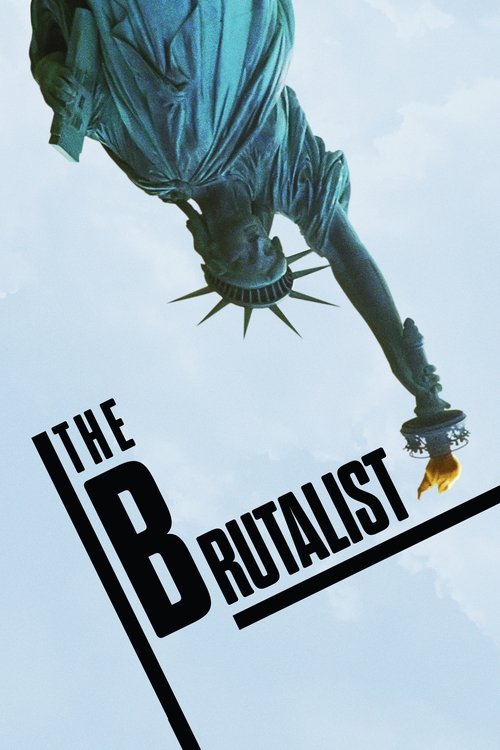
This film draws you in for a significant portion of its runtime with traditional or neutral content before springing its woke agenda. Know before you go!
The film's ideological posture is transparent from its premise: an immigrant artist exploited by American capitalism. The anti-capitalist critique, the anti-Semitism subplot, and the immigrant-as-victim narrative are present from act one. This is a prestige awards film aimed at the Cannes-and-A24 audience. Conservative viewers will not be ambushed.
Brady Corbet's The Brutalist is a serious, demanding, three-and-a-half-hour epic that positions itself as a meditation on the American Dream, artistic integrity, and the immigrant experience. It is the most ambitious American film of 2024 and also the most explicitly anti-capitalist. These two things are not unrelated. Corbet has made a film that treats the United States as a beautiful trap: a country that advertises freedom and delivers exploitation. Whether you find that thesis persuasive will determine how you experience the film's considerable formal achievements.
Adrien Brody plays László Tóth, a Jewish-Hungarian architect who survived the Holocaust and emigrated to the United States after World War II. He arrives with nothing but his genius and his memories of horror. He is taken in by his cousin Attila (Alessandro Nivola), a furniture dealer in Pennsylvania who has converted to Catholicism to assimilate more effectively. László struggles: addiction, rootlessness, the grief of survival. Then he comes to the attention of Harrison Lee Van Buren (Guy Pearce), a wealthy Pennsylvania industrialist who commissions László to design a community center on his estate. This is the engine of the film: the relationship between the immigrant artist of towering talent and the American patron whose generosity is inseparable from his need for ownership.
Guy Pearce is extraordinary as Van Buren. The character is not a cartoon villain. He has genuine affection for László and genuine appreciation for the work. But his affection is possessive. His patronage is conditional. He wants to own not just the building but the man. The film draws its most uncomfortable parallel in a late scene that has been widely discussed: Van Buren's assault on László during a trip to Italy. This act of violation is presented as the ultimate expression of the patron's relationship to the artist: I have bought you and therefore I may take whatever I want. It is a devastating scene, and the film earns it through three hours of careful preparation. It is also the film's most ideologically pointed moment: capitalism as rape.
This is, to be direct, an anti-capitalist film. The American Dream is presented as a promise that is kept only in the most technical sense while being broken in every meaningful one. László achieves recognition. He builds his monument. His wife Erzsébet (Felicity Jones, luminous and heartbreaking) eventually joins him. But the recognition comes on Van Buren's terms, the monument belongs to Van Buren's legacy, and the wife arrives disabled from imprisonment and deprivation. America gives László a career and takes nearly everything else.
Where the film is less ideologically tidy, and more genuinely interesting, is in its treatment of László's own character. He is not a passive victim. He is driven, difficult, addicted to heroin, and capable of cruelty to the people who love him. The film is not presenting a saintly immigrant; it is presenting a flawed, brilliant man who deserves better than what he receives. This distinction matters. The critique of American capitalism is more honest when its target is a complex person rather than a martyr.
Conservative viewers will have specific objections. The film's thesis, that America's promise to immigrants is a lie underpinning a system of exploitation, is unmistakable. The wealthy American businessman is the antagonist. The immigrant genius is the moral center. Jewish heritage is treated with genuine respect and weight, which is a traditional value even if the broader film is not. The marriage between László and Erzsébet is the emotional heart of the story, and it is rendered with genuine tenderness. Erzsébet's faith and dignity are never condescended to. The film's ending, in which an aged László addresses an architectural conference in Israel, frames survival and creation as its own form of victory. Whether that constitutes a conservative or progressive ending depends on your framework.
The craft is undeniable. Shot in VistaVision with extraordinary scope, The Brutalist looks like nothing else in contemporary cinema. At 215 minutes it is punishing to watch, but not padded. This is a film that earns its length. Conservative viewers who choose to engage should go in knowing exactly what they are getting: a beautifully made, seriously intended, unmistakably anti-capitalist epic about an immigrant artist destroyed and remade by America. The traditional elements, marital devotion, artistic faith, survivor's resilience, are real. The woke architecture surrounding them is also real.
| Trope | Category | Location | Authenticity |
|---|---|---|---|
| Institutional Evil | WOKE | Throughout -- American capitalism systematically exploits and dehumanizes the immigrant artist | Natural |
| Anti-Western Revisionism | WOKE | Throughout -- the American Dream is systematically debunked as a trap for the vulnerable | Natural |
| The Bigoted Traditionalist | WOKE | Multiple scenes -- anti-Semitism encountered by László in American social settings | Natural |
| The Victimhood Meritocracy | WOKE | Throughout -- László's genius is recognized but his humanity is denied due to his immigrant/Jewish status | Natural |
| Institutional Evil (Patron) | WOKE | Late act -- Van Buren's assault on László frames capitalism as literal violation | Emphasized |
| The Redeemed Criminal (Systemic) | WOKE | László's heroin addiction contextualized as trauma response to institutional failure | Natural |
| Globalist Utopia | WOKE | The film's ending at an Israeli conference frames multicultural artistic achievement as ultimate victory | Natural |
| The Marginalized Savant | WOKE | László as immigrant genius whose talent is exploited rather than honored by American system | Natural |
| The Colonialist Villain | WOKE | Van Buren's ownership mentality toward László coded as colonial possession | Emphasized |
| Defense of the Innocent | TRAD | Throughout -- László protects and waits for his wife Erzsébet across years of separation | Natural |
| The Nuclear Family Under Siege | TRAD | Throughout -- László and Erzsébet's marriage survives separation, illness, and addiction | Organic |
| Faith in Adversity | TRAD | Erzsébet's Jewish faith and dignity are portrayed with consistent respect | Organic |
| Industry and Perseverance | TRAD | Throughout -- László's artistic dedication and persistence despite crushing obstacles | Organic |
| The Self-Sacrificing Hero | TRAD | László endures humiliation and exploitation to complete his life's work and protect his wife's memory | Natural |
| Restored Home | TRAD | Final act -- the completed building stands as László's monument and vindication | Natural |
Director: Brady Corbet
MODERATELY WOKE (anti-capitalist, institutional critique, immigrant sympathy)Brady Corbet began his career as an actor in prestige films (Funny Games, Melancholia, Funny Games US) before transitioning to directing. His debut The Childhood of a Leader (2015) was a psychological study of fascism's origins. Vox Lux (2018) examined celebrity trauma and mass violence. The Brutalist (2024) is his most ambitious and most explicitly ideological work. Corbet is an art-house director whose primary concerns are power, exploitation, and the corruption of talent by capital. His films are not propaganda in a crude sense; they are serious works that consistently frame institutions and wealth as predatory forces.
Writer: Brady Corbet & Mona Fastvold
Fastvold is a Norwegian filmmaker and Corbet's long-term creative and romantic partner. She co-wrote The Childhood of a Leader and Vox Lux with him. Their collaborative sensibility is consistently interested in power dynamics, institutional corruption, and the suffering of outsiders. As co-writers, their combined signal amplifies the anti-capitalist, pro-immigrant framing that defines The Brutalist.
Producers
- Andrew Lauren (Ralph Lauren's son. Film investor and producer whose credits include indie and prestige projects.) — No consistent ideological signal. Follows quality and awards potential.
- Trevor Matthews (Brookstreet Pictures) — Canadian producer whose credits include a range of genre and prestige projects. No strong ideological signal.
- D.J. Gugenheim (Independent producer associated with emerging prestige cinema.) — No strong independent ideological signal.
- Brady Corbet — See director profile. As co-producer on his own film, his ideological imprint is total.
Full Cast
Fidelity Casting Analysis FAITHFUL
Original IP with no source material to contradict. Hungarian-Jewish lead is authentically cast with Adrien Brody, himself Jewish.
The Brutalist is an original screenplay about a fictional character. There is no source material from which to measure fidelity deviation. Notably, Adrien Brody, who is himself of Jewish and Polish heritage, was cast in the Jewish-Hungarian lead role, which represents genuine authenticity casting rather than identity politics. The American industrialist Harrison Lee Van Buren is played by Australian Guy Pearce, which is standard casting practice with no fidelity issue. No canon swaps or historical incongruities apply to original IP. Fidelity score: FAITHFUL.
Adult Viewer Insight
Conservative viewers will recognize The Brutalist as a sophisticated piece of anti-capitalist filmmaking. The film is honest about its thesis from its premise and does not disguise it. What makes it worth engaging with rather than dismissing is that Corbet and Brody do not flatten their characters into symbols. László is flawed and difficult. Van Buren is not pure evil. The marriage is genuinely touching. The Jewish heritage is treated with real weight. This is a film that makes its ideological case with craft and complexity rather than sloganeering. Understanding how prestige cinema constructs these arguments is itself valuable for the conservative viewer who wishes to engage the culture seriously.
Parental Guidance
The Brutalist is rated R and not appropriate for children or teenagers. The film contains a disturbing scene of sexual assault, sustained drug use (heroin addiction depicted in detail), wartime trauma references, and mature dramatic content throughout its 215-minute runtime. Adult conservative viewers should be prepared for the film's anti-capitalist thesis, which is central and consistent. The marital relationship is treated with dignity and the film does not contain progressive messaging on gender or sexual identity.
Find The Brutalist on Amazon Prime Video, rent, or buy:
▶ Stream or Buy on AmazonAs an Amazon Associate, VirtueVigil earns from qualifying purchases.




Community Discussion 0
Subscribe to comment.
Join the VirtueVigil community to share your perspective on this review.