
The Dark Knight
The Dark Knight is not just the best superhero film ever made. It is one of the best crime films ever made, full stop. Christopher Nolan took a character from the funny pages and made something that belongs in the same conversation as The Godfather, Heat, and No Country for Old Men.…
Full analysis below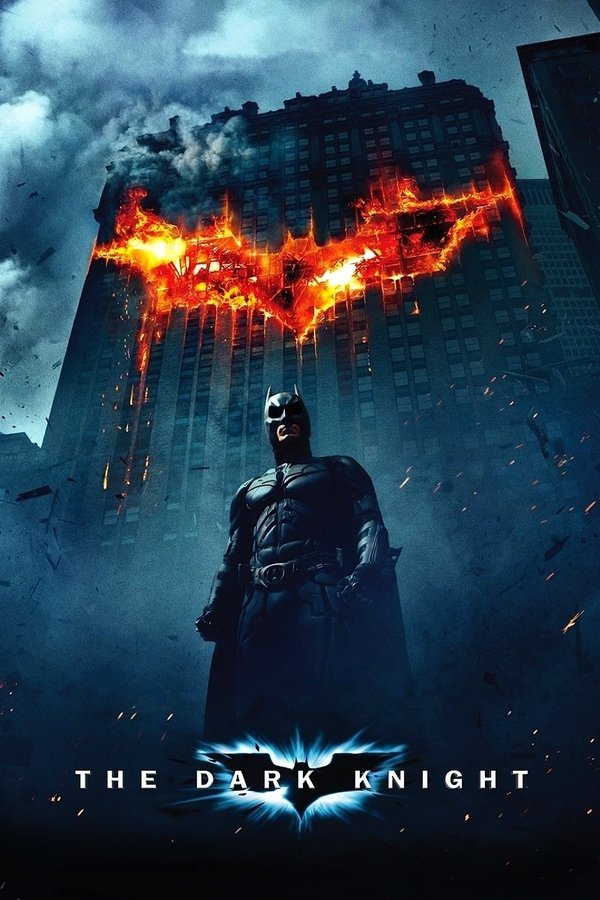
NOT A WOKE TRAP. The Dark Knight is a crime thriller about order versus chaos, with a conservative law-and-order framework so strong that it was widely analyzed as a post-9/11 defense of extralegal surveillance and coercive interrogation. The film's politics are complex but ultimately traditionalist. The hero is a vigilante who believes society must be defended by those willing to get their hands dirty when institutions fail. There is no bait and switch. The marketing accurately conveyed a dark, serious crime film. Conservative viewers will find The Dark Knight one of the most ideologically compatible superhero films ever made.
The Dark Knight is not just the best superhero film ever made. It is one of the best crime films ever made, full stop. Christopher Nolan took a character from the funny pages and made something that belongs in the same conversation as The Godfather, Heat, and No Country for Old Men. Seventeen years after release, it still holds.
But VirtueVigil's job is not just to assess quality. It is to assess ideology. And on that front, The Dark Knight is more interesting than almost anything else in the superhero genre.
The film is a post-9/11 allegory, whether Nolan intended it or not. The Joker is terrorism: an ideology, not a man. He cannot be reasoned with, bought, or bargained with. He has no demands in the traditional sense because he wants nothing except chaos. The film's response to this threat is classically conservative: escalating force, covert surveillance, and a hero willing to take on the moral burden of dirty work so that normal people can live clean lives.
Let's be specific about what Batman does in this film. He builds a machine that uses every citizen's cell phone to create a city-wide sonar surveillance system. Every person in Gotham is watched without their knowledge or consent. This is illegal. It is also, the film argues through Lucius Fox's resigned acceptance and ultimate cooperation, necessary. The film does not celebrate this. Lucius makes clear he finds it troubling and insists the machine be destroyed after one use. But the film does not condemn it either. Batman uses it. It works. He destroys it afterward. The message is nuanced but clear: sometimes extraordinary threats require extraordinary measures that violate the normal rules.
This is the argument the Bush administration made for warrantless wiretapping after September 11. The Dark Knight does not endorse waterboarding or extraordinary rendition. But it absolutely endorses the principle that a dedicated individual with good values can be trusted to use terrible tools wisely if the alternative is catastrophic civilian casualties. That is a conservative argument.
The film's core tension is the Joker's thesis versus Batman's. The Joker believes civilization is a thin veneer over barbarism: everyone is selfish, everyone will murder to survive, give them one hard push and they abandon all their principles. Batman believes in people. The film's climax puts this to the test when the Joker rigs two ferries with explosives and gives each the detonator for the other: normal citizens on one ferry, criminals on the other. Whoever blows up the other boat first survives. Neither boat does it. The Joker is wrong. People are better than he believes.
This is a conservative conclusion. G.K. Chesterton could have written it. Human beings, even criminals, possess a dignity and moral capacity that nihilism cannot account for. The social order is worth defending because the people inside it are worth defending. The Joker's cynicism is not sophistication. It is despair.
Harvey Dent's arc is the film's tragic heart. The best of us - the white knight, the public champion who fights crime by the rules - is the most vulnerable to corruption precisely because he has the most to lose. The Joker does not break Harvey's morality by presenting a logical argument. He breaks it by killing the woman Harvey loves. Grief and rage do the rest. The Joker's insight is that good people can become monsters if you take away what they love. That is not a progressive insight. It is a tragic one, and it is deeply traditional in its warning about the fragility of virtue under pressure.
Gordon and Batman's decision to lie about Dent at the end is the most philosophically interesting choice in the film. They cover up Harvey's murders and let Batman take the blame to preserve Dent's legacy as the foundation of Gotham's new anti-crime laws. The lie is utilitarian: one man's reputation, preserved in death, serves the greater good of giving Gotham hope. This is debated by academics and philosophers, but the film presents it as tragic necessity rather than clean virtue. Gordon's voice-over is elegiac, not triumphant. The film knows what Batman and Gordon did is wrong. It also believes they had no better option.
Christian Bale's Batman is deliberately unglamorous. The character is brilliant and determined but his arc is one of sacrifice without reward. He gives up Rachel. He gives up his reputation. He gives up any chance at normal life. The film treats this sacrifice not as heroic posturing but as genuine loss. Batman is not a wish fulfillment hero by the end of The Dark Knight. He is a man who took on a burden no one else would carry and paid the full price.
Heath Ledger's Joker is the greatest villain performance in superhero film history and one of the greatest villain performances in cinema history. The tragedy of Ledger's death before the film's release has made the performance mythological, but it deserves analysis independent of that context. Ledger's Joker is terrifying because he is intelligible. You follow his logic. You see exactly how he constructs his games. His chaos is not random - it is purposeful nihilism deployed with the precision of a chess grandmaster. The pencil trick, the why so serious monologue, the interrogation scene, the hospital sequence: these are all the same character, consistent and terrifying, in wildly different contexts.
Maggie Gyllenhaal as Rachel Dawes is serviceable but the role is thin. Rachel exists primarily to create stakes for Bruce and Harvey, and her death off-screen is more emotionally resonant for what it does to Harvey than for what it is in itself. This is the film's only significant feminist criticism: the female lead exists to be fridged. The film is honest enough about what it is doing - this is a film about men, the institutions they build, and what it costs them to maintain those institutions - but Rachel's thinness as a character is a genuine flaw.
The VVWS score reflects a film with a strongly traditional ideological framework: order versus chaos, sacrifice as virtue, institutional integrity worth protecting, a cynical villainous worldview that is defeated by ordinary people choosing decency. The woke content is minimal: a mass surveillance program (presented critically but used approvingly), and the fridge of the female lead. Neither is strong enough to significantly move the score.
The Dark Knight earns TRADITIONAL. It is a film that believes in civilization, believes in duty, believes that some people must carry burdens others cannot, and believes that ordinary citizens, when pushed to the limit, will choose decency over self-preservation. Those are not neutral beliefs. They are traditional ones.
This is the superhero film conservatives can be proud of. Watch it again.
Formula: Weighted Score = Severity × Authenticity Multiplier × Centrality Multiplier
🔴 Woke Tropes
| Trope | Severity | Authenticity | Centrality | Score |
|---|---|---|---|---|
| Mass Surveillance Depicted (Critical but Approved) | 3 | 1 | 1 | 3 |
| Female Lead as Plot Device (Fridging) | 1 | 1 | 0.5 | 0.5 |
| TOTAL WOKE | 3.5 | |||
🟢 Traditional Tropes
| Trope | Severity | Authenticity | Centrality | Score |
|---|---|---|---|---|
| Order vs. Chaos as Central Theme | 5 | 0.7 | 1.8 | 6.3 |
| Sacrifice Without Reward | 5 | 0.7 | 1 | 3.5 |
| Institutional Integrity Worth Protecting | 4 | 0.7 | 1 | 2.8 |
| Human Dignity Defeats Nihilism | 4 | 0.7 | 1 | 2.8 |
| Vigilante as Necessary Evil | 3 | 0.7 | 1 | 2.1 |
| Mentorship and Wisdom | 3 | 0.7 | 0.5 | 1.05 |
| Villain as Pure Ideology | 3 | 0.7 | 0.5 | 1.05 |
| TOTAL TRADITIONAL | 19.6 | |||
Score Margin: +16 TRAD
Director: Christopher Nolan
CENTRIST / CLASSICALLY LIBERAL AUTEUR. Nolan is a politically complex filmmaker who resists ideological categorization. He has spoken about his belief in individual agency, the importance of institutions, and his suspicion of moral relativism. The Dark Knight is often read as a post-9/11 allegory defending surveillance, coercive interrogation, and extralegal action in the face of terrorism. Nolan has denied any direct political intent, but the film's content supports conservative readings strongly. His subsequent work (Interstellar, Dunkirk, Oppenheimer) consistently favors themes of sacrifice, duty, and institutional integrity over progressive individualism.Christopher Nolan is a British-American filmmaker and one of the most commercially successful auteurs in Hollywood history. His credits include Memento (2000), The Prestige (2006), Inception (2010), Dunkirk (2017), and Oppenheimer (2023). The Dark Knight Trilogy (Batman Begins, The Dark Knight, The Dark Knight Rises) remains his most culturally significant work. Nolan shoots on film, resists CGI dependency, and builds practical sets - a commitment to craftsmanship that aligns with traditional filmmaking values. He is one of the few directors who can regularly open films at $50M+ purely on his name.
Writer: Jonathan Nolan and Christopher Nolan
The Nolan brothers wrote the screenplay from a story by Christopher Nolan and David S. Goyer. Jonathan Nolan is best known for co-creating Westworld (HBO), a sci-fi series with some woke elements in later seasons. The Dark Knight script is a tightly constructed crime thriller that borrows heavily from Michael Mann's Heat (1995) and Graham Greene's novels. The screenplay's central philosophical tension - is it right to lie to protect a noble institution? - is conservative in its conclusion (yes, sometimes it is). The script treats moral compromise as tragic but necessary, not as liberation.
Adult Viewer Insight
Parental Guidance
PG-13 but functions as psychological horror in places. The Joker is genuinely terrifying. Recommended for ages 13+ minimum; sensitive viewers should wait until 15. Harvey Dent's corruption and the film's themes of moral compromise are excellent conversation starters for teenagers. The surveillance subplot is ideal for discussing the tension between security and civil liberties.
Find The Dark Knight on Amazon Prime Video, rent, or buy:
▶ Stream or Buy on AmazonAs an Amazon Associate, VirtueVigil earns from qualifying purchases.
Community Discussion 0
Subscribe to comment.
Join the VirtueVigil community to share your perspective on this review.