
The Dark Knight Rises
When Occupy Wall Street's David Graeber, one of the movement's most prominent intellectual voices, publicly called The Dark Knight Rises 'a piece of anti-Occupy propaganda,' he handed Nolan the most accurate review the film ever received. He meant it as an insult. He was describing a feature.
Full analysis below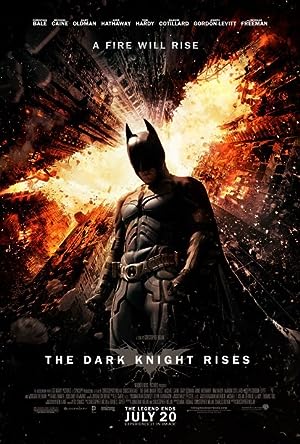
NOT A WOKE TRAP. The Dark Knight Rises is one of the most openly conservative blockbusters of the 21st century. Occupy Wall Street activist David Graeber called it 'anti-Occupy propaganda' on its release. The villain Bane leads a revolution framed explicitly as mob rule, kangaroo courts, and chaos. The film's sympathies are plainly with order, institutions, sacrifice, and the rule of law. Nothing is hidden. Conservative viewers will recognize their values front and center within the first act.
When Occupy Wall Street's David Graeber, one of the movement's most prominent intellectual voices, publicly called The Dark Knight Rises 'a piece of anti-Occupy propaganda,' he handed Nolan the most accurate review the film ever received. He meant it as an insult. He was describing a feature.
The Dark Knight Rises is the most overtly conservative major blockbuster of the 21st century. This is not a subtle observation. Bane's revolution is framed as pure evil from the moment he opens his mouth. His rhetoric about returning Gotham to its people is a mask for nihilism. The revolution he leads produces kangaroo courts where Cillian Murphy's Scarecrow presides over show trials sentencing citizens to 'death' or 'death by exile.' When the people get power in Bane's Gotham, what they get is fear, starvation, and summary execution.
Nolan lifted this directly from A Tale of Two Cities. The film even quotes Dickens in its opening epigraph. Bane's revolution is the Terror. The wealthy are dragged from their homes not because their wealth is actually redistributed but because the destruction of order is the point. The revolution is not a means to an end. It is the end. Chaos is the goal.
This is a specific political argument. It says: movements that promise liberation through destruction of existing institutions deliver not liberation but a different, more brutal form of oppression. It says: order, even imperfect order, is preferable to the chaos that comes when institutions collapse. It says: the people who destroy civilization in the name of the people are the people's greatest enemies.
Conservatives have been making this argument for two centuries. Nolan made a $250 million action film out of it.
But the film is more than its politics, and it is worth engaging with the whole of it.
Bruce Wayne begins the film broken. Eight years after The Dark Knight, he is a recluse. He gave up being Batman. He is limping through a mansion, letting his city run without him. The first act is about what it costs a person to stop doing the thing they were made to do. Alfred wants Bruce to live a normal life. Bruce is not capable of a normal life. He was forged by one specific tragedy into one specific purpose, and without that purpose, he is hollow.
Bane gives him the purpose back. The villain's arrival forces Bruce to become Batman again, and Batman is not ready. The scene in which Bane breaks him, methodically, almost bored, is one of the most brutal in the trilogy. This is not a clever villain defeat. This is a stronger man destroying a weaker one and leaving him alive specifically to watch his city burn. Bane does not want Batman dead. He wants Batman to suffer.
The pit sequence, in which Bruce recovers and attempts the climb that everyone around him says is impossible, is the film's philosophical heart. The other prisoners tell him he can only make the jump if he does it without the safety rope. The fear of death is what gives the jump its meaning. Without the possibility of failure, the climb means nothing.
This is a conservative argument about risk, consequence, and meaning. Safety nets do not produce greatness. The possibility of genuine failure is what makes genuine success possible. Bruce climbs without the rope and the film frames his escape not as luck but as the earned result of a man who finally understood what the climb required.
The film has weaknesses. The Marion Cotillard twist is handled clumsily. The logistics of Bane's five-month occupation of Gotham raise questions the film does not answer. Anne Hathaway's Catwoman is underwritten. The final twenty minutes rush through conclusions that deserved more space.
But the film's strengths are extraordinary. Tom Hardy's Bane is one of the great villain performances. His voice, theatrical and precise, makes every line sound like a pronouncement. Michael Caine's Alfred, in his two major scenes, demonstrates what a supporting performance can achieve when an actor is given real material and the craft to deliver it. Joseph Gordon-Levitt's John Blake is the film's argument for institutional faith: a young man who never stopped believing, whose belief is vindicated, and who accepts the responsibility that comes with that vindication.
And then there is the ending. Batman saves Gotham by flying a nuclear bomb out over the bay, apparently dying in the process. The city mourns. Alfred weeps at Bruce's grave. Commissioner Gordon finds the Bat-Signal repaired. And then Nolan gives us Alfred in a Florence cafe, looking up, seeing Bruce alive at a table across the room with Selina Kyle.
Nolan lets Batman win. He lets the hero survive. He lets the sacrifice be real without being final. It is the most generous ending in the trilogy, and it works because Nolan spent three films earning it.
The film grossed $1.085 billion worldwide. RT Critics 87% (Certified Fresh). RT Audience 90%. IMDB 8.4. It remains one of the highest-grossing films of all time and one of the most culturally durable superhero films ever made.
Formula: Weighted Score = Severity × Authenticity Multiplier × Centrality Multiplier
🔴 Woke Tropes
| Trope | Severity | Authenticity | Centrality | Score |
|---|---|---|---|---|
| Class Warfare Rhetoric | 2 | Low | Moderate | 2.8 |
| Occupy Wall Street Parallels | 2 | Low | Low | 1.4 |
| TOTAL WOKE | 4.2 | |||
🟢 Traditional Tropes
| Trope | Severity | Authenticity | Centrality | Score |
|---|---|---|---|---|
| Order vs. Chaos (Conservative Framing) | 5 | High | High | 6.3 |
| Institutional Authority / Police Heroism | 4 | High | High | 5.04 |
| Self-Sacrifice for Civilization | 5 | High | High | 6.3 |
| Masculine Heroism and Duty | 4 | High | High | 5.04 |
| Corruption Exposed / Justice Restored | 3 | High | Moderate | 2.1 |
| TOTAL TRADITIONAL | 24.8 | |||
Score Margin: +21 TRAD
Director: Christopher Nolan
CLASSICALLY LIBERAL / CENTRIST WITH CONSERVATIVE INSTINCTS. Nolan is one of the most politically ambiguous major filmmakers working. His films consistently valorize duty, sacrifice, masculine heroism, institutional authority, and the defense of civilization. His aesthetic is austere rather than progressive. He has been publicly critical of the Hollywood streaming model and advocates for theatrical filmmaking, a position that aligns with conservative cultural preservation instincts. He is not a partisan filmmaker. He makes films about what he believes are fundamental human experiences. His conservative instincts are most visible in The Dark Knight trilogy, Dunkirk (2017), and Oppenheimer (2023).Born July 30, 1970, in London, England, and raised in both the UK and the US. Nolan attended University College London, where he made short films. His feature debut Following (1998) was made for $6,000. Memento (2000) established him as a major filmmaking talent. His career arc includes Insomnia (2002), Batman Begins (2005), The Prestige (2006), The Dark Knight (2008), Inception (2010), The Dark Knight Rises (2012), Interstellar (2014), Dunkirk (2017), Tenet (2020), and Oppenheimer (2023). He is widely considered one of the greatest directors of his generation. His Batman trilogy redefined what a superhero film could be. The Dark Knight is consistently ranked among the greatest films ever made. The Dark Knight Rises completed the trilogy with a focus on political chaos, sacrifice, and the defense of civilization. He was knighted in 2024.
Writer: Christopher Nolan & Jonathan Nolan
The Nolan brothers have collaborated throughout Christopher's career. Jonathan Nolan's television work includes Person of Interest (2011-2016) and Westworld (2016-2022), both of which grapple seriously with questions of AI, free will, and human nature. The Dark Knight Rises screenplay draws on elements from three Batman comic arcs: Knightfall (the Bane storyline), No Man's Land (Gotham cut off from civilization), and A Tale of Two Cities (the French Revolution parallels in Bane's revolutionary rhetoric). The Dickens reference is intentional and gives the film its literary backbone: what happens when the mob gets power, and what is the individual's duty when civilization is under threat?
Adult Viewer Insight
Conservative adults who have not seen The Dark Knight Rises or have dismissed it as a superhero film are missing something. This is a film about what happens when institutions fail and what it costs the individuals who step into the breach. Nolan is making arguments about civilization, sacrifice, and the nature of heroism that most political films are too timid to make this directly. Bane's revolution is the film's central argument about what class warfare actually delivers: not justice, but a more brutal form of oppression with different masters. The film's treatment of institutional authority (police, courts, civic order) as worth defending, however imperfectly, is a genuinely conservative position rendered with visual intelligence and emotional commitment. Watch it, and then watch it again for what Nolan is saying underneath the action.
Parental Guidance
Find The Dark Knight Rises on Amazon Prime Video, rent, or buy:
▶ Stream or Buy on AmazonAs an Amazon Associate, VirtueVigil earns from qualifying purchases.
Community Discussion 0
Subscribe to comment.
Join the VirtueVigil community to share your perspective on this review.