
The Fall Guy
The Fall Guy is one of the most genuinely enjoyable action movies in recent memory, and it achieves that by doing something remarkably simple: it actually likes its protagonist.
Full analysis below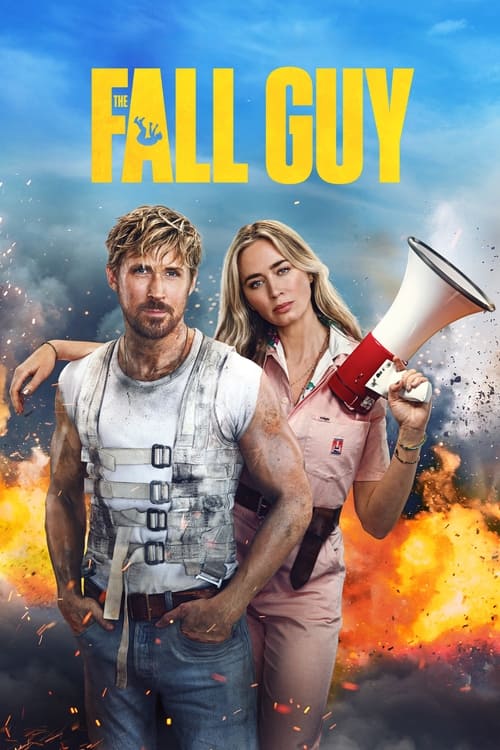
No bait-and-switch. David Leitch is an action filmmaker who prioritizes craft and entertainment. The Fall Guy is a love letter to stunt work that succeeds as genuine crowd-pleasing entertainment. The meta-Hollywood framing could have been used to lecture about Hollywood values. Leitch uses it to celebrate working people instead.
The Fall Guy is one of the most genuinely enjoyable action movies in recent memory, and it achieves that by doing something remarkably simple: it actually likes its protagonist.
Ryan Gosling plays Colt Seavers, a Hollywood stuntman who breaks his back doubling for action star Tom Ryder and disappears from the industry for eighteen months. He surfaces working as a valet at a Mexican restaurant, hiding from the career he loved. Then he gets a call: Jody Moreno, his ex-girlfriend and the camerawoman he walked out on, is now directing her first feature. The movie's producer (Hannah Waddingham) has been telling Jody that Colt asked to be on the crew. Colt arrives to discover Jody never asked for him and is furious about the breakup.
So the film's central structure is a stuntman trying to win back the woman he loves while also solving a mystery involving a missing movie star, a drug deal gone wrong, and a conspiracy that threatens to destroy Jody's film. This sounds more complicated than it feels. Leitch keeps everything moving at a pace that makes the complications feel fun rather than exhausting.
But what makes The Fall Guy special is its genuine affection for the stunt community. Leitch is a former stuntman. This is personal. When the film opens with text about how stuntmen and stuntwomen are the unsung heroes of cinema, it's not corporate PR. It's a filmmaker talking about his people. The action sequences - including a car cannon record-setting sequence that broke actual industry records during production - are staged with real craft and genuine reverence for the work involved.
Gosling is excellent. He's working in a tradition of classic Hollywood leading men: competent, humble, funny, and quietly courageous without needing to announce it. Colt Seavers is a working man. He gets beaten up, drugged, confused, and humiliated. He keeps going anyway. Not because he's trying to be a hero - because the woman he loves has staked her career on this movie and he's not going to let it fail.
Emily Blunt matches him beautifully. Jody Moreno is a first-time director trying to manage an overbudget production with a missing movie star and an unwanted ex on her crew. She's competent and frustrated and still in love. Blunt plays it without feminist signaling - Jody is just a person with a job and feelings, which is all the character needs to be.
The villain turns out to be the producer Gail (Waddingham), who has been covering up Tom Ryder's accidental killing of a stunt double. This is a satisfying reveal that the film earns. The real villains are the powerful people who see stuntmen as expendable - which is exactly the film's thematic argument. Stunt performers risk their lives so movie stars can look good, and nobody remembers their names. The Fall Guy makes that argument without turning it into a lecture.
The Hollywood meta-humor works because Leitch clearly loves movies rather than hating the industry. He's not making a cynical deconstruction of fame. He's making an affectionate genre film that happens to be set on a movie set. The references to classic action cinema feel earned. The action sequences feel real because much of them are real.
For conservative viewers, The Fall Guy is straightforwardly enjoyable. A working man. A woman he loves. A job worth doing. A villain worth stopping. The film has no political agenda. It just wants you to have a good time watching people do extraordinary physical things for the love of the craft. That is a profoundly traditional set of values. And it works.
| Trope | Category | Location | Authenticity |
|---|---|---|---|
| Globalist Utopia / Diverse Supporting Cast | WOKE | Supporting cast - Stephanie Hsu and Winston Duke in prominent supporting roles; diversity without plot relevance | Moderate. The characters are competent and serve the plot. Their diversity is not commented on or made a point of. Standard Hollywood diverse casting. |
| Romance as Comedy | WOKE | Jody's passive-aggressive film project - she has directed a film that thinly disguises her grievances about Colt; it is played for laughs | Organic to the premise. The comedy is affectionate rather than contemptuous of either character. |
| Institutional Corruption (Individual) | WOKE | Gail (the producer) is the villain - she covers up a killing to protect her film's budget; the Hollywood machine is briefly portrayed as corrupt | Mild. Gail is an individual villain, not evidence of systemic Hollywood corruption. The film is not anti-Hollywood - it loves Hollywood. Gail is just a bad person. |
| The Self-Sacrificing Hero | TRADITIONAL | Colt's arc - he risks his life repeatedly not for fame or money but to protect Jody's film and win back her trust | Authentic. The sacrifice is literal (physical danger) and emotional (professional humiliation). The film earns it. |
| Defense of the Innocent | TRADITIONAL | Colt tracks down Tom Ryder to protect Jody's film; he confronts Gail to expose the cover-up and vindicate the murdered stuntman | Authentic. The murdered stuntman Henry Herrera provides genuine moral stakes. Colt is fighting for justice as much as romance. |
| Industry and Perseverance (Blue Collar Heroism) | TRADITIONAL | The entire film's thesis - stunt performers are skilled, courageous working people who deserve recognition; their craft is celebrated throughout | Authentic and deeply felt. Leitch is a former stuntman. This is the film's soul, not its marketing. |
| Traditional Masculinity | TRADITIONAL | Colt Seavers throughout - competent, loyal, physically courageous, humble about his skills, devoted to the woman he loves | Authentic. The film does not deconstruct, ironize, or undermine Colt's masculinity. It simply presents a good man doing his job. |
| Romantic Devotion / Love Worth Fighting For | TRADITIONAL | The entire Colt-Jody arc - Colt's motivation throughout is to make things right with Jody; the romance is the engine of the film | Authentic. The chemistry is real, the romantic stakes are clear, and the resolution is earned through action rather than just words. |
| Classical Hollywood Craftsmanship | TRADITIONAL | Practical stunt work throughout - the film broke the world record for car cannon rolls during production; extensive use of real stunts over CGI | Authentic and documented. The production team set a Guinness World Record for the cannon car roll performed by stuntman Logan Holladay. |
Director: David Leitch
NEUTRALFormer stuntman turned director. Co-directed the original John Wick (uncredited), then solo on Atomic Blonde, Deadpool 2, Hobbs and Shaw, Bullet Train. Leitch is a pure craftsman - his films are about action choreography, star charisma, and kinetic energy. He has no consistent political agenda. His one concession to progressive casting (Deadpool 2 cast several diverse supporting characters) is franchise-dictated. His default mode is practical action filmmaking by a man who has dedicated his career to the craft of physical cinema.
Writer: Drew Pearce
Screenwriter with credits including Iron Man 3, Mission: Impossible - Rogue Nation, Hotel Artemis. Pearce writes genre entertainment without consistent political agenda. The Fall Guy script is self-aware (meta about movie-making) but not self-important. The Hollywood-insider perspective could have been used for political commentary. Pearce uses it for affectionate genre play instead.
Producers
- Kelly McCormick (87North Productions) — David Leitch's producing partner and wife. Co-produces all his films. No independent ideological signal. Business and creative partner whose output follows Leitch's action-entertainment instincts.
- David Leitch (87North Productions) — See director profile.
- Ryan Gosling (Entertainment 360) — Actor-producer. Gosling is broadly liberal in his public persona but exercises strong commercial instincts as a producer. His producing choices (La La Land, Barbie, The Fall Guy) show preference for entertaining crowd-pleasers rather than political vehicles. No consistent agenda as a producer.
- Guymon Casady (Entertainment 360) — Producing partner. No strong independent ideological signal.
Full Cast
Fidelity Casting Analysis MINOR DEVIATION
Based loosely on the 1980s TV series created by Glen A. Larson. In the original series, Colt Seavers was played by Lee Majors. Ryan Gosling's casting is a fresh interpretation rather than a direct adaptation - the film is clearly a reimagining rather than a strict remake. Dan Tucker (Winston Duke) is a new character not in the original series. No race-swapping of existing characters. Minor note: the film casts Stephanie Hsu (Asian-American) in a supporting role that would likely have been white in an 80s production, but this is not a fidelity violation since it's a new character in a loose adaptation.
The original Fall Guy TV series (1981-1986) starred Lee Majors as Colt Seavers, a Hollywood stuntman who moonlighted as a bounty hunter. The 2024 film keeps the basic concept (stuntman protagonist named Colt Seavers) but builds an entirely new plot. Jody Moreno is a new character with no analog in the series. Tom Ryder is original. Gail is original. The film acknowledges its TV origins with in-jokes and a cameo but is explicitly not a strict remake. Fidelity Casting Score: Minor deviation, mainly the absence of the original 80s cast. No ideological casting concerns. Gosling is Canadian rather than American but that is not a relevant fidelity issue. The supporting cast reflects modern Hollywood diversity without canon violations.
Adult Viewer Insight
The Fall Guy succeeds at something contemporary blockbusters rarely manage: it has a coherent set of values that it expresses through action rather than dialogue. Colt Seavers is not a morally complex antihero. He's a decent man who made a mistake (abandoning Jody after his accident), recognizes it, and spends the entire film making it right. The motivation is love. The method is work. The resolution is earned. The film's celebration of stunt performers carries real moral weight. These are people who do dangerous, highly skilled physical work for minimal recognition and compensation while the stars they double receive fame and awards. The Fall Guy is essentially a working-class hero narrative dressed in action-comedy packaging. Conservative viewers will appreciate the genuine masculine heroism on display. Gosling's Colt is not deconstructed, feminized, or undermined. He's beaten, humiliated, and confused - but he endures. He's loyal. He's competent. He does the work. These are traditional masculine virtues that Hollywood rarely portrays without ironic distance. The film underperformed at the box office, which is genuinely puzzling. It's well-crafted, funny, and features two of the biggest stars in the world with genuine chemistry. The audience score is significantly higher than the box office suggests it should be. The Fall Guy is a film that rewards the audience who shows up.
Parental Guidance
Rated PG-13. Violence: Moderate action violence. Significant stunt sequences including car crashes, falls, and fight scenes. One character is found dead. Presented as action-movie violence without gratuitous gore. Sexual Content: Mild. The romantic subplot between Colt and Jody involves clear romantic interest and an off-screen history. Nothing explicit. Language: Mild to moderate. Some profanity but within PG-13 limits. Substance Use: Colt is drugged at a nightclub without his consent - presented as villainous. Ideological Content: Pro-working class, pro-craft, pro-loyalty, pro-romantic commitment. No progressive political messaging. Age Recommendations: Appropriate for ages 13 and up. Parents of younger children should be aware of the action violence level. Family Discussion: (1) Colt leaves after his accident without explaining why. Is walking away from someone you love ever the right call? (2) The film argues that stuntpeople are overlooked and undervalued. Do you agree? (3) Gail covers up the stunt double's death to protect the movie's production. What does this say about how the powerful treat the less visible workers?
Find The Fall Guy on Amazon Prime Video, rent, or buy:
▶ Stream or Buy on AmazonAs an Amazon Associate, VirtueVigil earns from qualifying purchases.


Community Discussion 0
Subscribe to comment.
Join the VirtueVigil community to share your perspective on this review.