
The Housemaid
Let's be honest about what The Housemaid is before we decide whether it's any good.…
Full analysis below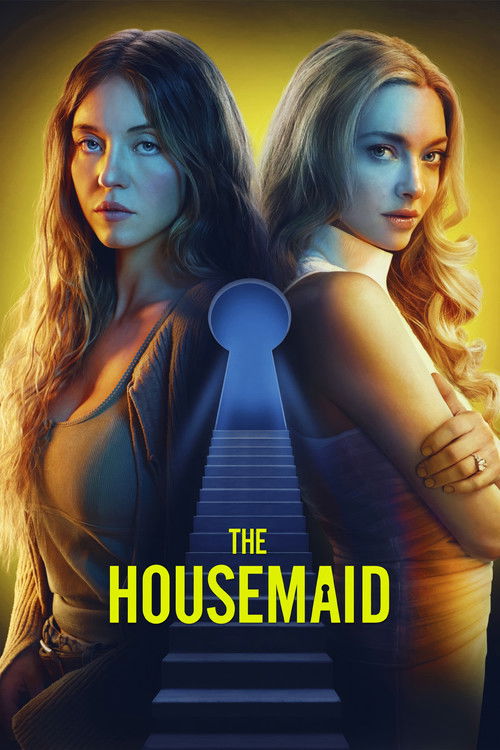
This film draws you in for a significant portion of its runtime with traditional or neutral content before springing its woke agenda. Know before you go!
Partial woke trap. The erotic thriller packaging and Sweeney's non-woke reputation provide cover for a film that specifically targets conservative domestic values as the mechanism of female oppression. The villain does not just abuse women; he uses the tradwife ideal as his weapon. This is not incidental. It is the thesis.
Let's be honest about what The Housemaid is before we decide whether it's any good. This is a feminist revenge fantasy wrapped in an erotic thriller, adapted from Freida McFadden's bestselling novel, directed by the man who made the Ghostbusters reboot, and starring Sydney Sweeney in a role designed to weaponize her non-woke reputation for a film with a very specific woke thesis. That thesis is: the tradwife ideal is not just limited but specifically, sadistically dangerous. Conservative viewers should know that before they buy a ticket. Then they can decide whether the filmmaking is good enough to justify the trip anyway. Spoiler: it mostly is.
Millie Calloway (Sydney Sweeney) is on parole for manslaughter. She killed a classmate in high school who raped her. With no money and no options, she takes a live-in housemaid position with Nina Winchester (Amanda Seyfried) and her impossibly handsome husband Andrew (Brandon Sklenar) at their Great Neck mansion. Nina is erratic, demanding, and contradictory. She gives Millie instructions and then denies having given them. She has a history of hospitalization for trying to drown her own daughter and attempting suicide. Andrew is calm, reasonable, and sympathetic. He confides in Millie. He protects her from Nina's rages. They fall into an affair while Nina is away.
The twist arrives in the third act, and it is genuinely effective: Nina is not crazy. Andrew is the predator. He systematically drove Nina insane through years of psychological torture and sadistic punishments, all coded in the language of domestic perfection. He demanded she maintain blonde hair. When she forgot to dye her roots, he locked her in the attic and required her to pull out one hundred hairs from her own scalp until he was satisfied. He drugged her, framed her for violence against their daughter, and used the psychiatric hospitalization to consolidate his control. Nina hiring Millie was not victimhood. It was a trap. She accurately predicted that Andrew would leave her for a younger woman, believed Millie's criminal past gave her the psychological resilience to survive him, and left her a knife.
Sydney Sweeney is excellent here. She has been better in other things, but she is doing something genuinely complicated: playing a woman who is simultaneously the victim, the instrument, and the avenger across a story that keeps rewriting the ground rules beneath her feet. The character requires her to be vulnerable and ruthless in the same scene, and she mostly pulls it off. Amanda Seyfried is the revelation. She plays Nina's apparent instability with a commitment that makes the twist land. Every scene you spent believing she was the villain has to be reassessed in retrospect, and that retroactive reinterpretation works because Seyfried has layered her performance with tells that only become legible on second viewing. This is smart acting in service of a smart script.
Brandon Sklenar has the harder job. Andrew Winchester has to be believable as both the romantic lead and the monster. He manages it through restraint. He plays Andrew with a kind of quiet authority that registers as confidence until it registers as control. The scene where he hands Millie the broken china and quietly asks her why she did not wash it, a scene of pure psychological menace dressed as domestic disappointment, is the film's best.
Now here is where it gets ideologically complicated. The film is not subtle about what it is doing. Andrew's abuse is constructed specifically through the apparatus of traditional domestic ideals. He did not just abuse Nina. He abused her through demands for perfect housekeeping, hair color, household management, wifely performance. The tradwife ideal is not neutral background; it is the mechanism. One critic said the film falls just short of a full tradwife deconstruction. It does not fall short. The message is clear: domestic perfection demanded by a husband is not a conservative value. It is a control mechanism. The film believes this and is not hiding that it believes it.
The ending escalates this. Millie and Nina murder Andrew by pushing him off a staircase. A policewoman, whose sister was also victimized by Andrew, covers up the murder and rules his death an accident. Nina gives Millie a check for $100,000. Millie takes another housemaid job, this time specifically to help another woman escape an abusive husband. She is now running a vigilante rescue service for women, funded by the proceeds of one murder. The film plays this as unambiguous triumph. Female solidarity above the law is the film's final value.
Conservative viewers will find several things to object to here. A woman who commits murder is presented as heroic rather than criminal. Female violence against men is treated as justice rather than crime. Institutional authority (law enforcement) is subverted in service of a female solidarity that has no accountability. And the specific framing of traditional domestic ideals as abuse machinery is pointed directly at the values of the film's likely most vocally critical demographic.
What makes this complicated is that the villain is genuinely monstrous. Andrew Winchester is not a critique of normal husbandly authority. He is a sadist who uses domestic structures as cover for torture. Domestic abuse is real. Male predators who weaponize their partners' psychological vulnerability against them are real. A film that takes this seriously and presents consequences for it is not inherently wrong. The problem is the extrapolation. The film wants viewers to understand that the tradwife structure is itself the threat, not the predator using it. That leap, from 'this specific monster used domestic ideals as weapons' to 'domestic ideals are themselves weaponizable and therefore suspect,' is an ideological claim that the film makes without examining it.
Here is what conservative viewers can genuinely appreciate. The story works. The thriller mechanics are effective. The performances are strong across the board. Paul Feig, who has made a career out of likable mainstream entertainment, has made something genuinely dark here, and the darkness serves the story. The film respects the audience's intelligence enough not to telegraph the twist early. Nina and Millie's eventual solidarity is emotionally earned even if its moral logic is shaky. And Andrew Winchester gets exactly what he deserves in a way that is deeply satisfying regardless of your politics. Evil punished. Innocents defended. The traditional machinery of revenge narrative working exactly as it should.
| Trope | Category | Location | Authenticity |
|---|---|---|---|
| Patriarchal Villain | WOKE | Throughout - Andrew Winchester uses traditional husband authority and domestic perfectionism as the machinery of sadistic control | Forced ideology: the film extrapolates from 'this specific predator used domestic structures' to 'domestic structures are instruments of patriarchal abuse.' The villain is real; the thesis is editorial. |
| Tradwife Deconstruction | WOKE | Throughout - Andrew demands blonde hair, perfect housekeeping, domestic performance; punishes imperfection in wifely duties with attic confinement and physical torture | Forced. The screenplay (not the novel) specifically constructed Andrew's abuse through domestic-ideal demands. This is an editorial choice to make traditional domestic values the weapon of the abuser. |
| Female Solidarity Above the Law | WOKE | Climax and denouement - Nina and Millie commit murder together; sympathetic policewoman covers it up in service of female solidarity; the law is subverted as morally correct | Forced. The film explicitly frames the legal system as inadequate for protecting women and female extrajudicial action as the necessary alternative. This is a specific ideological argument dressed as a thriller resolution. |
| Girl Boss Vigilante | WOKE | Final scene - Millie reframes as a professional vigilante housemaid who infiltrates abusive households and rescues women, funded by the proceeds of one murder | Forced. Millie's transformation into a vigilante heroine is earned dramatically (she's been through hell) but the moral logic is a progressive wish-fulfillment fantasy rather than a realistic outcome. |
| The Domestic Trap | WOKE | The Winchester household throughout - the perfect home, the stay-at-home wife, the beautiful daughter, the manicured lawn are all cover for systematic evil | Mixed. The critique of domestic ideals-as-mask-for-abuse has genuine grounding in real-world cases. But the film universalizes from a specific monster rather than examining the full range of domestic life. |
| Therapeutic Determinism (Inverted) | WOKE | Millie's backstory - her manslaughter conviction for killing a rapist is presented as fully justified; no moral ambiguity about vigilante justice for sexual violence | Mixed. Self-defense against rape is legitimate. The film's framing of Millie's manslaughter as unambiguously righteous requires no moral examination of the complexities of the legal and ethical question. |
| Female Solidarity as Moral Absolute | WOKE | Nina-Millie partnership throughout second half; policewoman's complicity in covering up Andrew's murder | Forced. The film presents female solidarity as a value that supersedes individual accountability, legal obligation, and moral complexity. |
| Institutional Failure | WOKE | Andrew's ability to have Nina institutionalized; nobody believed Nina when she told the truth; official justice is inadequate | Mixed. False institutionalization by abusive partners is documented. The film uses this reality to argue for extrajudicial female action rather than systemic reform. |
| Consequences of Evil | TRADITIONAL | Third act - Andrew's sadism is the direct cause of his death; he dies because of what he did, not because of random violence; the punishment fits the crime | Authentic. Whatever the ideological framing, the narrative structure is profoundly traditional. Andrew Winchester's sins are the engine of his destruction. He falls from his own staircase because of choices he made. This is the oldest moral logic in storytelling. |
| Defense of the Vulnerable | TRADITIONAL | Millie's arc throughout - she protects Nina, she protects herself, she goes on to protect other women in similar situations | Authentic as a narrative value, however contested the method. The impulse to defend the vulnerable from predators is foundational and traditional. |
| Maternal Love | TRADITIONAL | Nina's relationship with Cece throughout - despite everything done to her, Nina's love for her daughter is the emotional anchor of her arc; her sacrifice is for Cece's sake | Authentic. Nina's maternal devotion to Cece is the film's most traditional emotional thread. Maternal love as unconditional and worth any personal sacrifice is an unambiguously traditional value. |
| Courage Under Pressure | TRADITIONAL | Millie's confrontation with Andrew in the final act - she has been cut, locked up, terrorized, and drugged, and she still fights back | Authentic. Courage in the face of genuine threat requiring physical and psychological fortitude. The gender of the person showing it does not change the traditional nature of the value. |
| Truth Prevails | TRADITIONAL | The twist reveal - Nina's truth, which nobody believed for years, is ultimately validated and acted upon; Andrew's constructed reality collapses | Authentic. The truth emerging and destroying a carefully maintained lie is as traditional as storytelling gets. The specific ideological content of the lie does not change the traditional structure of its collapse. |
Director: Paul Feig
MODERATELY WOKEBritish-American director best known for female-led comedies and action films. Bridesmaids (2011), The Heat (2013), Spy (2015), and the controversial Ghostbusters (2016) female reboot that generated significant culture-war controversy. Feig is openly progressive and has been vocal about increasing female representation in Hollywood. He described The Housemaid as 'a film about the cost of being silenced.' His filmography is heavily weighted toward stories of female agency, competence, and the overcoming of male-imposed obstacles. Not a subtle filmmaker ideologically. His involvement signals a progressive interpretation of the source material.
Writer: Rebecca Sonnenshine (screenplay), based on the novel by Freida McFadden
Sonnenshine is a television writer whose credits include The Boys and The Vampire Diaries. Her adaptation of McFadden's novel reportedly amplified the tradwife-critique angle beyond what was in the source material. The decision to make Andrew's abuse specifically tied to domestic performance ideals (the blonde hair, the china plate, the punishment for imperfect housekeeping) is credited to Sonnenshine's screenplay rather than being present in the novel.
Producers
- Todd Lieberman (Hidden Pictures) — Producer whose credits include Beauty and the Beast (2017) and the Man of Steel franchise. Commercial producer who follows the market. No strong independent ideological signal.
- Laura Fischer (Independent) — Producer associated with Sydney Sweeney's production company. Sweeney and Fischer have an ongoing producing partnership. Sweeney has public influence over her projects and reportedly championed this adaptation.
- Paul Feig (Pretty Dangerous Pictures) — Director-producer. See director profile. His creative fingerprints are on every aspect of this production.
Full Cast
Fidelity Casting Analysis MOSTLY FAITHFUL
The adaptation is broadly faithful to Freida McFadden's bestselling 2022 novel in casting. The principal characters (Millie, Nina, Andrew, Enzo) are cast in a manner consistent with the source material. No significant race-swapping or ideological casting interventions. The main fidelity concern is in the screenplay's amplification of the tradwife-critique angle, which is stronger in the film than in McFadden's novel. The novel is primarily a thriller; the film specifically uses Andrew's domestic demands as ideological commentary.
Millie Calloway (Sydney Sweeney): The novel describes Millie as a blonde young woman, which Sweeney embodies perfectly. This is arguably the most on-the-nose casting in the film. Nina Winchester (Amanda Seyfried): The novel describes Nina as having dark hair that Andrew has forced her to dye blonde. Seyfried's casting works against this detail slightly (she is naturally blonde), though the film handles the hair-dyeing subplot by having Seyfried wear a wig in early scenes. Andrew Winchester (Brandon Sklenar): Sklenar's casting as the charming, handsome, secretly monstrous Andrew is pitch-perfect. He looks exactly like the kind of man you would trust. Enzo (Michele Morrone): The Italian groundskeeper is played by Italian actor Michele Morrone. Authentic to the character's Italian-American surname in the novel. The novel's Enzo is somewhat underwritten; Morrone's screen presence gives him more weight than the book provides. Overall: A cleaner adaptation in casting terms than most Hollywood remakes of popular fiction.
Adult Viewer Insight
Conservative adult viewers should understand what they are walking into. The Housemaid is explicitly designed as a feminist revenge narrative, and Paul Feig is not trying to hide that. The specific framing of Andrew's abuse through traditional domestic demands is an ideological argument, not just a plot device. The film is telling you that the tradwife structure is the problem as much as the predator. That is a claim worth pushing back on. But here is the nuance: the film's moral architecture works on traditional terms even through the progressive framing. Evil is punished. The vulnerable are protected. Courage is rewarded. The villain's downfall is directly caused by his own sadism. These are not progressive values; they are ancient ones. The film hijacks traditional narrative machinery in service of a feminist thesis, which is clever filmmaking even if the thesis itself is contestable. For conservative adult women specifically: the fantasy element of the film is obvious and worth naming. This is a movie that says you can survive the worst man imaginable, beat him at his own game, and walk away with $100,000 and a new purpose. It is not realistic. It is not meant to be. Treat it as what it is: escapist fantasy in a thriller wrapper, made by smart people who know their audience. Sydney Sweeney's performance is the real draw. Amanda Seyfried is excellent. The twist works. Go for the craft and argue with the politics on the drive home.
Parental Guidance
The Housemaid is rated R and the content concerns are substantial. Sexual Content: Significant. The film contains an explicit consensual sex scene between Andrew and Millie. Multiple scenes feature Andrew using sexual confidence as part of his manipulation. The film's erotic thriller category is accurately labeled. Violence: Strong. The film depicts domestic abuse in graphic psychological and physical terms. Andrew forces Millie to cut her own stomach with a china shard (25 cuts, one for each broken piece). Millie stabs Andrew with a cheese knife. Andrew attacks both women physically. The violence is realistic and disturbing rather than stylized. A character falls to his death from a staircase. Language: Moderate. Profanity throughout, consistent with the genre. Thematic Content: Domestic abuse as a sustained narrative theme. The film depicts gaslighting, psychological torture, false institutionalization, and physical violence against women over an extended period. This is heavy material that requires emotional maturity to process. Age Recommendation: Not appropriate for viewers under 16. For mature teenagers 16 and older, this film offers a legitimate conversation starter about the difference between healthy and unhealthy relationship dynamics, the warning signs of controlling behavior, and the real-world dynamics of how abusers use normalcy as cover. Discussion Points: Does the film's happy ending constitute justice or just revenge? What is the difference, and does it matter? Is Andrew's use of domestic ideals a critique of those ideals or just of his specific evil? Can a film present sympathetic female violence without the same standard applying to male violence? These conversations are more valuable than the film.
Find The Housemaid on Amazon Prime Video, rent, or buy:
▶ Stream or Buy on AmazonAs an Amazon Associate, VirtueVigil earns from qualifying purchases.



Community Discussion 0
Subscribe to comment.
Join the VirtueVigil community to share your perspective on this review.