
The Hunger Games
The Hunger Games arrived in 2012 with a premise that seemed designed to alienate half its potential audience: a female protagonist, a dystopian critique of entertainment culture and government control, and a story where children kill each other as state-mandated spectacle.…
Full analysis below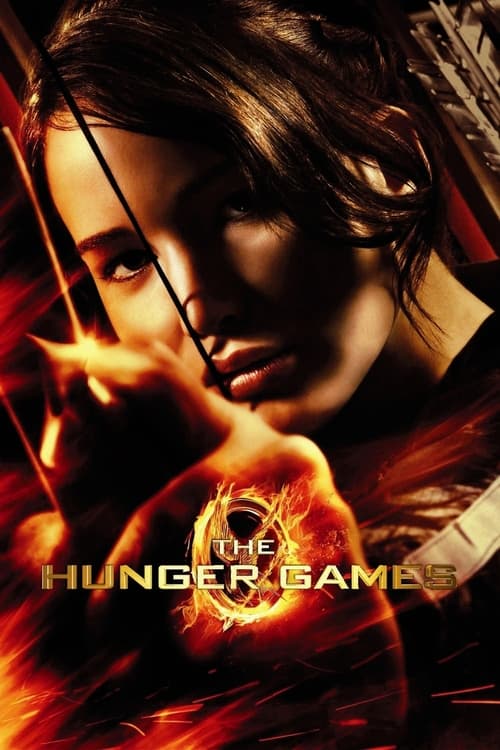
NOT A WOKE TRAP. The Hunger Games is exactly what the source novel and the marketing promised: a dystopian story about a girl who fights to survive a televised death match while a totalitarian government watches. The anti-government, anti-entertainment-complex themes are overt in Suzanne Collins' novel and faithfully translated to the screen. The film's feminist framing (a female protagonist in a survival role traditionally dominated by male heroes) is present and visible from the first trailer. Nothing about the film's content is concealed from audiences who bought tickets in 2012.
The Hunger Games arrived in 2012 with a premise that seemed designed to alienate half its potential audience: a female protagonist, a dystopian critique of entertainment culture and government control, and a story where children kill each other as state-mandated spectacle. It went on to gross $694 million worldwide and launch one of the decade's most successful YA franchises. Four years later, both political parties were using Katniss Everdeen imagery in their campaigns. That ideological ambiguity is the most interesting thing about the film.
Suzanne Collins wrote the novel after flipping channels between a reality TV show and footage from the Iraq War. The juxtaposition, entertainment and violence occupying the same screen, same cognitive space, same indifferent viewer gaze, became the book's central horror. The Capitol forces the districts to watch their children die as entertainment, and the districts have been watching long enough that some of them have started to enjoy it. This is a critique of spectacle culture, not of any specific political party. It applies with equal force to everything from Roman gladiatorial games to modern reality television to online outrage cycles.
The story: in a future North America called Panem, the Capitol rules twelve districts that were defeated in an earlier rebellion. As punishment and reminder of Capitol power, each district sends two 'tributes,' one male and one female, aged 12 to 18, to fight to the death in a nationally televised event called the Hunger Games. Katniss Everdeen (Jennifer Lawrence), from the coal-mining District 12, volunteers to replace her younger sister Prim when Prim's name is drawn at the reaping. Alongside Peeta Mellark (Josh Hutcherson), the district's male tribute, she must survive the arena while playing the Capitol's media game.
Jennifer Lawrence's performance is the film's load-bearing wall. She was 21 when they filmed, and she plays Katniss at 16 with complete credibility. The character is a hunter, a provider for her family, and a pragmatic survivor who has been doing what needs to be done since her father died in a mine explosion and her mother went catatonic with grief. Katniss is not a feminist character in the contemporary sense. She is not defined by her gender politics or her identity. She is defined by her skill, her love for her sister, her distrust of the Capitol, and her instinct for survival. She is, in the classical sense, a hero.
The ideological terrain here is genuinely complex. The film's anti-government critique is libertarian as much as progressive. The Capitol is not a conservative government or a liberal government. It is a totalitarian government, and the film's condemnation of it is total. President Snow (Donald Sutherland) is a compelling villain precisely because he understands power clearly: the Hunger Games exist to demonstrate that the Capitol can take your children and make you watch. The ritual of submission is the point. This is a classical tyranny critique that speaks to both left and right concerns about government overreach.
The film's tradScore comes primarily from Katniss herself. Her central motivation is not liberation or self-actualization. It is protection. She volunteers for the Games to protect her sister. She allies with Rue because Rue reminds her of Prim. She makes the berries gambit at the end not as political protest but because she cannot watch Peeta die. Every action Katniss takes is motivated by love for specific people, not by abstract ideology. This is a deeply traditional moral framework: the particular over the universal, the person you love over the cause you believe in.
The film's relationship to feminism is complicated. Katniss is physically capable, skilled with a bow, and entirely capable of surviving without male protection. But she is not written as a woman proving she can do what men do. She is written as a hunter who happens to be female, which is different. The film does not use her capabilities to make a gender argument. It uses them to make a survival argument. She can hunt, therefore she has a chance. The gender is incidental to the competence.
The class critique is real and structural. District 12 is Appalachian poverty: coal dust, black market trading, families who tesserae (enter their names extra times for food allowances). The Capitol is baroque excess: absurd fashion, surgical beauty modifications, a ruling class that maintains its position through engineered scarcity and ritualized violence. This maps onto contemporary class anxieties in ways that resonated across the political spectrum in 2012 and have not stopped resonating.
What the film does not do is tell you who to vote for or what specific policies would fix Panem. It presents a system of oppression and the individual who refuses to be fully absorbed by it. The politics are structurally anti-authoritarian without being prescriptively progressive. A libertarian watches Katniss and sees a citizen resisting the surveillance state. A progressive watches and sees an underclass rising against the plutocracy. Both readings are in the film. This is Collins' craft.
The VVWS score lands at MIXED, just barely tipping TRAD. The tradScore is anchored by Katniss's sacrifice-for-family motivation, the film's strong anti-tyranny framing, and the traditional bond structures (sisterhood, mentor relationships, genuine friendship) that survive the Games. The wokeScore reflects the female-warrior-in-a-death-sport framing and the class critique's progressive applications. The margin is genuinely narrow.
The film has real flaws. The shaky-cam cinematography in the arena sequences is disorienting in ways that obscure rather than intensify the action. Gary Ross departed after this film, and the sequels under Francis Lawrence are better directed. The love triangle between Katniss, Peeta, and Gale is underserved in the first film. Liam Hemsworth barely registers.
But the core story is powerful, the performance at its center is extraordinary, and the moral framework, one person refusing to be reduced to a tribute when survival demands it, remains as resonant as it was in 2012. The Hunger Games earned its audience. It still deserves one.
Formula: Weighted Score = Severity × Authenticity Multiplier × Centrality Multiplier
🔴 Woke Tropes
| Trope | Severity | Authenticity | Centrality | Score |
|---|---|---|---|---|
| Female Warrior as Default Hero | 3 | 1 | 1.8 | 5.4 |
| Class Critique / Ruling Elite as Villain | 3 | 1 | 1 | 3 |
| Critique of Entertainment / Media Spectacle | 2 | 1.4 | 0.5 | 1.4 |
| TOTAL WOKE | 9.8 | |||
🟢 Traditional Tropes
| Trope | Severity | Authenticity | Centrality | Score |
|---|---|---|---|---|
| Sacrifice for Family | 5 | 0.7 | 1.8 | 6.3 |
| Anti-Tyranny / Liberty as Core Value | 4 | 0.7 | 1 | 2.8 |
| Mentor Relationship and Earned Trust | 3 | 0.7 | 0.5 | 1.05 |
| Loyalty and Genuine Friendship | 4 | 0.7 | 0.5 | 1.4 |
| Competence Valued Over Identity | 3 | 0.7 | 0.5 | 1.05 |
| TOTAL TRADITIONAL | 12.6 | |||
Score Margin: +3 TRAD
Director: Gary Ross
PROGRESSIVE / INSTITUTIONALLY LIBERAL. Ross is a Hollywood liberal whose previous directorial work includes Pleasantville (1998), which is an explicit progressive allegory about conformity and liberation, and Seabiscuit (2003), which is politically neutral. The Hunger Games gave him source material with anti-government themes that resonated with both progressive and libertarian audiences. Ross's directorial choices emphasize the oppressive surveillance state and the dehumanizing effects of media spectacle, both of which are left-coded critiques in the film's contemporary reception.Gary Ross is primarily known as a writer-director with strong literary instincts. Before directing, he wrote the screenplays for Big (1988) and Dave (1993). Pleasantville established him as a filmmaker interested in social allegory. The Hunger Games was his biggest commercial project by far, grossing $694 million worldwide. He departed the franchise after the first film and was replaced by Francis Lawrence for the sequels. His visual approach to Hunger Games, with its harsh handheld work in District 12 and its glossy, saturated aesthetic in the Capitol, serves the story's class critique effectively.
Writer: Gary Ross, Suzanne Collins, Billy Ray
The screenplay is faithful to Collins' novel, which Collins herself co-wrote. Collins conceived the story as a meditation on war, reality television, and government control of narrative. The book draws from Greek mythology (Theseus and the Minotaur tribute system), Roman gladiatorial games, and Collins' father's military service in Vietnam. The script preserves the book's core moral: a government that makes children kill each other for entertainment is a government that has lost any claim to legitimacy. This is a classical anti-tyranny argument that resonates across ideological lines.
Adult Viewer Insight
Parental Guidance
PG-13, appropriate for ages 12 and up. Central premise involves child-on-child violence; handled with restraint but conceptually disturbing. No sexual content. Strong themes of family sacrifice, government tyranny, and survival. Worth discussing the anti-tyranny themes with teenagers.
Find The Hunger Games on Amazon Prime Video, rent, or buy:
▶ Stream or Buy on AmazonAs an Amazon Associate, VirtueVigil earns from qualifying purchases.
Community Discussion 0
Subscribe to comment.
Join the VirtueVigil community to share your perspective on this review.